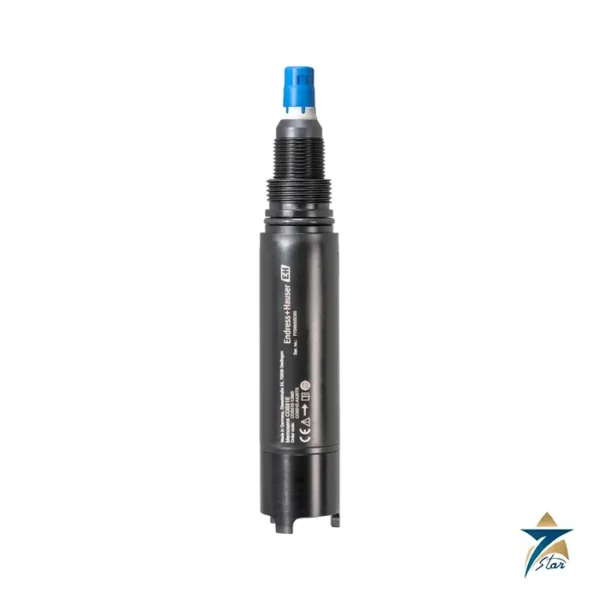
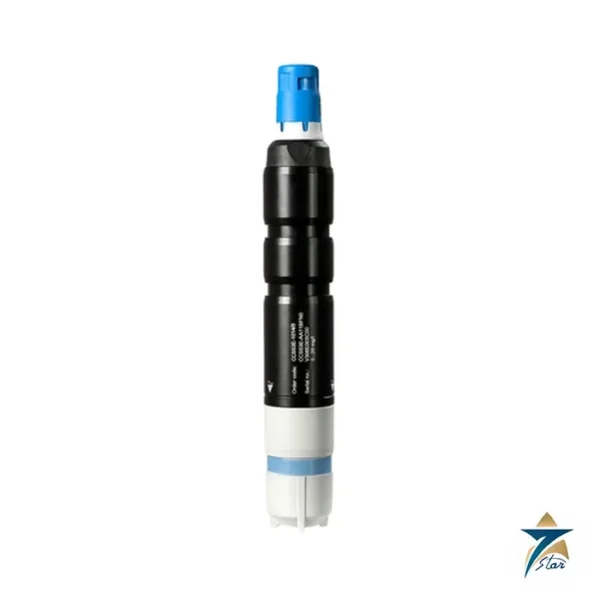
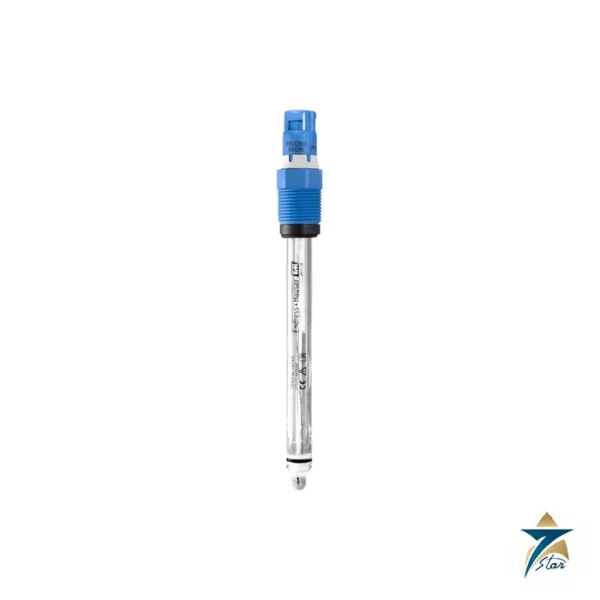
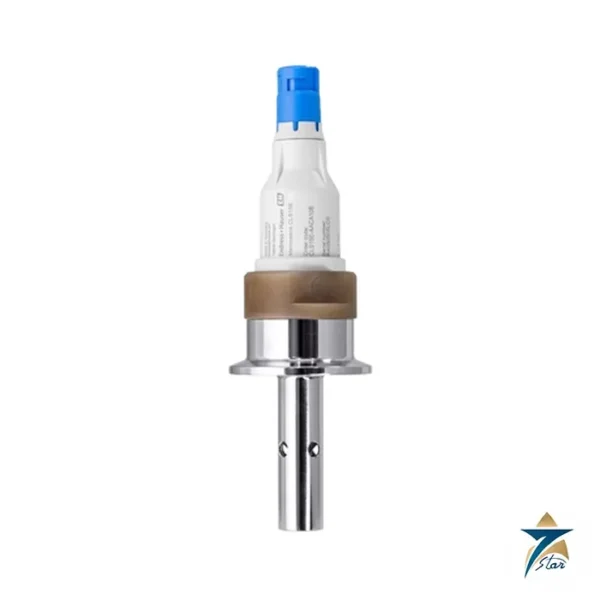
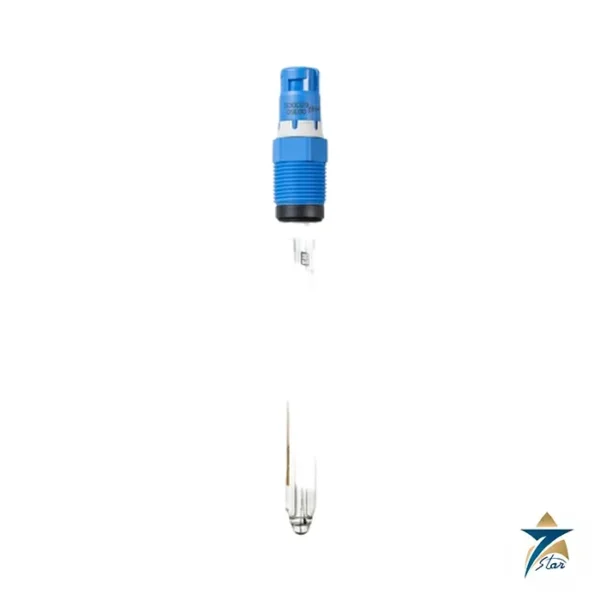
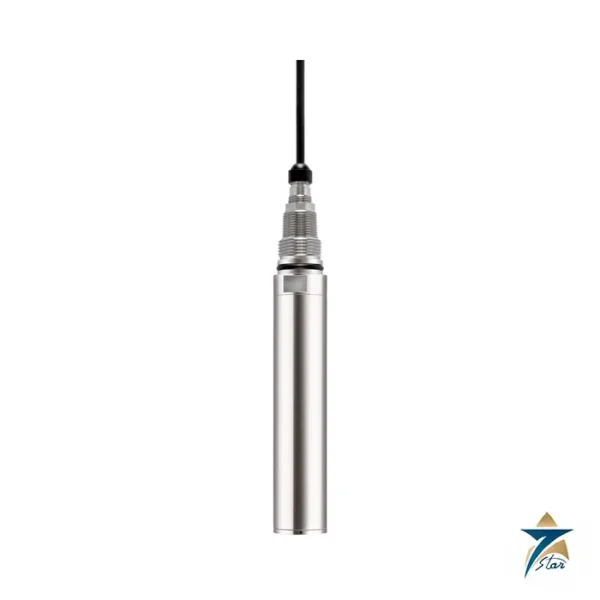
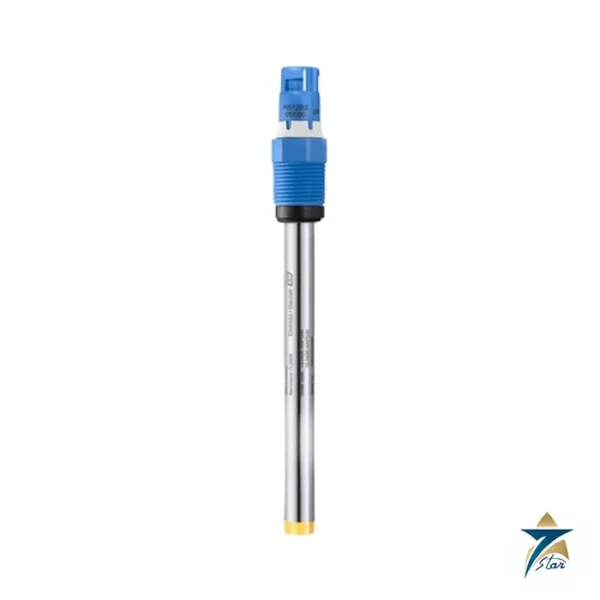
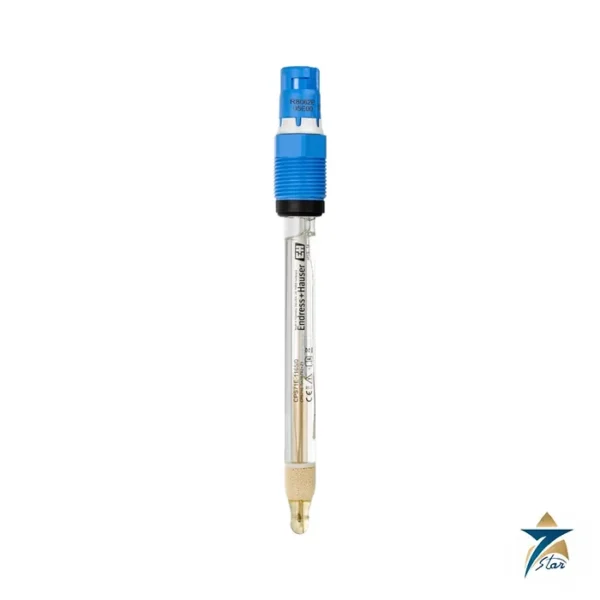
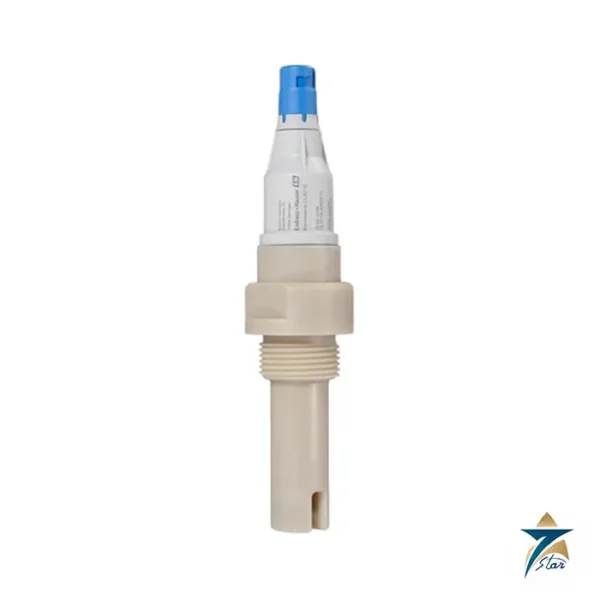
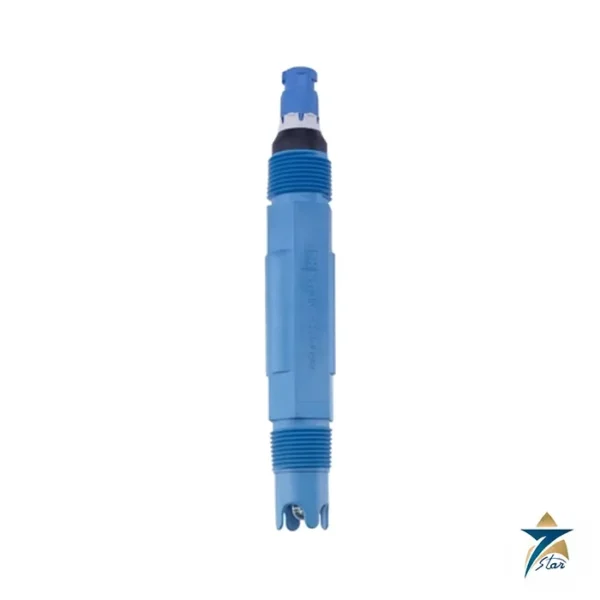
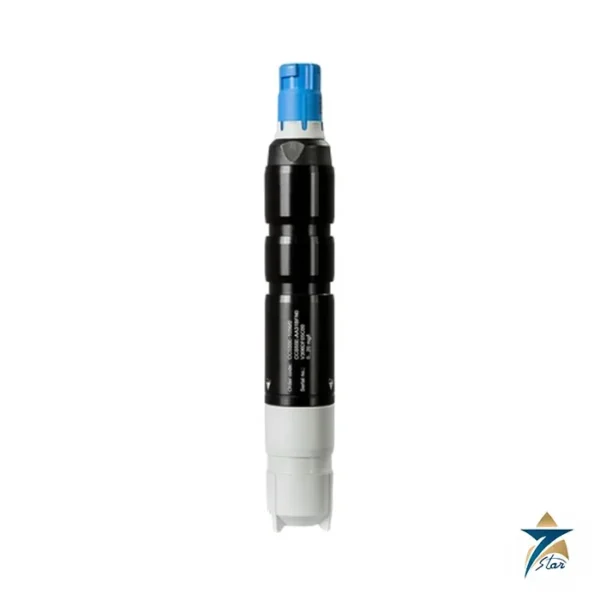
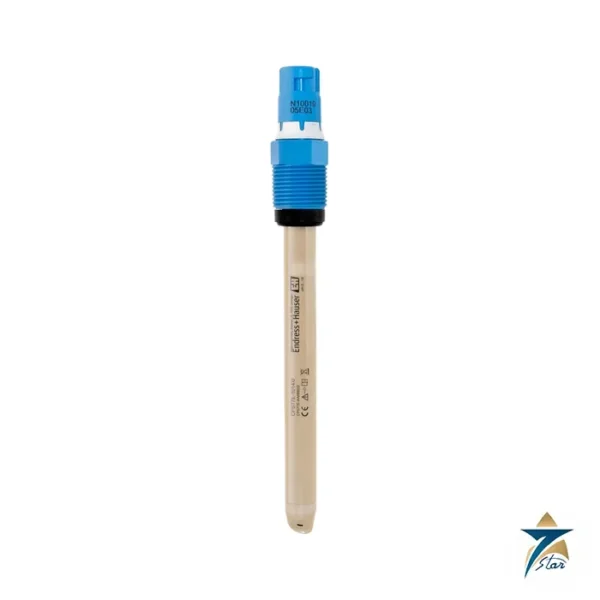
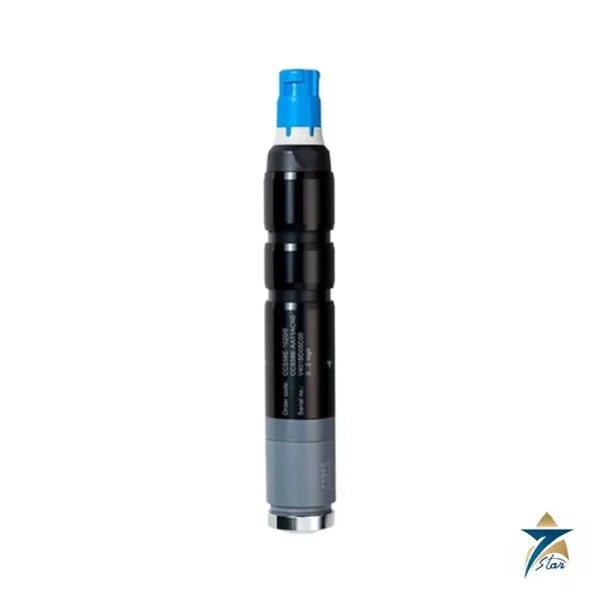
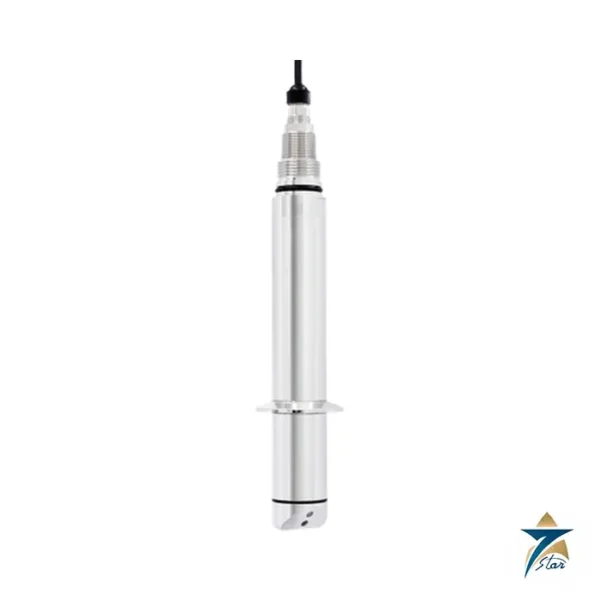
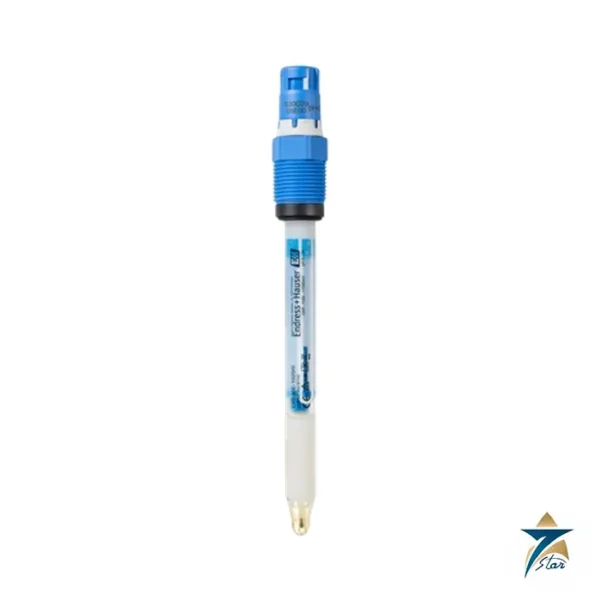
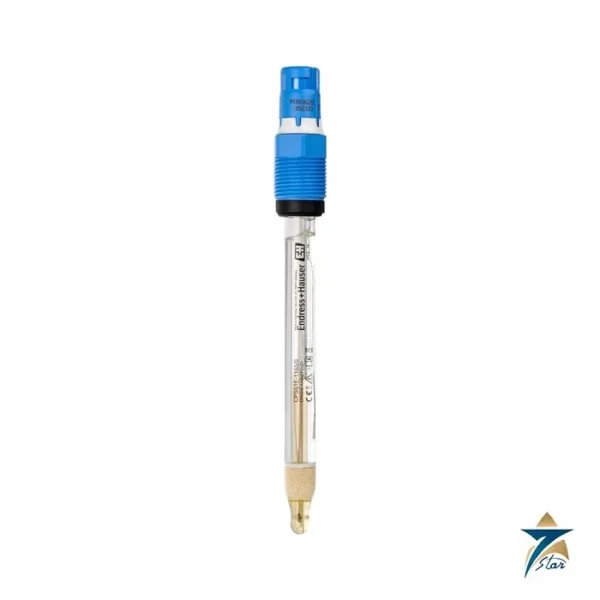
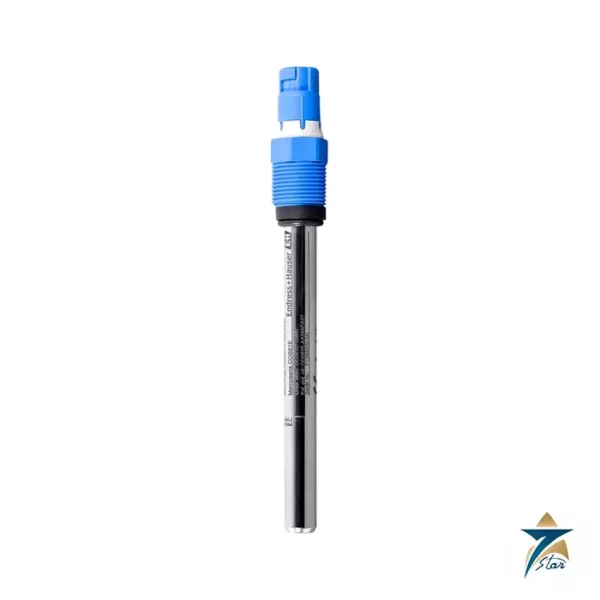
Endress+Hauser CPF82E Memosens Compact ORP Sensor

Description

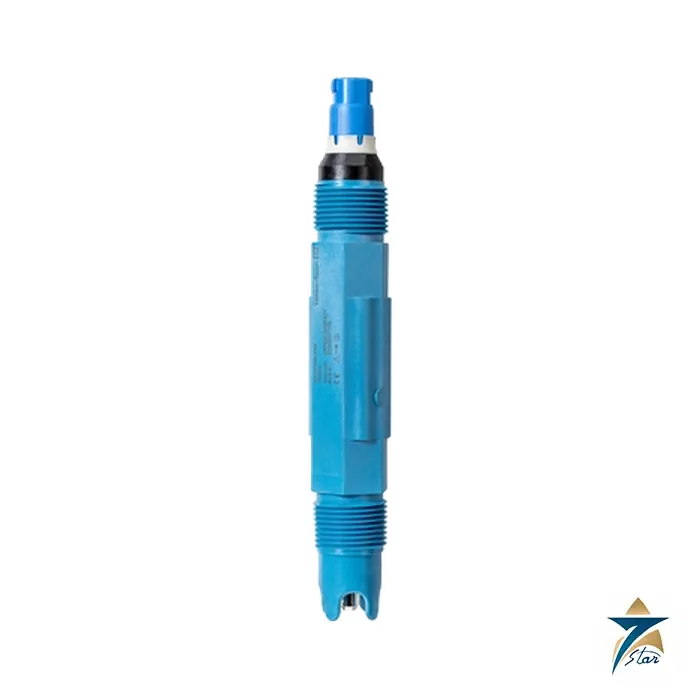
Overview of the Endress+Hauser CPF82E compact ORP sensor

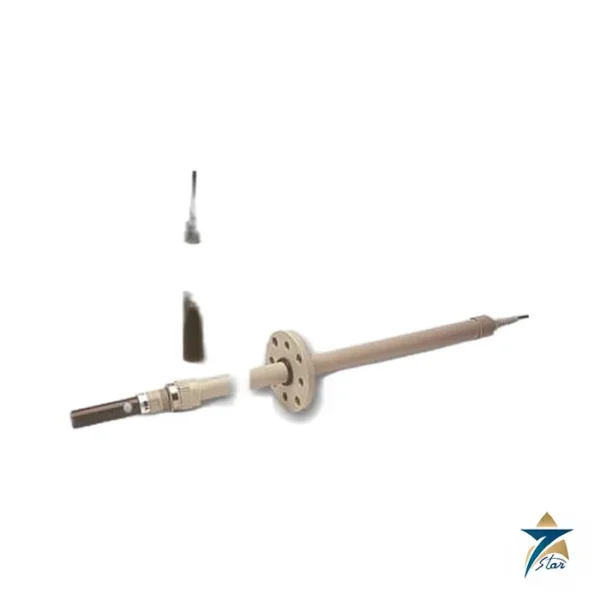
When a redox signal is needed in a leach tank or a wastewater outfall, a thin glass electrode is often the wrong tool. The Endress+Hauser CPF82E is a rugged PPS-bodied Memosens 2.0 ORP sensor with a protective guard, 3/4 inch NPT threads at both ends and a KNO3 electrolyte bridge intended to resist sulfide and cyanide poisons. It targets mining, industrial water and wastewater treatment: flotation, leaching, neutralization and inlet or outlet monitoring.

It is the redox twin of the CPF81E pH sensor, with the same housing and the same mechanical interfaces, so a plant that already stocks one body style can add the CPF82E without changing its piping.

CPF82E highlights

  • Measuring range minus 1500 to plus 1500 mV
  • Proven KNO3 electrolyte bridge protects against S2- and CN- ions
  • Double chamber reference system
  • NPT 3/4 inch at both ends for easy fitting
  • Protection guard against damage
  • NTC 30K temperature sensor, suitable for 0 to 80 °C

Datasheet values for CPF82E

Parameter Value
Range Minus 1500 to plus 1500 mV
Process temperature 0 to 80 °C
Process pressure 0.8 to 11 bar absolute
Minimum conductivity 50 microsiemens per cm at atmospheric pressure, no flow
Reference Double chamber
Housing and shaft PPS
Connection NPT 3/4 inch
Weight 0.12 to 0.15 kg, without cable
Head pressure resistance 16 bar relative
Protection IP 68
Storage 0 to 50 °C
Verification standard 220 mV at pH 7 and 468 mV at pH 0.1 reference values given

Where CPF82E differs from CPS62E and CPF81E

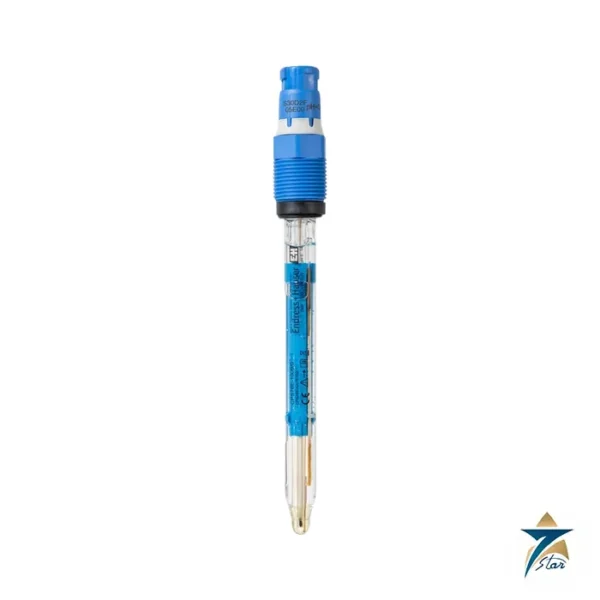
Compared with the glass-shaft CPS62E, the CPF82E cannot be autoclaved, tops out at 80 °C and 11 bar rather than 100 °C and 14 bar, and has a weight of 0.12 to 0.15 kg instead of 40 to 90 g, but it takes knocks and threads straight into piping. Compared with the CPF81E, it reports mV rather than pH, so it has no application L or N glass choice.

Use cases in Oman

Mineral processing, quarry wash plants, and municipal or industrial effluent works can all use a redox probe in neutralization or detox tanks. The CPF82E suits steps where cyanide or sulfide would shorten the life of a classic reference.

Mounting

Use PTFE tape or a compatible thread sealant on the NPT connections, avoid over-tightening the plastic thread and keep the plug-in head dry. The sensor needs a flowing or stirred medium at 50 microsiemens per cm or more for the CPF82E to give a stable potential.

Verification and maintenance

Test the CPF82E in a redox buffer and compare with the table of standard values supplied in the sensor documentation. Wipe the platinum surface when coating builds up, and replace the sensor if verification fails. Memosens keeps its history so a replacement can be exchanged in minutes.

How the sensor works in practice

The CPF82E is a potentiometric sensor: a metallic ORP element develops a potential against a reference, and the Memosens electronics inside the plug-in head digitize that value before sending it to the transmitter by inductive coupling. Because there is no galvanic contact at the connector, humidity or corrosion cannot influence the signal, and the transmitter is isolated from the medium. For a mine site where cable glands are exposed to spray, this is a real benefit.

The double-chamber reference separates the Ag/AgCl element from the process by two electrolyte volumes, which lengthens the path an attacking ion must travel. With the KNO3 bridge, this arrangement is what the datasheet cites as protection against sulfide and cyanide.

Process conditions to keep in mind

The CPF82E is designed for temperatures between 0 and 80 °C and absolute pressures between 0.8 and 11 bar. The fluid needs at least 50 microsiemens per cm for a stable reference, so it is not a choice for ultrapure water. In flotation cells where bubbles and solids are present, install the sensor where the flow keeps the sensing surface wetted, and avoid dead zones where scale can settle. The protection guard shields the element from mechanical knocks but it is not a substitute for a good installation position.

Calibration of the sensor history is simple: after any cleaning, record the verification value and date in the maintenance system. If your plant uses a Liquiline transmitter, the sensor load and the date of initial commissioning are displayed, and these are useful when deciding whether a drifting CPF82E has reached the end of its normal life or whether the fault lies in the process.

Ordering and spare strategy

Because the CPF82E body matches the CPF81E, sites often hold one spare of each for the same fitting. Record the serial number of the installed sensor against the tank or pipe, and keep a verified replacement on the shelf. When you send an RFQ, include the transmitter type and Memosens cable so that the complete measuring chain can be checked.

Typical commissioning checks for the CPF82E: confirm the NPT sealant is compatible, confirm the cable run to the transmitter, verify the potential in a redox standard before installation, and note the reading in the commissioning log as a baseline for later comparison.

If the reading starts to drift slowly, clean the electrode surface by the method your process allows, re-verify in standard, and only then replace the sensor. Where flotation reagents coat the platinum, a gentle cleaning cycle scheduled by the operator can restore response, and the history stored in the sensor shows how often this was needed over its service life.

Documents and quotation

The datasheet for the CPF82E is attached. Seven Star LLC is an independent supplier serving Oman and the GCC and is not affiliated with the manufacturer. Please send an RFQ with the part number CPF82E and the quantity you need.

Other Models in the Memosens Orp Range

Seven Star LLC supplies models from the Memosens Orp range in Oman and the GCC. Compare the related models below and request a quote for the one that matches your application.

ModelCategory
Endress+Hauser CPS62E Memosens ORP Sensor (Sterilizable)Liquid Analysis SensorsView details
Endress+Hauser CPF82E Memosens Compact ORP SensorLiquid Analysis SensorsYou are viewing this model
Datasheets & Documents
  • PDF Datasheet Endress+Hauser CPF82E Memosens Compact ORP Sensor Datasheet Download
Reviews (0)

Reviews

There are no reviews yet.

How would you rate this product?

It takes about 10 seconds — just tap a star. Your email is never published.

About brand

Endress+Hauser makes process measurement instruments for flow, level, pressure, temperature and liquid analysis. Georg H. Endress and Ludwig Hauser started the business in Lörrach, Germany, on 1 February 1953, first selling level meters, and the Endress+Hauser name has been used since 1957. The group is headquartered in Reinach, Switzerland, and has been wholly owned by the Endress family since 1975.

Seven Star LLC is an independent supplier listing Endress+Hauser flowmeters, level and pressure transmitters, temperature assemblies and liquid analysis products for buyers in Oman and the GCC. Instruments are matched from the full order code on the nameplate.

Endress+Hauser company profile

Origin Founded in Lörrach, Germany, on 1 February 1953 by the Swiss engineer Georg H. Endress and Ludwig Hauser
Headquarters Endress+Hauser AG, Reinach (Basel-Landschaft), Switzerland
Ownership Family owned; the Endress family has been the sole shareholder since 1975, and a family charter commits the company to stay family owned
Size About 16,500 employees and sales of about EUR 3.7 billion (2023, as reported by the company)
Product families Proline flowmeters, Micropilot and Levelflex radar, Liquiphant switches, Cerabar and Deltabar pressure, iTEMP and iTHERM temperature, Liquiline and Memosens liquid analysis

Milestones

  • 1953: Georg H. Endress and Ludwig Hauser start the business in Lörrach on 1 February, first selling level meters.
  • 1957: The Endress+Hauser name comes into use.
  • 1975: The Endress family becomes sole shareholder.
  • 2023: About 16,500 employees and sales of about EUR 3.7 billion, as reported by the company.

Endress+Hauser product lines

Line Measuring principle Typical use
Promass F 300, Promass 80F, 83F/84F Coriolis mass flow Direct mass flow and density of liquids and gases, hydrocarbon transfer and chemical dosing
Promag P 300, P 500, H 300, W 400, W 10, 50P Electromagnetic flow Water, wastewater, slurries and other conductive liquids
Prowirl F 200, 72F Vortex flow Steam, gas and low-viscosity liquids
Prosonic Flow 92F, t-mass 65F Ultrasonic and thermal mass flow Water lines; compressed air and industrial gases
Micropilot FMR62, FMR67, FMR60, FMR10B, FMR20, FMR50, FMR52 Free-space radar level, 80 GHz and 26 GHz Tanks, process vessels, silos and open water channels
Levelflex FMP51, FMP50, FMP54, FMP55 Guided wave radar level Level and interface in vessels, separators and bypass chambers
Liquiphant FTL51, Prosonic S FMU90 Vibronic point level; ultrasonic level High and low level alarms, pump protection, open channel flow
Cerabar PMC71B, PMP51B, PMP71, Deltabar PMD78B, PMD75 Pressure and differential pressure Process pressure, hydrostatic level and DP flow
iTEMP TMT82, TMT162, iTHERM TM101, TR66, TR10 Temperature transmitters and thermometers RTD and thermocouple points with thermowells
Liquiline CM444, CM442, Memosens CPS11E, Stamolys reagents Liquid analysis pH, ORP, conductivity, dissolved oxygen and nutrient analysis in water treatment and process

Where Endress+Hauser instruments are used

In Oman and the GCC, Endress+Hauser instruments are common in oil and gas production and processing, refineries and petrochemicals, desalination and water networks, wastewater treatment, power plants and food and beverage plants. Coriolis meters measure hydrocarbon and chemical flows, electromagnetic meters cover water and wastewater, radar transmitters handle tank and silo level, and Liquiline analysers monitor water quality. Proline 300 and 500 flowmeters include Heartbeat Technology for in-situ verification, which reduces the need to remove a meter for checks.

Ordering Endress+Hauser instruments: what we need

The order code on the nameplate (for example PMP71-1QA1S11RDADU) defines every option: measuring range, process connection, materials, output, approvals and display. Send it with the serial number; Endress+Hauser can retrieve the original configuration from the serial number. For a new instrument add the medium, operating and design pressure and temperature, range, line size or tank geometry, process connection, wetted materials, output or protocol (4-20 mA HART, PROFIBUS, FOUNDATION Fieldbus, Modbus) and the hazardous-area approval required. Older models such as Promass 80/83 or Micropilot M are replaced by current Proline or 80 GHz Micropilot devices.

Facts checked against Endress+Hauser company history and product information, October 2026.

FAQ

Questions about the Endress+Hauser CPF82E Memosens Compact ORP Sensor

Answers from our engineering team on installation, compatibility and integration.

01What is the measuring range of the CPF82E?
The ORP range is minus 1500 mV to plus 1500 mV, with temperature measured by an NTC 30K sensor.
02What is the temperature limit of CPF82E?
The process temperature range is 0 to 80 °C, lower than that of the glass-shaft ORP sensors.
03Which electrolyte protects the CPF82E against poisons?
A proven KNO3 electrolyte bridge in a double-chamber reference gives improved protection against S2- and CN- ions.
04What thread does the CPF82E use?
It has an NPT 3/4 inch thread at both the top and the bottom.
05What is the pressure rating of the CPF82E?
The process pressure is 0.8 to 11 bar absolute, and the head resists 16 bar relative.