Endress+Hauser FTW32 Liquipoint rope probe for tall tanks
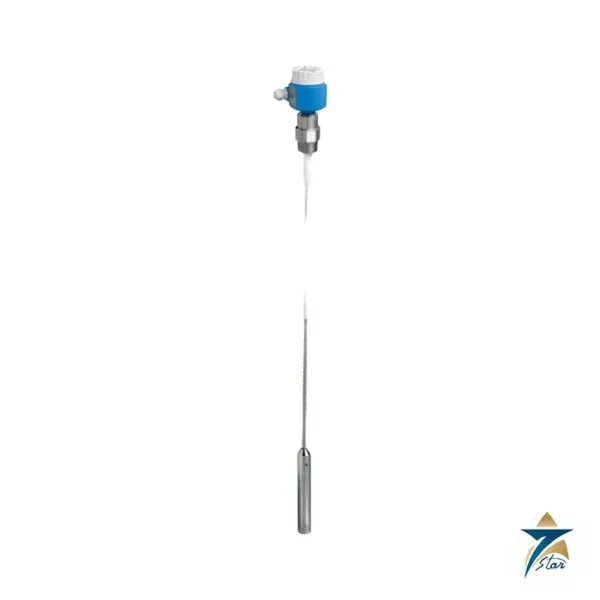
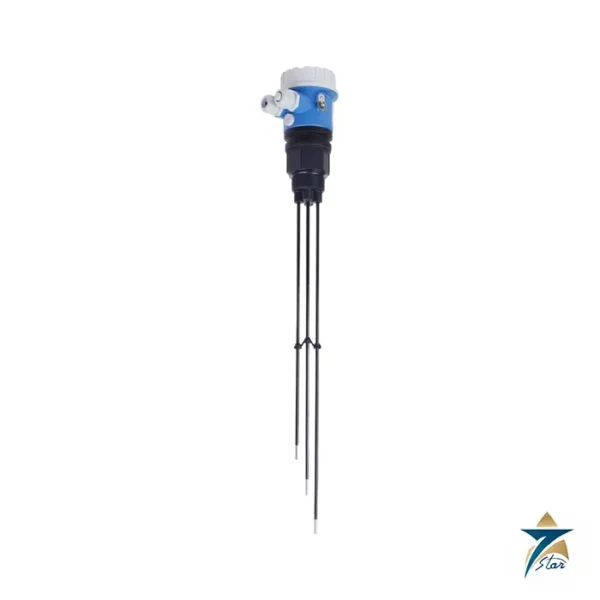
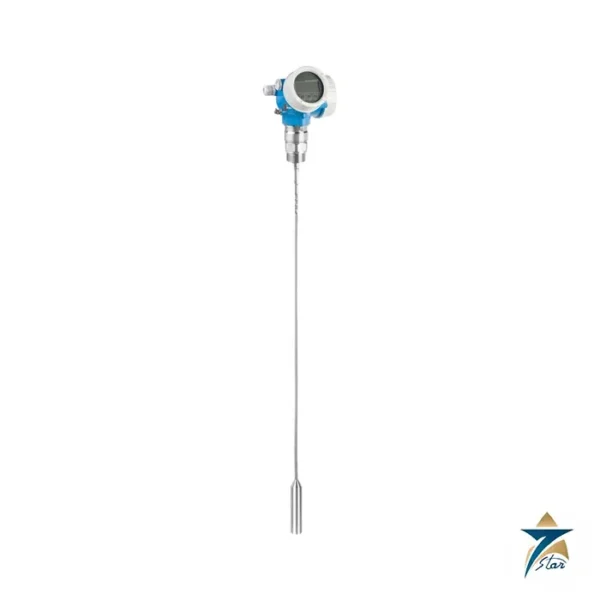
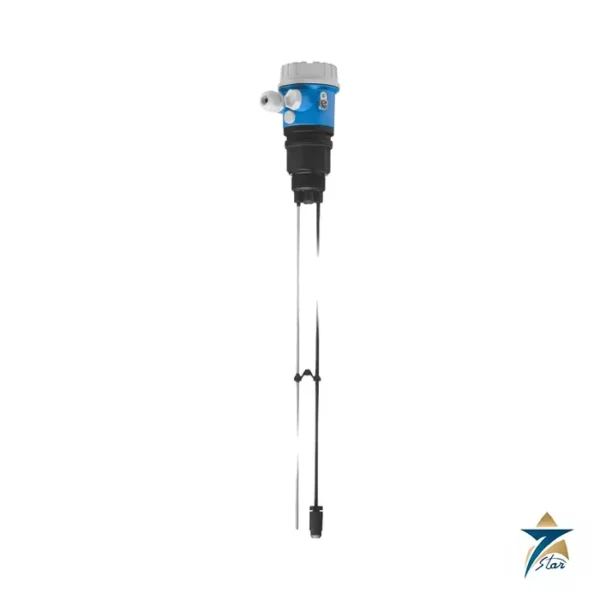
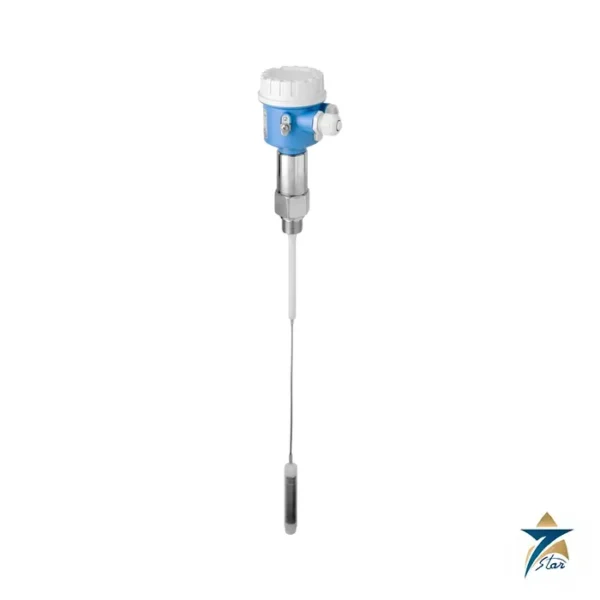
The Endress+Hauser FTW32 is the rope version of the Liquipoint T conductive level switch. Instead of rigid rods, thin insulated stainless ropes with small weights hang down from the head, so the probe can be installed in tall tanks and deep pits where a rod would be impractical. The FTW32 detects up to five switch points on one probe in liquids of 10 µS/cm or more. Seven Star LLC, an independent supplier in Muscat, supplies the FTW32 and related instruments in Oman and the GCC.
It shares its housing, electronics and approvals with the rod probe FTW31. The difference is in the sensor: ropes up to 15 m long, a lower temperature limit, and a lower pull rating. If the tank is under 4 m deep, the rod model is the simpler choice.
FTW32 technical specifications
| Parameter |
Specification |
| Manufacturer / part number |
Endress+Hauser / FTW32 (Liquipoint T) |
| Measuring principle |
Conductive (alternating voltage between ropes) |
| Probe style |
Rope probe with weights; 2, 3 or 5 ropes; up to 5 switch points |
| Sensor length |
0.25 m to 15 m (10 in to 590 in), shortenable on site |
| Process temperature |
-40 °C to 70 °C (-40 °F to 158 °F) |
| Process pressure |
Vacuum to 10 bar (145 psi) |
| Minimum medium conductivity |
10 µS/cm |
| Ambient temperature |
-40 °C to 70 °C (-40 °F to 158 °F) |
| Process connection |
G 1 1/2 or NPT 1 1/2″ |
| Main wetted parts |
316L, FEP, PPS |
| Max. tensile strength |
500 N |
| Output / supply |
DC PNP 10.8 V to 45 V; relay 20 V to 230 V AC or 20 V to 55 V DC |
| Degree of protection |
IP66 |
| Approvals listed |
ATEX, EAC Ex; WHG overfill prevention and leakage detection |
Rope construction of the FTW32
The data sheet describes each rope as a 1 mm stainless conductor (316Ti) wrapped in FEP insulation about 0.75 mm thick, ending in a 316L weight roughly 100 mm long and 10 mm in diameter that is left uninsulated. That bare weight is the sensing tip: the liquid has to touch it for a switching event. The weight also keeps the rope straight, which is important when several ropes hang side by side and must not touch each other.
Because the FEP covering and the thin rope limit the pull the probe can take, the specified tensile load is 500 N, half the rod model. In tanks with agitation or heavy product movement this needs checking before the FTW32 is selected.
How the FTW32 switches
The principle matches the rest of the Liquipoint T family. An alternating voltage is applied across the reference rope and the MAX or MIN rope. A conductive liquid closes the circuit between them and the electronics register a current. Dry weights mean no current. Because the voltage alternates, there is no electrolytic damage to the liquid and the ropes do not corrode, and the vessel wall plays no role in the measurement.
The insert offers MIN or MAX fail-safe behaviour, a 0 s or 2 s switching delay, and four sensitivity steps from 100 Ω to 100 kΩ. With three ropes, the compact version works in two-point control mode, which suits automatic pump start and stop between a low and a high level.
FTW32 electronics and outputs
- FEW52 insert: three-wire PNP transistor output, 10.8 V to 45 V DC, up to 200 mA.
- FEW54 insert: two change-over relay contacts, 20 V to 55 V DC or up to 253 V AC.
- FEW58 insert: NAMUR output (IEC 60947-5-6) for an isolating amplifier.
- No insert: connection to a separate Nivotester FTW325 switching unit (several units for multi-point probes), with cable monitoring on ropes 1 and 2.
Performance is typical of a limit switch: switch-on delay below 3 s, influence of ambient temperature below 0.05 %/K, and a measuring error and repeatability that depend on the selected sensitivity. It is a level limit device, not a continuous measurement.
Where the FTW32 fits: related Endress+Hauser level parts
For short tanks use the rod probe FTW31. For continuous level over a few metres, the Prosonic transmitters FMU40, FMU41 and FMU42 give a 4 to 20 mA HART signal without contact, and the FMU95 combines up to ten FDU9x ultrasonic sensors. Conductive probes cannot see non-conductive products, so oils and most solvents need a different principle.
FTW32 selection and ordering checklist
- Verify conductivity of at least 10 µS/cm at operating temperature.
- Check process temperature against 70 °C, which is lower than the rod model.
- Measure the vertical distance from the nozzle to each switch point, then add a margin so the ropes can be shortened.
- Consider tank internals, agitators and inflow: ropes must hang free and cannot touch walls or each other.
- Select the thread, G 1 1/2 or NPT 1 1/2″, and the output type and supply voltage.
- Declare hazardous-area needs so approvals can be confirmed.
Installing and maintaining the FTW32
Shorten the ropes to length on site by following the operating instructions supplied with the probe. Keep the ropes vertical and clear of the inlet stream, because splashing can produce false switching. After commissioning, test each switch point by raising the liquid, or by bridging the probe with a wet cloth when the tank cannot be filled.
Look at the FEP insulation for cuts or abrasion at each shutdown, clean any deposit from the weights, and keep a spare electronic insert. Regular inspection of rope tension matters more than on a rod probe, since buildup adds weight.
Typical FTW32 applications in Oman and the GCC
Rope probes fit deep underground water tanks, balancing tanks and storage vessels at desalination and water treatment plants, sludge and effluent pits, and utility tanks where the ropes can hang 10 m or more. In hot coastal conditions the plastic and FEP-covered parts resist salt-laden humidity, and the housing is rated IP66. For installations with humid, dusty air near compressors or fertiliser handling, make sure cable entries are fully sealed.
FTW32 versus FTW31
| Item |
FTW32 |
FTW31 |
| Sensing element |
Rope and weight |
Rigid rod |
| Length |
0.25 m to 15 m |
0.1 m to 4 m |
| Process temperature |
to 70 °C |
to 100 °C |
| Tensile load |
500 N |
1000 N |
Information to send with an RFQ for the FTW32
- Part number FTW32 and quantity.
- Liquid, conductivity, operating temperature and pressure.
- Tank depth, nozzle size and the required position of each switch point.
- Rope count, thread and output type with supply voltage.
- Hazardous-area requirements.
Documents and quotation
The Technical Information for the FTW31 and FTW32 is attached on this page. Please compare it with the exact order code, since options change what is available.
Send the FTW32 part number or the full order code, the quantity and the delivery location, and Seven Star LLC will confirm availability and lead time.
Other Models in the Liquipoint Conductive Range
Seven Star LLC supplies models from the Liquipoint Conductive range in Oman and the GCC. Compare the related models below and request a quote for the one that matches your application.




















Reviews
There are no reviews yet.