FTI51 Liquicap M rod-probe capacitance level switch for liquids
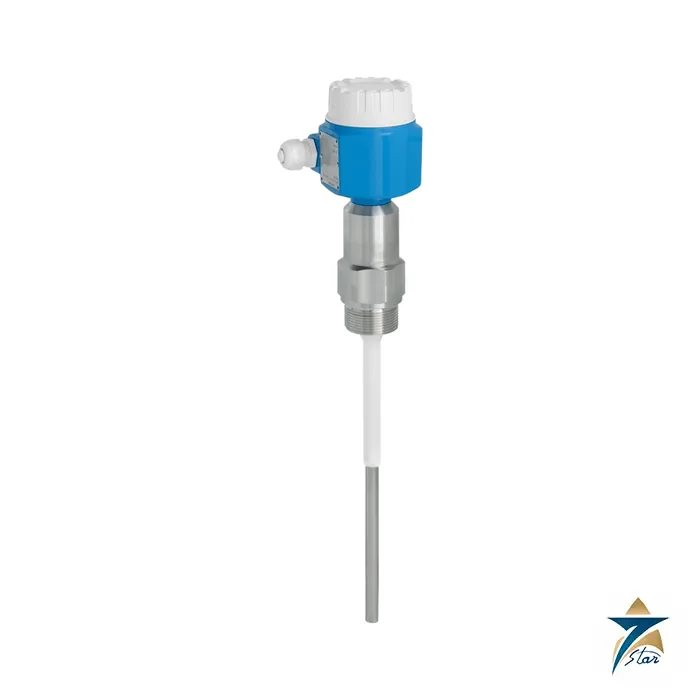
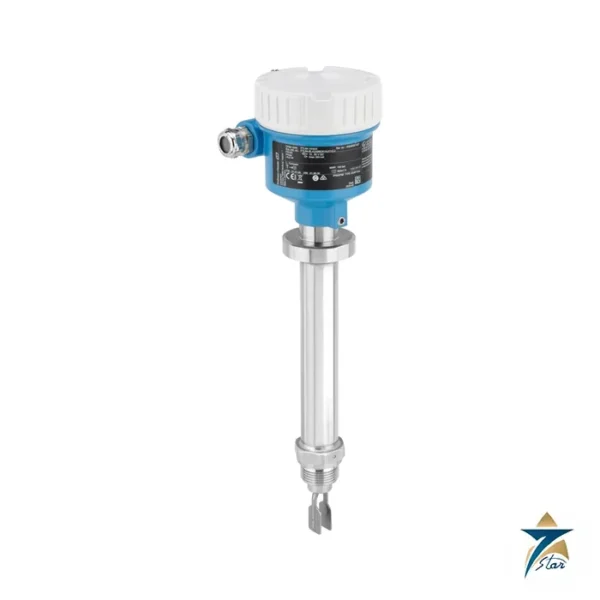
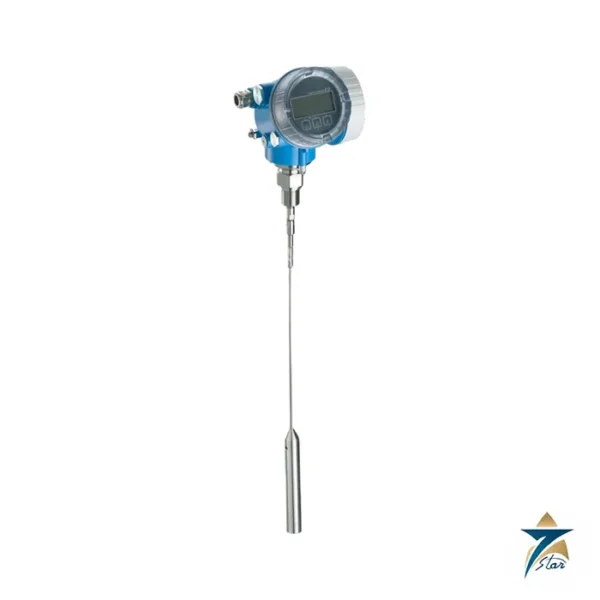
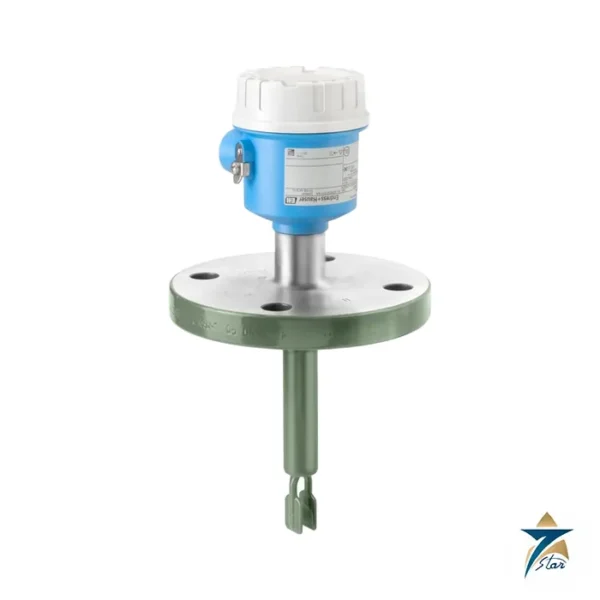
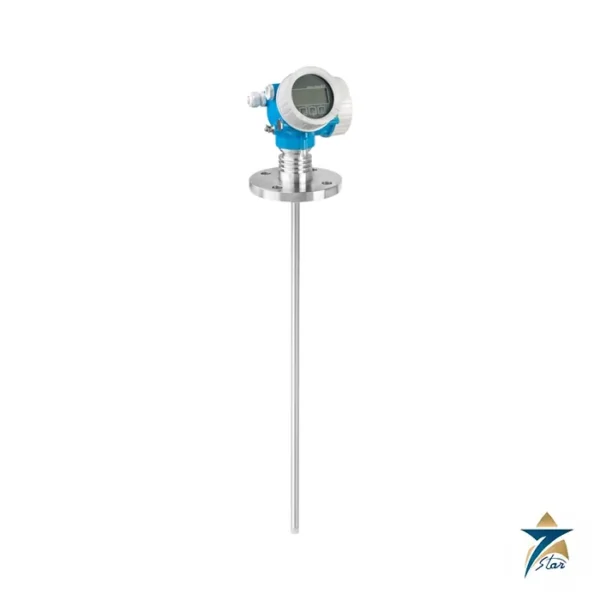
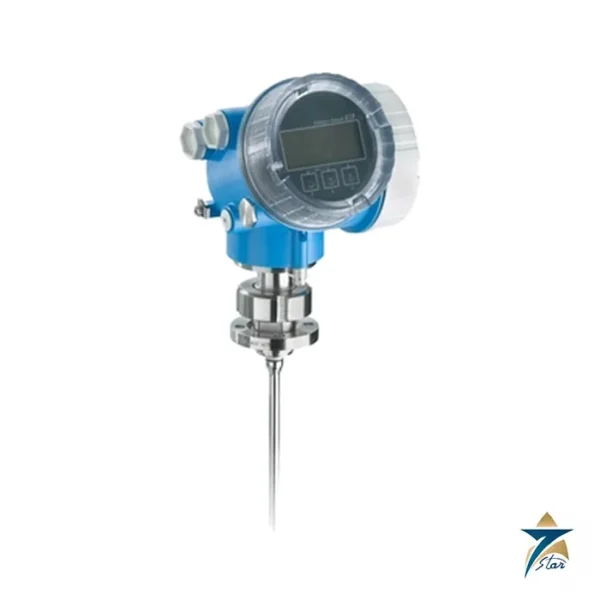
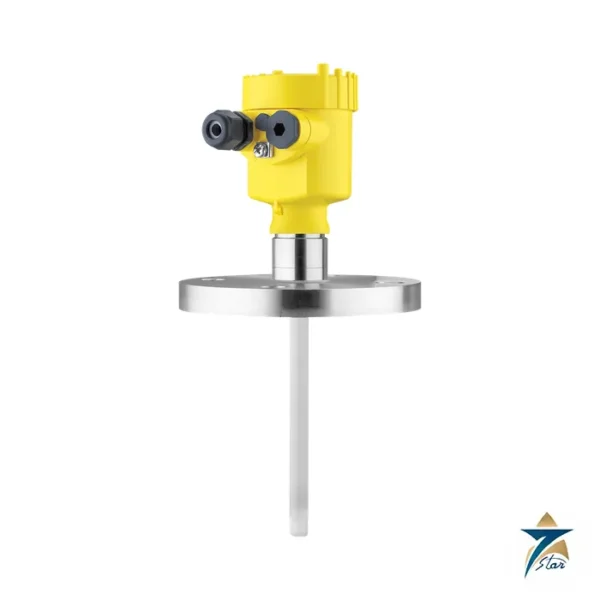
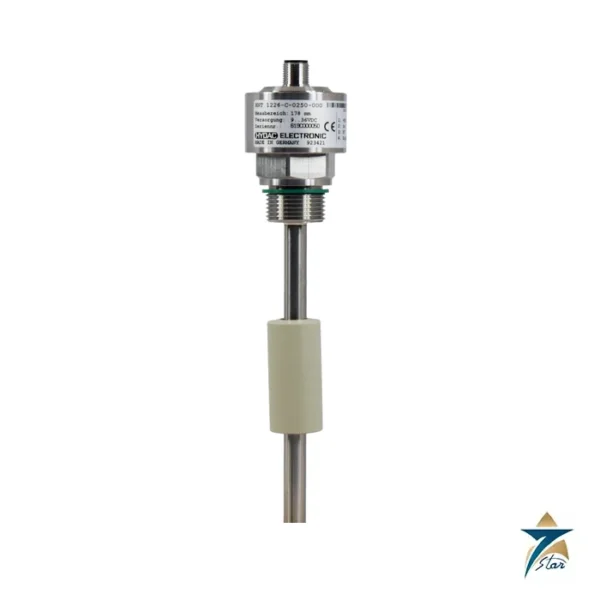
The Endress+Hauser FTI51 is a Liquicap M capacitance point level switch built around a rigid rod probe. It detects whether a liquid has reached a chosen height by watching the electrical capacitance between the probe and the vessel wall, and it switches an output at the level you calibrate. Seven Star LLC supplies the FTI51 in Oman and the GCC as an independent supplier in Muscat, and this page sets out what the device can do so that your enquiry is complete the first time.
The FTI51 name covers a configurable platform rather than one fixed assembly. A buyer chooses the rod diameter and length, whether the rod is fully or partially insulated, whether an inactive length or active build-up compensation is fitted, the process connection (thread, flange or hygienic fitting), the housing and one of seven electronic inserts. The manufacturer builds the order code in its online configurator, so the exact string is not printed in the technical information. Send the duty and we help you assemble the specification.
FTI51 technical specifications
| Parameter |
Specification |
| Manufacturer / part number |
Endress+Hauser / FTI51 (Liquicap M point level switch, rod probe) |
| Measuring principle |
Capacitive point level detection in liquids |
| Process temperature |
–80 to +200 °C (–112 to +392 °F), with fully insulated PTFE or PFA rods |
| Process pressure |
–1 to 25 bar for the 10 mm rod, –1 to 100 bar for the 16 mm rod (63 bar with an inactive length), –1 to 50 bar for the 22 mm rod |
| Ambient temperature (housing) |
–50 to +70 °C; –40 to +70 °C for the F16 polyester housing; separate housing up to +120 °C |
| Capacitance span |
ΔC = 5 to 1,600 pF (FEI58: 5 to 500 pF); minimum change for switching 5 pF |
| Measuring frequency |
500 Hz |
| Switching delay |
0.3 to 10 s adjustable on FEI51, FEI52, FEI54, FEI55; 1 s or 5 s on FEI58 |
| Wetted materials |
316L rod and process connection, PTFE and/or PFA insulation, elastomer-fibre seals (asbestos-free) |
| Maximum rod length for pump control |
About 4 m, set by the 1,600 pF span with a 16 mm rod |
| Separate housing |
Up to 6 m connecting cable; cable plus rod length not above 10 m |
| Enclosure ratings |
IP66 and IP67 on compact housings, IP68 on the gas-tight F13, F27, T13 and separate housings (M20 or G½ entry), Type 4X |
How the FTI51 detects liquid level
The probe rod and the vessel wall act as the two plates of a capacitor. With the rod in air the capacitance is low. As liquid rises around the insulated rod, the capacitance climbs in proportion to the covered length, and the electronic insert compares it with the value stored during calibration. When the stored switching capacitance is reached the output changes state. Calibration is done with a push-button on the electronic insert, and because the setting lives in the insert, a replacement insert does not require recalibration according to the datasheet.
Two details separate the FTI51 from a simple level switch. First, an inactive length can be added next to the process connection so that condensate, creep or build-up in the nozzle does not trigger a false switch. Second, an active build-up compensation option measures and cancels coatings that grow on the rod, which is useful in viscous or sticky liquids. For tanks that are not made of conductive material, a ground tube takes the place of the vessel wall as the counter electrode.
The same probe can also separate two liquids. With a prior adjustment the switch point remains definite at the boundary between a non-conductive medium below 1 µS/cm and a conductive one above 100 µS/cm, even where an emulsion layer of varying thickness sits in between. Partially insulated rods are the choice for foam detection in conductive liquids.
Electronic inserts available for the FTI51
The output of the FTI51 is determined by the insert fitted in the head, and all seven can be paired with the same rod. The table summarises the ones named in the technical information.
| Electronic insert |
Role with the FTI51 |
| FEI51 |
Two-wire AC, load in series, thyristor switching, 19–253 V AC, residual current below 3.8 mA |
| FEI52 |
Three-wire DC PNP, 10–55 V DC, up to 350 mA load, short-circuit protected |
| FEI53 |
Three-wire DC signal for a separate Nivotester FTC325 3-WIRE, supply 14.5 V DC |
| FEI54 |
Universal 19–253 V AC or 19–55 V DC, relay output with two floating changeover contacts (DPDT) |
| FEI55 |
Two-wire 8/16 mA signal for a separate switching unit such as RMA42, SIL2 hardware / SIL3 software approval |
| FEI57S |
PFM current-pulse signal for a Nivotester FTC325 PFM, with remote self-test |
| FEI58 |
NAMUR two-wire (IEC 60947-5-6) for a Nivotester FTL325N type switching unit |
Fail-safe behaviour is selectable: minimum safety switches the output to its alarm state when the probe is uncovered (dry-run protection), maximum safety does so when the probe is covered (overfill protection). On FEI53 and FEI57S the selection is made on the associated Nivotester. Correct switching state is reached within 3 s of power-up.
Probe, housing and process-connection options
Rod diameters in the datasheet are 10, 14, 16 and 22 mm depending on construction, with total length measured from the sealing surface and a length tolerance of 0 to –5 mm below 1 m, widening to 0 to –20 mm between 3 and 6 m. Active build-up compensation adds a 125 mm section. Rods of 10 and 16 mm with a length of 1 m or more must be supported, and the datasheet gives a quarter-length and half-length rule for the support points. Hygienic fully insulated versions use 2 mm insulation on 14 or 16 mm rods.
Housing choices are polyester F16, stainless steel F15, aluminium F17, aluminium F13 and stainless F27 with a gas-tight process seal, and aluminium T13 with a separate connection compartment for flameproof designs. Cable entries can be M20, G½, NPT½ or NPT¾, and an M12 plug is offered so that the signal line can be connected without opening the housing. Process connections run from G½ and NPT½ up to 1½ threads, flanges from DN25, ASME 1 in. and JIS 10K, plus clamp and dairy-type hygienic fittings.
Selecting the FTI51: checklist
- Medium and conductivity: below 1 µS/cm needs a longer probe or ground tube; above 100 µS/cm suits insulated rods.
- Temperature and pressure at the nozzle, including cleaning cycles, checked against the derating curve for the chosen rod diameter.
- Function: single switch point, interface, foam, or two-point pump control (fully insulated rod only, not with FEI58).
- Build-up risk: choose active compensation for viscous or crystallising liquids and an inactive length when mounting in a nozzle.
- Vessel construction: metal wall, plastic or concrete tank, or a ground tube.
- Output and voltage: AC load, PNP to a PLC, relay, SIL-rated 8/16 mA, PFM or NAMUR.
- Hazardous area class and approvals: depend on the ordered version, so state zone, gas group and country of use.
- Installation height and agitation: stay at least 10 mm above the floor, keep 500 mm between neighbouring probes, avoid the filling curtain.
Installing and maintaining the FTI51
The FTI51 can be mounted from the top, bottom or side. Keep the rod clear of the vessel wall, away from the inlet stream and away from agitator blades, and use the rod with a ground tube where lateral loads are strong. Where the instrument is in the open air, the datasheet recommends a protective cover for the housing. Surge arresters are listed as accessories for supply and signal lines, which matters in plants exposed to lightning.
After mounting, set empty and full conditions with the insert push-button. Periodic work is limited to checking the rod for coating and wiping it clean without scratching the insulation, which is the barrier that makes the measurement possible. If a rod is damaged the insulation may be compromised, so replace the probe rather than relying on a repair. Keep a spare electronic insert in stock for each type installed, because the inserts are interchangeable without recalibration.
Where the FTI51 is used in Oman and the GCC
Capacitance level switches suit utility and process liquids found across Oman and the Gulf: seawater and brine, chemical dosing tanks, wastewater sumps, fuel and lube-oil day tanks, condensate and slop tanks. The FTI51 is often selected where a float or vibrating fork would foul, for example emulsions in separators, sticky chemical liquids or foamy surface layers. High ambient heat and humidity call for correct gland selection and a protective cover, and coastal sites benefit from stainless housings.
Related level switches in the same family
| Model |
Role |
| FTI51 |
Rod probe, liquids, –80 to +200 °C, up to 100 bar |
| FTI52 |
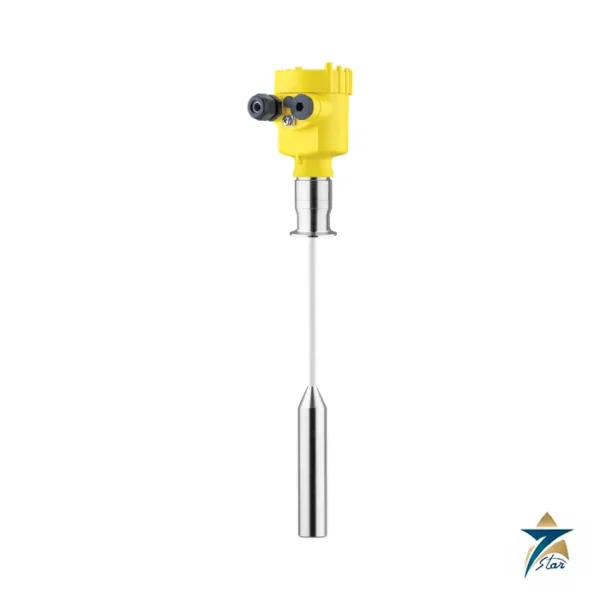
Rope probe for liquids in deeper tanks, same temperature range |
| FMI21 |
Two-rod Liquicap T for continuous 4–20 mA measurement, 150–2,500 mm |
| FTI55 |
Solicap M rod probe for bulk solids |
| FTI56 |
Solicap M rope probe for tall silos |
| FTI77 |
Solicap S for bulk solids up to 400 °C |
Information to send with an RFQ for the FTI51
- Liquid, conductivity range and whether interface or foam detection is required
- Operating and design temperature and pressure, and cleaning or sterilising conditions
- Vessel material and nozzle size, and the distance from nozzle to the desired switch point
- Required rod length, insulation type and any build-up behaviour
- Output type, supply voltage and connected PLC or switching unit
- Hazardous area zone and approvals required, plus housing and cable entry preference
- Quantity, tag numbers and delivery site
Documents and quotation
A datasheet for the FTI51 is attached on this page. It is the manufacturer’s Technical Information and gives the dimensional drawings, derating curves and electronic-insert details referred to above.
To request a quotation, send the information above and the part number FTI51. Seven Star LLC replies with availability and lead time for Oman and the GCC.





















Reviews
There are no reviews yet.