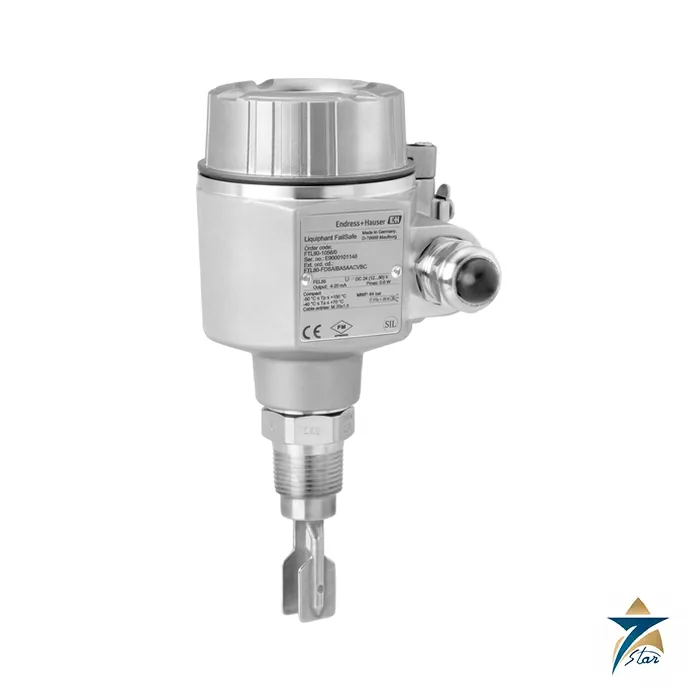
Endress+Hauser FTL80 Liquiphant FailSafe compact level switch for SIL 3 loops
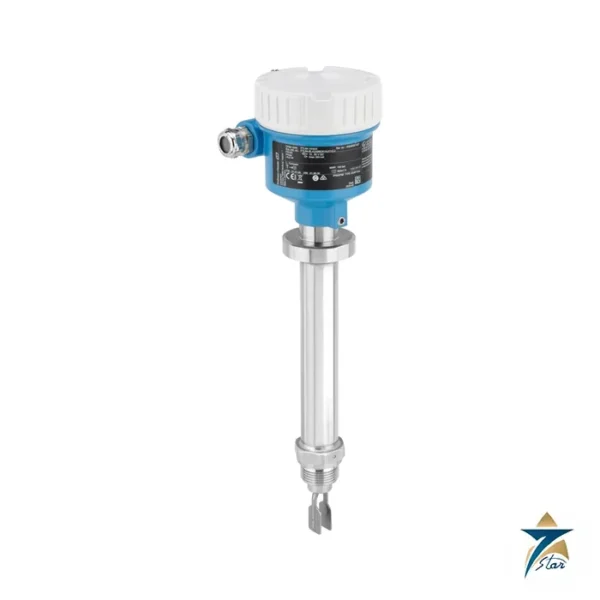
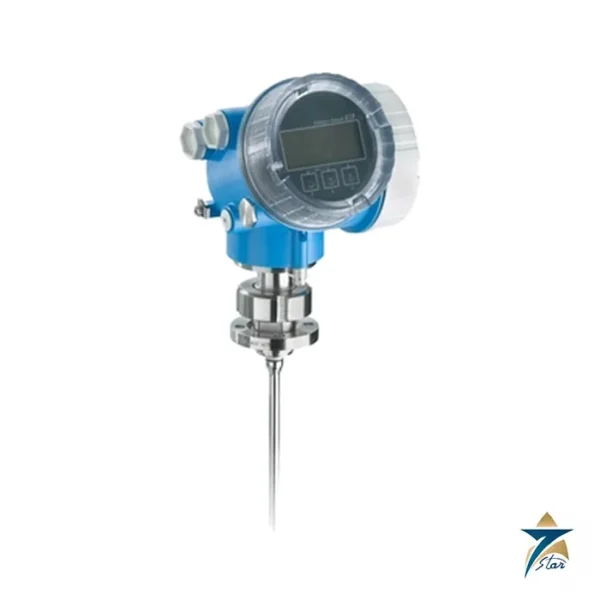
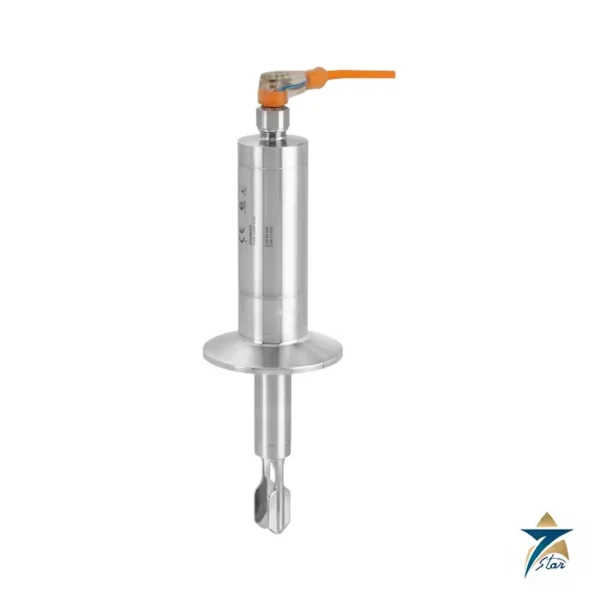
The Endress+Hauser FTL80 is the compact version of the Liquiphant FailSafe family: a vibronic point level switch for overfill protection and dry-run protection in safety instrumented systems up to SIL 3 under IEC 61508 and IEC 61511-1. Unlike the standard FTL51B, it carries a permanent LIVE signal on its 4–20 mA line, so the evaluator can tell a healthy “no demand” condition from a failed device. Seven Star LLC supplies the FTL80 in Oman and the GCC as an independent supplier in Muscat.
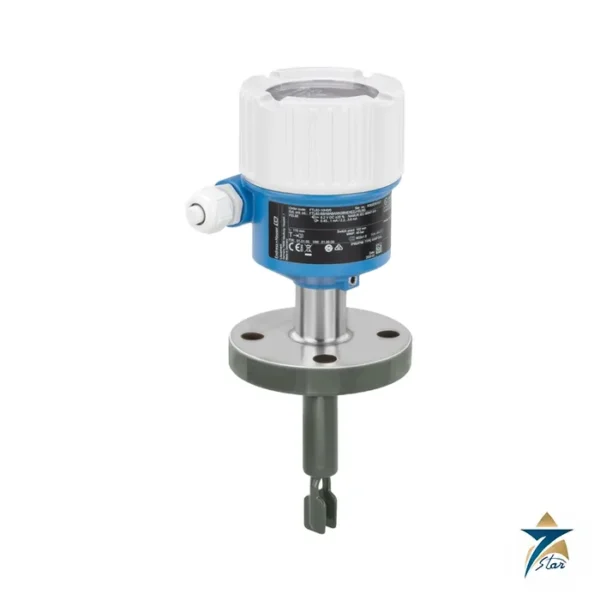
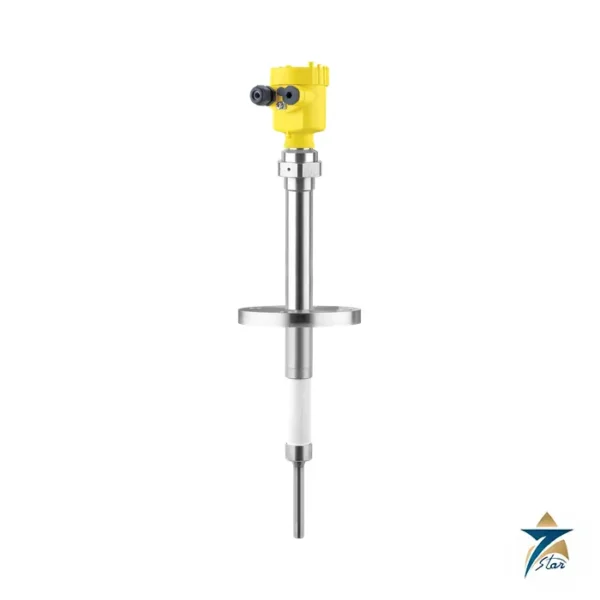
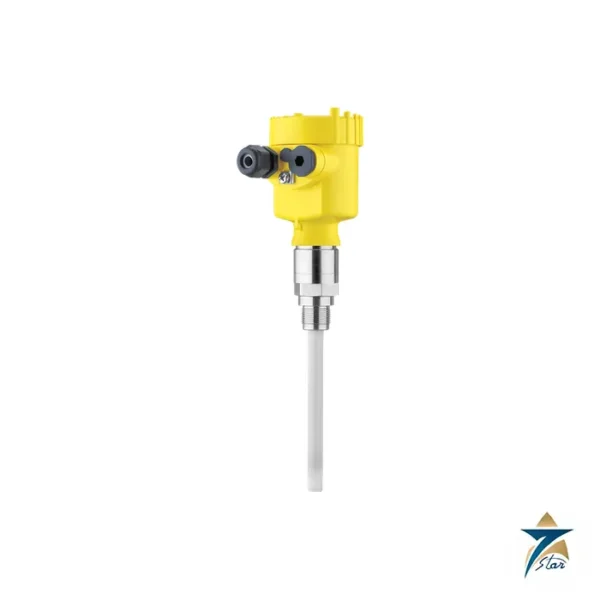
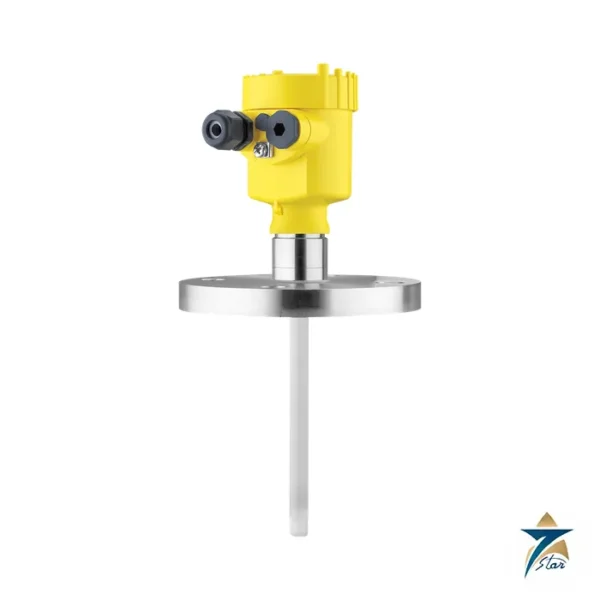
The FTL80 has no pipe extension: the fork sits directly under the process connection, with a sensor length of up to 80 mm. It has a process temperature of –60 to +280 °C and pressure up to 100 bar, and the second process seal (second line of defense) is standard for the high-temperature versions.
FTL80 technical specifications
| Parameter |
Specification |
| Manufacturer / part number |
Endress+Hauser / FTL80 (Liquiphant FailSafe, compact) |
| Function |
Point level detection, MIN or MAX, for safety systems up to SIL 3 |
| Process temperature |
–50 to +150 °C, or –60 to +280 °C (to 300 °C for max. 50 h cumulative); liquefied gas –50 to +60 °C |
| Process pressure |
–1 to 64 bar or –1 to 100 bar depending on version and temperature |
| Output |
2-wire 4–20 mA (electronic insert FEL85) with 0.25 Hz LIVE signal of ±0.5 mA |
| Signal levels |
MIN: 18.5 mA falls to 9.0 mA; MAX: 13.5 mA falls to 6.0 mA; fault below 3.6 mA |
| Supply |
12 to 30 V DC, 24 V nominal; power below 660 mW |
| Switching delay |
About 0.5 s ±0.2 s covered, 1.0 s ±0.2 s uncovered; dwell time at least 0.3 s |
| Accuracy |
Maximum error ±1 mm; hysteresis about 2 mm; repeatability 0.1 mm |
| Density setting |
Two rotary switches (Low and High), with defined combinations only |
| Viscosity |
MAX up to 10,000 mPa·s; MIN up to 350 mPa·s, or 100 mPa·s at 230–280 °C |
| Wetted materials |
316L (1.4435); high-temperature fork 318L (1.4462); optional Alloy C22 (2.4602) |
| Sensor length |
Compact, up to 80 mm; G ¾ 66.5 mm and G 1 69 mm to sealing surface |
| Ambient temperature |
–40 to +70 °C; –50 or –60 °C optional |
| Proof test |
Interval of up to 12 years; test started at the press of a button |
How the FTL80 LIVE signal and self-monitoring work
The FTL80 uses the usual tuning-fork principle, and its electronics add redundancy and monitoring on top. The 4–20 mA output is read as a state: in minimum mode the OK current is 18.5 mA and the demand current is 9.0 mA, and in maximum mode the OK current is 13.5 mA and the demand is 6.0 mA. While the device is healthy, a small 0.25 Hz oscillation of ±0.5 mA rides on the OK current. If the live signal disappears, or the current drops below 3.6 mA, the evaluator treats it as a fault and de-energizes the safety function.
The device also monitors the fork for damage, corrosion, buildup and mechanical blocking. Fault messages are coded as currents below 3.6 mA, for example “clean sensor” or “replace electronic insert”, in line with NAMUR NE43. No adjustment is needed other than the density setting and the connection coding that selects MIN or MAX.
Where the FTL80 sits in a safety loop
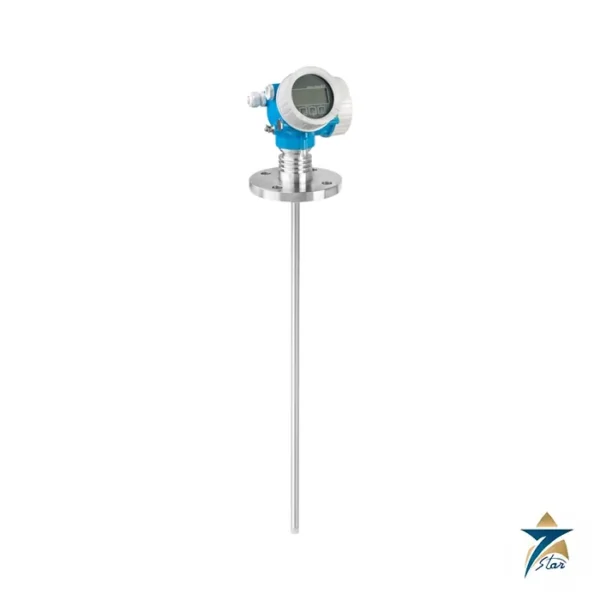
A typical loop connects the FTL80 through a two-wire cable to a Nivotester FailSafe FTL825, which provides a two-channel safety contact output and a lock option, or directly to the analog input of a safety PLC. The compact FTL80 is the version for tank-top nozzles, vessel sides and pipe tees with limited depth. When the fork has to reach below a roof nozzle, use the FTL81 with extension pipe. For coated fork service in aggressive media, the FTL85 is the family member. For non-safety duty without the live signal, the FTL51B is the common standard model.
FTL80 selection and ordering checklist
- Safety function: MIN or MAX, required SIL, proof-test interval and PFD target from your SIL verification.
- Liquid density and viscosity, to set the two density switches within the permitted combinations; liquefied gas has its own combination.
- Temperature: standard (–50 to +150 °C) or high-temperature (up to 280 °C) version, and pressure 64 or 100 bar.
- Process connection: G, NPT or R thread in ¾ or 1 inch, or EN, ASME or JIS flange; flush-mount G 1 variant.
- Wetted material: 316L or Alloy C22.
- Housing: F16 plastic, F13 or F17 aluminum, F15 hygienic 316L, F27 316L, T13 with separate terminal compartment; M20 cable entry or M12 plug.
- Hazardous area approval, WHG overfill approval, CRN, marine, and 3.1 or NACE documents.
Installing and proof testing the FTL80
Mount the FTL80 with at least 10 mm between the fork and the wall. Orient the fork with its narrow sides facing up and down so liquid drains, and use the thread or flange marking to align it. Wire MIN or MAX using the connection coding on the FEL85 insert, and with the M12 plug connect only the signal wires as drawn in the datasheet. Add a drip loop to the cable and, where possible, a weather protection cover in plastic.
Commission by setting both density switches, checking the live signal at the evaluator and running the function test. The datasheet specifies a proof-test interval of up to 12 years, with the test started on the device by a button. Record test results in line with your safety lifecycle plan. Keep a spare FEL85 insert on site; the insert can be exchanged and the safety manual explains the follow-up checks.
FTL80 applications in Oman and the GCC
Typical duties are overfill prevention on crude, condensate and product tanks, LPG and liquid gas bullets with the dedicated density combination, surge drums and knock-out vessels, and dry-run protection of transfer pumps. Hot service up to 280 °C suits heat transfer oil expansion tanks and hot oil drums found in Omani refineries and gas plants.
FailSafe family comparison
| Model |
Probe design |
Max. temperature |
Max. pressure |
| FTL80 |
Compact, no extension, up to 80 mm |
280 °C |
100 bar |
| FTL81 |
Short pipe or extension, 148 to 3,000 mm |
280 °C |
100 bar |
| FTL85 |
Coated (ECTFE, PFA, enamel), extension to 3 m |
150 °C (ECTFE 120 °C) |
40 bar |
Information to send with an RFQ for the FTL80
- Order code or tag list, and whether the FTL80 replaces an existing Liquiphant.
- Liquid, density, viscosity, temperature and pressure.
- MIN or MAX mode and the SIL target, with the evaluator type (FTL825 or safety PLC).
- Connection standard, size and rating; housing and cable entry.
- Ex, WHG, marine or CRN approvals and certificates needed.
- Quantity and delivery location in Oman or the GCC.
Documents and quotation
A datasheet (Technical Information) for the Endress+Hauser FTL80 is attached on this page. Functional safety data and the proof-test procedure are in the separate safety manual, which should be checked against your SIL verification.
Send the FTL80 order code or the checklist information to Seven Star LLC, and we will confirm availability and lead time for Oman and the GCC.





















Reviews
There are no reviews yet.