- Automation & ControlView all 3,157 products
- Automation Accessories
- AC Drives
- PLC & I/O Cards
- Industrial Communications
- Vibration Monitoring
- Controllers & Data Acquisition
- Isolator & Barrier
- Safety Switches & Guard Locking
- Encoders
- Motor Soft Starters
- CCTV & Security
- Pneumatic Cylinders
- HMI Displays
- Servo Drives
- Industrial Computers
- Machine Vision
- Automation Software
- Robotics
Brand: Hochiki
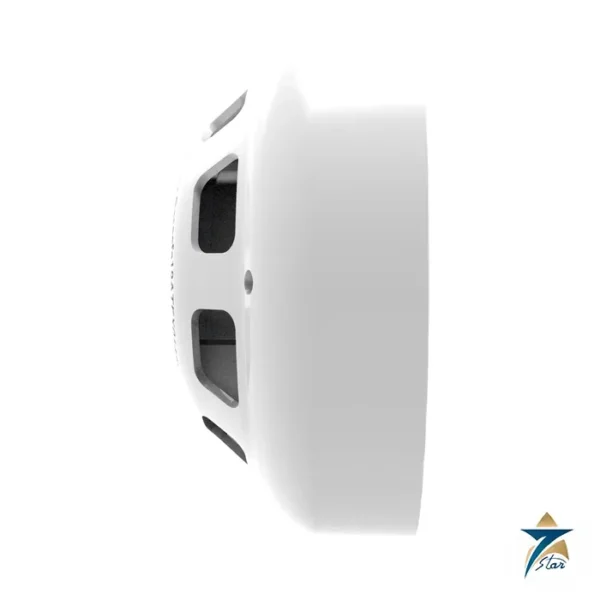
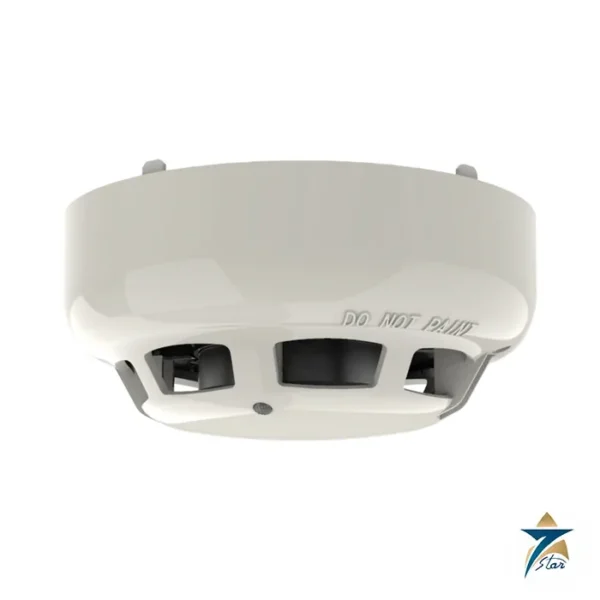
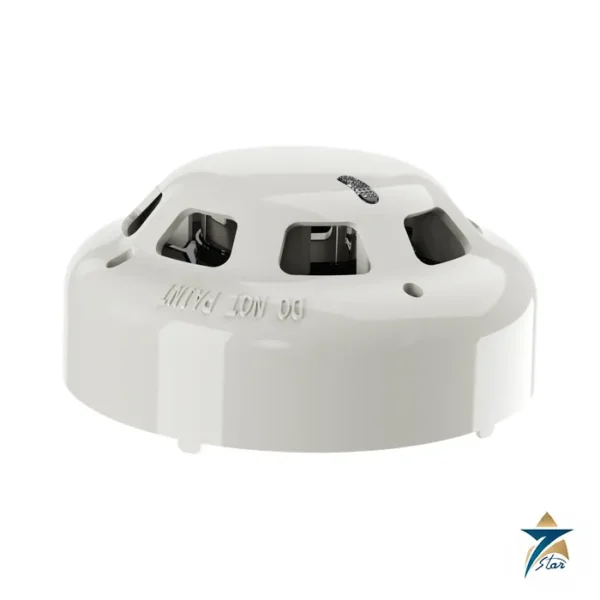
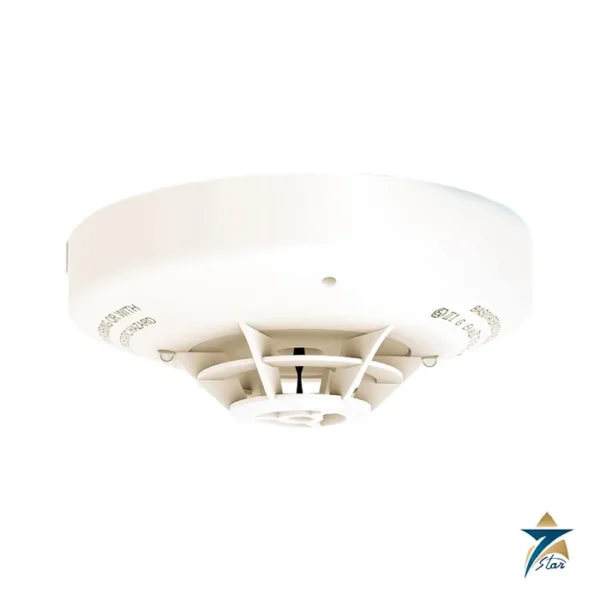
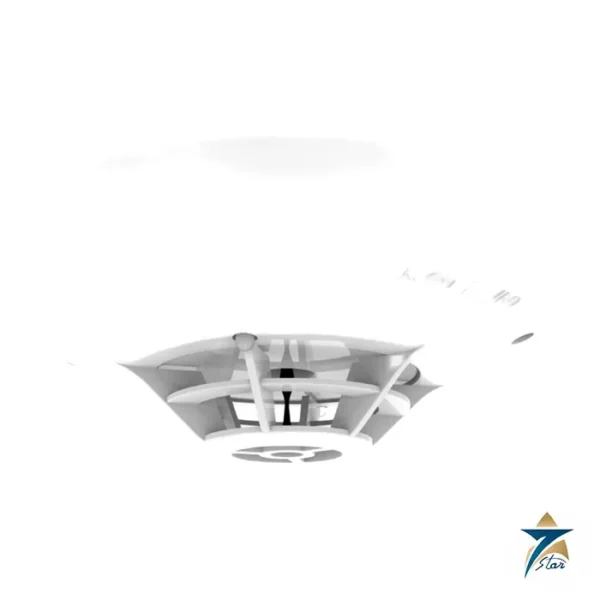
Hochiki DFJ-AE3 Conventional Fixed Temperature Heat Detector 60C
Description
Overview
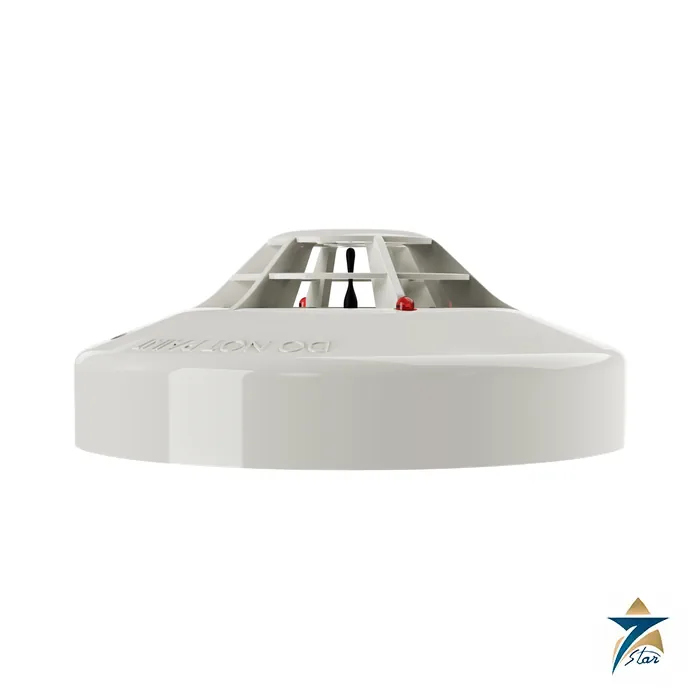
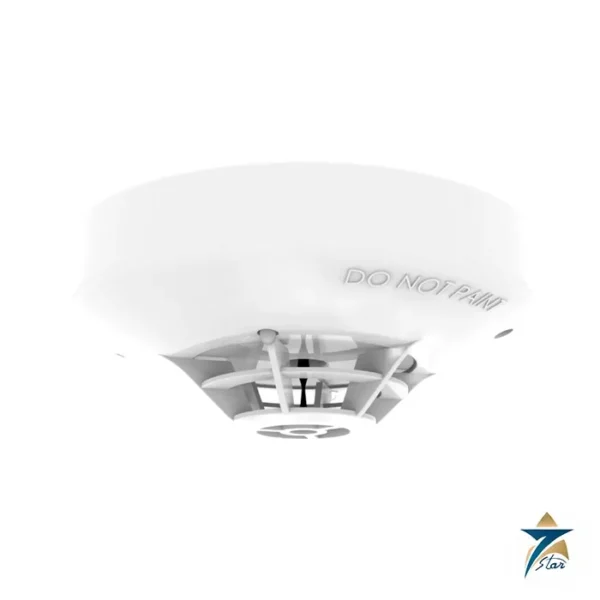
Choose Hochiki DFJ-AE3 when a conventional fire zone needs a heat detector that ignores steam, cooking fumes and similar smoke-like contamination. The DFJ-AE3 is a fixed temperature detector that raises an alarm when the surrounding air reaches 60 degrees C, using a thermistor and a linearising circuit to give an accurate, repeatable response rather than a simple bimetallic switch.
The manufacturer positions it for medium ambient temperature spaces such as drying rooms and kitchens, where a smoke detector would be set off by the environment itself. In Oman and across the GCC, that covers commercial kitchens, laundries, boiler rooms with controlled ventilation and some workshop areas. Seven Star LLC is an independent supplier serving Oman and the GCC.
Why engineers specify Hochiki DFJ-AE3
- Electronic linear heat detection with a stable 60 degrees C fixed temperature response.
- Twin fire LEDs, so an alarm is visible from any direction around the detector.
- Third terminal providing a remote indicator output.
- Wide operating voltage window of 9.5 to 30 VDC.
- Approved by LPCB, with EN 54-5:2017 categories A1 and A1S listed on the data sheet.
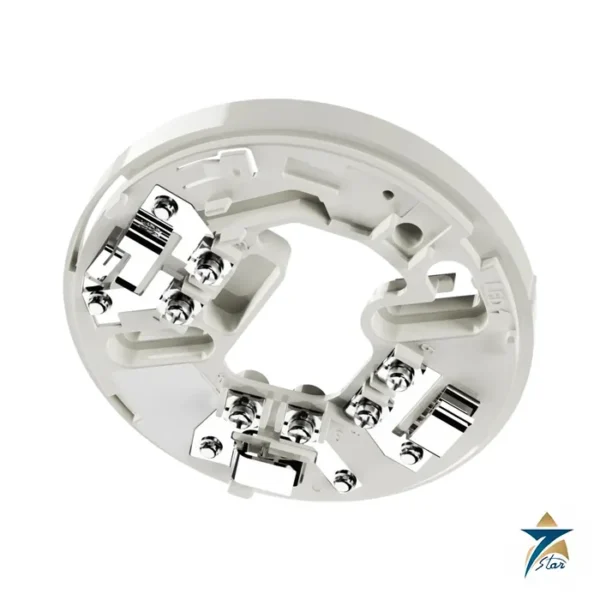
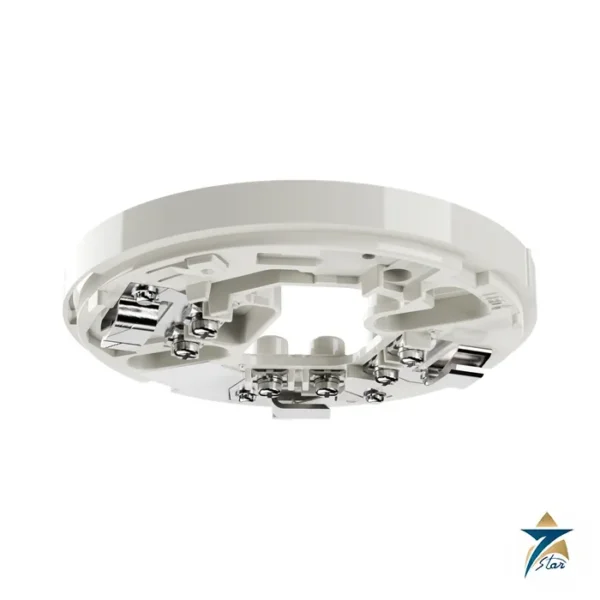
- A full range of mounting bases for different applications.
- Ivory as standard, with a white case under its own ordering code.
Hochiki DFJ-AE3 data sheet values
| Parameter | Value |
|---|---|
| Detector type | Conventional fixed temperature heat detector, 60 degrees C |
| Ordering codes | DFJ-AE3 ivory, DFJ-AE3(WHT) white |
| Operating voltage | 9.5 to 30 VDC |
| Quiescent current | 35 microamps |
| Maximum alarm current, typical | 40 mA |
| Remote indicator drive | 20 mA maximum |
| Ingress protection | IP63 |
| Operating temperature | -10 degrees C to +50 degrees C |
| Storage temperature | -30 degrees C to +70 degrees C |
| Maximum humidity | 95 percent RH, non-condensing, at 40 degrees C |
| Case material | Modified polycarbonate |
| Weight | 76 g |
| Dimensions | Diameter 100 mm by height 38 mm |
| Base fixing centres | 48 to 74 mm |
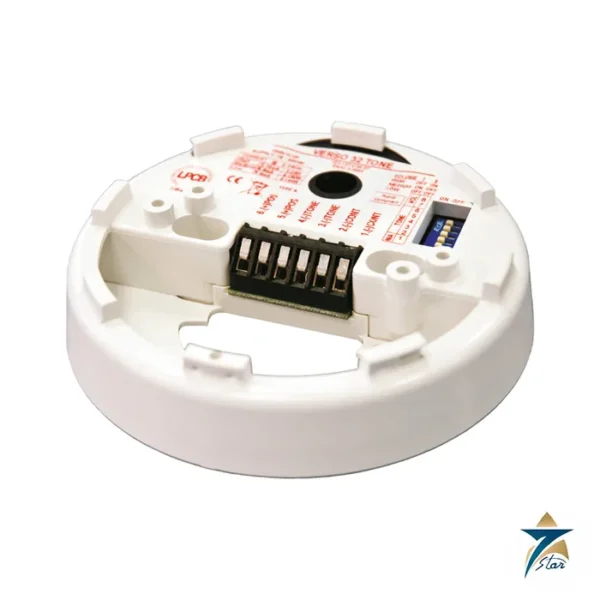
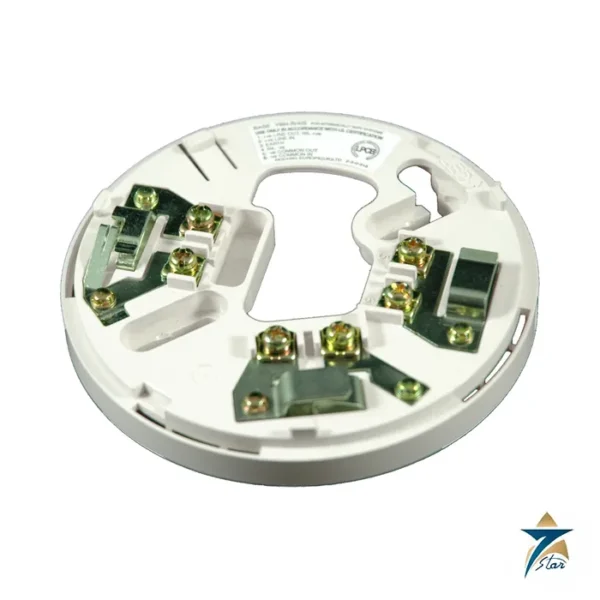
| Compatible bases | YBN-R6, YBN-R/6SK, YBO-R/6R, YBO-R/6RS, YBO-R/6RN, YBO-R/6PA |
| Approvals | LPCB, EN 54-5:2017 Category A1 and A1S; VdS G204046 for the YBN-R/6SK base only |
Heat versus smoke: where Hochiki DFJ-AE3 is the right choice
A heat detector does not sense smoke at all. It senses temperature, so it reacts later than a smoke detector in a clean room, but it keeps working in spaces where smoke detection would produce false alarms. The data sheet names two typical cases: drying rooms, and rooms with steam or cooking fumes such as kitchens.
Because the alarm point is fixed at 60 degrees C, the room must normally stay clearly below that value. Operating temperature of the detector itself is listed up to +50 degrees C, so do not fit it above a heater, a hot duct outlet or in direct sun that can push the local ceiling temperature close to the alarm threshold. In a very hot plant area a higher-rated heat detector would be the correct choice.
How Hochiki DFJ-AE3 compares with the SOC-E3N smoke detector
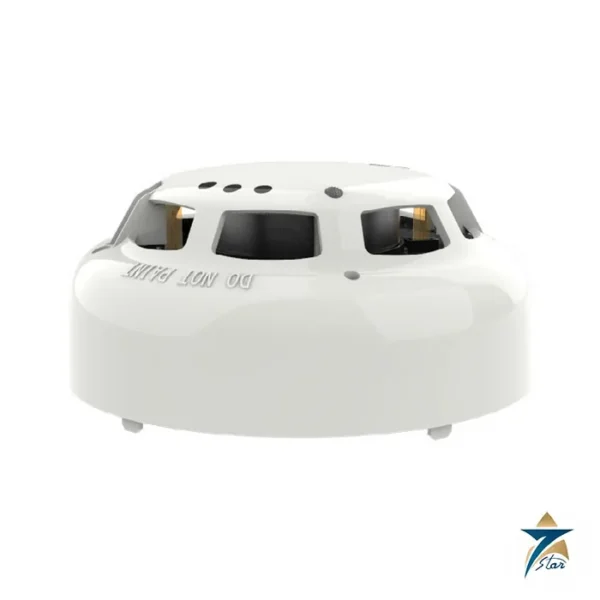
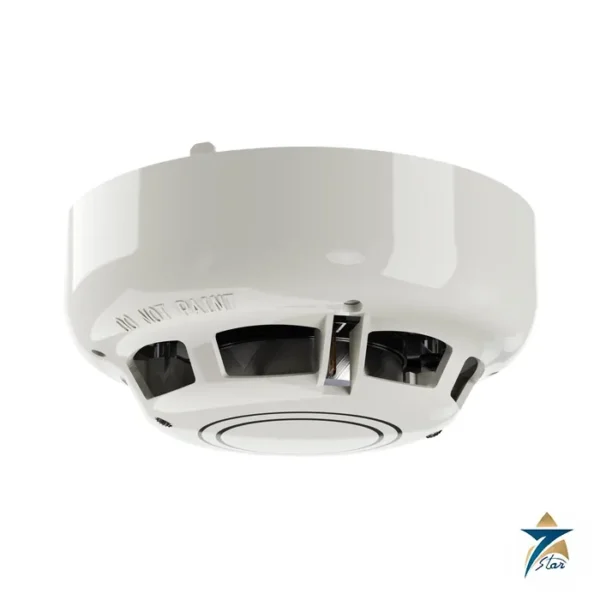
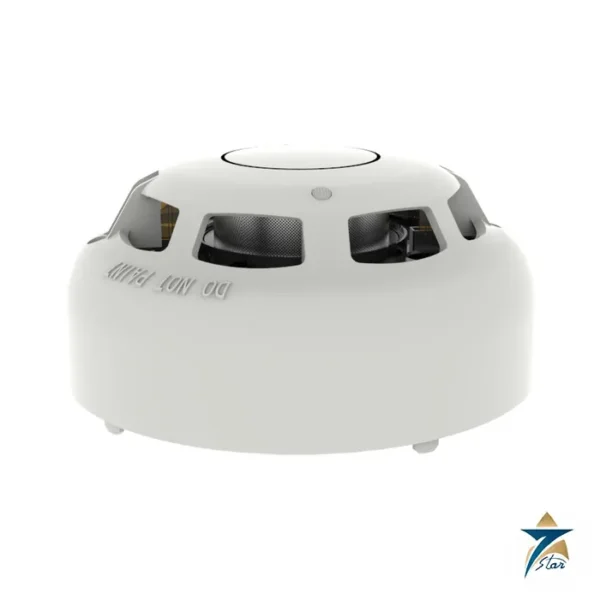
Both detectors share a 100 mm diameter body and the same base fixing centres of 48 to 74 mm, so they can sit on the same conventional bases. The heat detector is lighter at 76 g against 95 g, has a higher ingress rating of IP63 against IP42, and begins operating from 9.5 VDC rather than 12 VDC. Its case is modified polycarbonate rather than ABS. Those figures explain why the heat detector is the one chosen for damp, steamy and greasy rooms.
Approvals and the VdS base note
The LPCB approval on the data sheet is to EN 54-5:2017, categories A1 and A1S. The VdS approval, listed under certificate G204046, carries an important footnote: it applies only when the detector is used with the YBN-R/6SK base. If your project specification requires VdS compliance, make sure the base on the order is the YBN-R/6SK and not one of the other five listed bases.
Planning the layout with Hochiki DFJ-AE3 detectors
Detector spacing, ceiling height limits and the number of detectors per zone are set by the fire detection standard applied on the project and by the approval category, not by this page. For Category A1 and A1S heat detectors the design engineer should read the relevant clauses of EN 54-14 or the local civil defence rules that apply in the country concerned, and then size the zones accordingly.
What this data sheet does give you are the electrical limits needed for the zone calculation: a quiescent current of 35 microamps per head and a typical alarm current of 40 mA. Add up the quiescent figures for the whole zone to check the standing load against the panel, and use the alarm figure to verify that the panel can still sound the zone after one or more detectors have operated. A short voltage drop calculation along the longest cable run completes the check against the 9.5 VDC lower limit.
Installation and commissioning
- Check the panel zone supplies 9.5 to 30 VDC at the end of the line.
- Place the detector away from direct heat sources and not in the airflow of heaters.
- Use one of the six listed bases and record which one for each zone.
- Test with a controlled heat source suited to heat detectors and confirm the panel indicates the right zone.
- Wire the remote indicator only if the detector is hidden, and keep that cable separate.
Maintenance
Heat detectors need less cleaning than smoke detectors because they have no chamber, but dust, grease and paint can still insulate the sensing element and slow its response. In kitchens, inspect the lower face of the detector at each service visit. Replace any head with paint overspray, melted plastic or cracking on the case. Keep spare detectors in the colour used on site, since colour mismatch is a common complaint after a swap.
Ordering Hochiki DFJ-AE3
Specify the case colour, the quantity and the bases that will carry the detectors. If VdS approval is a project requirement, say so in the request. Include the site location in Oman or the GCC for lead time planning.
Related items you may also need: Hochiki ACD-EN Intelligent Multi Sensor | Hochiki ESP FIREbeam Xtra Addressable Beam Smoke Detector | Hochiki ALN-EN Intelligent Photoelectric Smoke Sensor (ESP) | All Hochiki products.
Documents and quotation
The manufacturer data sheet for the DFJ-AE3 is attached to this page. To receive a quotation, send an RFQ with the part number, colour code and required quantity through the enquiry form and our team will reply with availability.
Datasheets & Documents
- Datasheet Hochiki DFJ-AE3 Conventional Fixed Temperature Heat Detector 60C Datasheet Download
Reviews (0)
How would you rate this product? Cancel reply
About brand
Hochiki is a Japanese fire detection company, established in Tokyo in 1918 as Japan's first fire alarm manufacturer, with leading insurance companies among its founders. It makes smoke and heat detectors, beam detectors, addressable fire alarm systems and emergency lighting. Hochiki America has operated in the US since 1972.
Seven Star LLC is an independent supplier in Muscat. We list Hochiki detectors for fire alarm contractors in Oman and the GCC.
Hochiki company profile
| Founded | 1918, Tokyo, Japan |
|---|---|
| Founders | Members of Japan's insurance industry |
| US operations | Since 1972 |
| Systems | Conventional and addressable fire detection |
| Product families | ESP intelligent detectors and multi-sensors, FIREbeam beam detectors, CDX conventional detectors, control panels |
Milestones
- 1918: Hochiki is founded in Tokyo.
- 1972: Hochiki America begins US operations.
Hochiki product series
The ACD-EN is an intelligent multi sensor detector for Hochiki addressable systems.
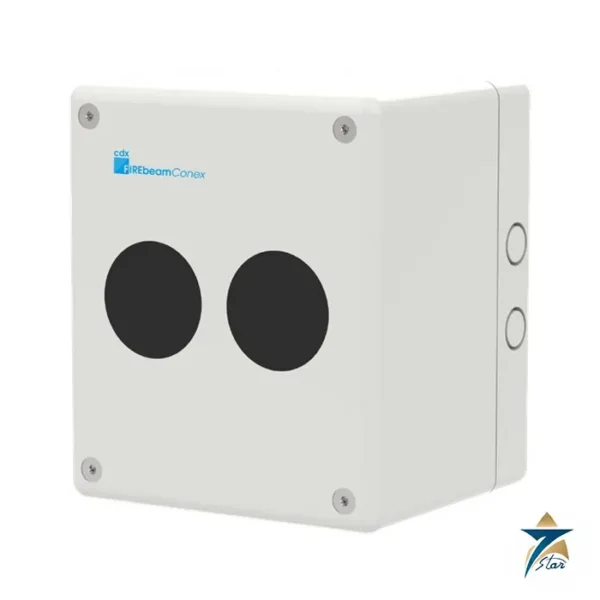
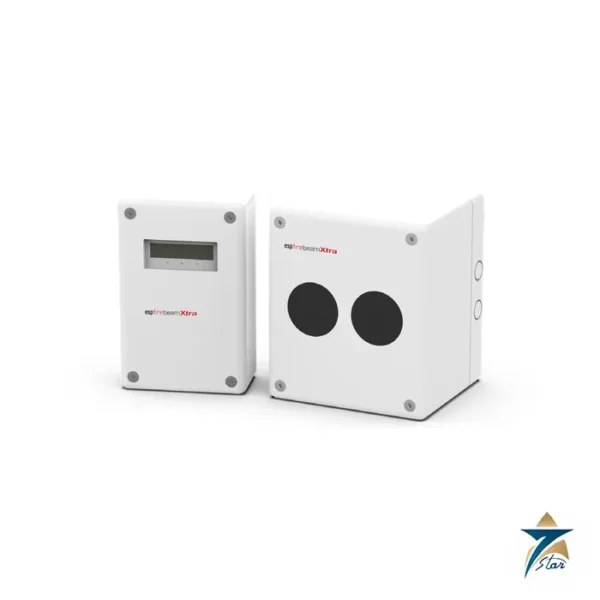
Beam smoke detectors include the CDX FIREbeam Conex and CDX FIREbeam Xtra conventional detectors and the ESP FIREbeam Xtra addressable detector.
Multi sensor detectors combine smoke and heat sensing to detect different fire types and reduce false alarms. Beam detectors send an infrared beam across an open space and alarm when smoke reduces the signal, covering large areas with fewer devices.
Detectors must match the panel protocol and be installed and tested to the local fire code.
Where Hochiki detectors are used
Offices, hotels, schools and hospitals, and large open spaces such as warehouses, atriums and halls where beam detectors cover long distances.
Hochiki products we list
| Family | Examples |
|---|---|
| Fire & Gas Detectors | ACD-EN Intelligent Multi Sensor, CDX FIREbeam Conex Conventional Beam Smo…, ESP FIREbeam Xtra Addressable Beam Smoke… |
Ordering Hochiki detectors: what we need
Send the part number, protocol (conventional or ESP addressable), the beam range and the panel in use.
Facts checked against IFSEC Global centenary coverage and Hochiki company profiles, October 2026.
Browse Hochiki products by category: Fire & Gas Detectors.
FAQ
Questions about the Hochiki DFJ-AE3 Conventional Fixed Temperature Heat
Answers from our engineering team on installation, compatibility and integration.
01At what temperature does the Hochiki DFJ-AE3 operate?
It is a 60 degrees C fixed temperature heat detector using a thermistor and linearising circuit, intended for medium ambient temperature areas such as drying rooms and kitchens.
02Which approvals does the DFJ-AE3 carry?
The data sheet lists LPCB approval to EN 54-5:2017 categories A1 and A1S, and VdS G204046, which applies only when the YBN-R/6SK base is used.
03What electrical values are listed for the DFJ-AE3?
Operating voltage is 9.5 to 30 VDC, quiescent current is 35 microamps, typical maximum alarm current is 40 mA and remote indicator drive is 20 mA maximum.
04Which bases are compatible with the DFJ-AE3?
The listed bases are YBN-R6, YBN-R/6SK, YBO-R/6R, YBO-R/6RS, YBO-R/6RN and YBO-R/6PA, all using base fixing centres of 48 to 74 mm.
05What is the ingress rating and weight of the DFJ-AE3?
The data sheet gives IP63, a weight of 76 g and dimensions of 100 mm diameter by 38 mm height, in a modified polycarbonate case.


Reviews
There are no reviews yet.