Brand:

Hochiki YBN-R/6 Conventional Detector Mounting Base with R/I

Description

Overview

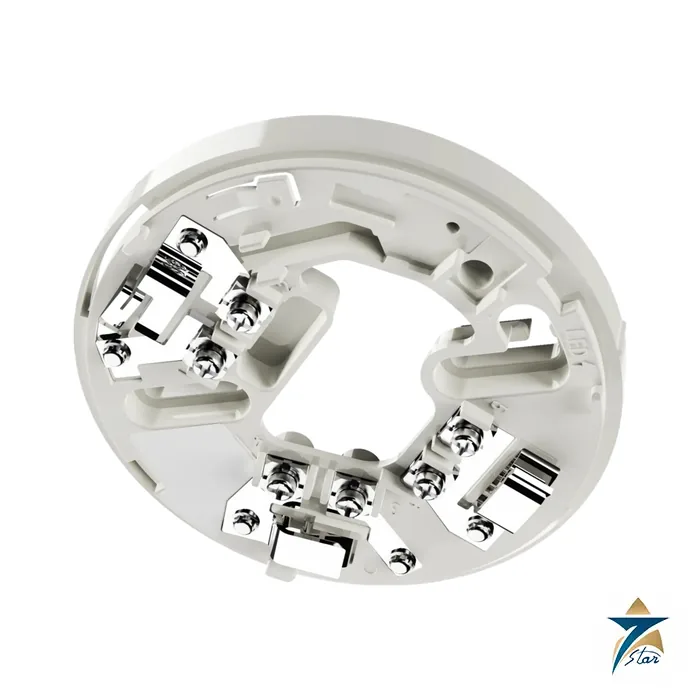
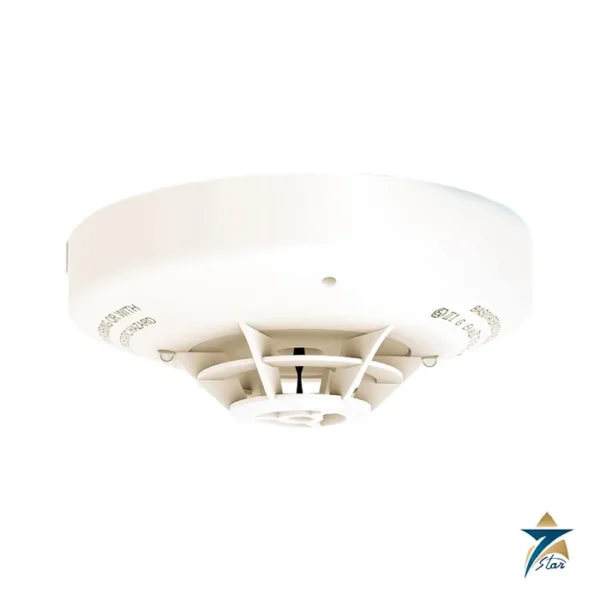
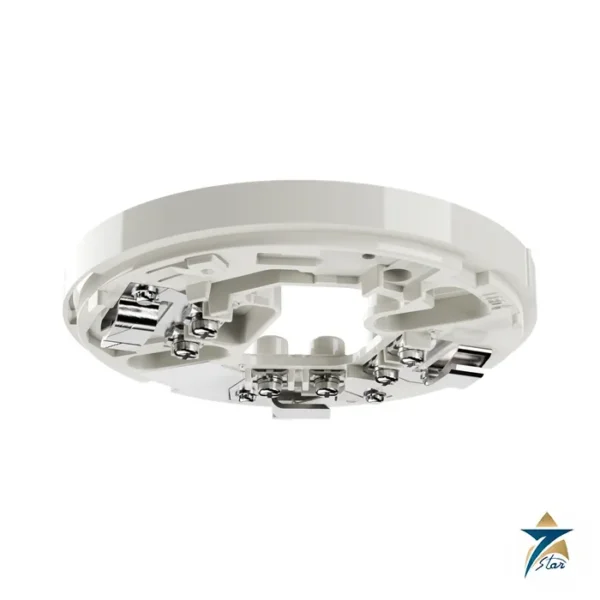
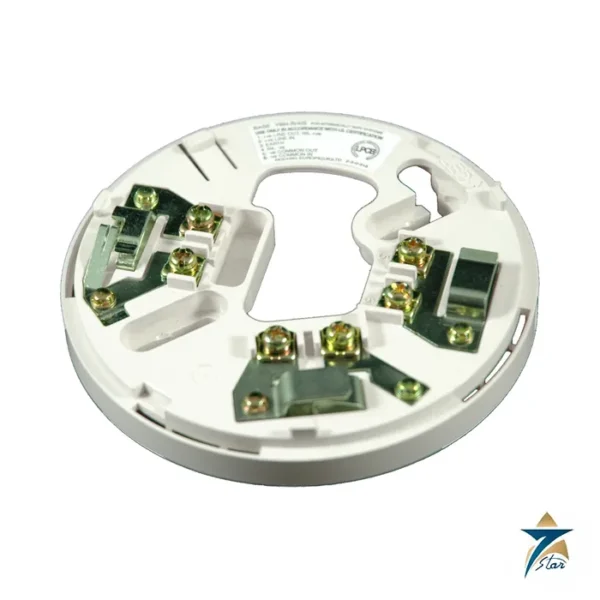
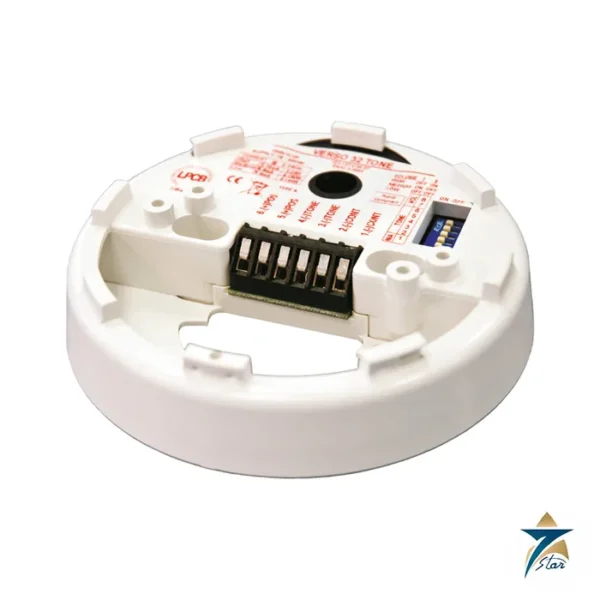
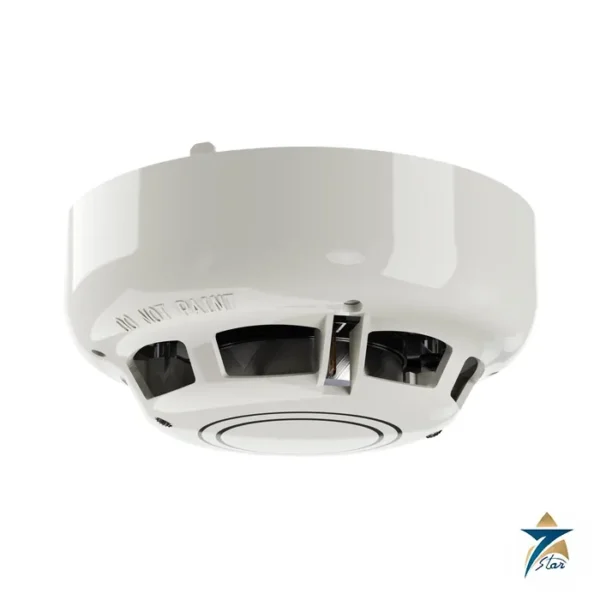
The Hochiki YBN-R/6 is a conventional detector mounting base for the CDX range, finished in ivory as standard. It carries a smoke or heat detector on a two-wire zone circuit and adds a third terminal that supplies a remote indicator output. The base is completely electronics free and only 8 mm deep, which keeps the fitted detector close to the ceiling line.

Conventional zone panels are still common in older plant buildings, workshops, warehouses and accommodation blocks in Oman, and many are extended or refurbished one device at a time. That keeps demand high for the matching base. Seven Star LLC is an independent supplier serving Oman and the GCC. We list this base by its exact code and confirm the colour variant in every quotation.

What distinguishes the Hochiki YBN-R/6

  • Integral remote indicator output on the third terminal.
  • Bayonet slot with low insertion force, so detectors twist in without a hard push.
  • Square cable clamps that grip conductors up to 2.5 mm2.
  • Operating voltage range of 9.5 to 30 VDC.
  • Low profile of only 8 mm and a rugged electronics free construction.
  • Available in ivory, white or black according to the ordering code.

Hochiki YBN-R/6 specification table

Parameter Value
Ordering codes YBN-R/6, YBN-R/6(WHT), YBN-R/6(BLK)
Operating voltage 9.5 to 30 VDC
Operating temperature range -10 degrees C to +50 degrees C
Storage temperature range -30 degrees C to +60 degrees C
Maximum humidity 95 percent RH, non-condensing, at 40 degrees C
Colour and material White, ivory or black, ABS
Weight 51 g
Diameter 100 mm
Height 8 mm
Fixing centres 48 to 74 mm
Cable capacity 2.5 mm2 per terminal
System type Conventional, associated with the CDX detector range

The temperature, voltage and size figures above are taken from the manufacturer data sheet for this base. Humidity is quoted at 40 degrees C, so a base in a permanently wet location will need additional protection from the building or enclosure design.

Wiring with the Hochiki YBN-R/6: a point many installers miss

The data sheet makes one wiring point very clear: this base does not give line continuity when a detector is removed. On a conventional zone the loop passes through the detector contacts, so taking one detector out opens the circuit beyond it. For that reason the manufacturer advises that, where manual call points share the zone, the call points should be wired onto the zone first, ahead of detector bases. Then a removed detector cannot cut a call point out of the circuit.

The third terminal provides the remote indicator output. If you plan to use it, decide at first fix which positions need a remote lamp and run that cable at the same time, rather than opening the ceiling later.

Conventional versus addressable bases

Do not confuse this part with the addressable common base. The YBN-R/6 belongs to the conventional CDX family and works with most existing conventional fire alarm control panels. Addressable ESP sensors need a different base, so check the panel type and detector family before ordering. Mixed sites that run both technologies should keep the two base types clearly labelled in store.

How Hochiki YBN-R/6 differs from the addressable YBN-R/3 base

Placed side by side, the two Hochiki bases look almost identical, and both are 100 mm across and 8 mm high. The differences are in the data sheets. The YBN-R/6 quotes an operating voltage of 9.5 to 30 VDC because it serves conventional zone detectors, while the YBN-R/3 sheet gives no operating voltage at all since it serves the addressable range. The YBN-R/6 weighs 51 g against 50 g, and its storage temperature tops out at +60 degrees C against +70 degrees C for the addressable base.

The more important difference is in the third terminal. The conventional base has an integral remote indicator output wired to that terminal, whereas the addressable base only offers a facility to drive a remote LED. In purchasing terms this means you should never substitute one for the other; the base must always match the detector family sitting above it.

A good habit on mixed projects is to specify the base in the same line of the schedule as the detector, for example a CDX smoke detector with the YBN-R/6 and the colour code. That way purchasing, stores and installers all read the same pairing.

Typical sites for the Hochiki YBN-R/6

Common uses include refinery and terminal administration buildings, utility offices and small substations, workshops, warehouses and hostels. Each of these usually has a conventional panel with a few zones and a modest number of detectors. When a detector head is damaged or replaced with a newer model from the same family, the existing base normally stays in place, which is why spares are often ordered separately from the head.

Installation guidance

  • Fix the base on 48 to 74 mm centres and keep it flat against the surface.
  • Terminate zone conductors on the square clamps and check that no strand is outside the clamp.
  • Wire call points before detector bases on the same zone, as the data sheet advises.
  • Test the zone with detectors removed, then fit detectors one at a time and watch the panel.
  • Label remote indicator cables clearly if the third terminal is in use.

Maintenance notes

Because the base holds no components, maintenance is visual: look for cracked lugs, loose clamps and corrosion on contacts during detector service visits. A detector that keeps giving unexplained faults on a particular position may be sitting in a base with a poor contact, so swap the base before replacing a detector head that tests correctly on the bench.

Ordering the Hochiki YBN-R/6

Please state the colour code, quantity and the detector model that will be fitted, for example the CDX smoke or heat detector. Add the project location in Oman or the GCC so lead time can be quoted. Confirm any special requirement for remote indicators in the same request.

Related items you may also need: Hochiki ACD-EN Intelligent Multi Sensor | Hochiki CDX FIREbeam Xtra Conventional Beam Smoke Detector | Hochiki CDX FIREbeam Conex Conventional Beam Smoke Detector | All Hochiki products.

Documents and quotation

A manufacturer datasheet for the YBN-R/6 is attached to this page and carries the voltage, temperature, weight and dimension values listed above. To get pricing and availability, send an RFQ with the part number YBN-R/6, the colour code and the required quantity using the enquiry form. We will reply as soon as stock and lead time are confirmed.

Datasheets & Documents
  • PDF Datasheet Hochiki YBN-R/6 Conventional Detector Mounting Base with R/I Datasheet Download
Reviews (0)

Reviews

There are no reviews yet.

How would you rate this product?

It takes about 10 seconds — just tap a star. Your email is never published.

About brand

Hochiki is a Japanese fire detection company, established in Tokyo in 1918 as Japan's first fire alarm manufacturer, with leading insurance companies among its founders. It makes smoke and heat detectors, beam detectors, addressable fire alarm systems and emergency lighting. Hochiki America has operated in the US since 1972.

Seven Star LLC is an independent supplier in Muscat. We list Hochiki detectors for fire alarm contractors in Oman and the GCC.

Hochiki company profile

Founded 1918, Tokyo, Japan
Founders Members of Japan's insurance industry
US operations Since 1972
Systems Conventional and addressable fire detection
Product families ESP intelligent detectors and multi-sensors, FIREbeam beam detectors, CDX conventional detectors, control panels

Milestones

  • 1918: Hochiki is founded in Tokyo.
  • 1972: Hochiki America begins US operations.

Hochiki product series

The ACD-EN is an intelligent multi sensor detector for Hochiki addressable systems.

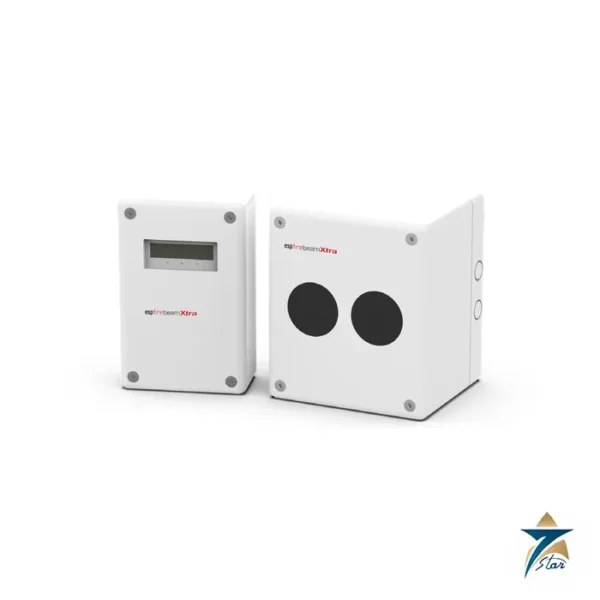
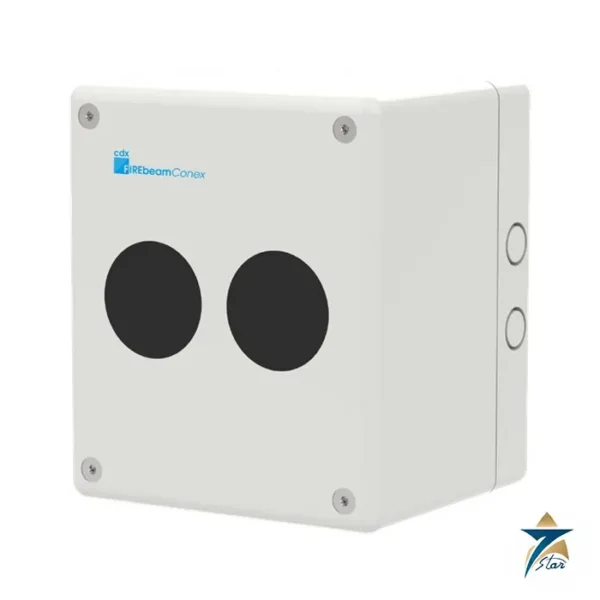
Beam smoke detectors include the CDX FIREbeam Conex and CDX FIREbeam Xtra conventional detectors and the ESP FIREbeam Xtra addressable detector.

Multi sensor detectors combine smoke and heat sensing to detect different fire types and reduce false alarms. Beam detectors send an infrared beam across an open space and alarm when smoke reduces the signal, covering large areas with fewer devices.

Detectors must match the panel protocol and be installed and tested to the local fire code.

Where Hochiki detectors are used

Offices, hotels, schools and hospitals, and large open spaces such as warehouses, atriums and halls where beam detectors cover long distances.

Hochiki products we list

Family Examples
Fire & Gas Detectors ACD-EN Intelligent Multi Sensor, CDX FIREbeam Conex Conventional Beam Smo…, ESP FIREbeam Xtra Addressable Beam Smoke…

Ordering Hochiki detectors: what we need

Send the part number, protocol (conventional or ESP addressable), the beam range and the panel in use.

Facts checked against IFSEC Global centenary coverage and Hochiki company profiles, October 2026.

FAQ

Questions about the Hochiki YBN-R/6 Conventional Detector Mounting Base

Answers from our engineering team on installation, compatibility and integration.

01Is the Hochiki YBN-R/6 an addressable or conventional base?
It is a conventional base associated with the CDX range of detectors and compatible with the majority of existing conventional fire alarm control panels.
02Does the YBN-R/6 keep the zone closed when a detector is removed?
No. The data sheet states that it gives no line continuity during detector removal, so call points on the same zone should be wired onto the zone first.
03What voltage range is listed for the YBN-R/6?
The data sheet gives an operating voltage of 9.5 to 30 VDC, with a weight of 51 g, a diameter of 100 mm and a height of 8 mm.
04Which colours are available for the YBN-R/6?
The ordering codes are YBN-R/6 for ivory, YBN-R/6(WHT) for white and YBN-R/6(BLK) for black, all in ABS plastic.
05Does the YBN-R/6 provide a remote indicator connection?
Yes, the integrated third terminal provides a remote indicator output, so a remote lamp can be driven where the detector is concealed.