MSA Quad Gas II four-sensor gas monitor explained
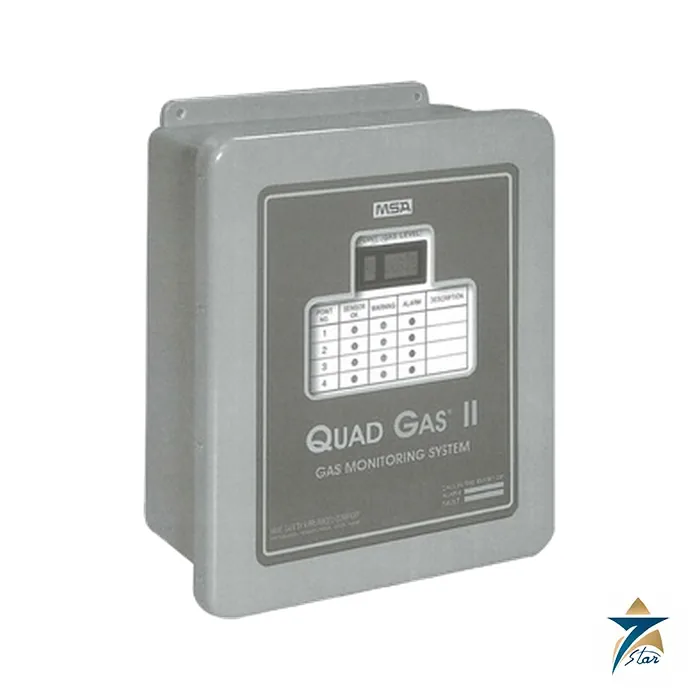
The MSA Quad Gas II is a microprocessor-based gas monitoring controller that links up to four remote gas sensors to one wall-mounted NEMA 4X enclosure. It shows the gas value and sensor point number on a four-digit LED readout, lights a warning, alarm and trouble indicator for each sensor, and operates relays for warning, alarm, horn and trouble. It is an established design and many units are still in service, which is why Seven Star LLC, an independent supplier in Muscat, receives enquiries for replacement units, sensors and parts for Quad Gas II systems in Oman and the GCC. We are not affiliated with the manufacturer.
The details below come from the manufacturer specification for the Quad Gas II monitor system and the product page. They help maintenance teams understand how a typical Quad Gas II installation is built before ordering replacements.
Quad Gas II technical specifications
| Parameter |
Specification |
| Manufacturer / part number |
MSA / Quad Gas II monitor (controller for up to four sensors) |
| Sensors per monitor |
Up to 4 remote gas sensors or transmitters |
| Enclosure |
Wall-mounted NEMA 4X, less than 14 in in any dimension; for non-hazardous locations |
| Readout |
Four-digit LED; configurable ranges 0-999, 0.00-9.99 or 00.0-99.9 |
| Indicators |
Separate warning, alarm and trouble light per sensor |
| Alarm set points |
Two independent levels per sensor, latching or non-latching |
| Relays |
Form C (single-pole double-throw) minimum, rated 10 A resistive at 125 VAC minimum; common or discrete versions |
| Input signal |
4-20 mA from each sensor |
| Sensor distance |
Up to 5,000 ft from the monitor, per the specification |
| Power |
115 or 220 VAC, 50 or 60 Hz, not more than 100 VA; DC battery connection provides back-up |
| Start-up delay |
Minimum 30 seconds after start-up or power loss to avoid false alarms |
Sensors and gases listed for the Quad Gas II
The specification template lists a wide range of sensor and transmitter options that can be combined on one monitor. These are chosen by gas and full-scale range when the system is defined.
| Gas |
Full-scale range listed |
| Combustible gas: natural gas and hydrogen, petroleum vapours or solvents |
0-100 %LEL |
| Carbon monoxide |
0-100 ppm or 0-500 ppm |
| Hydrogen sulfide |
0-10, 0-50 or 0-100 ppm |
| Oxygen |
0-25 % |
| Chlorine dioxide |
0-3 ppm |
| Nitric oxide / nitrogen dioxide |
0-100 ppm / 0-10 ppm |
| Sulfur dioxide / chlorine |
0-25 ppm / 0-5 ppm |
| Hydrogen cyanide / hydrogen chloride |
0-50 ppm / 0-100 ppm |
Enclosure and mounting choices around the Quad Gas II
Sensors are offered in general-purpose NEMA 4X, explosion-proof and intrinsically safe housings, and in single condulet or remote-sensor mounting styles. A remote combustible sensor can be separated from its calibration electronics by up to 50 ft. The specification also covers gas sampling systems with a DC pump or an air aspirator, each with a flow sensor that triggers a relay if flow fails, as well as remote relay systems, automatic calibration systems and installation hardware such as straps and hanger assemblies.
Calibration and operation of the Quad Gas II
Alarm set points, warning levels and the full-scale range are entered at the keyboard, and the front panel allows an operator to display set points, select a channel, reset an alarm or reset a latching relay once the condition has cleared. The sensor transmitters are designed for non-intrusive calibration: the unit can be zeroed and spanned without opening any enclosure, and the date of the last successful calibration is stored in the transmitter. A magnet or flashlight-type device is not the accepted calibration method in the specification; a dedicated calibrator is used. A trouble relay operates on power loss, signal loss from a sensor or a disconnected sensor, and the display shows a distinct character for a 10 percent or greater under-range condition.
Quad Gas II compared with other MSA controllers
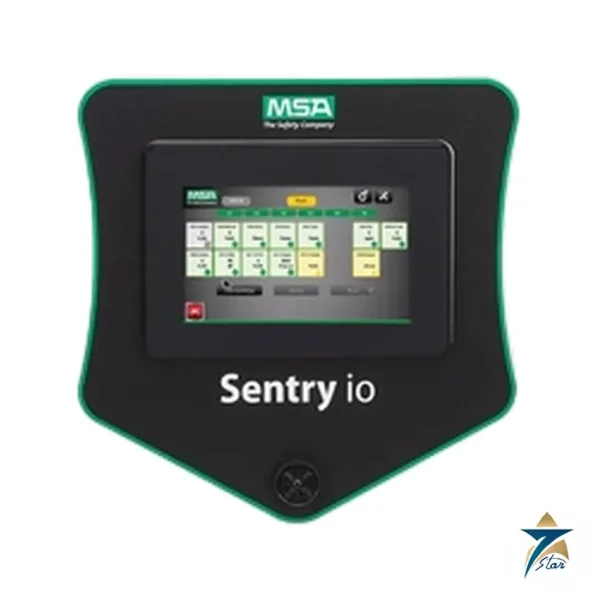
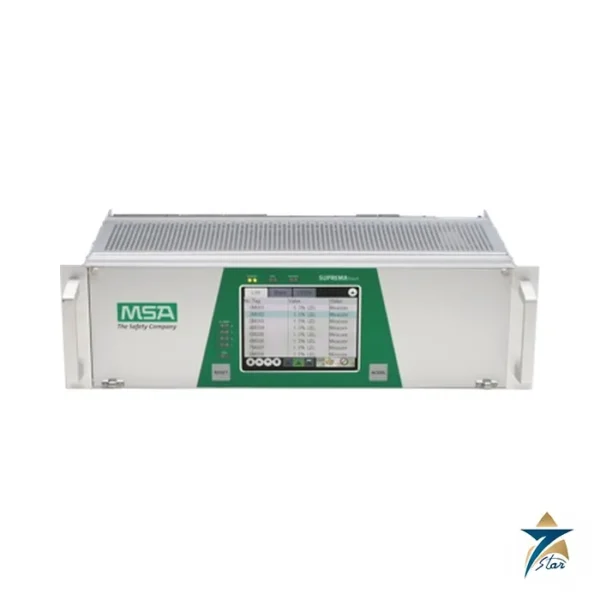
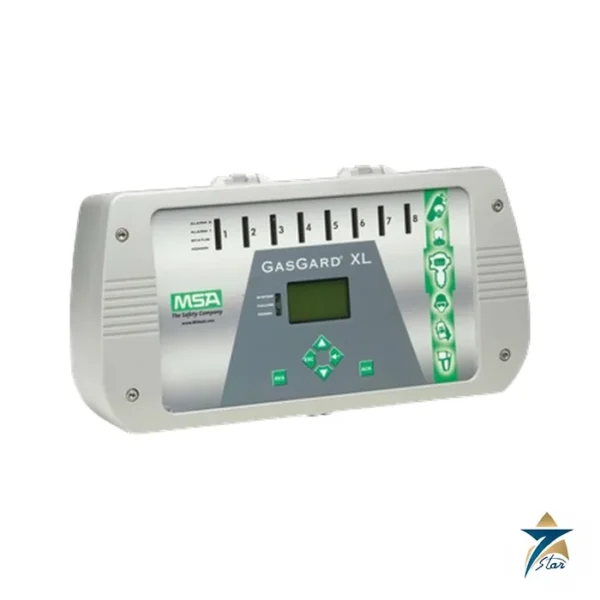
For small groups of sensors the Quad Gas II is the simplest solution. The GasGard XL handles up to eight channels with Modbus communications, the SENTRY io adds a touchscreen and cause-and-effect logic, and the SUPREMATouch serves large fire and gas systems. If a Quad Gas II is being replaced, check whether a newer controller can accept the existing 4-20 mA sensor loops so that field wiring can stay in place.
Selection and ordering checklist for the Quad Gas II
- Gas and range for each of the four channels
- Sensor enclosure type: general purpose, explosion proof or intrinsically safe
- Sensor mounting style and distance to the monitor
- Relay arrangement: common alarm, horn and trouble with discrete warning relays, or discrete relays for all set points
- Sampling system, automatic calibration or remote relay modules if required
- Supply voltage 115 or 220 VAC, and whether a DC back-up connection is needed
- Nameplate data of the existing unit when replacing
Typical Quad Gas II applications in Oman and the GCC
In Oman and the GCC a Quad Gas II monitor is typically found in water treatment buildings, chlorine and sulfur dioxide dosing rooms, wastewater lift stations, boiler houses, workshops and small process buildings. It provides local horns and relay outputs without a plant network. Condensation, dust and heat shorten the life of older enclosures, so inspect gaskets, glands and electronics during routine rounds.
Information to send with a Quad Gas II RFQ
- Photo of the monitor and sensor nameplates
- Gas, range and sensor enclosure for each point
- Relay configuration and supply voltage
- Spare sensors or calibration items needed
- Delivery location and date
Storage, handling and spares for the MSA Quad Gas II
Store the MSA Quad Gas II and its sensors as described in the manufacturer instructions, in a clean, dry place within the stated temperature range. Some gas sensors have a limited shelf life, so plan deliveries close to the installation date. In Oman and the GCC, avoid storing detectors and calibration gas in hot containers or in direct sun.
- Bump test or calibrate the detector with certified test gas at the interval set by your site safety procedure.
- Check hazardous area certificates and markings against the zone classification before installation.
- Keep spare sensors, filters and calibration gas for planned maintenance.
- Record test and calibration results for each detector tag number.
When you send an RFQ for the MSA Quad Gas II, include the target gases, ranges, area classification and any calibration kit you need, so the full scope can be quoted together.
Documents and quotation
Send the Quad Gas II nameplate details and the gases monitored and we will confirm which documents are available for your configuration.
Seven Star LLC prepares quotations for MSA gas monitoring equipment in Oman and the GCC as an independent supplier, with delivery arranged to your site.
Other Models in the Msa Gas Controllers Range
Seven Star LLC supplies models from the Msa Gas Controllers range in Oman and the GCC. Compare the related models below and request a quote for the one that matches your application.































Reviews
There are no reviews yet.