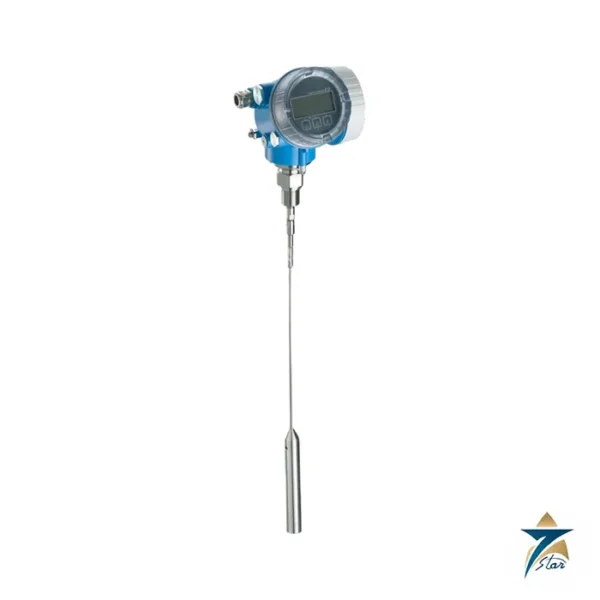
Endress+Hauser FWR30 Micropilot battery-powered radar level sensor
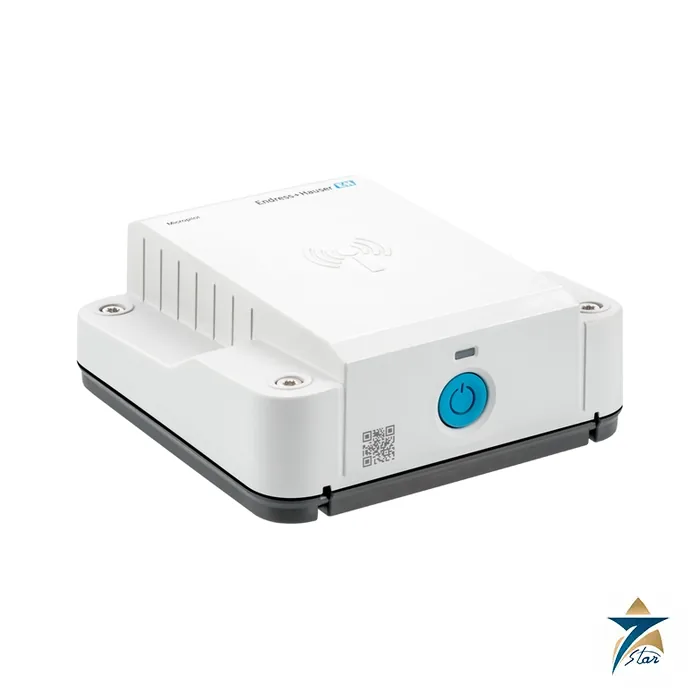
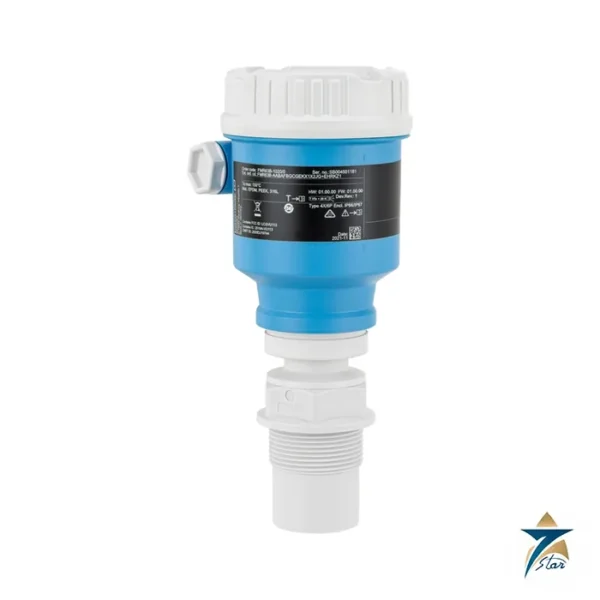
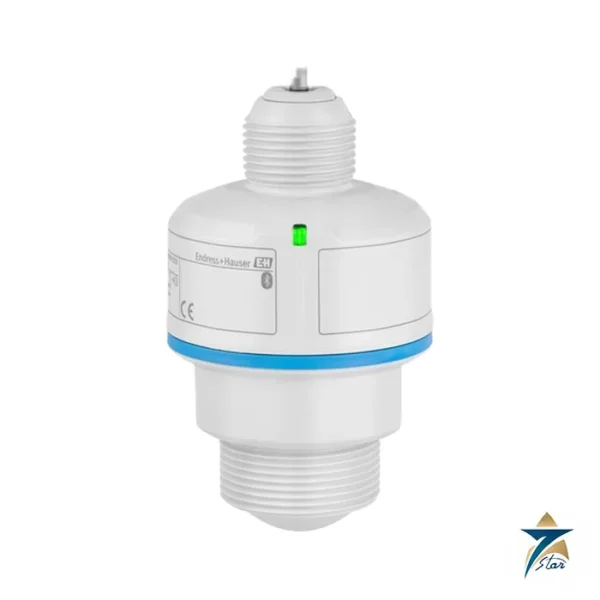
The Endress+Hauser FWR30 is a Micropilot free-space radar sensor that runs on a battery and sends its level readings to the cloud over a cellular link. It is built for remote storage tanks, mobile tanks and bulk containers that have no mains supply and no wired signal path. The FWR30 operates at 80 GHz, measures from 0 to 30 m with ±2 mm accuracy, and reports through Netilion Value or SupplyCare Hosting so that a phone or desktop browser can show tank contents, logistics status and trends. Seven Star LLC supplies the FWR30 in Oman and the GCC as an independent supplier in Muscat.
The sensor also reports ambient temperature (accuracy ±2 °C), the angle of the device to the horizontal and, on versions with GPS, a position with ±20 m accuracy in free field, which helps verify that a mobile tank has not been moved.
FWR30 technical specifications
| Parameter |
Specification |
| Manufacturer / part number |
Endress+Hauser / Micropilot FWR30 |
| Measuring principle |
80 GHz time-of-flight radar, free space |
| Measuring range |
0 to 30 m (98 ft) |
| Accuracy |
±2 mm (0.08 in) |
| Power |
Lithium D cell 3.6 V, 19 Ah (ER34615), replaceable |
| Battery life |
More than 5 years at 4 h; more than 10 years at 12 or 24 h interval |
| Communication |
Cellular LTE-M, NB-IoT, GPRS/EDGE |
| Ambient temperature |
−20 to +60 °C |
| Housing / protection |
PBT/PC; IP66/IP68, NEMA 4X/6P |
| Additional data |
Ambient temperature, tilt angle 0 to 180 degrees, GPS on some versions |
| Cloud services |
Netilion Value, SupplyCare Hosting |
How the FWR30 measures level
The Micropilot is a downward-looking time-of-flight radar. An antenna emits short 80 GHz pulses, the product surface reflects them, and the electronics convert the transit time into distance. Level equals empty distance minus measured distance. Because the 80 GHz beam is narrow, the sensor can see past tank internals and into narrow nozzles better than lower-frequency radar. The device revision on the nameplate shows the application: Dev.Rev.1 for liquids and Dev.Rev.2 for liquids and solids. The blocking distance can be set automatically or defined in the cloud, and the sensitivity can be set high, medium or low.
The datasheet warns that some media with absorbing gas phases, such as pure ammonia, acetone, methylene chloride, methyl ethyl ketone, propylene oxide and vinyl chloride monomer, are not suitable for this radar, and guided radar or another principle should be used.
FWR30 data, power and communication
The housing is plastic (PBT/PC) with IP66/IP68, NEMA Type 4X/6P. Ambient temperature is −20 to +60 °C. Power is a replaceable lithium thionyl chloride D-cell, 3.6 V and 19 Ah (ER34615), which is included in the delivery. Battery life depends on the transmission interval: more than 5 years at 4 h, more than 8 years at 8 h, more than 10 years at 12 or 24 h, and about 500 days at 1 h. Battery status is reported as full, medium, low or critical.
Communication is by cellular radio: LTE-M, NB-IoT and GPRS/EDGE, with the priority 4G first and then GPRS/EDGE. The radio variants are tied to order code 030 and to world regions, so check which regional radio and SIM option applies to the GCC and whether the network and radio approval cover Oman before ordering.
Selecting the FWR30 and cloud service
The decisions are the radio and SIM option, the transmission interval (a shorter interval uses more battery), the mounting bracket or nozzle thread, and whether GPS is required. GPS is deactivated for some order codes and for intervals shorter than one hour. Select the cloud service and user licenses with your supplier in the same enquiry.
Installing the FWR30 on a tank
Mount the sensor on a nozzle or bracket so its axis points vertically at the product, outside the blocking distance and away from inlet streams and inner structures. Keep the antenna free of condensation and heavy build-up, and note that for solids the usable range depends on reflection properties, angle of repose and interference echoes. Test the first transmission before leaving the site by checking the reading in the cloud against a dip stick or known level.
FWR30 for remote tanks in Oman and the GCC
Typical Gulf uses include diesel and lube-oil day tanks at remote sites, water and chemical tanks at desalination and wastewater stations, bulk silos at cement, sand and fertilizer plants, and rental tanks that move between jobs. The cellular connection removes the need for cable runs across large sites, and the long battery life suits locations that are visited seldom. Direct sun and very high summer temperatures should be taken into account against the ±60 °C ambient rating; fit a sunshade where the sensor is exposed.
FWR30 versus wired radar sensors
Choose the FWR30 when the tank is remote or mobile and a periodic reading is enough. For continuous control, safety loops or hazardous-area approvals, use a wired Micropilot such as the FMR20B, FMR60B or FMR62B. The FWR30 is limited in update rate by the battery and radio, so it is a monitoring device, not a control device.
Information to send with an FWR30 RFQ
- Medium and whether liquid or solid
- Tank height and nozzle size
- Transmission interval needed
- Region and mobile network availability
- GPS requirement
- Cloud service and quantity
Documents and quotation
A copy of the manufacturer technical information for the FWR30 is attached on this page so you can check ranges, connections and ordering codes against your specification.
Send the full order code or the process data (fluid, temperature, pressure, line size or tank data, output and approvals) and Seven Star LLC will prepare a quotation and confirm lead time. We are an independent supplier in Muscat and do not represent the manufacturer.


















Reviews
There are no reviews yet.