- Automation & ControlView all 3,084 products
- Automation Accessories
- AC Drives
- PLC & I/O Cards
- Industrial Communications
- Vibration Monitoring
- Isolator & Barrier
- Controllers & Data Acquisition
- Safety Switches & Guard Locking
- Motor Soft Starters
- Encoders
- CCTV & Security
- Pneumatic Cylinders
- HMI Displays
- Servo Drives
- Industrial Computers
- Machine Vision
- Automation Software
- Robotics
Brand: Hochiki
Hochiki CCP-E Conventional Manual Call Point
Description
Overview
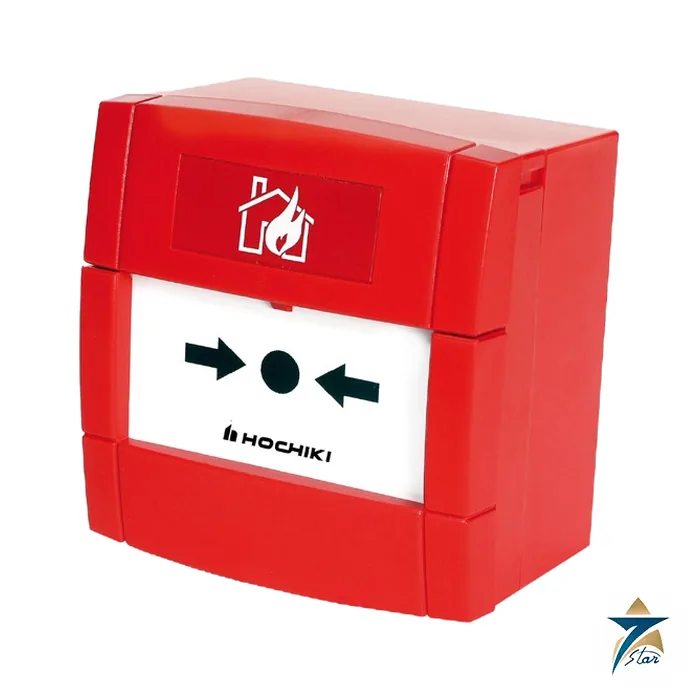
The Hochiki CCP-E is a conventional manual call point for indoor use, the red break-glass box that people press to raise a fire alarm. It is based on the industry standard KAC housing and uses push-fit wiring terminals, so installers can terminate cables quickly. Seven Star LLC is an independent supplier serving Oman and the GCC. Below is a technical summary taken from the Hochiki datasheet, with notes on colour options, elements and mounting.
What the Hochiki CCP-E offers
The unit accepts two kinds of operating element: a frangible glass element, supplied by default, or a non-frangible plastic element that can be reset. The datasheet carries an important note: after changing from glass to the flexible element, the installer should confirm the operation by pressing the resettable element. It is a Type A device approved to EN 54-11:2001, supplied with a surface-mount backbox, and the terminals take solid conductors up to 2.5 square millimetres. The LPCB approval covers the red variant only; other colours are available on request but are not EN 54 approved.
Specification of Hochiki CCP-E
| Item | Value |
|---|---|
| Device type | conventional manual call point, Type A, EN 54-11:2001 |
| Ordering codes | Hochiki CCP-E (red); CCP-EB (blue); CCP-EO (orange); CCP-EY (yellow) |
| Nominal operating resistance | 470 ohms |
| Maximum contact resistance | 200 ohms |
| Maximum voltage | 30 V DC |
| Current in alarm at 24 V DC | 50 mA |
| IP rating | IP24D |
| Operating temperature | minus 10 to plus 55 degrees C |
| Storage temperature | minus 10 to plus 55 degrees C |
| Maximum humidity | 93 plus or minus 3 percent RH non-condensing at 40 degrees C |
| Case material | ABS |
| Weight | 130 g flush mount; 180 g surface mount |
| Dimensions | W 89 x H 93 x D 27.5 mm flush; W 89 x H 93 x D 59.5 mm surface |
| Replacement elements | KAC/G/HE glass; KAC/EWS/HE non-frangible |
| Terminals | up to 2.5 square millimetres solid conductor |
Where call points are required
Building codes in Oman and across the Gulf follow international practice: manual call points are installed on escape routes, at exits and at stairwell landings, and they need to be easy to see and reach. The Hochiki CCP-E is intended for internal use with an IP24D rating, which allows splash from above and dust to a limited extent. For outdoor, dusty or washdown areas a weatherproof model would be chosen instead. The colour options, blue, orange and yellow, are often used to mark other functions such as gas release or process shutdown, although those variants are not EN 54 approved.
Choosing between glass and resettable elements
Frangible glass gives a clear visual indication that the point has been operated and is cheap to replace, but each test or false use needs a new element. The resettable plastic element suits places where testing is frequent, where fragments would be a hazard, such as food factories or schools, and where the facility wants to restore the call point in seconds. The two replacement codes listed are KAC/G/HE for glass and KAC/EWS/HE for the non-frangible type. After fitting the new element, press it to confirm the contact operates and the panel shows the alarm.
Wiring and mounting
The call point installs on a flush or surface mounting; the surface version uses the supplied backbox and is 59.5 mm deep, the flush version is 27.5 mm. The nominal operating resistance of 470 ohms is the value the panel sees when the point is operated, so zones should be designed with that in mind, and the contact resistance limit of 200 ohms constrains how much resistance the installation may add. Maximum voltage is 30 V DC and alarm current at 24 V DC is 50 mA. Mount the point at the height required by the local code, usually between 1.2 and 1.6 m above the floor, in a position that is not obstructed.
Call points in the wider alarm design
A call point is the human trigger of the system, and its place in the design is guided by travel distance: no person should have to walk more than about 45 metres to reach one, and in places where occupants have limited mobility the distance is shorter. Additional call points belong at every final exit and near stairs. The height, the clear space in front and the contrast of the cover against the wall all affect how quickly a person finds the device. On sites where staff wear gloves, helmets or protective clothing, the large face of this model is easy to push. For public buildings, consider a cover to prevent accidental operation, and ensure that signs explain how to use the point in English and Arabic.
Wiring of conventional call points on a zone uses the operating resistance of 470 ohms to signal an alarm, which means the panel can distinguish between an operated point and a fault such as a short circuit or an open circuit. Because several points can share a zone, keep the zone chart accurate so that responders know which area the alarm refers to. Check regularly that the legend on the glass is legible and has not faded in sunlight.
Inspection
Test call points on the schedule set by the system’s maintenance plan, rotating through the points so that each is checked at least once during the year. Check the cover, the legend, the backbox seal and the terminals, and keep spare elements on hand. Replace any call point that is cracked or discoloured. Record the model and colour so that the right unit is ordered later.
Related items you may also need: Hochiki ACD-EN Intelligent Multi Sensor | Hochiki ESP FIREbeam Xtra Addressable Beam Smoke Detector | Hochiki CDX FIREbeam Conex Conventional Beam Smoke Detector | All Hochiki products.
Hochiki CCP-E ordering checklist
- When the Hochiki CCP-E replaces an installed unit, check the existing nameplate against the code on this page before ordering.
- Every enquiry for the Hochiki CCP-E is answered with a written confirmation of the code and expected lead time.
- Use the attached datasheet to check the Hochiki CCP-E ratings, dimensions and connection details against your drawings.
- We supply the Hochiki CCP-E as part of our fire & gas detectors range to plants in Oman and the GCC.
- For critical duty, keeping one Hochiki CCP-E as a site spare shortens downtime after a failure.
Documents and quotation
The Hochiki datasheet for the Hochiki CCP-E is attached to this page and gives the specification and the ordering codes. Send your RFQ with the model, colour code, quantity, and delivery location in Oman or the GCC, and tell us whether replacement elements should be added.
Other Models in the CDX Range
Seven Star LLC supplies models from the CDX range in Oman and the GCC. Compare the related models below and request a quote for the one that matches your application.
| Model | Category | |
|---|---|---|
| Hochiki DCD-AE3 Rate-of-Rise Heat Detector 60 C | Fire & Gas Detectors | View details |
| Hochiki DCD-CE3 Rate-of-Rise Heat Detector 90 C | Fire & Gas Detectors | View details |
| Hochiki DCD-1E-IS Intrinsically Safe Heat Detector | Fire & Gas Detectors | View details |
| Hochiki CCP-E Conventional Manual Call Point | Fire & Gas Detectors | You are viewing this model |
Datasheets & Documents
- Datasheet Hochiki CCP-E Conventional Manual Call Point Datasheet Download
Reviews (0)
How would you rate this product? Cancel reply
About brand
Hochiki is a Japanese fire detection company, established in Tokyo in 1918 as Japan's first fire alarm manufacturer, with leading insurance companies among its founders. It makes smoke and heat detectors, beam detectors, addressable fire alarm systems and emergency lighting. Hochiki America has operated in the US since 1972.
Seven Star LLC is an independent supplier in Muscat. We list Hochiki detectors for fire alarm contractors in Oman and the GCC.
Hochiki company profile
| Founded | 1918, Tokyo, Japan |
|---|---|
| Founders | Members of Japan's insurance industry |
| US operations | Since 1972 |
| Systems | Conventional and addressable fire detection |
| Product families | ESP intelligent detectors and multi-sensors, FIREbeam beam detectors, CDX conventional detectors, control panels |
Milestones
- 1918: Hochiki is founded in Tokyo.
- 1972: Hochiki America begins US operations.
Hochiki product series
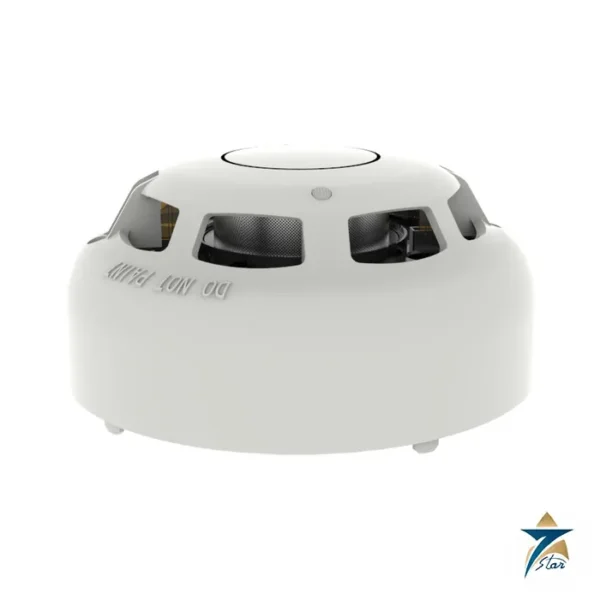
The ACD-EN is an intelligent multi sensor detector for Hochiki addressable systems.
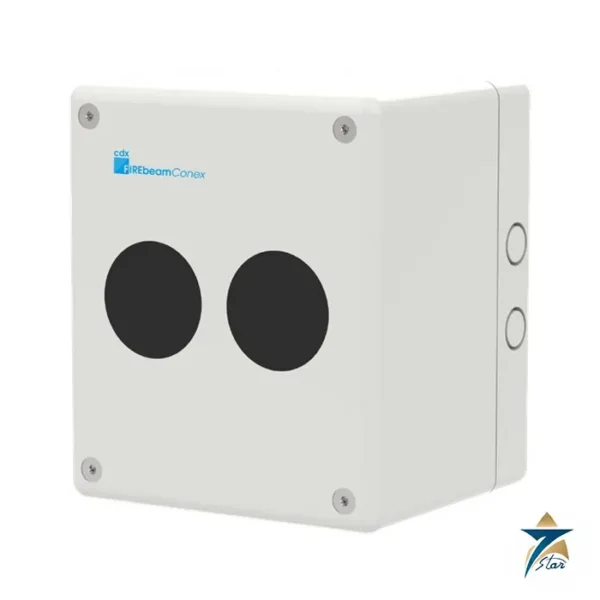
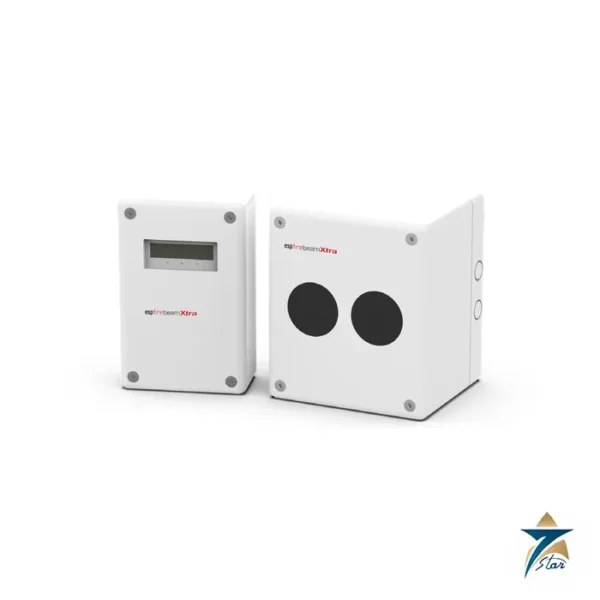
Beam smoke detectors include the CDX FIREbeam Conex and CDX FIREbeam Xtra conventional detectors and the ESP FIREbeam Xtra addressable detector.
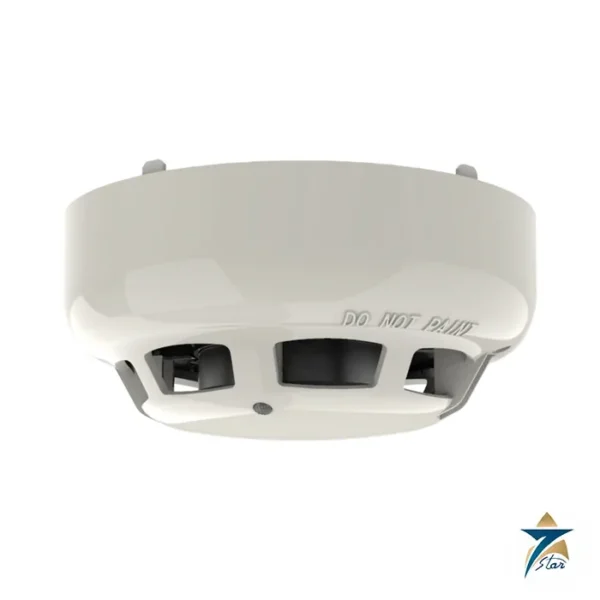
Multi sensor detectors combine smoke and heat sensing to detect different fire types and reduce false alarms. Beam detectors send an infrared beam across an open space and alarm when smoke reduces the signal, covering large areas with fewer devices.
Detectors must match the panel protocol and be installed and tested to the local fire code.
Where Hochiki detectors are used
Offices, hotels, schools and hospitals, and large open spaces such as warehouses, atriums and halls where beam detectors cover long distances.
Hochiki products we list
| Family | Examples |
|---|---|
| Fire & Gas Detectors | ACD-EN Intelligent Multi Sensor, CDX FIREbeam Conex Conventional Beam Smo…, ESP FIREbeam Xtra Addressable Beam Smoke… |
Ordering Hochiki detectors: what we need
Send the part number, protocol (conventional or ESP addressable), the beam range and the panel in use.
Facts checked against IFSEC Global centenary coverage and Hochiki company profiles, October 2026.
Browse Hochiki products by category: Fire & Gas Detectors.
FAQ
Questions about the Hochiki CCP-E Conventional Manual Call Point
Answers from our engineering team on installation, compatibility and integration.
01Which colours are available for the Hochiki CCP-E?
The ordering codes are CCP-E for red, CCP-EB for blue, CCP-EO for orange and CCP-EY for yellow; only the red variant carries LPCB EN 54 approval.
02What elements can the CCP-E use?
It supports a frangible glass element, KAC/G/HE, or a non-frangible resettable plastic element, KAC/EWS/HE.
03What are the electrical values of the CCP-E?
Nominal operating resistance is 470 ohms, maximum contact resistance 200 ohms, maximum voltage 30 V DC and alarm current 50 mA at 24 V DC.
04What is the protection rating of the CCP-E?
The IP rating is IP24D and the device is intended for internal use.
05Is a backbox included with the CCP-E?
Yes, it is supplied with a surface-mount backbox, and the flush-mount depth is 27.5 mm while the surface-mount depth is 59.5 mm.


Reviews
There are no reviews yet.