- Automation & ControlView all 3,009 products
- Automation Accessories
- AC Drives
- PLC & I/O Cards
- Industrial Communications
- Vibration Monitoring
- Isolator & Barrier
- Controllers & Data Acquisition
- Safety Switches & Guard Locking
- Motor Soft Starters
- CCTV & Security
- Encoders
- Pneumatic Cylinders
- HMI Displays
- Servo Drives
- Industrial Computers
- Machine Vision
- Automation Software
- Robotics
Brand: Hochiki
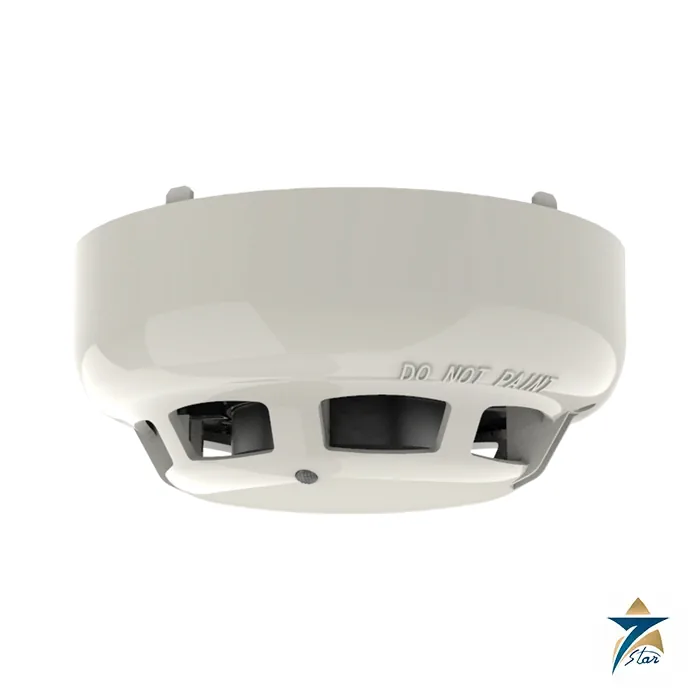
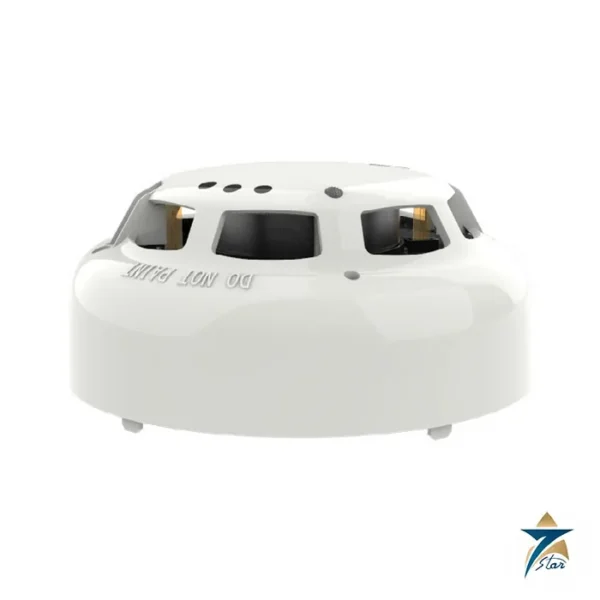
Hochiki ALN-EN Intelligent Photoelectric Smoke Sensor (ESP)
Description
Overview
The Hochiki ALN-EN is an addressable photoelectric smoke sensor made for the ESP analogue addressable protocol, and it is the detector most often specified when a loop needs plain smoke sensing without a thermal element. Fire engineers choose it for offices, plant control rooms, switch rooms and accommodation blocks because its optical chamber reacts to the slow, smouldering smoke typical of overheated cable and insulation. Seven Star LLC is an independent supplier serving Oman and the GCC. This page describes the ivory ALN-EN, with the white and black versions noted where the datasheet lists them.
Key features of the Hochiki ALN-EN
The sensing chamber of the ALN-EN is described by the maker as its newest high performance design. Its baffle shape lets smoke enter while keeping ambient light out, which allows the alarm threshold to sit higher and so improves the signal to noise ratio and lowers the risk of false alarms. Because of this, ionisation sensors are not needed in most applications. The chamber can be lifted out and replaced, so cleaning during a service visit does not require replacing the whole head.
- Twin LEDs give a 360 degree view: green while polling, amber when the sensor is isolating, red in a fire condition.
- A locking mechanism secures the sensor to its base.
- Variable sensitivity is set from the panel, from 2 to 4.5 percent per metre.
- Electronic addressing, with pulsing or non-pulsing of the LEDs controlled by the panel when the panel supports it.
- Approvals listed on the datasheet: LPCB and VdS, plus a SIL Level 2 approved variant.
Hochiki ALN-EN technical specification
| Parameter | Datasheet value |
|---|---|
| Ordering code | ALN-EN ivory, ALN-EN(WHT) white, ALN-EN(BLK) black |
| Operating voltage | 17 to 41 V DC |
| Low power mode current | 120 microamps typical |
| Quiescent current | 400 microamps typical |
| Maximum current consumption | 30 mA |
| Alarm current | 9.1 mA, controlled by the panel, excluding remote indicator |
| Communication | Digital, ESP protocol |
| Operating temperature | minus 10 to plus 50 degrees C |
| Operating humidity | 95 percent RH non-condensing at 40 degrees C |
| Sensitivity levels | 2 to 4.5 percent per metre |
| Storage temperature | minus 30 to plus 60 degrees C |
| Case material and colour | ABS; ivory, white or black |
| Weight | 95 g |
| Diameter and height | 100 mm by 45 mm |
| Compatible bases | YBN-R/3, YBO-BS, YBO-BSB2, YBN-R/3(SCI) |
| Base fixing centres | 48 to 74 mm |
| Wind exposure, EN 54-7 | 1 plus or minus 0.2 metres per second |
| Ingress protection | IP42 |
How the ALN-EN differs from other Hochiki ESP sensors
Within the same 100 mm family, the ALN-EN senses smoke only. The ATJ-EN is a heat sensor with a fixed temperature and a rate of rise element, weighing 90 g in polycarbonate, and the ACC-EN combines an optical chamber with a thermal element and weighs 95 g. The ALN-EN is the one with the lowest quiescent draw among the multi-element family at 400 microamps, equal to the ACC-EN but higher than the 350 microamps of the ATJ-EN. Its case is ABS where the heat and multi sensors use polycarbonate. Choose the ALN-EN where smoke is the expected product of combustion and avoid it in places where steam, dust or exhaust fumes would call for a heat element.
Where the Hochiki ALN-EN is used in Oman and the GCC
Smoke detection on addressable loops is common in utility buildings, data and control rooms, substation control houses, hotels and schools. In hot climates the main consideration is the cabinet and ceiling void environment: the operating range tops out at 50 degrees C, so detectors in unconditioned roof spaces need to be checked against that limit. Dust is another matter, since fine desert dust settles into chambers over time. The removable chamber of the ALN-EN helps here because maintenance staff can clean or exchange it without removing the base wiring.
Selection and compatibility notes
Sensors of this type only work with a compatible ESP control panel, so confirm the panel model and firmware before ordering. The bases listed in the datasheet are the standard base, the isolator base and the sounder or relay bases shown by their codes, and the fixing centres of 48 to 74 mm suit the usual European back boxes. The sensitivity range of 2 to 4.5 percent per metre allows the panel to apply day and night or area-based settings. If a remote indicator is needed, remember that the quoted alarm current excludes it.
Installation and commissioning
Fit the base first, wire the loop in and out terminals, then twist the detector into the base until the lock engages. Address the sensor electronically from the panel or with the hand-held programmer used on the loop, and then verify with the panel that the device appears with the expected type. Remove dust covers once building work has ended, because a covered sensor is blind. After commissioning, run a smoke test on a sample of heads and record the analogue values for later comparison.
Maintenance
Review the analogue value trend reported by the panel, which shows a creeping chamber before it causes a fault. Clean the chamber with the method described in the maker’s service instructions, replace the chamber or head when drift reaches its limit, and keep spare units of the same colour so appearance remains uniform in a room.
Choosing smoke over heat or multi-element sensing
A photoelectric chamber such as the one in this sensor responds early to the visible particles of a smouldering fire, which is why it is preferred over a heat-only head wherever life safety and early warning matter. Heat sensing is kept for kitchens, boiler rooms or dusty spaces. When a room contains both hazards, a multi-element head may be the compromise, so discuss the risk assessment with the system designer before fixing the quantities.
Ordering notes for Hochiki ALN-EN
Order by code and state the colour: plain ALN-EN is ivory. Bases are separate items, so quote the correct base with the sensors. Compare quantities per loop with the address capacity of the panel before finalising the list.
Related items you may also need: Hochiki CDX FIREbeam Xtra Conventional Beam Smoke Detector | Hochiki ACD-EN Intelligent Multi Sensor | Hochiki CDX FIREbeam Conex Conventional Beam Smoke Detector | All Hochiki products.
Documents and quotation
The manufacturer datasheet for the Hochiki ALN-EN is attached to this page and shows the specification, features and approvals. Please send your RFQ with the part number, colour, quantity and delivery location in Oman or the GCC.
Datasheets & Documents
- Datasheet Hochiki ALN-EN Intelligent Photoelectric Smoke Sensor (ESP) Datasheet Download
Reviews (0)
How would you rate this product? Cancel reply
About brand
Hochiki is a Japanese fire detection company, established in Tokyo in 1918 as Japan's first fire alarm manufacturer, with leading insurance companies among its founders. It makes smoke and heat detectors, beam detectors, addressable fire alarm systems and emergency lighting. Hochiki America has operated in the US since 1972.
Seven Star LLC is an independent supplier in Muscat. We list Hochiki detectors for fire alarm contractors in Oman and the GCC.
Hochiki company profile
| Founded | 1918, Tokyo, Japan |
|---|---|
| Founders | Members of Japan's insurance industry |
| US operations | Since 1972 |
| Systems | Conventional and addressable fire detection |
| Product families | ESP intelligent detectors and multi-sensors, FIREbeam beam detectors, CDX conventional detectors, control panels |
Milestones
- 1918: Hochiki is founded in Tokyo.
- 1972: Hochiki America begins US operations.
Hochiki product series
The ACD-EN is an intelligent multi sensor detector for Hochiki addressable systems.
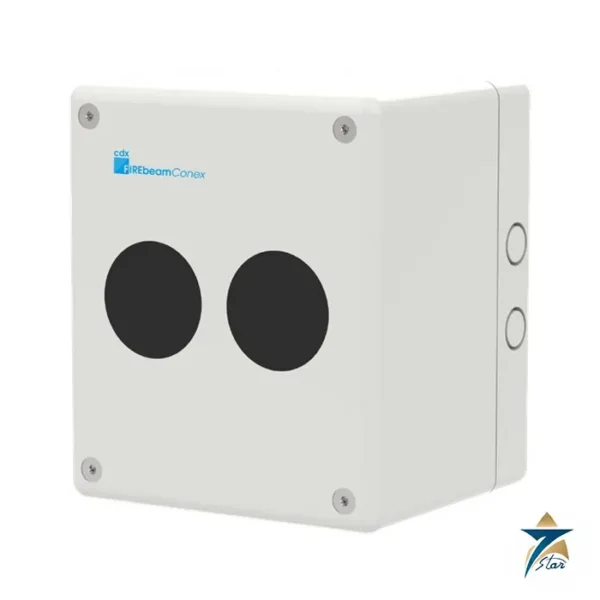
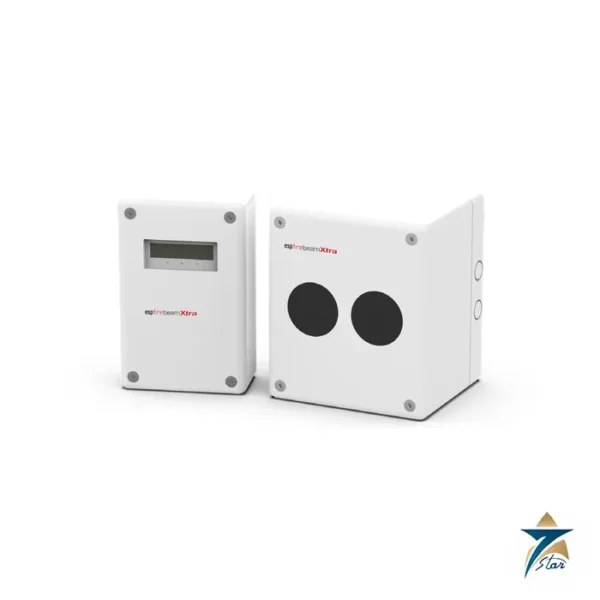
Beam smoke detectors include the CDX FIREbeam Conex and CDX FIREbeam Xtra conventional detectors and the ESP FIREbeam Xtra addressable detector.
Multi sensor detectors combine smoke and heat sensing to detect different fire types and reduce false alarms. Beam detectors send an infrared beam across an open space and alarm when smoke reduces the signal, covering large areas with fewer devices.
Detectors must match the panel protocol and be installed and tested to the local fire code.
Where Hochiki detectors are used
Offices, hotels, schools and hospitals, and large open spaces such as warehouses, atriums and halls where beam detectors cover long distances.
Hochiki products we list
| Family | Examples |
|---|---|
| Fire & Gas Detectors | ACD-EN Intelligent Multi Sensor, CDX FIREbeam Conex Conventional Beam Smo…, ESP FIREbeam Xtra Addressable Beam Smoke… |
Ordering Hochiki detectors: what we need
Send the part number, protocol (conventional or ESP addressable), the beam range and the panel in use.
Facts checked against IFSEC Global centenary coverage and Hochiki company profiles, October 2026.
Browse Hochiki products by category: Fire & Gas Detectors.
FAQ
Questions about the Hochiki ALN-EN Intelligent Photoelectric Smoke
Answers from our engineering team on installation, compatibility and integration.
01What type of sensing element does the Hochiki ALN-EN use?
It is a photoelectric smoke sensor with a removable high performance chamber, and it works on Hochiki's ESP analogue addressable protocol.
02What sensitivity range does the Hochiki ALN-EN offer?
The datasheet gives sensitivity levels from 2 to 4.5 percent per metre, selected from the control panel.
03Which bases fit the Hochiki ALN-EN?
The datasheet lists YBN-R/3, YBO-BS, YBO-BSB2 and YBN-R/3(SCI) as compatible bases, with fixing centres of 48 to 74 mm.
04What colours does the Hochiki ALN-EN come in?
Ivory is the plain ALN-EN code, while ALN-EN(WHT) is white and ALN-EN(BLK) is black.
05What is the operating voltage and temperature range of the Hochiki ALN-EN?
It runs on 17 to 41 V DC and the operating temperature range is minus 10 to plus 50 degrees C at up to 95 percent RH non-condensing.


Reviews
There are no reviews yet.