- Automation & ControlView all 2,922 products
- Automation Accessories
- AC Drives
- PLC & I/O Cards
- Industrial Communications
- Vibration Monitoring
- Controllers & Data Acquisition
- Isolator & Barrier
- Safety Switches & Guard Locking
- Motor Soft Starters
- CCTV & Security
- Encoders
- Pneumatic Cylinders
- HMI Displays
- Servo Drives
- Industrial Computers
- Machine Vision
- Automation Software
- Robotics
Brand: Endress+Hauser (E & H)
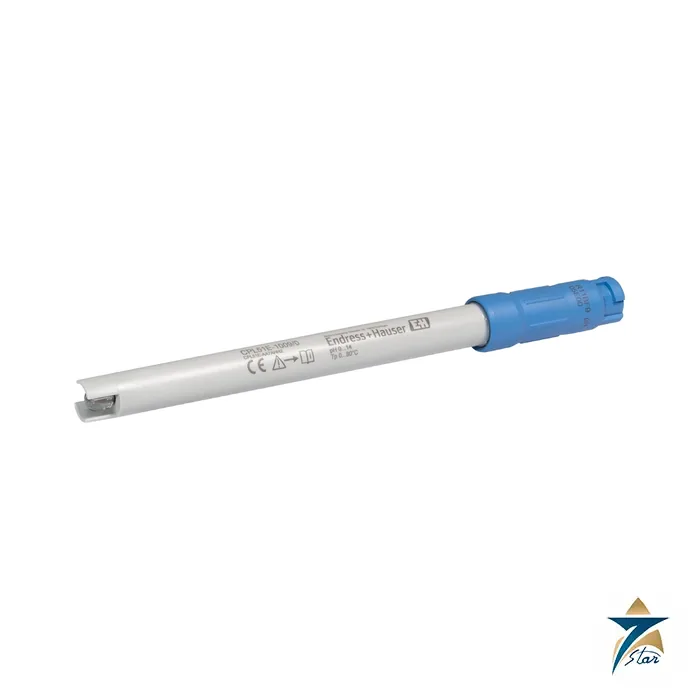
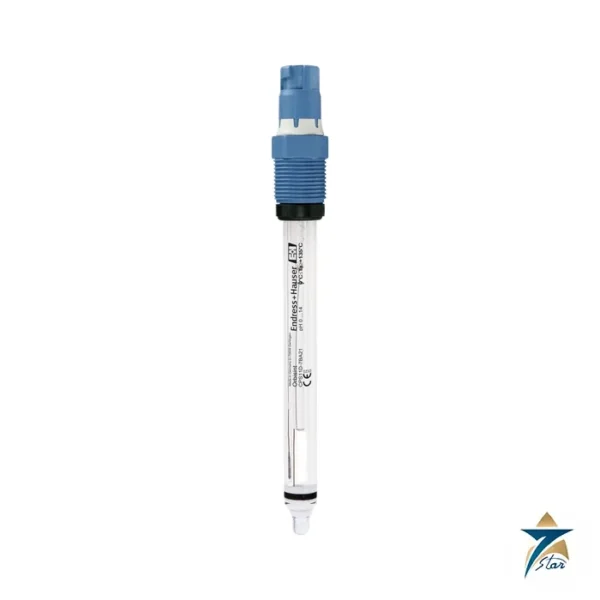
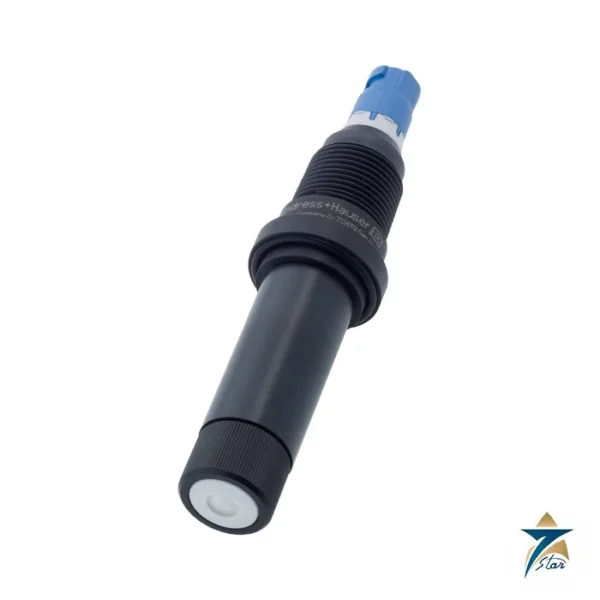
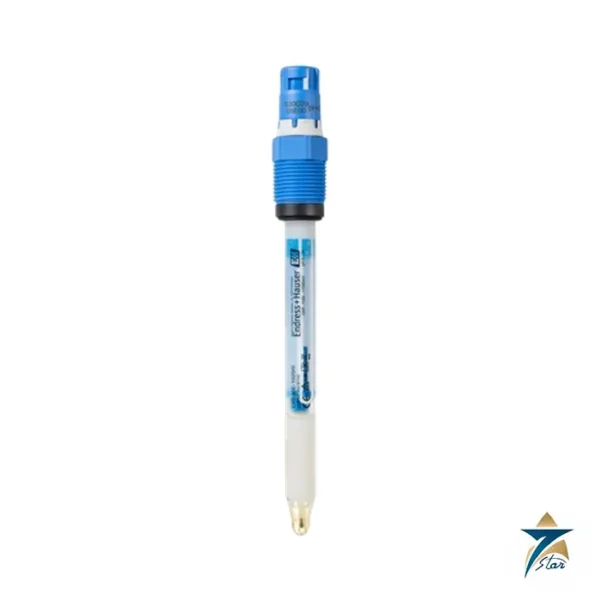
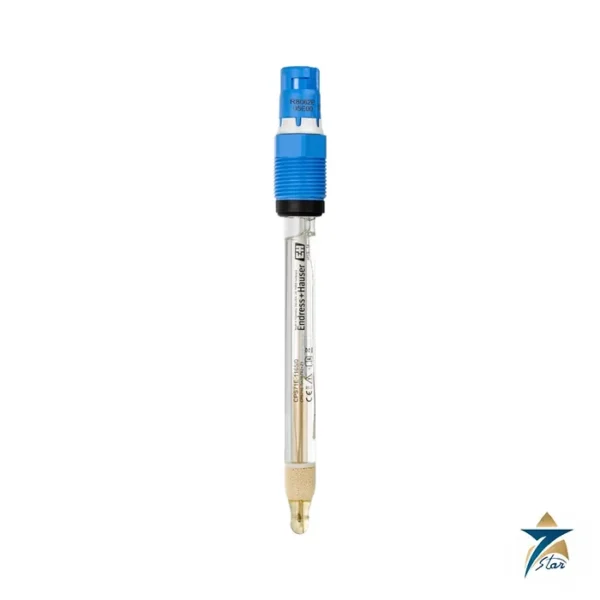
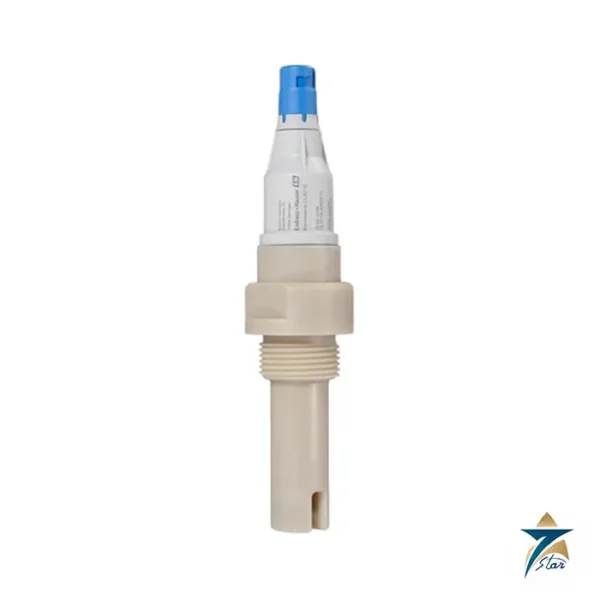
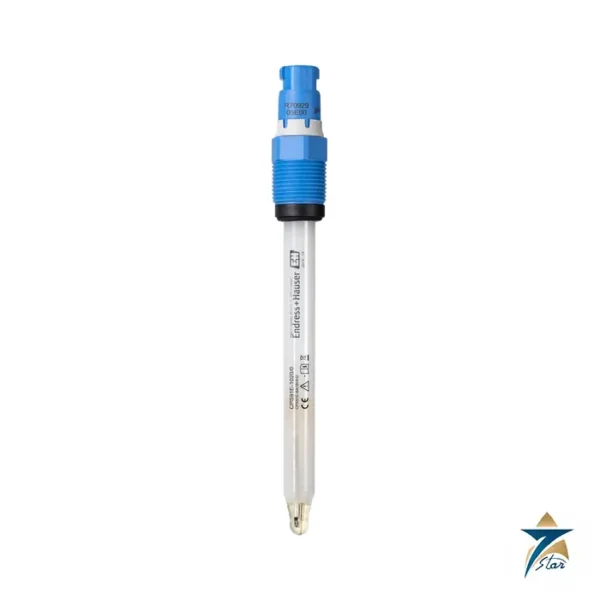
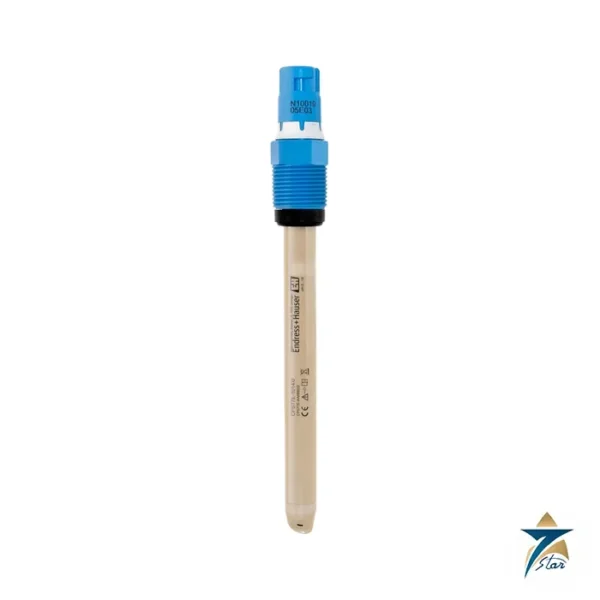
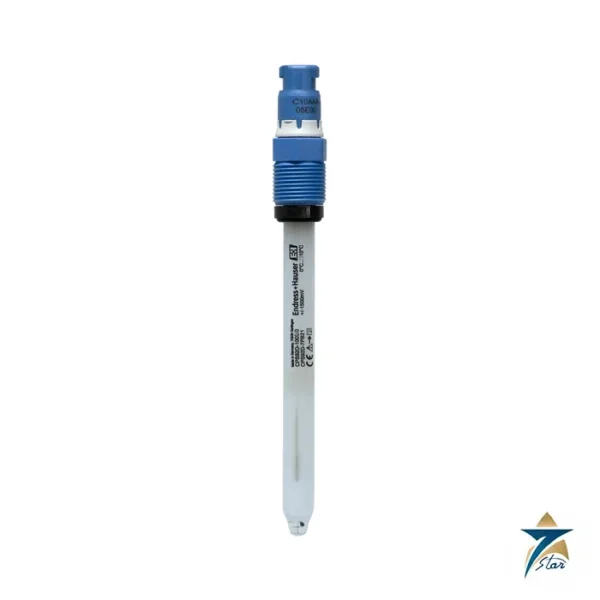
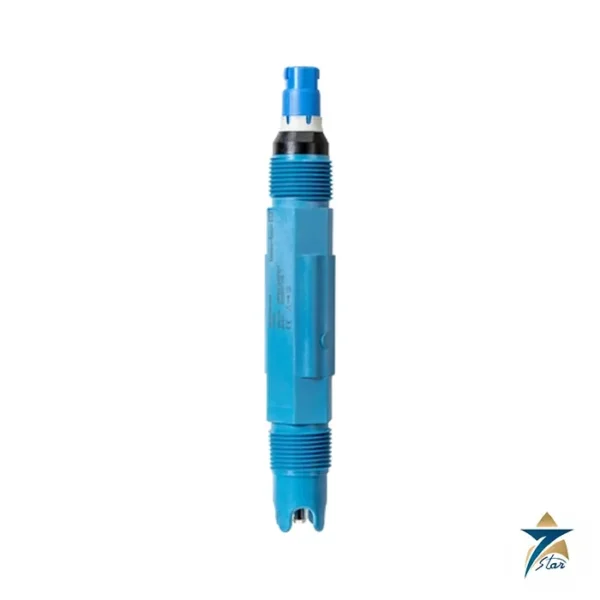
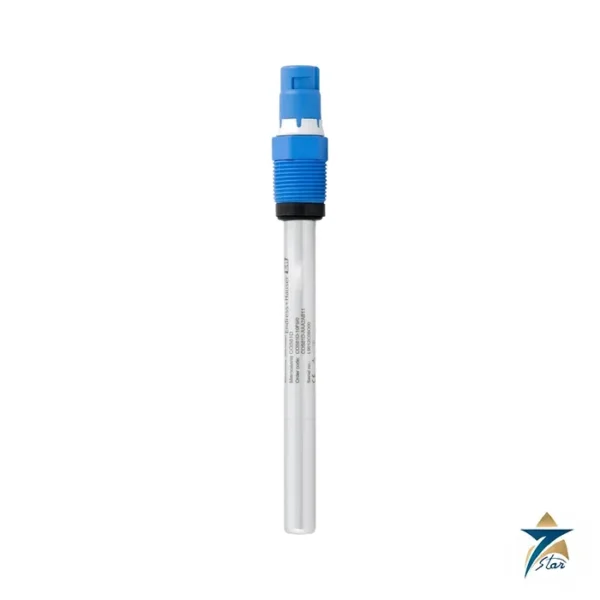
Endress+Hauser CPL51E Memosens Laboratory pH Sensor
Description
Endress+Hauser CPL51E for sampling and laboratory pH
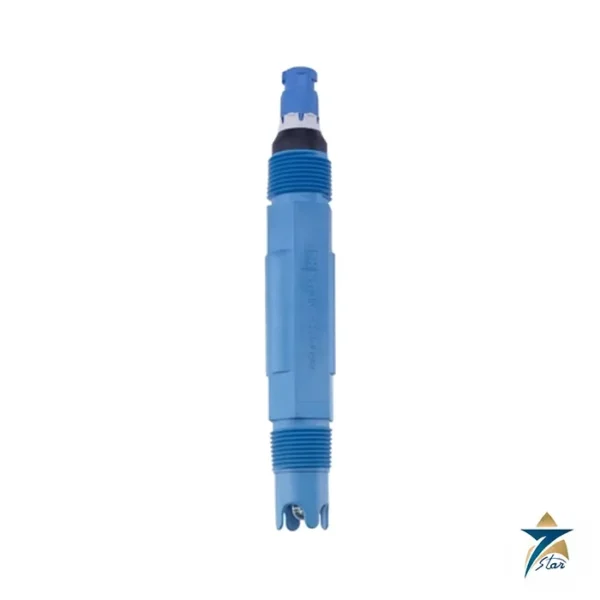
The CPL51E is a very light digital pH probe from Endress+Hauser, designed for lab measurements and random sampling in the field. It is a Memosens 2.0 sensor with a plastic PEEK shaft, a 12 mm class body only 120 mm long and a weight of 33 g, so one hand can hold it and a sample cup together. It is not meant for permanent process installation; its job is spot checks of drinking water, wastewater and process water.
Seven Star LLC is an independent supplier serving Oman and the GCC and is not affiliated with the manufacturer. Laboratories at utilities and effluent plants often ask us for CPL51E when an older cabled lab electrode has to be replaced by something that holds its own calibration history.
CPL51E at a glance
| Parameter | Value |
|---|---|
| Measured variables | pH and temperature |
| pH range | 0 to 14 |
| Temperature range | 0 to 80 degrees C (process and ambient use not below 0 degrees C) |
| Reference | Ag/AgCl lead, gel KCl 3M, AgCl-free |
| Junction | Open aperture, which the datasheet links to low contamination risk and fast response in cold, ion-weak water |
| Shaft material | PEEK |
| Nameplate | Ceramic metal oxide |
| Temperature sensor | NTC 30K |
| Dimensions | Length 120 mm, diameter 11.9 mm |
| Weight | 33 g |
| Ingress protection | IP 68, 10 m water column, 25 degrees C, 45 days, 1 M KCl |
| Storage | 0 to 50 degrees C, non-freezing |
| EMC | Interference emission and immunity per EN 61326-1: 2013 |
| Head and thread | Memosens laboratory plug-in head, Pg 13.5 |
Why a digital head matters in the lab
Information that normally sits on a paper log lives in the CPL51E itself: manufacturer data, serial number, order code, date of manufacture, calibration data and date, the count of calibrations, the serial number of the handheld that did the last adjustment, plus the temperature and pH application range and the first commissioning date. Move the probe to another handheld and the data follow it. Signal transfer is inductive and non-contact, which removes the corroded plug contacts that plague analog lab electrodes.
How CPL51E differs from other Memosens pH sensors
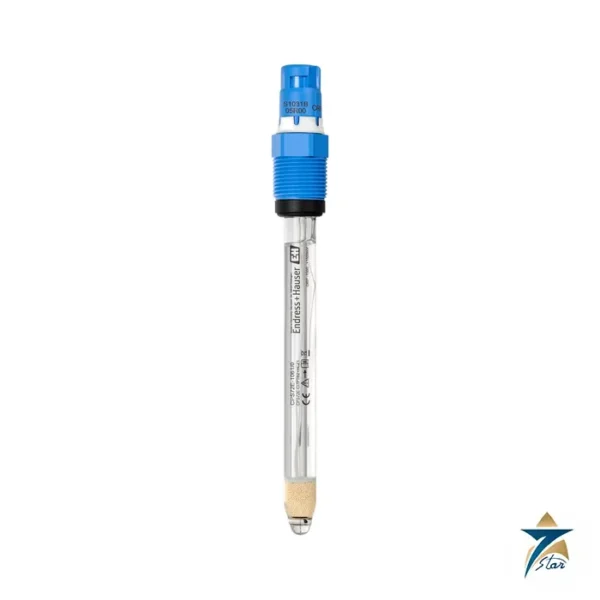
Compared with process Memosens sensors such as the CPS11E or CPS71E, the CPL51E trades pressure rating and temperature span for portability: it works only from 0 to 80 degrees C, has no pressure specification because it is not installed in pipes, and its shaft is PEEK instead of glass or stainless steel. Its open aperture junction gives fast response in cold ion-weak water, whereas the PTFE ring and ceramic designs of process sensors favour fouling resistance. The temperature element is an NTC 30K rather than the Pt1000 used in many other Memosens sensors.
Using CPL51E with CML18 and Memobase Plus
The measuring system drawn in the datasheet has three elements: the CML18 handheld, an optional smartphone with the Smartblue app, and the CPL51E. Accessories listed are the Memosens laboratory cable CYK20, the data cable CYK10, Memobase Plus CYZ71D software for lab calibration records and CPY20 buffer solutions referenced to PTB or NIST material per DIN 19266. A smartphone gives the operator a second view of the reading.
Typical sampling jobs for CPL51E in Oman and the GCC
The datasheet limits the application to drinking water, wastewater and process water. In practice that means a water quality technician at a municipal works walking from a storage tank to a distribution point, an operator at a sewage treatment plant checking the aeration basin and effluent channel, or a utilities chemist verifying a process water sample before it is sent for full laboratory analysis. The 80 degrees C upper limit is not a licence for hot samples straight from a boiler; let the sample cool to the sensor range before measuring.
Because the shaft is PEEK, the CPL51E is also a sensible option where glass breakage in a busy laboratory is a concern, while the fast response in cold, ion-weak water suits desalination permeate checks and rainwater runoff samples.
Handling notes for CPL51E
- Keep the glass membrane protected between readings; the plastic shaft is designed to give it physical protection.
- Never expose the probe to temperatures below 0 degrees C.
- Always calibrate with the handheld before an important series of samples and let the sensor record the calibration.
- Rinse between samples to avoid carry-over, since the junction is open.
Quoting Endress+Hauser CPL51E
The part is ordered as a complete sensor with a Memosens laboratory head; cables, handheld and buffers are separate items. If you are building a mobile kit, tell us which handheld you already have so we can confirm compatibility with CPL51E before quoting.
CPL51E questions answered briefly
Which device reads the Endress+Hauser CPL51E? The datasheet says digital laboratory Memosens sensors must be connected to a Memosens handheld such as Liquiline Mobile CML18, and they also suit Liquiline To Go and Memobase Plus.
What is the shaft material of CPL51E and how heavy is it? The shaft is PEEK and the whole sensor weighs 33 g, which makes it far lighter than the stainless or glass-shaft process pH sensors.
What measuring range does CPL51E have? pH 0 to 14 and temperature 0 to 80 degrees C, with an NTC 30K temperature sensor for automatic compensation.
Can CPL51E be left in a freezing sample? No, the datasheet warns against use below 0 degrees C and gives a non-freezing storage range of 0 to 50 degrees C.
What does CPL51E store inside the sensor? Serial number, order code, manufacturing date, calibration data and date, number of calibrations, last handheld serial number and application data such as first commissioning date.
Documents and quotation
The manufacturer datasheet for CPL51E is available from this page. Send us an RFQ with the part number CPL51E, the quantity and any cables or buffer solutions that should travel with it, and we will return a quotation.
Other Models in the Memosens Lab Range
Seven Star LLC supplies models from the Memosens Lab range in Oman and the GCC. Compare the related models below and request a quote for the one that matches your application.
| Model | Category | |
|---|---|---|
| Endress+Hauser CLL47E Memosens 4-Electrode Conductivity Sensor | Liquid Analysis Sensors | View details |
| Endress+Hauser CPL51E Memosens Laboratory pH Sensor | Liquid Analysis Sensors | You are viewing this model |
Datasheets & Documents
- Datasheet Endress+Hauser CPL51E Memosens Laboratory pH Sensor Datasheet Download
Reviews (0)
How would you rate this product? Cancel reply
About brand
Endress+Hauser makes process measurement instruments for flow, level, pressure, temperature and liquid analysis. Georg H. Endress and Ludwig Hauser started the business in Lörrach, Germany, on 1 February 1953, first selling level meters, and the Endress+Hauser name has been used since 1957. The group is headquartered in Reinach, Switzerland, and has been wholly owned by the Endress family since 1975.
Seven Star LLC is an independent supplier listing Endress+Hauser flowmeters, level and pressure transmitters, temperature assemblies and liquid analysis products for buyers in Oman and the GCC. Instruments are matched from the full order code on the nameplate.
Endress+Hauser company profile
| Origin | Founded in Lörrach, Germany, on 1 February 1953 by the Swiss engineer Georg H. Endress and Ludwig Hauser |
|---|---|
| Headquarters | Endress+Hauser AG, Reinach (Basel-Landschaft), Switzerland |
| Ownership | Family owned; the Endress family has been the sole shareholder since 1975, and a family charter commits the company to stay family owned |
| Size | About 16,500 employees and sales of about EUR 3.7 billion (2023, as reported by the company) |
| Product families | Proline flowmeters, Micropilot and Levelflex radar, Liquiphant switches, Cerabar and Deltabar pressure, iTEMP and iTHERM temperature, Liquiline and Memosens liquid analysis |
Milestones
- 1953: Georg H. Endress and Ludwig Hauser start the business in Lörrach on 1 February, first selling level meters.
- 1957: The Endress+Hauser name comes into use.
- 1975: The Endress family becomes sole shareholder.
- 2023: About 16,500 employees and sales of about EUR 3.7 billion, as reported by the company.
Endress+Hauser product lines
| Line | Measuring principle | Typical use |
|---|---|---|
| Promass F 300, Promass 80F, 83F/84F | Coriolis mass flow | Direct mass flow and density of liquids and gases, hydrocarbon transfer and chemical dosing |
| Promag P 300, P 500, H 300, W 400, W 10, 50P | Electromagnetic flow | Water, wastewater, slurries and other conductive liquids |
| Prowirl F 200, 72F | Vortex flow | Steam, gas and low-viscosity liquids |
| Prosonic Flow 92F, t-mass 65F | Ultrasonic and thermal mass flow | Water lines; compressed air and industrial gases |
| Micropilot FMR62, FMR67, FMR60, FMR10B, FMR20, FMR50, FMR52 | Free-space radar level, 80 GHz and 26 GHz | Tanks, process vessels, silos and open water channels |
| Levelflex FMP51, FMP50, FMP54, FMP55 | Guided wave radar level | Level and interface in vessels, separators and bypass chambers |
| Liquiphant FTL51, Prosonic S FMU90 | Vibronic point level; ultrasonic level | High and low level alarms, pump protection, open channel flow |
| Cerabar PMC71B, PMP51B, PMP71, Deltabar PMD78B, PMD75 | Pressure and differential pressure | Process pressure, hydrostatic level and DP flow |
| iTEMP TMT82, TMT162, iTHERM TM101, TR66, TR10 | Temperature transmitters and thermometers | RTD and thermocouple points with thermowells |
| Liquiline CM444, CM442, Memosens CPS11E, Stamolys reagents | Liquid analysis | pH, ORP, conductivity, dissolved oxygen and nutrient analysis in water treatment and process |
Where Endress+Hauser instruments are used
In Oman and the GCC, Endress+Hauser instruments are common in oil and gas production and processing, refineries and petrochemicals, desalination and water networks, wastewater treatment, power plants and food and beverage plants. Coriolis meters measure hydrocarbon and chemical flows, electromagnetic meters cover water and wastewater, radar transmitters handle tank and silo level, and Liquiline analysers monitor water quality. Proline 300 and 500 flowmeters include Heartbeat Technology for in-situ verification, which reduces the need to remove a meter for checks.
Ordering Endress+Hauser instruments: what we need
The order code on the nameplate (for example PMP71-1QA1S11RDADU) defines every option: measuring range, process connection, materials, output, approvals and display. Send it with the serial number; Endress+Hauser can retrieve the original configuration from the serial number. For a new instrument add the medium, operating and design pressure and temperature, range, line size or tank geometry, process connection, wetted materials, output or protocol (4-20 mA HART, PROFIBUS, FOUNDATION Fieldbus, Modbus) and the hazardous-area approval required. Older models such as Promass 80/83 or Micropilot M are replaced by current Proline or 80 GHz Micropilot devices.
Facts checked against Endress+Hauser company history and product information, October 2026.
Browse Endress+Hauser products by category: Flowmeters, Level Transmitter, Pressure Instrumentation, Temperature, Liquid Analysis Sensors, Liquid Analytical Systems.
FAQ
Questions about the Endress+Hauser CPL51E Memosens Laboratory pH Sensor
Answers from our engineering team on installation, compatibility and integration.
01Which device reads the Endress+Hauser CPL51E?
The datasheet says digital laboratory Memosens sensors must be connected to a Memosens handheld such as Liquiline Mobile CML18, and they also suit Liquiline To Go and Memobase Plus.
02What is the shaft material of CPL51E and how heavy is it?
The shaft is PEEK and the whole sensor weighs 33 g, which makes it far lighter than the stainless or glass-shaft process pH sensors.
03What measuring range does CPL51E have?
pH 0 to 14 and temperature 0 to 80 degrees C, with an NTC 30K temperature sensor for automatic compensation.
04Can CPL51E be left in a freezing sample?
No, the datasheet warns against use below 0 degrees C and gives a non-freezing storage range of 0 to 50 degrees C.
05What does CPL51E store inside the sensor?
Serial number, order code, manufacturing date, calibration data and date, number of calibrations, last handheld serial number and application data such as first commissioning date.


Reviews
There are no reviews yet.