Brand:

SICK IM18-05BPS-ZC1 M18 Inductive Sensor, 5 mm Flush PNP, M12 Plug

Description

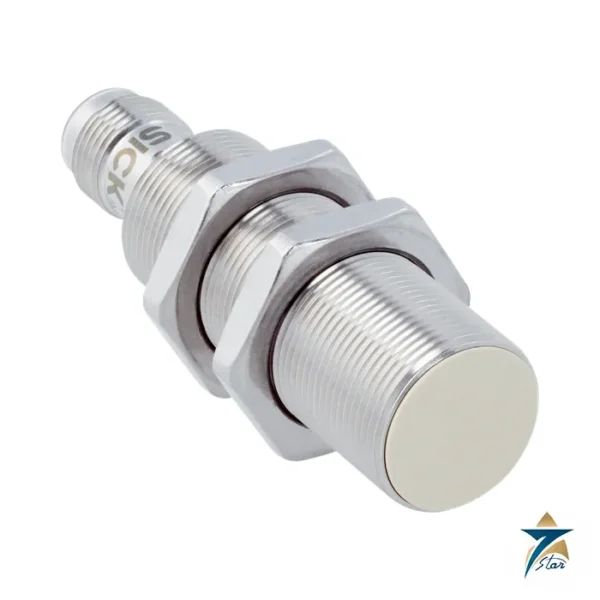
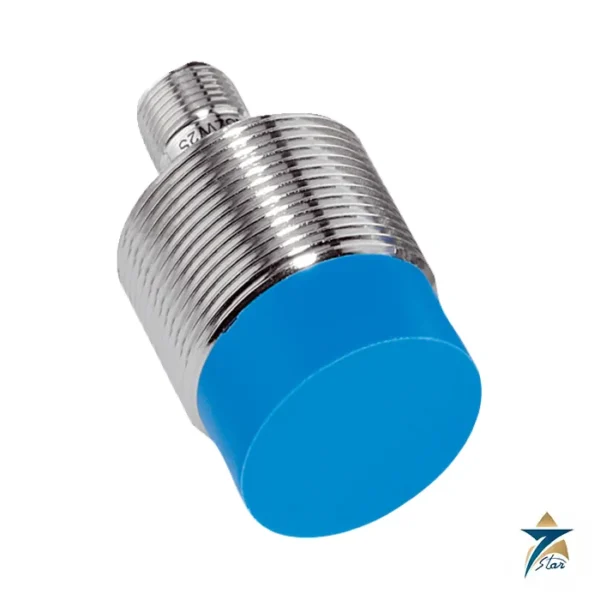
SICK IM18-05BPS-ZC1: M18 reach with a quick-change M12 plug

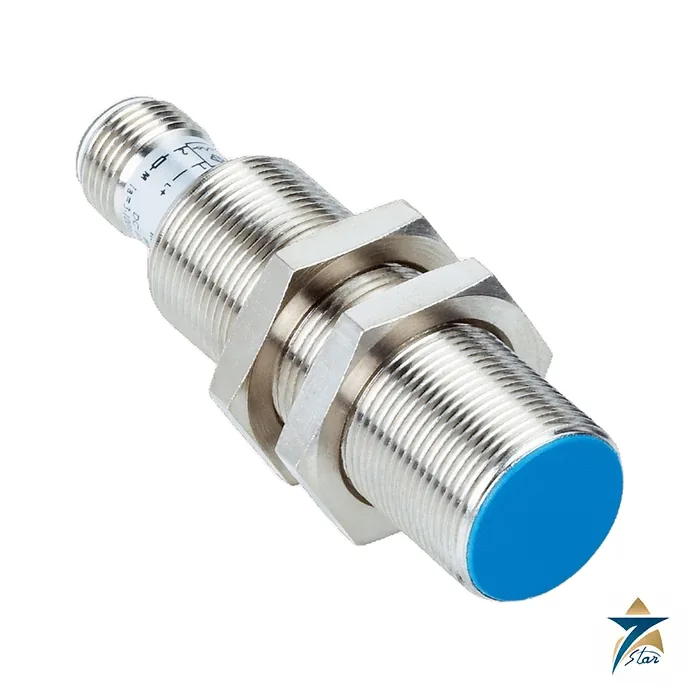
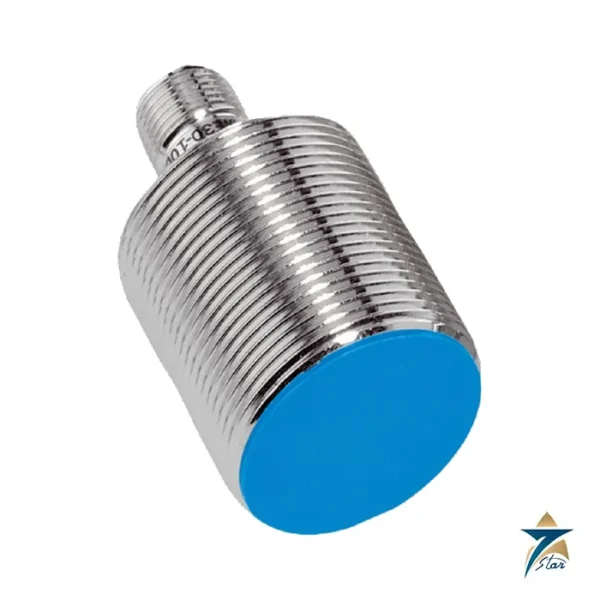
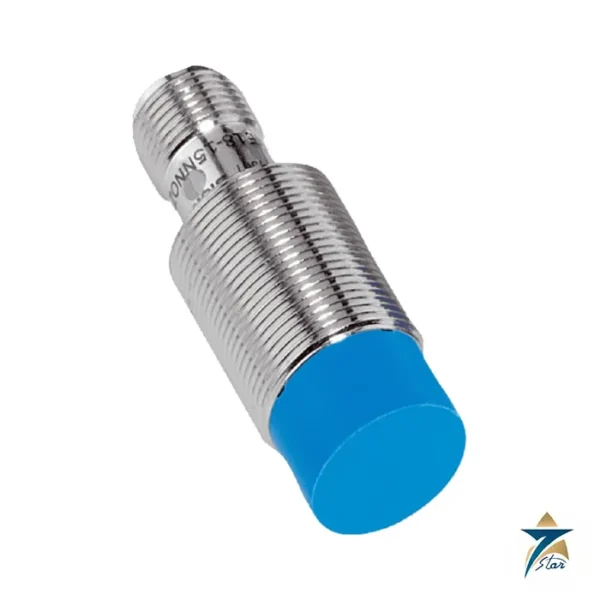
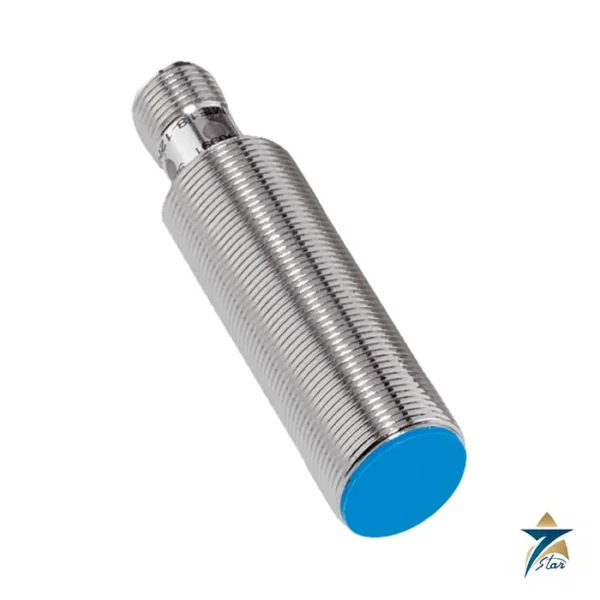
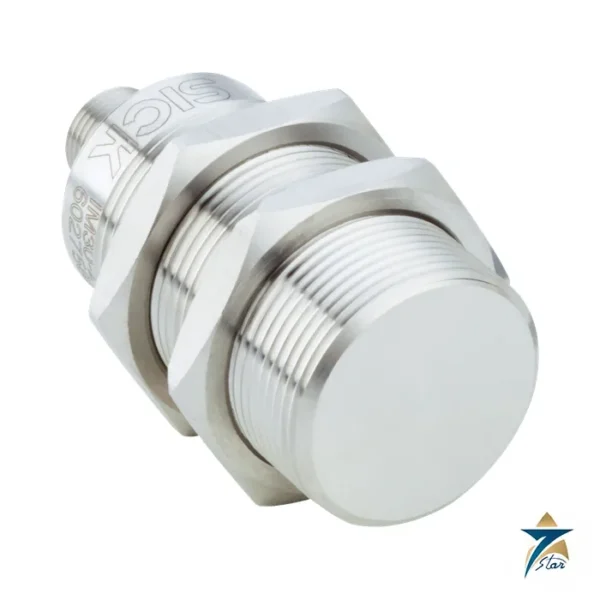
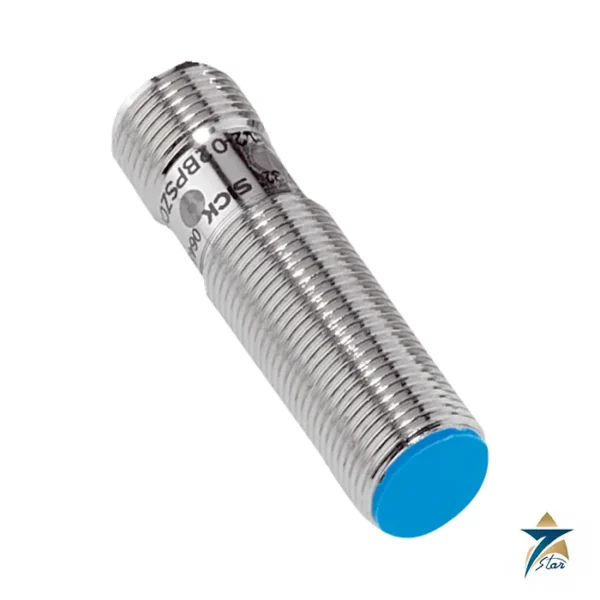
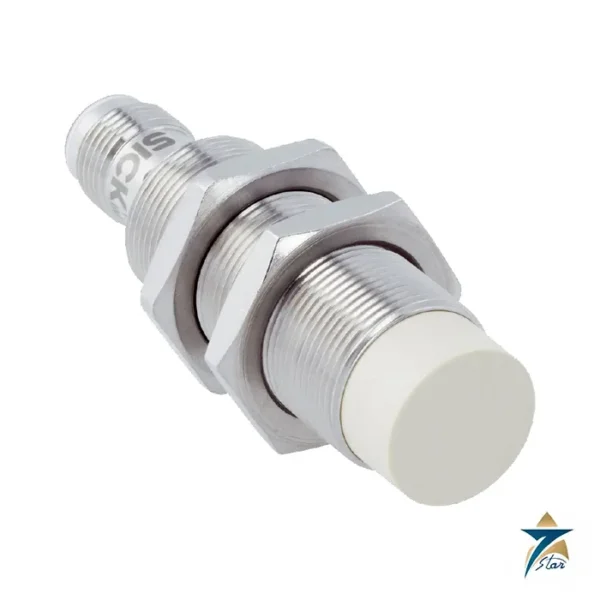
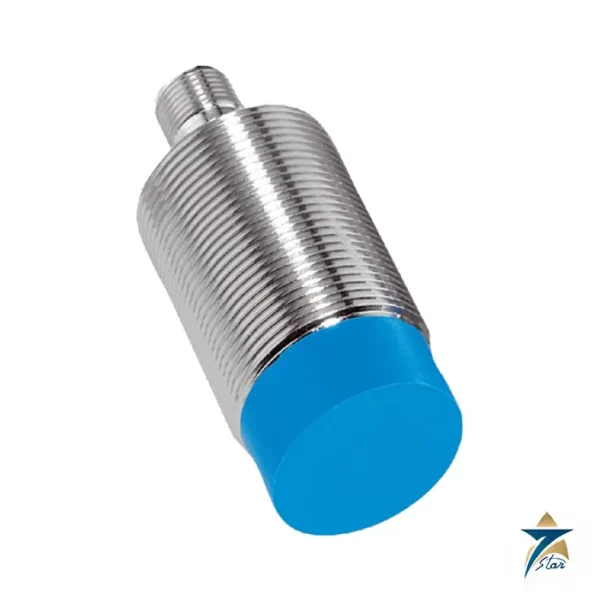
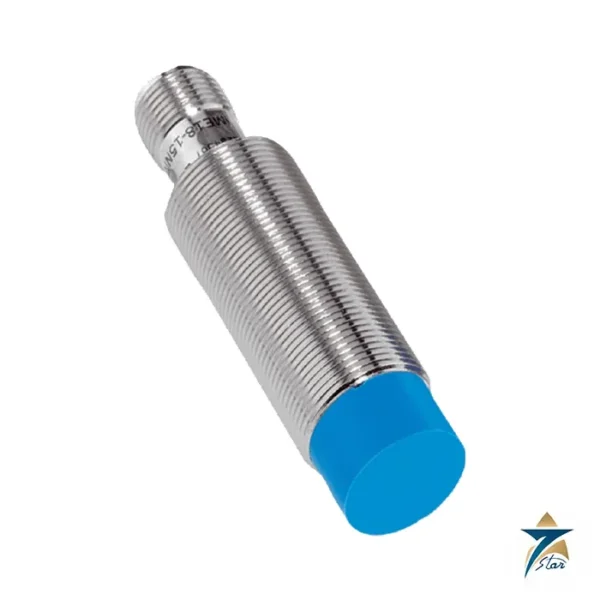
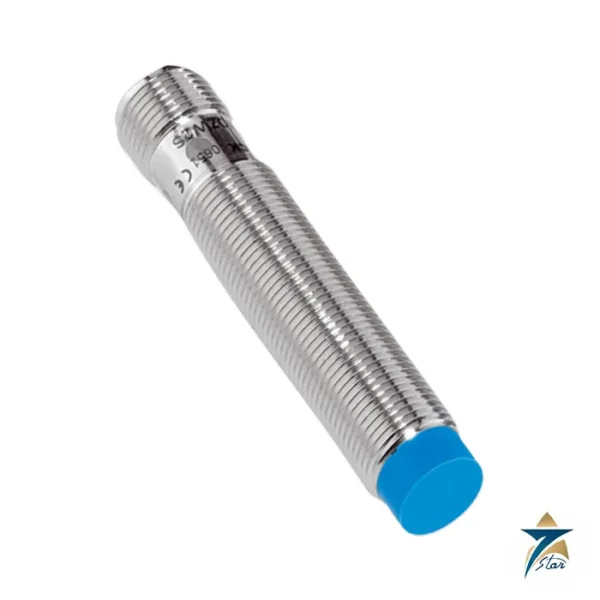
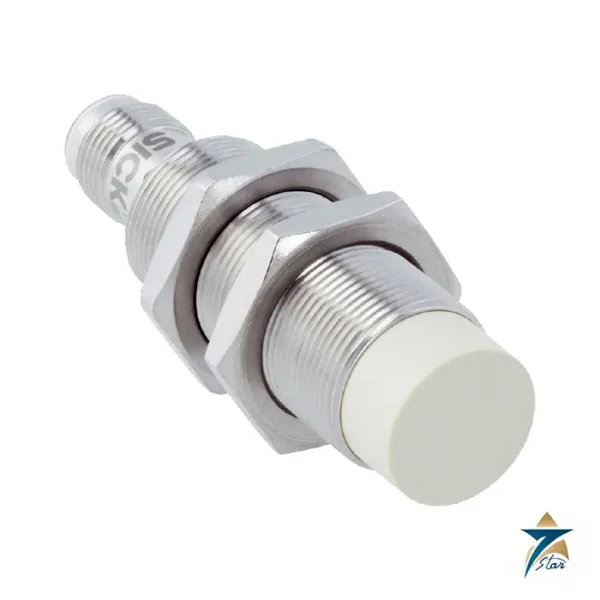
The SICK IM18-05BPS-ZC1 (part no. 6011991) is an M18 x 1 inductive proximity sensor with a flush-mountable 5 mm nominal sensing distance and a PNP normally-open output. Unlike cable versions, it terminates in a four-pin M12 male connector on the rear of a 64 mm nickel-plated brass barrel, so a faulty sensor can be exchanged in seconds without re-terminating wires.

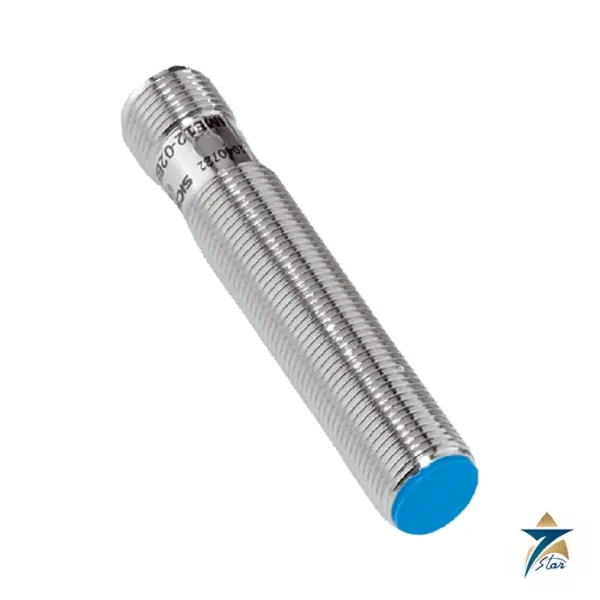
The IM Standard series is meant for general industrial duty. The IM18-05BPS-ZC1 is the larger sibling of the common M12 types: it offers 5 mm of range instead of 4 mm, a higher continuous current of 400 mA and a lower voltage drop of 1 V, in exchange for a slower 600 Hz switching frequency.

The M18 platform is popular because it balances size and strength. The 18 mm brass barrel withstands the knocks of heavy machinery, the 48 mm thread length gives plenty of adjustment depth in a bracket, and the 5 mm range leaves a comfortable air gap between target and sensor face. An LED display on the housing shows the switching state, which speeds up fault finding at the machine without a multimeter.

Because the device is an inductive type, it responds to metal targets only. Plastic, wood, glass and liquids are invisible to it, a property that is often exploited: the sensor can look through a plastic guard or a non-metallic wall to detect a steel part behind it.

Characteristics of IM18-05BPS-ZC1

  • Thread M18 x 1, diameter 18 mm, housing length 64 mm, thread length 48 mm
  • Display LED on the housing, flush installation, plastic sensing face
  • Hysteresis 2 percent to 10 percent, reproducibility up to 2 percent, temperature drift up to plus or minus 10 percent of Sr
  • Operating temperature -25 to +70 degrees Celsius, IP67 per EN 60529
  • Shock and vibration 30 g, 11 ms and 10 to 55 Hz at 1 mm
  • Maximum tightening torque 30 Nm

IM18-05BPS-ZC1 datasheet figures

Parameter Value
Type part no. 6011991
Series IM Standard, metric
Thread / diameter M18 x 1 / 18 mm
Sensing range Sn 5 mm, flush installation
Switching output PNP, normally open, DC 3-wire
Supply voltage 10 V DC to 30 V DC, ripple up to 10 percent
Voltage drop Up to 1 V
Continuous current Up to 400 mA
Switching frequency 600 Hz
Hysteresis / reproducibility 2 to 10 percent / up to 2 percent
Connection Male connector M12, 4-pin
Housing Nickel-plated brass, length 64 mm, thread 48 mm
Enclosure rating IP67
Operating temperature -25 to +70 degrees Celsius
Maximum tightening torque 30 Nm
MTTFD 93 years

IM18-05BPS-ZC1 compared with IM12 sensors

Compared with the IM12-04BPS-ZW1, the IM18-05BPS-ZC1 offers one extra millimetre of range, tighter reproducibility (2 percent against 5 percent) and a narrower hysteresis band (2 to 10 percent against 1 to 15 percent). The IM12 type switches at 1,000 Hz with a 2 m cable; the IM18 type switches at 600 Hz with a connector. The MTTFD also differs, 93 years for the IM18-05BPS-ZC1 against 192 years for the IM12 type, which reflects different electronic designs, not a quality difference. Use the IM18 where the larger thread provides more mechanical strength and the M12 connector offers faster replacement.

For buyers who maintain installed bases, one more point matters: the IM18-05BPS-ZC1 carries the Standard series designation, which SICK positions as the economical range. The same M18 thread is also available in other SICK inductive series with longer ranges or stainless bodies, so if the application is harsher than general machinery, the type code should be revisited rather than forced.

Applications for IM18-05BPS-ZC1 in Omani industry

Typical uses include end-position sensing on pneumatic gates in cement plants, detection of metal cans on beverage lines, position feedback on dosing valves and part presence at welding fixtures. In water utilities, it is a common proximity detector on penstock gates and screw-conveyor drives. The 5 mm range suits mounting on heavier frames where vibration moves the target by a millimetre or two.

Installing IM18-05BPS-ZC1 flush in metal

The datasheet lists the flush-installation clearances: A 9 mm, B 18 mm, C 18 mm, D 15 mm, E 3.6 mm and F 40 mm. Observe them when mounting next to other sensors or in steel brackets. For non-flush mounting the free space requirements are different, so only use the flush dimensions for this sensor type and keep the 30 Nm torque limit in mind when tightening the nuts.

Electrical connection of IM18-05BPS-ZC1

Connect with an M12 four-pin female cordset according to connection diagram CD-007; one pin is shown as not connected, and the normally-open output goes to the PLC input. Supply is 10 V to 30 V DC with ripple up to 10 percent. Short-circuit and power-up pulse protection are built in, and the continuous load limit is 400 mA.

Test the installed sensor by passing a steel target at 3 mm, then at 6 mm. The output should be on in the first case and off in the second. Record the result with the cable or cordset reference, so that later fault finding can distinguish a failed sensor from a failed cable.

Servicing IM18-05BPS-ZC1

The sensor has no wearing parts; routine checks cover a clean sensing face, intact connector seals and secure lock nuts. If a spare is kept on site, the plug-in design allows swapping within minutes during a stoppage.

Supply of IM18-05BPS-ZC1

Order using the full type code IM18-05BPS-ZC1 and the part number 6011991. Seven Star LLC is an independent supplier serving Oman and the GCC and is not affiliated with the manufacturer.

Documents and quotation

The datasheet for the IM18-05BPS-ZC1 can be downloaded from this page. Send an RFQ stating IM18-05BPS-ZC1, the quantity and the delivery point in Oman or the GCC.

Datasheets & Documents
  • PDF Datasheet SICK IM18-05BPS-ZC1 M18 Inductive Sensor, 5 mm Flush PNP, M12 Plug Datasheet Download
Reviews (0)

Reviews

There are no reviews yet.

How would you rate this product?

It takes about 10 seconds — just tap a star. Your email is never published.

About brand

SICK is the German maker of industrial sensors: photoelectric and proximity sensors, safety laser scanners and light curtains, encoders, distance sensors, code readers and gas analysers. Erwin Sick, an optics engineer, founded it in Munich in 1946, and in 1952 it introduced its first marketable accident-prevention light curtain, which protected press operators by stopping the machine when a hand broke the light beam. The company moved to Waldkirch in the Black Forest in 1956 and is still headquartered there. It is a privately held company, and has been an Aktiengesellschaft (AG) since 1996.

SICK company profile

Founded 1946, Munich, Germany, by Erwin Sick (1909–1988)
Headquarters Waldkirch, Baden-Württemberg, Germany (since 1956)
Ownership Privately held; after the founder's death in 1988 his widow Gisela Sick became the main shareholder. Legal form SICK AG since 1996
Size More than 12,000 employees and group revenue of about EUR 2.3 billion (company figures for 2023)
First breakthrough Accident-prevention light curtain for presses, shown in Hanover in 1952
International growth First foreign subsidiary in France in 1972, United States in 1976; today sales and service companies worldwide
Product families Photoelectric, inductive, capacitive, magnetic and ultrasonic sensors; safety laser scanners, light curtains, safety controllers and relays; encoders and motor feedback systems; distance sensors and LiDAR; barcode and 2D code readers and machine vision; gas analysers, dust and flow measurement for process and emissions monitoring

Milestones

  • 1946: Erwin Sick receives a licence to run his engineering firm in Munich.
  • 1952: The first marketable accident-prevention light curtain is presented in Hanover and goes into series production.
  • 1956: The company moves to Waldkirch with 25 employees.
  • 1972 and 1976: Subsidiaries are founded in France and the United States.
  • 1996: SICK becomes an Aktiengesellschaft.
  • Today: Sensors for factory and logistics automation, machine safety and process analysis, with a large share of revenue outside Germany.

Choosing a SICK sensor

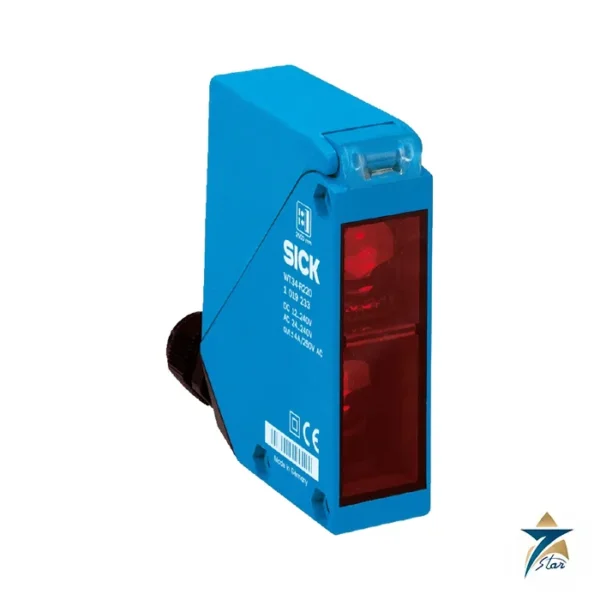
For object detection, the sensing principle comes first. A retro-reflective sensor (WL series) sends light to a reflector and switches when an object breaks the beam; it is reliable over long distances and easy to align. A sensor with background suppression (WTB series) detects an object at a set distance and ignores what is behind it, which suits conveyors with shiny or dark backgrounds. A through-beam pair (WS/WE) gives the longest range and the highest reliability in dust. For transparent bottles and film, use a model built for transparent objects (for example WL12G-3B or WL150-P420). The digits in the code also matter: "P" usually means a PNP output and "N" NPN, and the last digits set the connector or cable. For machine guarding, a safety laser scanner such as nanoScan3 or microScan3 protects an area, while a safety controller such as Flexi Soft combines several safety devices.

Where SICK products are used

In Oman and the GCC, SICK sensors are used in packaging and bottling lines, food and beverage plants, logistics and airport baggage handling, cement and steel plants, ports and cranes, automated warehouses, and on machines built by European OEMs. SICK safety scanners guard robots and automated guided vehicles, and its encoders give position feedback on motors, hoists and conveyors.

SICK products we list

Family Examples
Photoelectric sensors WL12-3P2431, WTB12-3P2431, GTB6-P4211, VL18-4P3240, WL12G-3B2531, WS/WE100, KT5W contrast, W26 IO-Link
Proximity, cylinder and ultrasonic sensors IME12-08NPSZC0S, IME18-05BPSZC0S, MZT8, UM18 4-20 mA, UM30, UFN3 fork
Machine safety nanoScan3, microScan3, S300 Professional, Flexi Soft FX3-CPU1, FX3-XTIO, ReLy OSSD
Encoders and motor feedback DFS60B, AFM60 PROFINET, AFS60 SSI, ATM60 PROFIBUS, SRS50, EFS50
Distance sensors and code readers DT50, DL50, DT35, Lector632

Ordering SICK products: what we need

Send the type code and the 7-digit SICK part number from the label (for example WTB12-3P2431 together with its part number). For a replacement sensor, add the output (PNP or NPN), connection (M8, M12 or cable) and sensing distance. For encoders, add the interface (incremental, SSI, PROFIBUS, PROFINET), resolution and shaft type. For safety scanners, tell us the model and whether the existing configuration needs to be kept.

Frequently requested SICK models: SICK WTB4-3 Miniature Photoelectric Proximity Sensor, SICK IME18-08NPSZW2K Inductive Proximity Sensor, SICK DT35-B15251 Laser Distance Sensor, SICK microScan3 Safety Laser Scanner, SICK RZT7-03ZUS-KWB T-Slot Cylinder Sensor.

Facts checked against SICK's published company history and annual figures, October 2026.

FAQ

Questions about the SICK IM18-05BPS-ZC1 M18 Inductive Sensor, 5 mm

Answers from our engineering team on installation, compatibility and integration.

01What is the sensing range of SICK IM18-05BPS-ZC1?
Sn is 5 mm for flush installation in an M18 x 1 brass housing.
02What connector does IM18-05BPS-ZC1 have?
A four-pin M12 male connector, wired per connection diagram CD-007.
03How fast does IM18-05BPS-ZC1 switch?
The switching frequency is 600 Hz, as stated in the manufacturer datasheet for IM18-05BPS-ZC1.
04What is the load capacity of IM18-05BPS-ZC1?
Continuous current up to 400 mA with a voltage drop of up to 1 V.
05What torque can be applied to IM18-05BPS-ZC1?
A maximum of 30 Nm on the M18 housing, as stated in the manufacturer datasheet for IM18-05BPS-ZC1.