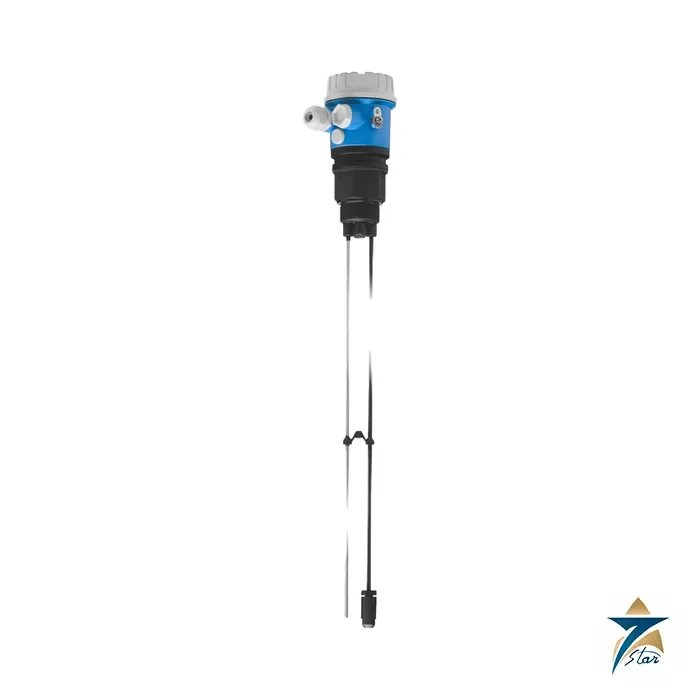
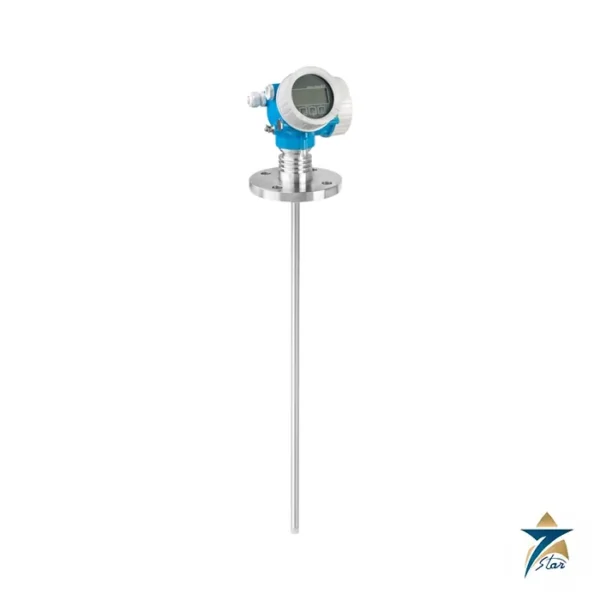
FMI21 Liquicap T two-rod probe for continuous level measurement
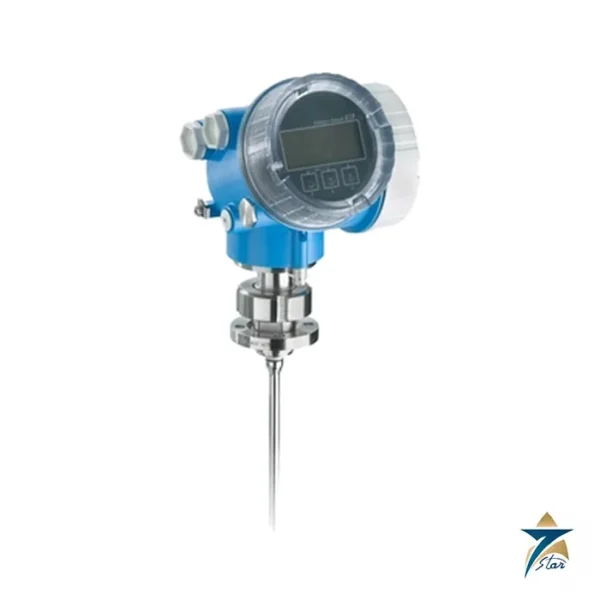
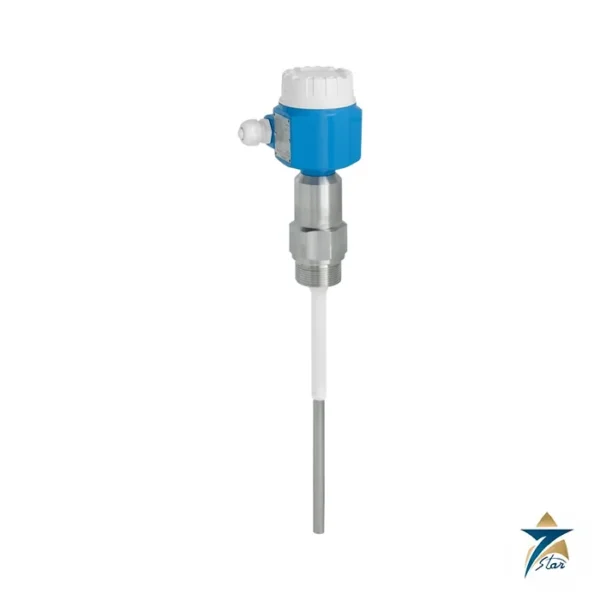
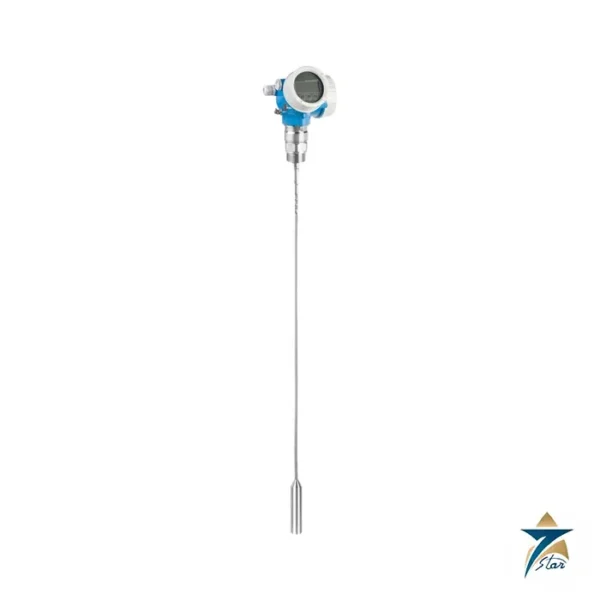
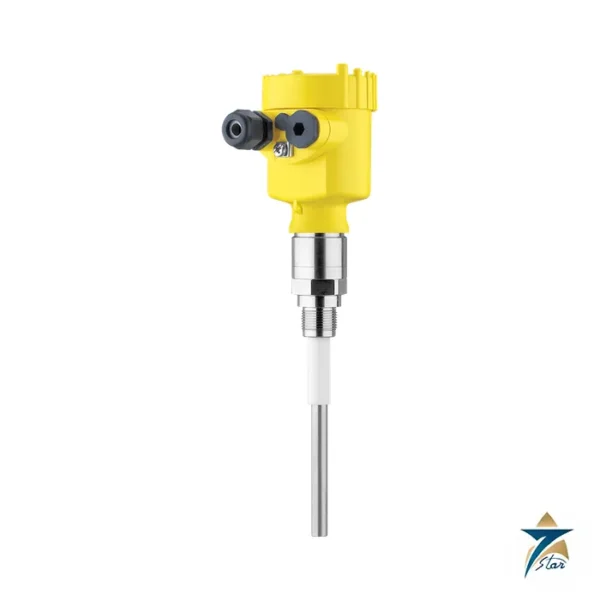
The Endress+Hauser FMI21 is a Liquicap T capacitive probe that turns the level of a conductive liquid into a 4–20 mA signal. Unlike the Liquicap M switches, which give a single on/off point, the FMI21 has two parallel rods of 150 to 2,500 mm and reports the whole span from 0 to 100 percent. It is delivered preconfigured to the probe length that was ordered, so in many cases the signal can be used straight after wiring. Seven Star LLC supplies the FMI21 in Oman and the GCC as an independent supplier in Muscat.
The FMI21 is a compact, low-cost solution for storage, buffer and chemical tanks where the liquid is conductive and where a radar or ultrasonic transmitter would be oversized. The datasheet we hold is an older Technical Information edition (05.10), so confirm the current build and electronics with us before ordering a replacement for an installed unit.
FMI21 technical specifications
| Parameter |
Specification |
| Manufacturer / part number |
Endress+Hauser / FMI21 (Liquicap T two-rod level probe) |
| Measured variable |
Continuous level of a conductive liquid, by capacitance between two rods |
| Measuring range |
150 to 2,500 mm, according to probe length ordered |
| Medium conductivity |
30 µS/cm or higher; independent of the dielectric constant above that value |
| Maximum viscosity |
2,000 cSt (medium must drain from the probe) |
| Output |
4–20 mA, 3.8 to 20.5 mA working range, alarm above 21 mA (electronic insert FEI20) |
| Supply |
10 to 30 V DC, reverse-polarity protected; power below 0.7 W, current below 22 mA |
| Measured error |
1 % of full scale or better (active rod probe); repeatability 0.25 % |
| Process temperature / pressure |
–40 to +100 °C and –1 to 10 bar, with a permitted pressure-temperature field in the datasheet |
| Ambient temperature |
–40 to +70 °C for the electronics; display may be restricted below –20 °C and above +60 °C |
| Rods |
4 mm diameter; one 316L (or optional carbon fibre) insulated in PP 0.5 mm, one uninsulated ground rod |
| Process connection |
G 1½ A or NPT 1½, PPS, EPDM seal |
| Housing |
F16 polyester, IP66 / NEMA 4X, cable entry M20, NPT ½ or G ½ |
| Weight |
About 600 g for a 1 m probe |
How the FMI21 converts level into a current signal
The insulated rod, the liquid and the uninsulated ground rod together form a capacitor. In air the capacitance is low. As the liquid rises along the rods, the covered fraction grows and the capacitance with it. The FEI20 electronic insert measures the capacitance at 250 kHz and converts it into a current in proportion to the level. Above 30 µS/cm the reading does not depend on the dielectric constant of the liquid, which means water-based liquids, salt solutions, acids, alkalis, wastewater and many beverages can share one calibration approach.
Because the ground rod is part of the probe, the FMI21 does not depend on the tank wall. It works in plastic, stainless or concrete tanks and in cisterns of any shape, provided the rods never touch the tank. Hydrocarbons with less than about 0.1 % water, petrols, oils and solvents are not suitable, and the manufacturer points to other technologies for these. In a build-up mode set by a DIL switch the electronics also tolerate deposits such as those formed by hydrochloric acid.
Electronics, display and calibration on the FMI21
The FEI20 insert has two push-keys, a green and a red LED and an optional display showing the level in percent with a bar graph of capacitance. A 4–20 mA test socket lets a technician calibrate empty and full against a multimeter without opening the loop. The DIL switches select full or empty calibration, normal or build-up mode, output damping of 0 or 1 s, and a linearisation for horizontal cylindrical tanks, where the output is then proportional to volume rather than height.
Factory calibration assumes conductivity of at least 30 µS/cm and holds 0 and 100 percent to within 5 mm. Recalibration is needed only if the rods are shortened, if customer-defined 0 and 100 percent values are wanted, or if the electronic insert is replaced. The FMI21 reaches a stable value within 2 s of switch-on.
Wiring and compatible power supplies
The FMI21 is a two-wire loop-powered device. The datasheet lists the transmitter supply units RNS221, RN221N (an active barrier for intrinsically safe isolation), RMA421 and RMA422 as suitable supplies, and the Fieldgate FXA320 gateway for remote interrogation through a modem or the internet. Use screened cable where electromagnetic interference is strong, and bond the housing to protective earth with a short lead.
Selecting the FMI21: checklist
- Liquid conductivity at or above 30 µS/cm, and no oil-like layers or non-conductive films on the rods.
- Probe length 150 to 2,500 mm, and whether the level range can be covered by a single rod length.
- Rod material: 316L for water, alkalis and salts; carbon fibre for acids such as hydrochloric acid.
- Approval: general purpose, WHG, ATEX category 3G (EEx nA IIC T6) or CSA, as chosen in the ordering structure.
- Tank geometry: vertical, with the rods clear of walls and internals, or a horizontal cylinder with linearisation.
- Display needed or not, and cable entry thread.
- Shortening set for site adjustment.
FMI21 ordering structure and accessories
Unlike many of the Liquicap family, the FMI21 datasheet shows its ordering structure in full. The first block selects approval (A non-hazardous, B non-hazardous WHG, C ATEX II 3 G EEx nA IIC T6 with WHG, D CSA General Purpose, Y special). The process connection is G 1½ or NPT 1½. The probe block specifies length in millimetres or inches and the material: stainless 316L or carbon fibre in two length bands. Housing and cable entry, electronics (none, FEI20, or FEI20 with display) and a basic or shortening-kit option follow.
| Accessory / spare |
Remark |
| Mounting nut G 1½ |
Accessory, hexagon AF 60 |
| Shortening kit |
Eye screw, sealing ring and insulating cap, for cutting the insulated rod and re-insulating it |
| Spare FEI20 electronics |
Replacement insert, needs recalibration |
| Spare covers and display |
F16 cover, high transparent cover with gasket, digital display |
| Spacer set |
Five spacers for the probe rods |
Installation and maintenance of the FMI21
Mount the FMI21 vertically from the top in a buffer or storage tank, with the two rods never in contact with the tank. If the rods must be shortened, do not damage the insulation above the cut; fit the shortening set and carry out zero balance just above it. Spare spacers are sold in packs of five. Maintenance is mostly cleaning of the rods; with carbon-fibre rods, avoid mechanical impact. Keep a spare insert, because replacing it demands recalibration.
Where the FMI21 is used in Oman and the GCC
The FMI21 fits water and chemical services at desalination and water treatment plants, such as acid and caustic day tanks, antiscalant and hypochlorite dosing, wastewater balancing, rainwater and cooling water cisterns, and brine and process water buffer tanks. Its wide ambient range (–40 to +70 °C) covers the heat on exposed tank roofs, and the IP66 housing protects against dust and washdown. For hazardous locations the ATEX category 3G option is available.
Information to send with an RFQ for the FMI21
- Liquid and its conductivity, plus the water content if the liquid is hydrocarbon-based
- Tank type, height and the span to be measured
- Process temperature and pressure
- Probe length, rod material and shortening kit requirement
- Approval class (general purpose, WHG, ATEX 3G, CSA)
- Display requirement and power supply or barrier model
- Quantity and delivery site
Documents and quotation
A datasheet for the FMI21 is attached on this page. It is the Technical Information for the Liquicap T and contains the ordering structure, dimension drawings and wiring references.
Send the part number FMI21 with your tank details and we will confirm availability, current electronics version and lead time for Oman and the GCC.





















Reviews
There are no reviews yet.