Overview
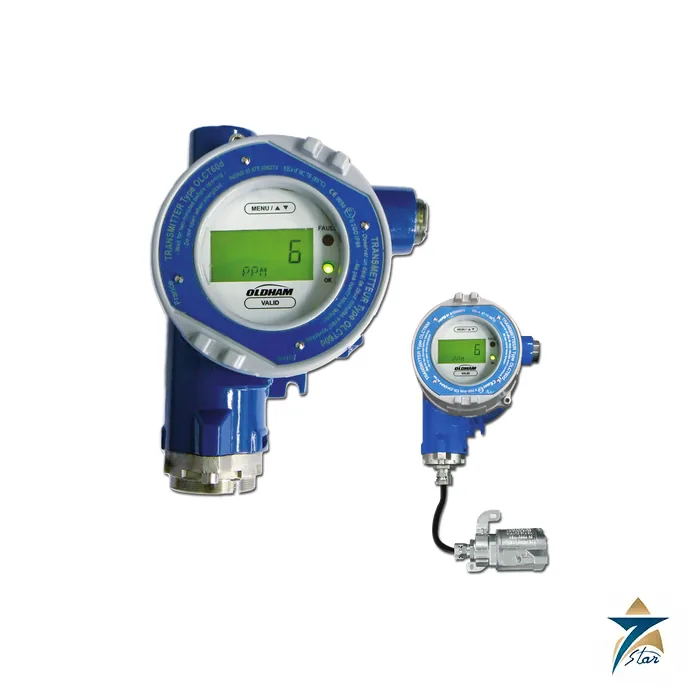
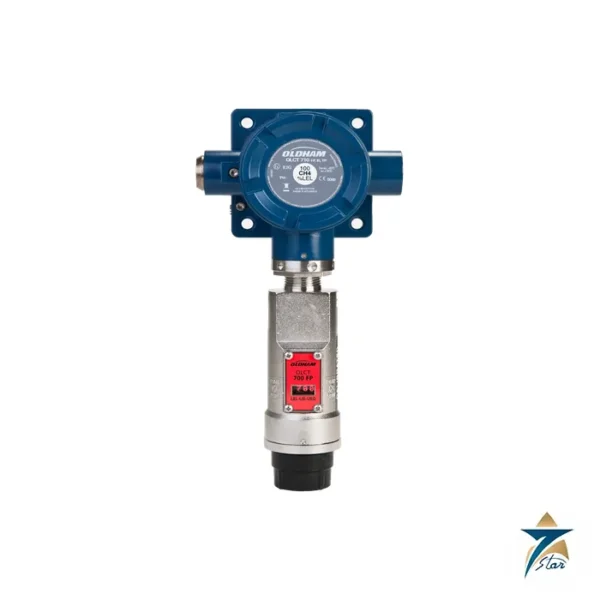
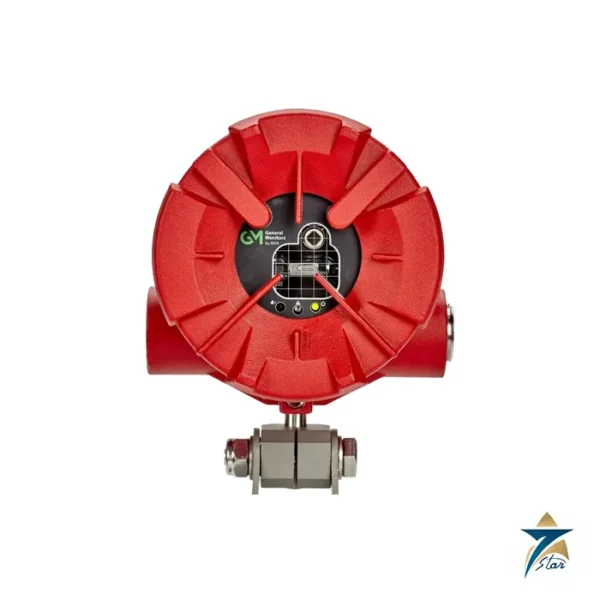
The Oldham OLCT 60 is an industrial fixed gas detector from Teledyne Gas and Flame Detection for flammable gases, toxic gases and oxygen in hazardous and harsh areas. Teledyne describes the OLCT 60 series as a new standard in gas detection, offering explosion-proof (XP) or intrinsically safe (IS) sensors, on-board or remote sensor placement, a local display with a non-intrusive menu, and an IP66 rated construction. Because the sensor can be mounted remotely, the Oldham OLCT 60 can detect gas in difficult locations, including zone 0 (gas) and zone 20 (dust) with the intrinsically safe sensor version, while the transmitter stays at an accessible height.
Seven Star LLC supplies the Oldham OLCT 60, its sensors and its accessories to oil and gas facilities, refineries, petrochemical plants, chemical and pharmaceutical sites, power stations, water treatment plants and refrigeration installations in Oman and the GCC. Our Muscat team helps define the gas, range, sensor technology and area classification, and we provide model selection support from Muscat.
Key Features of the Oldham OLCT 60
- XP or IS sensor options: catalytic, electrochemical, semiconductor or infrared sensors in the explosion-proof version, and electrochemical sensors in the intrinsically safe version.
- Pre-calibrated sensor blocks: sensor blocks arrive pre-calibrated, saving time when sensors are replaced.
- Non-intrusive calibration: adjustments and calibration can be carried out in hazardous areas without opening the enclosure and without a hot work permit, according to Teledyne.
- Local display: intuitive menu for set-up and checks at the detector.
- Remote or on-board sensor: flexible placement for ducts, pits, ceilings and confined spaces.
- Durable construction: epoxy-coated aluminium transmitter housing with a 316 stainless steel sensor, IP66 protection against dust and water jets.
- Infrared versions: infrared sensors are offered for CO2, SF6, refrigerants and some hydrocarbons.
Gases and Sensor Technologies
The Teledyne sensor table lists 0-100 percent LEL catalytic sensors for explosive gases, an infrared option based on the GD10P sensor for hydrocarbons, and electrochemical sensors for oxygen (0-30 percent volume), carbon monoxide (100, 300 or 1000 ppm), hydrogen sulfide (30, 100 or 1000 ppm), hydrogen (2000 ppm), nitric oxide, nitrogen dioxide, sulfur dioxide, ammonia (up to 5000 ppm), chlorine, chlorine dioxide, hydrogen chloride, hydrogen cyanide, hydrogen fluoride, ozone, phosgene, arsine, phosphine, silane and ethylene oxide. Semiconductor sensors cover many refrigerants and solvents such as R134a, R404a, R410a, toluene, ethanol and xylene, and infrared sensors cover CO2 up to 100 percent volume, SF6 and refrigerants such as R32 and R1234yf. Some toxic gases are offered only with the IS sensor, so each Oldham OLCT 60 order should be checked against the brochure table for the gas and range required.
Electrical and Signal Data
With the XP sensor, the Oldham OLCT 60 operates on 16 to 30 VDC, with average consumption of 140 mA for catalytic sensors, 80 mA for electrochemical sensors and 120 mA for infrared sensors. The analog output is 0-23 mA with 4-20 mA reserved for measurement, over three active wires in a shielded cable. Teledyne lists maximum loop resistance and length of 32 ohms over 1 km at 1.5 mm2 (16 AWG) for catalytic sensors, and 48 ohms over 1.5 km at 1.5 mm2 for electrochemical and XP infrared sensors. The detector weighs 2.1 kg, measures 154 x 186 x 121 mm and operates from −20 to +60°C.
Certifications
The XP transmitter with integrated XP sensor (OLCT60D) is certified ATEX II 2 GD, Ex db IIC T6 Gb and Ex tb IIIC T85°C Db, for ambient temperatures from −20 to +60°C. The XP transmitter with an IS sensor (OLCT60id) is certified ATEX II 2 GD, Ex db [ia Ga] ia IIC T4 Gb and Ex tb [ia Da] ia IIIC T135°C Db. Remote sensor versions carry their own markings, including ATEX II 1 GD Ex ia IIC T4 Ga for the remote intrinsically safe cell. Electromagnetic compatibility is to EN 50270. Always check the marking on the specific Oldham OLCT 60 model against the area classification drawing.
Accessories
For the Oldham OLCT 60, Teledyne lists a calibration cup (6331141), bypass adapter for sample measurement (6327910), splash guard (6329004), remote gas introduction head (6327911) for applying gas without opening the detector, removable protective filter (6335975), duct measurement kit (6793322), ceiling mounting bracket (6322420), protective cover against weather and direct sun (6123716), adapter plate for replacing another Oldham detector without re-drilling (6793718), wall and ceiling collecting cones for lighter-than-air gases (6331169 and 6331168) and a tool kit (6147877). In the GCC, the protective cover is especially useful for an outdoor Oldham OLCT 60, because direct sun can push enclosure temperatures well above ambient.
Applications
- Process areas in refineries and gas plants for hydrocarbons and H2S.
- Compressor houses, pump rooms and metering skids.
- Chemical dosing areas for chlorine, ammonia and other toxic gases.
- Pits, ducts and confined spaces using a remote sensor.
- Switchgear rooms for SF6 and refrigeration plant rooms for refrigerants.
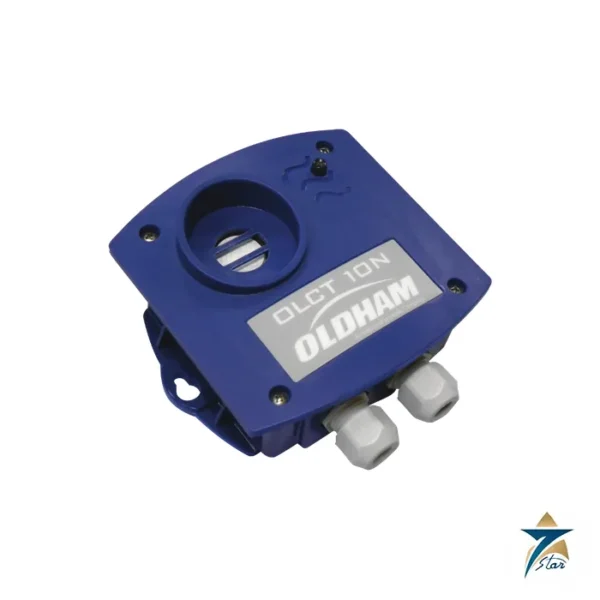
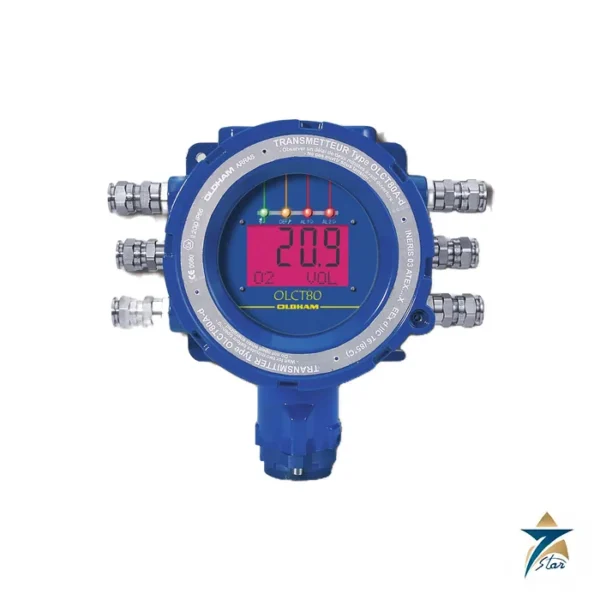
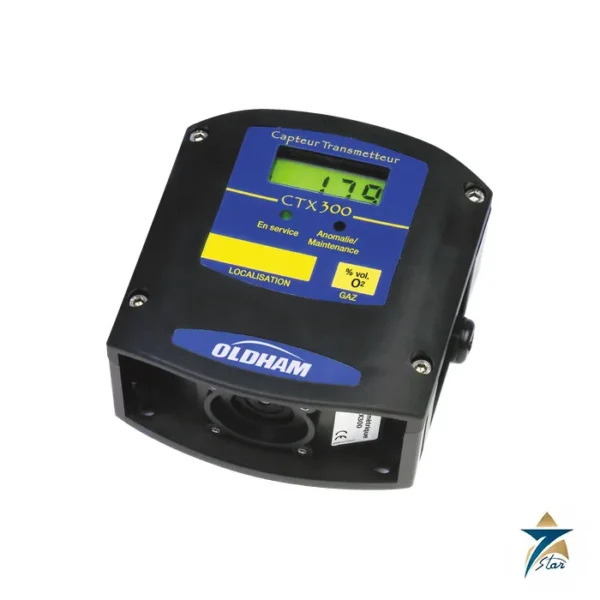
The Oldham OLCT 60 4-20 mA signal connects to Teledyne controllers such as the Oldham MX 62 controller or to a plant PLC or safety system. On the same site, the Oldham OLCT 100 and the Oldham OLCT 710 are other explosion-proof options, depending on the gas and the project specification.
Installation Notes (General Guidance)
This guidance is general practice rather than Teledyne data. Locate the Oldham OLCT 60 sensor according to the density of the target gas and the likely leak sources, keep it away from direct water jets, and fit the protective cover outdoors. Use certified cable glands suitable for the zone. Commission each Oldham OLCT 60 with calibration gas, then follow the bump test and calibration intervals in the user manual and site procedures.
Technical Specifications
| Parameter |
Oldham OLCT 60 (Teledyne brochure GF-30019I-EN) |
| Sensors |
Catalytic, electrochemical, semiconductor, infrared (XP); electrochemical (IS) |
| Power supply |
16 to 30 VDC |
| Average consumption (XP sensor) |
140 mA catalytic; 80 mA electrochemical; 120 mA infrared |
| Output |
0-23 mA (4-20 mA for measurement), 3-wire shielded |
| Housing |
Epoxy-coated aluminium with 316 stainless steel sensor |
| Ingress protection |
IP66 |
| ATEX (OLCT60D) |
II 2 GD, Ex db IIC T6 Gb, Ex tb IIIC T85°C Db |
| Weight / dimensions |
2.1 kg; 154 x 186 x 121 mm |
| Operating temperature |
−20 to +60°C |
How to Order
To order the Oldham OLCT 60, send Seven Star LLC the gas, range, area classification, sensor mounting (on-board or remote) and the controller or PLC it will connect to. Our Muscat engineers will prepare a formal quotation. The Teledyne brochure and user manual can be downloaded from this page, and we provide model selection support from Muscat for customers across Oman and the GCC.











Reviews
There are no reviews yet.