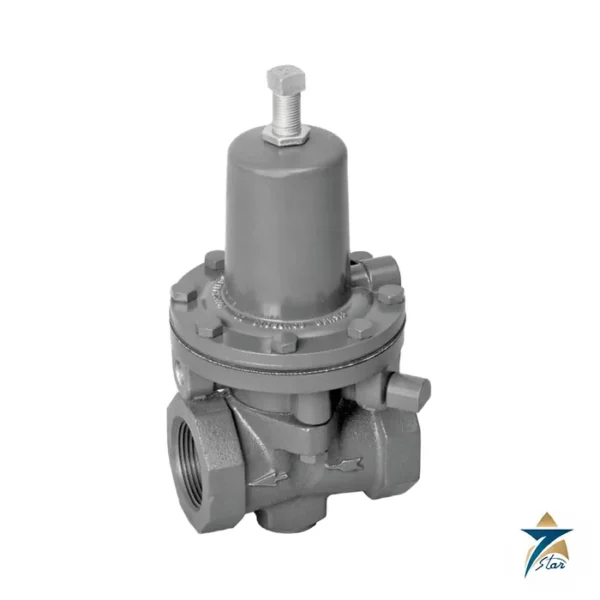
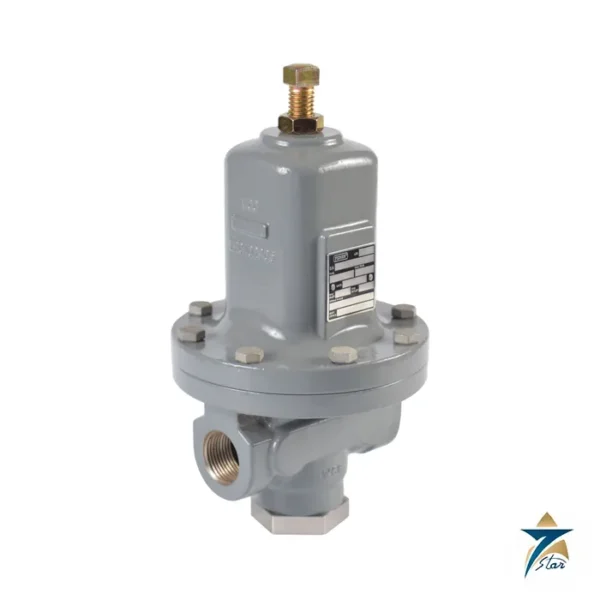
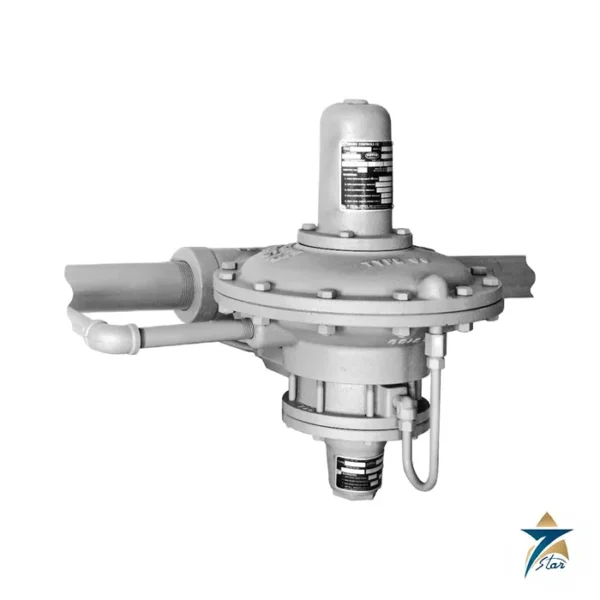
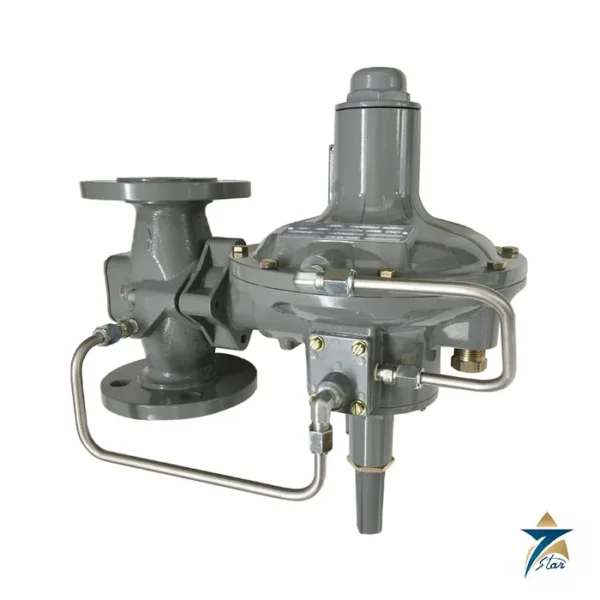
Fisher Type 63EG pilot-operated relief valve and backpressure regulator
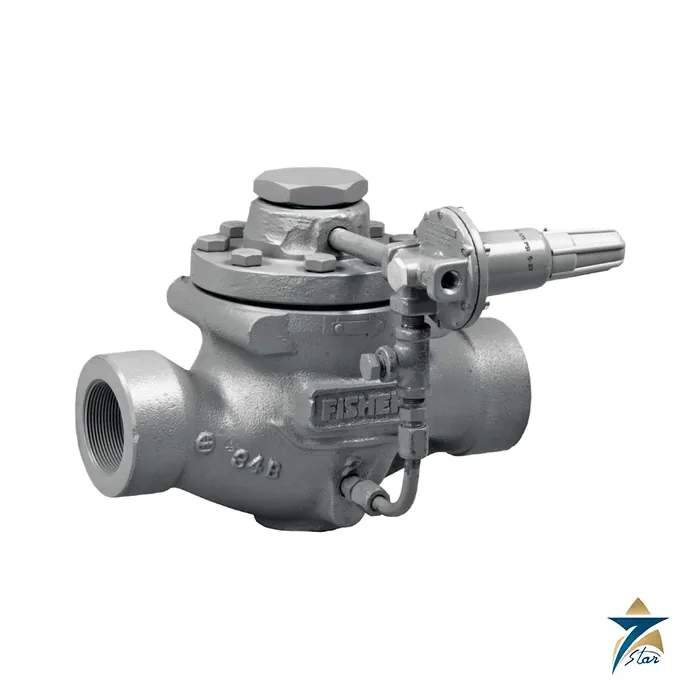
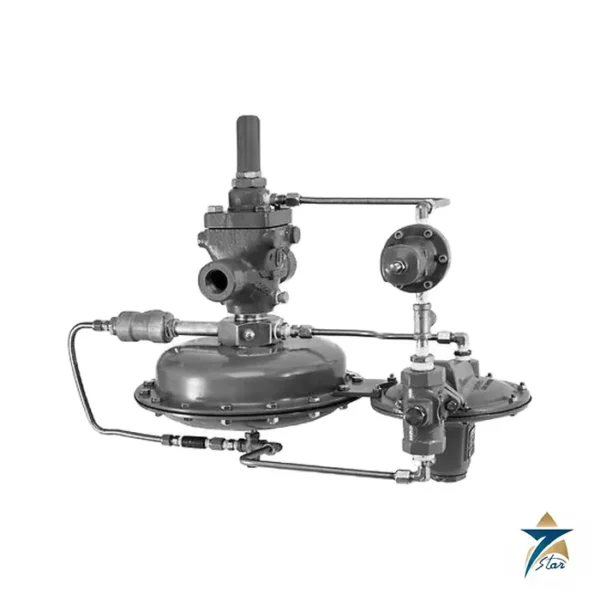
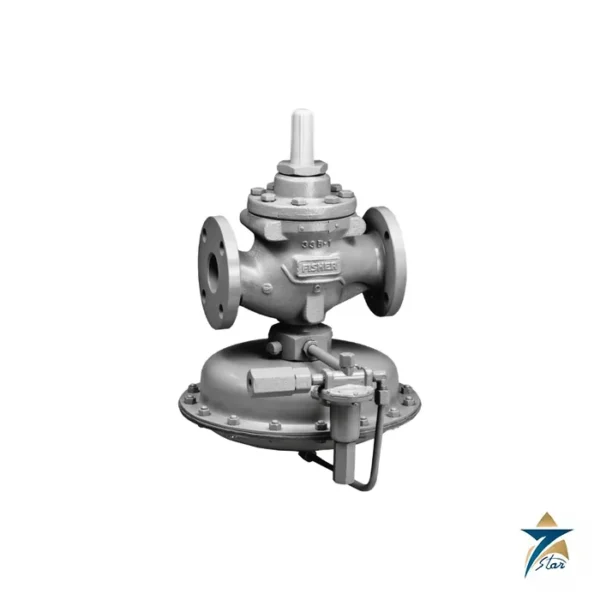
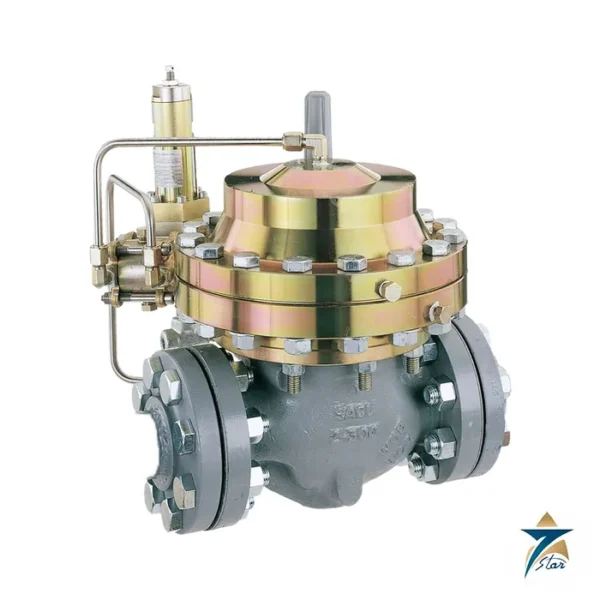
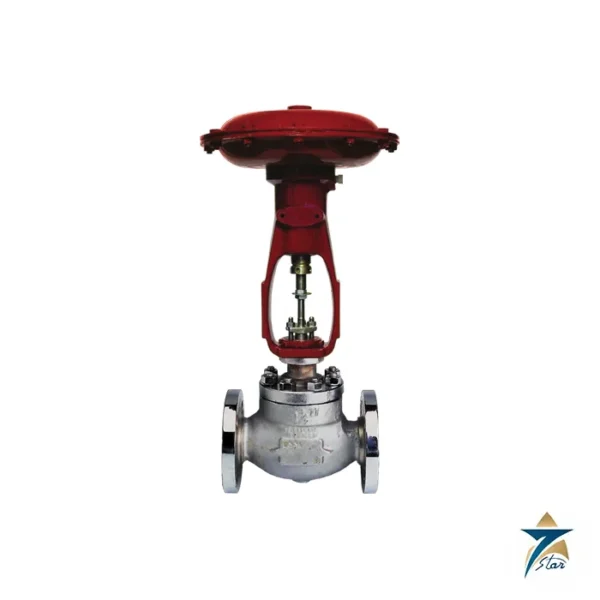
The Type 63EG is a pilot-operated relief valve and backpressure regulator for liquid and gas service, available in sizes from NPS 1 / DN 25 up to NPS 12 x 6 / DN 300 x 150. It uses a 6358 series pilot (6358, 6358B, 6358EB or 6358EBH) to control a large top-entry main valve, and it is also used for throttling backpressure control, for example on oilfield separators. The related Type 1098-63EGR is the actuator-operated variant with a Type 6358B pilot. The bulletin is explicit that these valves are not ASME safety relief valves, so the 63EG is a pressure control and overpressure protection device within a larger protection scheme.
63EG technical specifications
| Parameter |
Specification |
| Manufacturer / part number |
Fisher Type 63EG (with 6358 series pilot); Type 1098-63EGR |
| Body sizes |
NPS 1, 2, 3, 4, 6, 8 x 6 and 12 x 6 (DN 25, 50, 80, 100, 150, 200 x 150, 300 x 150) |
| End connections |
Cast iron: NPT or CL125 FF (small sizes); steel or stainless: NPT, BWE, SWE, CL150, CL300, CL600 RF or PN 16/25/40 |
| Maximum relief (inlet) pressure |
63EG: 400 psig / 27.6 bar or body rating, whichever is lower; 1098-63EGR: 82 psig / 5.6 bar |
| Main valve characteristic |
Linear (standard), Quick Open or Whisper Trim III (optional) |
| Flow direction |
Up through seat ring and out through the cage |
| Port diameter / travel |
NPS 1: 33 mm / 19 mm; NPS 2: 60 mm / 29 mm; NPS 3: 86 mm / 38 mm; NPS 4: 111 mm / 51 mm; NPS 6 and larger: 183 mm / 51 mm |
| Temperature, nitrile |
-29 to 82°C (-20 to 180°F) |
| Temperature, other elastomers |
FKM 0 to 149°C; EPR -29 to 135°C; FFKM -18 to 218°C; water limited to 0 to 82°C |
| Body materials |
WCC steel, cast iron or CF8M stainless steel |
| Pilot materials |
CF8M stainless steel or aluminum (6358 and 6358B); nitrile or FKM plugs and diaphragms |
| Weight with pilot |
16 kg (NPS 1), 25 kg (NPS 2), 43 kg (NPS 3), 66 kg (NPS 4), 150 kg (NPS 6), 304 kg (8 x 6), 521 kg (12 x 6) |
| Options |
Type 252 or P594-1 pilot supply filter, pressure gauges, NACE construction, oxygen service materials |
How the 63EG pilot and main valve work
While inlet pressure stays below the set pressure, the pilot control spring holds the pilot plug closed. Inlet pressure passes through a pilot restriction and a hollow main valve stem and loads the top of the main valve plug, which together with the main spring keeps it tightly closed. When inlet pressure rises above the set pressure, the pilot diaphragm lifts the pilot plug and exhausts the loading pressure from above the main plug, so the inlet pressure unbalance overcomes the spring and the plug opens. The hollow stem gives quick pressure registration at start-up and avoids main valve unseating, and the fixed restriction in the 6358B, 6358EB and 6358EBH pilots lets the plug reseat quickly. Low build-up is a stated benefit, with capacity tables available.
The Whisper Trim III cage can lower noise from high-velocity gas by as much as 10 dB at the outlet of high-pressure relief applications.
Where the 63EG fits in oil and gas, power and utility systems
The bulletin lists natural gas transmission and distribution stations, oilfield separators and pump recirculation as typical uses, with materials available for NACE, oxygen service, natural gas and liquids. The top-entry design means trim can be inspected and replaced without removing the body from the pipeline. A travel indicator shows plug position without taking the valve out of service. Smaller needs are covered by the Fisher 289, 1805 and MR98 series on our site; this is the choice for larger flows.
63EG selection and ordering checklist
- Duty: relief or backpressure, throttling or on-off, liquid or gas.
- Set pressure, maximum inlet pressure including build-up, and required capacity.
- Body size and end connection rating, with material (WCC, cast iron, CF8M).
- Trim: standard, 316 or Whisper Trim III for noise reduction.
- Pilot type and elastomers for temperature and fluid compatibility.
- Remote pilot adjustment or upstream registration needs.
- NACE or oxygen service requirements.
- Pilot supply filter and gauges.
Installation and maintenance
Pipe the pilot exhaust and spring case vents to a safe location with the removable vents replaced by tubing if gas is toxic or flammable. Where upstream registration is needed, the pilot supply tubing can be disconnected at the 1/4 NPT body tapping and that tapping plugged. Clean the pilot restriction and filter regularly, since contamination affects reseat time. Replace diaphragms, O-rings and valve plug assemblies as part of overhaul kits, and verify the set point with a gauge and a controlled pressure source.
Typical 63EG applications in Oman and the GCC
Typical applications are separator pressure holding and relief in production facilities, gas metering and regulating stations, pump recirculation and discharge pressure control, and fuel gas supply systems at power plants. Where gas pressure is high and outlet velocity near sonic, the Whisper Trim cage is worth specifying. High ambient temperatures call for FKM or EPR elastomers when fluids are hot.
63EG body sizes at a glance
| Size |
Port |
Weight with pilot |
| NPS 1 / DN 25 |
33 mm port |
16 kg |
| NPS 2 / DN 50 |
60 mm port |
25 kg |
| NPS 3 / DN 80 |
86 mm port |
43 kg |
| NPS 4 / DN 100 |
111 mm port |
66 kg |
| NPS 6 / DN 150 |
183 mm port |
150 kg |
Information to send with a 63EG enquiry
- Medium, set pressure, relieving flow and inlet pressure.
- Body size, end connection, material and temperature.
- Trim, pilot and elastomer preferences.
- NACE or oxygen service needs.
- Quantity and destination.
Site conditions in Oman for the 63EG
Valves and their accessories in Oman work in demanding conditions: high ambient temperatures, direct sun on outdoor pipe racks, dust, and corrosive coastal air at many oil, gas and water sites. When you specify the 63EG, confirm the pressure and temperature ratings, body and trim materials and any sour-service or hazardous-area requirements against the actual line data, and check that seals and soft parts suit the process medium and the full temperature range.
For reliable operation, plan access for maintenance, define which spare parts are kept on site, and record the configuration of each installed 63EG. Sending the complete process data sheet with your RFQ allows the selection to be checked before the order is placed.
Documents and quotation for the 63EG
A manufacturer bulletin for the Type 63EG is attached on this page. Seven Star LLC is an independent supplier in Muscat.
Send the 63EG size, set pressure and flow and we will confirm availability and quote.






















Reviews
There are no reviews yet.