Type 99 pilot-operated pressure reducing regulator: what it is and how the pilot variants are coded
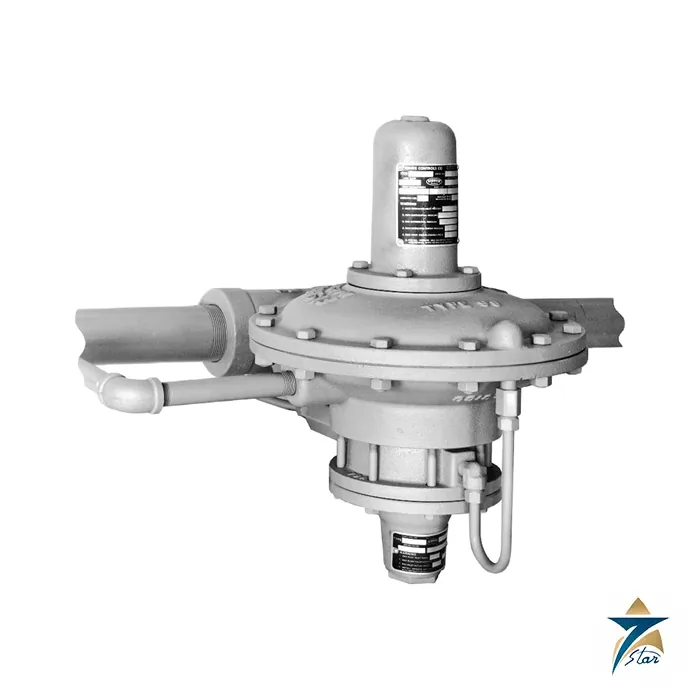
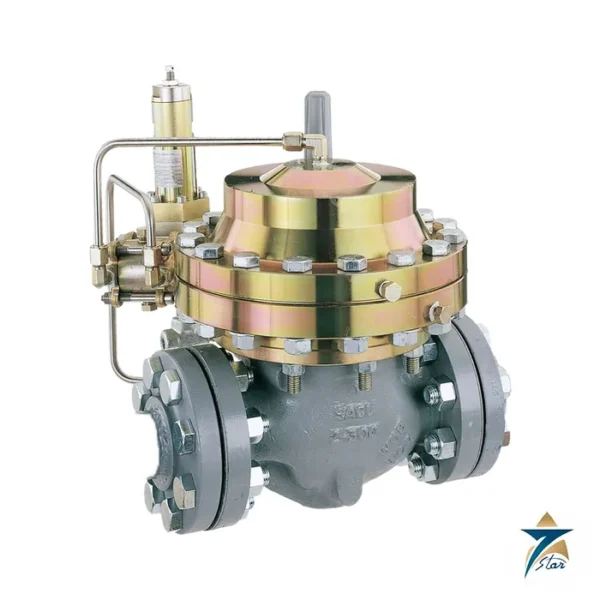
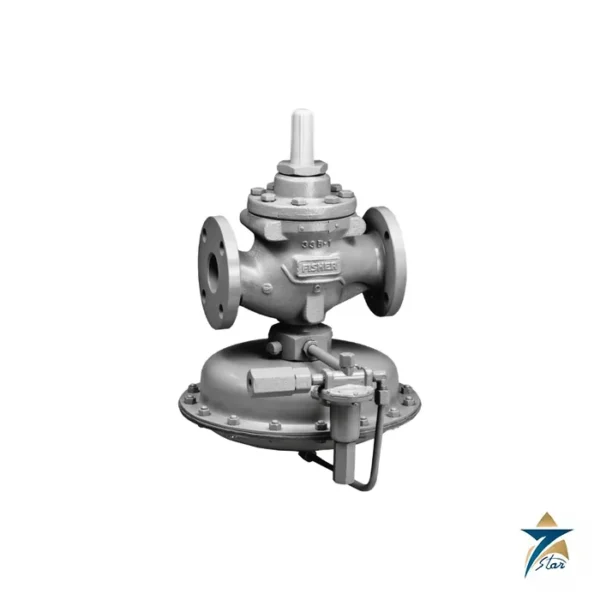
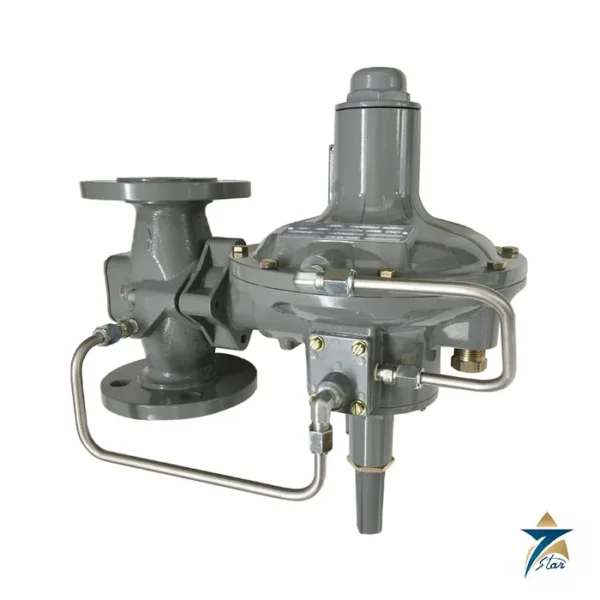
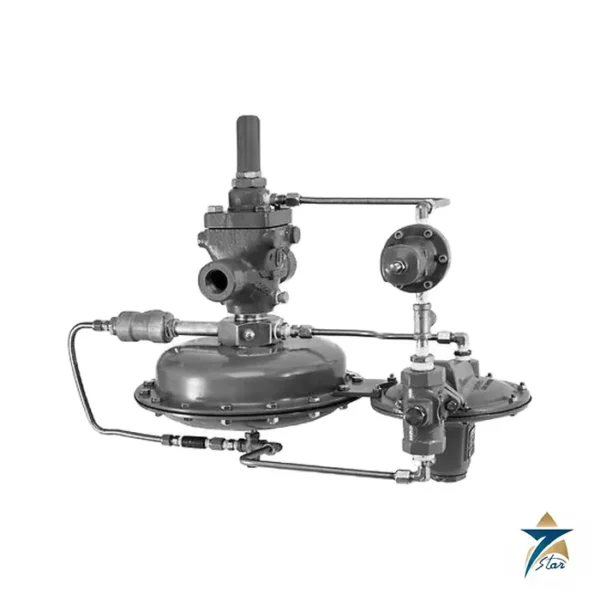
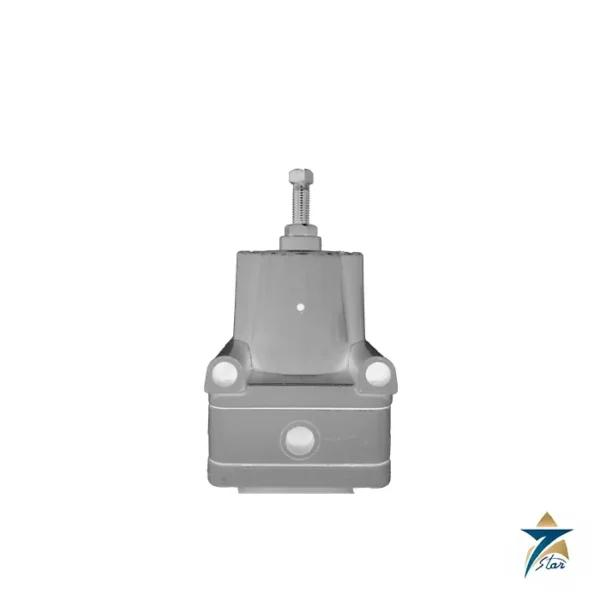
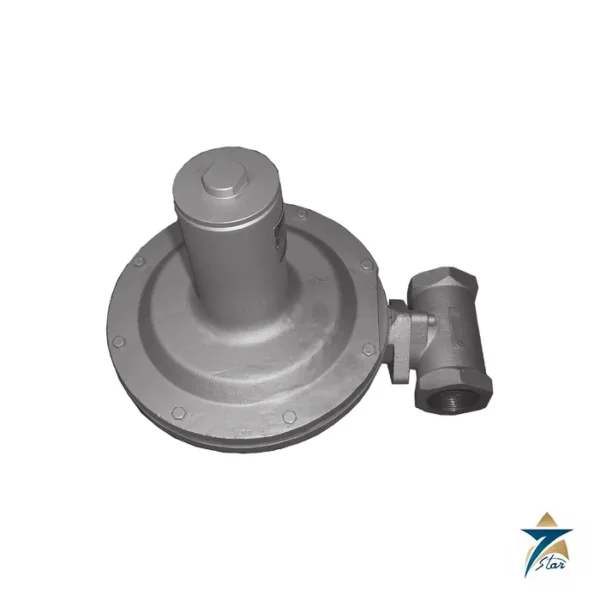
The Type 99 is a pilot-operated, spring-loaded gas pressure reducing regulator in the Fisher regulator range, built around a yoked double-diaphragm pilot mounted directly on the actuator casing. The body is NPS 2 / DN 50, and the regulator is intended for natural gas distribution, industrial boiler and furnace supply, plant air, and oxygen and ammonia service as well as large commercial sites. A Type 99 is not ordered as one fixed set-point device: the letter after 99 identifies which pilot is fitted, and that choice defines the outlet pressure window.
| Designation |
Pilot and outlet range |
| Type 99L |
Type 61L pilot, 2 in. w.c. to 20 psig / 5 mbar to 1.4 bar |
| Type 99LD |
Type 61LD pilot, narrower proportional band than the 61L |
| Type 99LE |
Type 61LE pilot, broader proportional band than the 61L |
| Type 99H |
Type 61H pilot, 10 to 65 psig / 0.69 to 4.5 bar |
| Type 99HP |
Type 61HP pilot, 35 to 100 psig / 2.4 to 6.9 bar |
This page covers the Type 99 as a family because buyers in Oman and the GCC normally specify the inlet pressure class, pilot and orifice together, and confirm the exact combination at quotation stage.
Type 99 technical specifications
| Parameter |
Specification |
| Manufacturer / part number |
Fisher Type 99 (pilots 61L, 61LD, 61LE, 61H, 61HP) |
| Body size and ends |
NPS 2 / DN 50; NPT, CL125 FF, CL150 RF, CL250 RF or CL300 RF |
| Max inlet pressure |
160 psig / 11.0 bar (61LD); 400 psig / 27.6 bar (61L, 61LE, 61H); 1000 psig / 69.0 bar (61HP with Type 1301F pilot supply regulator and Type H110 pop relief valve) |
| Outlet setting range |
2 in. w.c. to 100 psig / 5 mbar to 6.9 bar overall |
| Max actuator pressure |
Operating 100 psig / 6.9 bar; emergency 110 psig / 7.6 bar |
| Maximum rated travel |
1/4 in. / 6.4 mm |
| Main body materials |
Cast iron or WCC steel (400 psig class); WCC steel (1000 psig class) |
| Trim |
Brass or stainless steel (400 psig class); stainless steel (1000 psig class) |
| Seat elastomers |
Neoprene (CR), nitrile (NBR), fluorocarbon (FKM), nylon (PA) or PTFE |
| Diaphragms |
Nitrile (NBR) or fluorocarbon (FKM); 61HP uses neoprene (CR) or FKM |
| Temperature |
-20 to 180°F / -29 to 82°C with NBR, CR, PA; 0 to 300°F / -18 to 149°C with FKM |
| Approximate weight |
115 lbs / 52 kg |
Orifice sizes up to 1-1/8 in. / 29 mm are offered, but the allowed size shrinks as the maximum inlet pressure rises: 7/8 in. / 22 mm is the largest at 250 and 400 psig, and only 1/2 in. / 13 mm exists for the 1000 psig version.
How the Type 99 two-path pilot control works
The yoked double-diaphragm pilot senses downstream pressure and amplifies a small change into a much larger change in the loading pressure acting on the main diaphragm. The manufacturer quotes an approximate pilot gain of 20, meaning outlet pressure needs to droop only about one-twentieth as much as a direct-operated regulator for the same force across the main diaphragm. Because downstream pressure also acts directly under the main actuator diaphragm, the regulator has two control paths, which gives fast response.
When outlet pressure falls below the pilot spring setting, the pilot opens its relay orifice and raises loading pressure on top of the main diaphragm. The diaphragm moves down, a lever pulls the disk open and more gas flows. When demand is satisfied and outlet pressure rises, the pilot throttles loading pressure, and the heavy main spring acting through the lever drives the disk onto the orifice for tight shutoff. Loading pressure bleeds downstream through the pilot rather than to atmosphere, so there is no atmospheric bleed and nothing vents when the regulator is shut off.
Where the Type 99 fits: pilots, accessories and related Fisher regulators
Pilot choice sets accuracy. The proportional band is about 0.1 to 0.5 in. w.c. on a 61LD with the lightest springs, 1 to 2 in. w.c. on a standard 61L with the red spring, and 5 to 8 in. w.c. on a 61LE; 61H is around 0.1 to 0.3 psi and 61HP around 1 to 2 psi. For stability or overpressure protection a pilot supply regulator can be piped into the pilot supply tubing. The high-pressure 1000 psig version needs the Type 1301F pilot supply regulator and the Type H110 pop relief valve. Options include a travel indicator, an O-ring stem seal, a handwheel for the 61L pilot and electronic remote control capability.
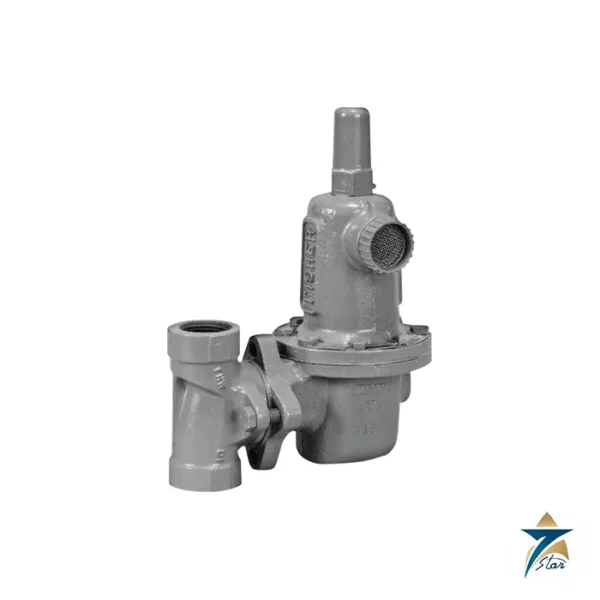
In a pressure-reduction station the Type 99 is often paired with a monitor or slam-shut device upstream, and with relief valves such as the Fisher 289 series downstream. Smaller or simpler duties may be met by the Fisher 133 or 119 series instead.
Selection and ordering checklist for a Type 99
- Maximum and minimum inlet pressure, and whether the 1000 psig construction is needed.
- Required outlet set-point and the pilot spring range that covers it (Table 1 of the bulletin lists spring part numbers and colour codes).
- Maximum flow and the allowable pressure drop; check the main spring and the minimum differential for full stroke (0.05 bar on the lightest spring to 0.69 bar on the heaviest).
- Orifice size, disk or O-ring seat type and elastomer compatible with the gas.
- Body material and end connection standard (NPT, CL125 FF, CL150 RF, CL250 RF or CL300 RF).
- Accuracy requirement, which decides between 61L, 61LD and 61LE pilots.
- Ambient and gas temperature against the elastomer limits.
Installation, commissioning and maintenance
Install the regulator in a straight, accessible run with isolation valves and a relief or monitor strategy suited to the system. The standard installation needs no upstream pilot supply line because supply pressure is factory-piped from the inlet side of the main body. Control line and pilot connections are listed in the bulletin. Before start-up, confirm the pilot spring and nameplate settings, vent pipe routing and that pressure and temperature stay inside the ratings.
Maintenance is straightforward: the valve disk and orifice can be inspected without removing the body from the pipeline, and a union nut connection lets the actuator and pilot be removed from the body as a unit. Keep spare diaphragms, disks, O-rings and pilot relay parts, and use the filter in the P590 series (brass Type P594-1 or aluminum Type P593-1 with a replaceable cellulose element) to protect the pilot from debris.
Typical Type 99 applications in Oman and the GCC
In the Gulf the Type 99 appears at gas-fired boilers and furnaces in power and desalination plants, at fuel gas skids on oil and gas facilities, and in industrial gas distribution to workshops and process units. Its wide turn-down and tight shutoff suit fuel supply lines whose demand swings between pilot-flame and full load. High ambient temperatures call for fluorocarbon elastomers where gas or sun-heated piping approaches the upper limits, and dust-laden coastal air makes the inlet filter and vent screens worth inspecting regularly. Plant air and oxygen or ammonia service are also listed uses in the manufacturer literature, each requiring confirmation of material and cleaning requirements.
Type 99 pilot comparison
| Pilot |
Outlet range |
Max inlet |
Note |
| 61L |
Low pressure; 2 in. w.c. to 20 psig outlet by spring |
400 psig / 27.6 bar |
Standard proportional band |
| 61LD |
Low pressure, narrow band |
160 psig / 11.0 bar |
Highest accuracy of the low-pressure pilots |
| 61LE |
Low pressure, broad band |
400 psig / 27.6 bar |
Broader band for stability |
| 61H |
10 to 65 psig / 0.69 to 4.5 bar |
400 psig / 27.6 bar |
High-pressure pilot |
| 61HP |
35 to 100 psig / 2.4 to 6.9 bar |
1000 psig / 69.0 bar (with 1301F and H110) |
Extra high pressure |
Information to send with a Type 99 enquiry
- Gas, density and any contaminants (oxygen and ammonia need special review).
- Inlet pressure range, outlet set-point and maximum flow in standard units.
- Pipe size, end connection and flange rating.
- Pilot type or required accuracy.
- Temperature range and any oxygen cleaning or NACE-type material requirements.
- Quantity, project name and delivery destination in Oman or the GCC.
Documents and quotation for the Type 99 regulator
A manufacturer bulletin for the Type 99 is attached on this page and should be read together with the pilot spring tables before sizing. Seven Star LLC is an independent supplier in Muscat and does not represent itself as an official channel for the brand.
Send the exact Type 99 designation, pilot, pressures and flow, and we will return an availability and quotation response.






















Reviews
There are no reviews yet.