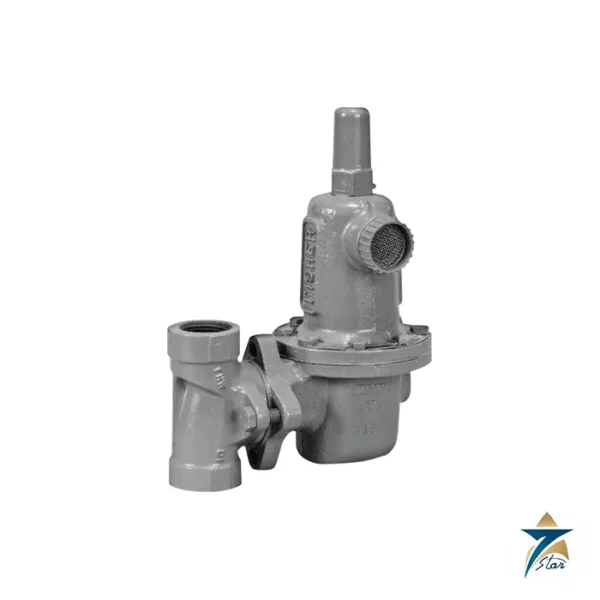
Fisher CS800 commercial and industrial pressure reducing regulator
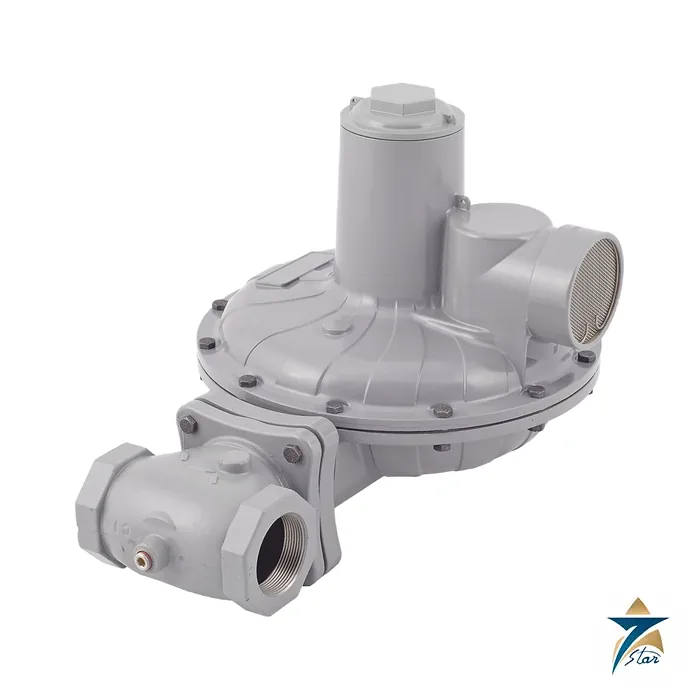
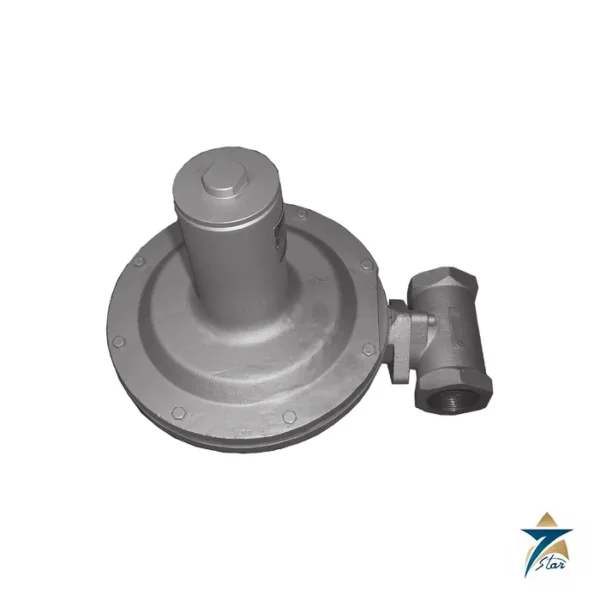
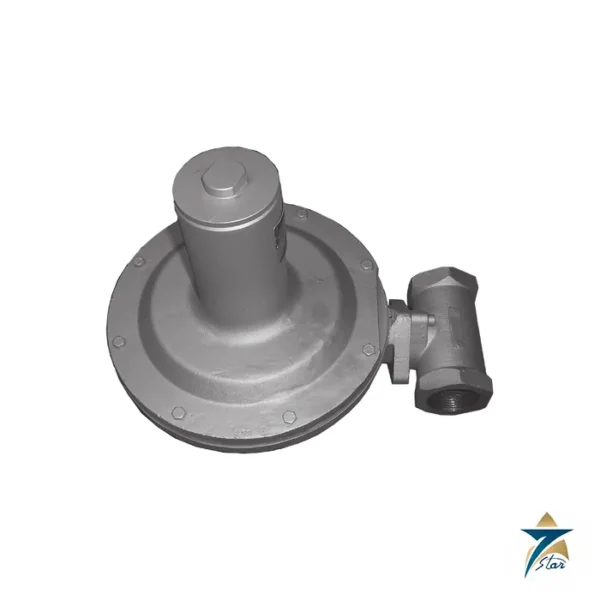
The Fisher CS800 series is a direct-operated, spring-loaded gas pressure reducing regulator family for commercial and industrial service. Bulletin D103140X012 (June 2026) groups the base CS800 with variants that add integral protection: the CS803 with True-Monitor protection, the CS804 with an integral Type VSX8 slam-shut module, and CS805 and CS806 with Secondary Seat protection, plus the CS820 and CS850 families for higher outlet ranges.
Seven Star LLC supplies the Fisher CS800 series in Oman and the GCC as an independent supplier in Muscat. Because the type number encodes the outlet range, protection module, registration and relief option, the exact code must be agreed from your process data before quotation.
Decoding the CS8xx type number
The bulletin builds the type number in this order: CS8, then outlet pressure construction, then overpressure protection module, then registration, then relief.
| Position |
Meaning |
| Third digit |
0 = low pressure (3.5 to 30 in. w.c. / 9 to 75 mbar); 2 = medium (1 to 5.5 psig / 69 mbar to 0.38 bar); 5 = high (5 to 10 psig / 0.34 to 0.69 bar) |
| Fourth digit |
0 = none; 3 = integral True-Monitor; 4 = slam-shut; 5 = Secondary Seat; 6 = Secondary Seat with controlled bleed |
| Registration letter |
I = internal; E = external |
| Relief letter |
N = non-relieving; R = internal relief; Q = high-capacity relief; T = token relief; L = low-flow token relief; SC = stabilizer cartridge |
Example from the bulletin: CS800IR is a CS800 without protection module, with internal registration and internal relief.
Fisher CS800 technical specifications
| Parameter |
Specification |
| Manufacturer / part number |
Fisher (Emerson) / CS800 Series (Bulletin D103140X012) |
| Emergency inlet pressure |
175 psig / 12.1 bar |
| Outlet pressure range |
3.5 in. w.c. to 10 psig / 9 mbar to 0.69 bar |
| Emergency outlet (casing) pressure |
15 psig / 1.0 bar; 3 psig / 0.21 bar differential above setting to avoid internal damage |
| Temperature capability |
-20 to 150 °F / -29 to 66 °C (tested for lockup, relief and reseal to -40 °F) |
| Body sizes and ends |
1-1/4, 1-1/2 and 2 in. NPT; 2 in. Rp; 2 in. / DN 50 flanged CL125 FF, CL150 FF or RF, PN 10/16 |
| Body materials |
Gray cast iron, ductile iron, WCC steel |
| Inlet rating by body |
Gray iron 175 psig / 12.1 bar; ductile iron 250 psig / 17.2 bar; steel 290 psig / 20 bar (PN 10/16 flanges 232 psig / 16 bar) |
| Orifice sizes |
1/4 to 1-3/8 in. (6.4 to 35 mm); 1/4 in. orifice Cg 50, 1-3/8 in. Cg 1125 |
| Spring case vent |
1 NPT (internal relief); 2-1/2 NPT (high-capacity relief) |
| External registration connection |
3/4 NPT |
| Accuracy capability |
Fixed Factor / Pressure Factor Measurement (PFM) |
| True-Monitor performance |
Max operating inlet up to 125 psig / 8.6 bar; outlet 12 in. w.c. to 7.5 psig |
| VSX8 slam-shut |
Maximum and operating inlet 175 psig / 12.1 bar |
| Hydrogen |
Up to 25% hydrogen blend by volume; 100% hydrogen construction available by contacting the factory |
| Soft parts |
Nitrile (NBR) diaphragm, disk and body O-ring; aluminum casings |
| Approximate weight (threaded) |
CS800 25 lb / 11 kg; CS803 34 lb / 15 kg; CS804 31 lb / 14 kg; flanged body adds 11 lb / 5 kg |
How the CS800 regulates and protects the outlet
The CS800 is a direct-operated regulator: a control spring pushes the diaphragm, and downstream pressure acts on the diaphragm through registration. When the outlet falls, the spring opens the disk; when it rises, the disk closes. Flow-optimized disks are meant to give the most capacity for the application, and only standard tools are needed to adjust pressure and remove the orifice.
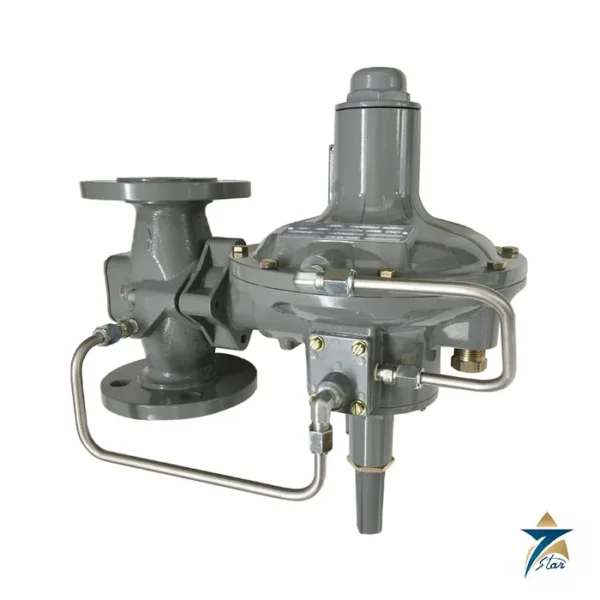
Overpressure protection is selected by the fourth digit. True-Monitor places a second, balanced-port actuator in series so that a failed working stage is backed by the monitor, and the bulletin quotes a 125 psig operating inlet for that module. The VSX8 slam-shut closes completely on overpressure and, depending on set-up, underpressure. Secondary Seat adds a second sealing path, and the controlled-bleed version signals that it is working. An optional stabilizer cartridge improves stability.
Fisher CS800 selection and ordering checklist
- Outlet range and construction digit (low, medium or high pressure) against the spring ranges, which run from 3.5 to 6 in. w.c. up to 5 to 10 psig.
- Protection module: none, True-Monitor, slam-shut or Secondary Seat.
- Registration (internal or external) and relief option (none, internal, high-capacity, token or low-flow token).
- Body size and end connection, then body material against inlet pressure rating.
- Orifice size from Table 3: the maximum operating inlet falls from 125 psig for small orifices to 15 psig for the 1-3/8 in. orifice at optimum performance setpoints.
- Low inlet option for the 2 in. body with the 5.5 to 8.5 in. w.c. spring where inlet pressure is low.
- Hydrogen blend requirement, if any.
- Orientation of vent and body, noting that some spring ranges need the spring case pointing downward.
Installing and servicing the Fisher CS800
Install the regulator on clean, filtered gas with the vent pointing down or screened so water and insects cannot enter. Keep any relief vent piped to a safe location according to site rules. Simplified maintenance is a design aim: pressure is adjusted with standard tools, and the orifice can be removed without special equipment. After service, set the outlet with a gauge, lock up the downstream, and check that relief or slam-shut points match the bulletin tables.
Spares worth stocking are diaphragms, disks, O-rings and the control spring in the range you use; the bulletin lists spring part numbers and colors for each range, for example GE30337X012 for 3.5 to 6 in. w.c. and GE30344X012 for 5 to 10 psig.
Typical applications in Oman and the GCC
The CS800 is positioned by its maker for commercial and industrial gas pressure reduction, typically the last stage between a distribution or supply line and burners, boilers and process equipment. In Oman and the GCC that points to factory estates, food and beverage plants, hospitality kitchens and utility fuel gas lines. Hot, dusty conditions call for vent screens kept clear and for protecting regulators from standing water in wash-down areas.
Fisher CS800 variant reference
| Type |
Role |
Protection |
| CS800 |
Base regulator, low outlet range (3.5 to 30 in. w.c.) |
none |
| CS850 |
Base regulator, high outlet range (5 to 10 psig) |
none |
| CS820 |
Medium outlet range, 1 to 5.5 psig |
none |
| CS803 / CS823 |
Integral True-Monitor |
Monitor module |
| CS804 / CS824 / CS854 |
Integral VSX8 slam-shut |
Slam-shut |
| CS805 / CS825 |
Secondary Seat |
Second seal |
| CS806 / CS826 |
Secondary Seat with controlled bleed |
Second seal, bleed indicator |
Information to send with a Fisher CS800 RFQ
- Full type number or nameplate photo (type, maximum outlet pressure and spring range).
- Gas type, inlet range, set pressure and peak flow.
- Body size, material and connection.
- Protection and relief needs, and hydrogen content.
- Quantity and spare parts.
Documents and quotation
A datasheet for the CS800 series is attached on this page. Please check the type digits there against your required configuration.
Send the CS800 type number and process data to Seven Star LLC in Muscat and we will quote against the confirmed code.























Reviews
There are no reviews yet.