Fisher Y692 gas blanketing regulator system: scope and configuration
The Fisher Y692 is a direct-operated, spring-loaded regulator built for very low-pressure gas blanketing. It reduces a higher-pressure inert gas, normally nitrogen, to a few millibar or inches of water column and holds that pressure over a stored liquid. Seven Star LLC supplies the Y692 in Oman and the GCC as an independent supplier in Muscat, and the points below help you define the unit before you request a price.
Y692 is a type number, not a coded string, so the choices to make are physical: body size (NPS 1-1/2 or NPS 2, DN 40 or DN 50), body material (cast iron, steel or stainless steel), end connection, pressure registration (internal through a pitot tube, or external through a control line), the elastomer set, and one of seven control springs. A hydrogen-ready construction is also offered, evaluated for material compatibility, leakage and permeation.
Y692 technical specifications
| Parameter |
Specification |
| Manufacturer / part number |
Fisher (Emerson) / Type Y692, bulletin 74.1 (D102032X012, May 2024) |
| Design |
Direct-operated pressure reducing regulator, spring loaded |
| Body sizes |
NPS 1-1/2 and NPS 2 / DN 40 and DN 50 |
| Cast iron ends |
NPS 1-1/2 NPT; NPS 2 NPT or CL125 FF |
| Steel and stainless ends |
NPT, CL150 RF, CL300 RF or PN 16/25/40; steel also SWE (made with slip-on flanges and socket-weld nipples) |
| Maximum inlet pressure |
150 psig / 10.3 bar |
| Maximum outlet (casing) pressure |
15 psig / 1.0 bar |
| Operating outlet limit to avoid internal damage |
3 psig / 0.21 bar above the control pressure setting |
| Control pressure range |
1 in. w.c. to 7 psig / 2 mbar to 0.48 bar, in seven spring ranges |
| Pressure registration |
Internal (standard, pitot tube) or external |
| Spring case connection |
1/4 NPT |
| IEC sizing coefficients |
XT 0.775; FD 0.50; FL 0.89 |
| Weight |
Cast iron body 45 lb / 20 kg; steel or stainless body 57 lb / 26 kg |
| Diaphragm materials |
NBR (standard), FKM, EPDM or silicone (VMQ) |
| Temperature limits |
NBR -20 to 180°F / -29 to 82°C; FKM 0 to 300°F / -18 to 149°C; FFKM -20 to 300°F / -29 to 149°C; EPDM -20 to 275°F / -29 to 135°C |
| Listed regulatory notes |
CRN approved; usable as a safety accessory in PED category I |
How the Y692 holds a low blanket pressure
Tank pressure is sensed across a large diaphragm. Large diaphragm area is what gives a direct-operated regulator usable accuracy at inch-of-water settings, because a tiny change in pressure still produces a meaningful force against the spring. When the tank pressure drops below the spring setting, because liquid is leaving or vapors are cooling, the spring moves the disk away from the orifice and gas flows toward the vessel. When pressure climbs back to the setpoint, the diaphragm pushes the disk onto the orifice and flow stops.
With internal registration, a pitot tube in the lower casing senses the downstream pressure and also adds a dynamic boost that helps capacity, so no extra tubing is needed. With external registration, a control line brings the true tank pressure to the diaphragm, which is the better choice when the pipe between regulator and tank is long or the flow velocity could distort the reading.
Y692 control spring ranges
The seven springs are split into light and heavy assemblies. Ranges below apply with the spring-case barrel pointing down; installing it pointing up shifts the range for the three lowest springs.
| Control range |
Spring colour |
Spring part number |
| 1 to 3 in. w.c. / 2 to 7 mbar |
Brown |
1D892527022 |
| 3 to 11 in. w.c. / 7 to 27 mbar |
Iridite |
0B019727052 |
| 6.5 in. w.c. to 1.2 psig / 16 to 83 mbar |
Green |
0B019427052 |
| 0.7 to 2 psig / 48 mbar to 0.14 bar |
Blue |
0B019627032 |
| 1 to 3.2 psig / 69 mbar to 0.22 bar |
Orange |
0A081127202 |
| 2 to 5.5 psig / 0.14 to 0.38 bar |
Silver with green stripe |
0Y066427022 |
| 4 to 10 psig / 0.28 to 0.69 bar (outlet ceiling applies) |
Silver |
1H802427032 |
The manufacturer also notes that an FKM diaphragm should not be combined with the lowest springs when the diaphragm temperature is below 60°F / 16°C. Read the bulletin footnotes before finalising a very low setting, particularly for outdoor installations that see cool nights.
Sizing a Y692 blanketing system
Blanketing demand has two components: gas that fills the volume of liquid pumped out, and gas that fills the shrinkage of vapors when the tank cools. For the first, multiply the maximum pump rate by 8.021 (US gpm to SCFH of air) or 1.01 (m³/h to Nm³/h). For the second, API 2000 tabulated values or the equation of tank volume times 0.0238 SCFH of air per US gallon can be used. The sample in the bulletin, a 42,000 gallon tank pumped at 150 gpm, arrives at about 2203 SCFH of air and roughly 2248 SCFH when converted to nitrogen.
Regulator capacity at your inlet pressure and orifice is then read from the capacity tables in the bulletin. Remember that the inlet pressure ceiling is 150 psig, the casing is rated to only 15 psig, and the tank must still carry its own emergency vent.
Where Y692 fits and related Fisher parts
Within the Fisher blanketing line, the ACE95jr is the small, self-contained choice for low flows, while the Type 1190 is the pilot-operated, larger-flow option with an EGR main valve. The Y692 occupies the middle ground: a simple, one-body regulator with no pilot or tubing loops, offered in two sizes and in cast iron or fabricated steel. A union nut between body and actuator lets a technician open the diaphragm casing and reach the disk and orifice without taking the body out of the line.
Y692 selection and ordering checklist
- Gas, supply pressure range and temperature at the regulator.
- Blanket setpoint and acceptable droop, so the correct spring can be matched.
- Required flow in SCFH or Nm³/h, including pump-out and thermal terms.
- Body size (DN 40 or DN 50), material and end connection to match the pipe class.
- Internal pitot or external control-line registration.
- Diaphragm, disk and O-ring materials for gas, temperature and any hydrogen duty.
- Mounting position: the spring case barrel should point down.
Installation, commissioning and maintenance
Mount the regulator with the spring-case barrel pointing downward, following the flow arrow on the body. If a block valve is needed between the regulator and the vessel, use a full-flow type so that it adds no restriction. Vent and block valves around the regulator make isolation and checking easier. After startup, compare the vessel pressure with the setting at two or three flow conditions.
Routine care consists of looking for diaphragm leakage at the spring-case vent, checking that the disk still seals, and keeping the pitot tube or control line free of condensate. Stock a diaphragm and disk set in the same elastomer as the installed unit.
Typical applications in Oman and the GCC
Low-pressure blanketing appears on fixed-roof storage of solvents, methanol, naphtha, condensate and chemicals at petrochemical and gas-processing sites, as well as on process vessels in power and desalination plants. Large daily temperature swings in the region increase inbreathing demand at night, so thermal cooling often governs sizing. Cast iron is common for dry nitrogen service, while steel or stainless bodies are used for higher flange ratings or where corrosion in the coastal atmosphere is a concern.
Information to send with an RFQ
- Part number Y692 with quantity and size, DN 40 or DN 50.
- Tank volume, product and maximum pump-out rate.
- Gas type, inlet pressure range and outlet setpoint.
- Body material, end connection and flange class.
- Registration type, elastomer set and any hydrogen or special-service requirement.
Documents and quotation
The manufacturer’s datasheet for the Y692 is attached on this page. It contains the full capacity tables for each orifice, which are the numbers to check against your flow requirement.
Send us the part number Y692 and your duty data and Seven Star LLC will prepare a quotation for Oman and the GCC.
Other Models in the Fisher Tank Blanketing Range
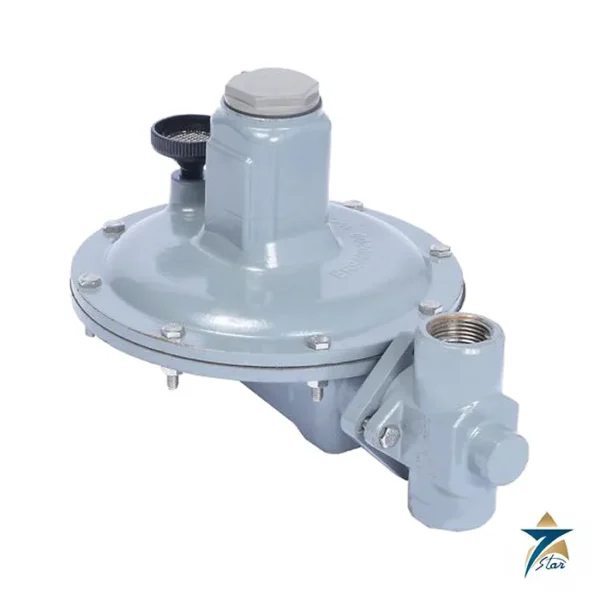
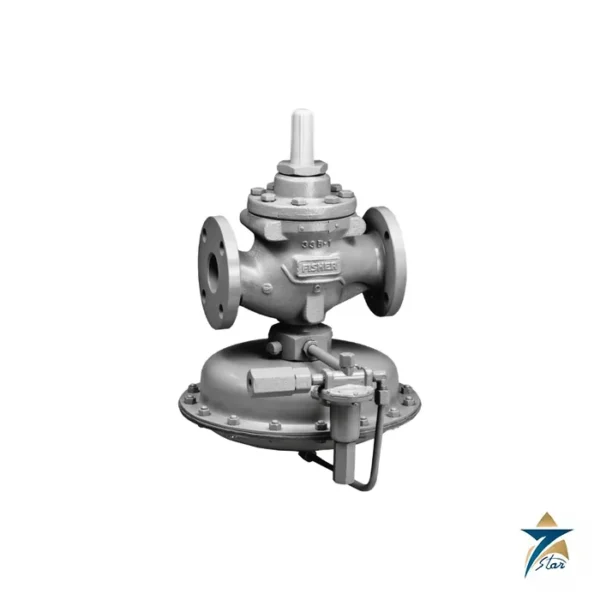
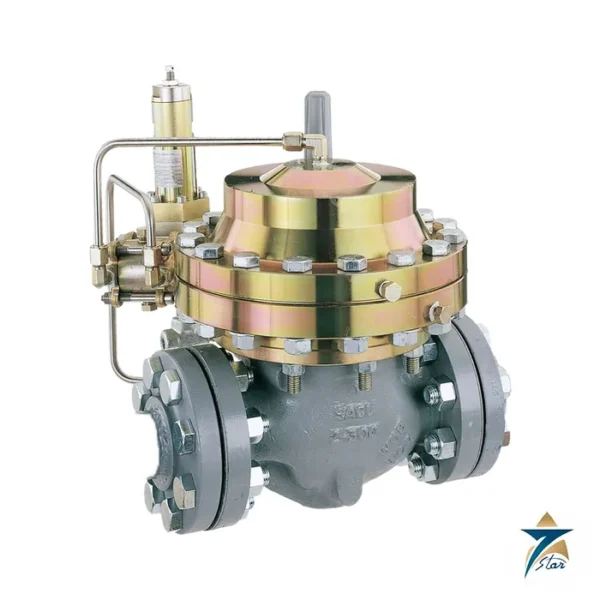
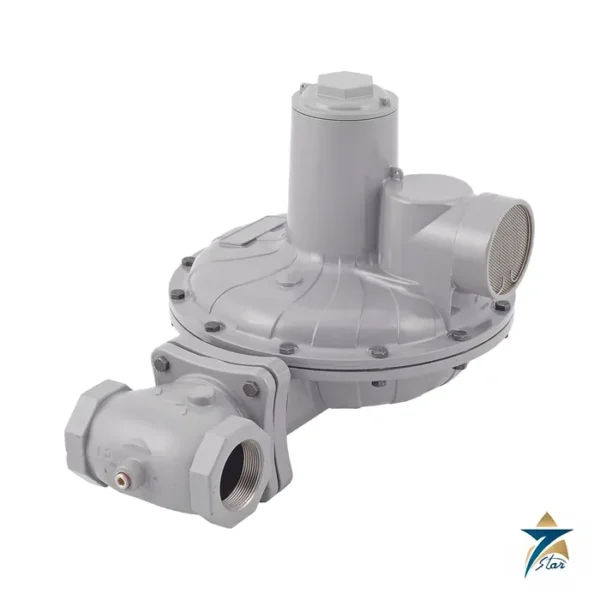
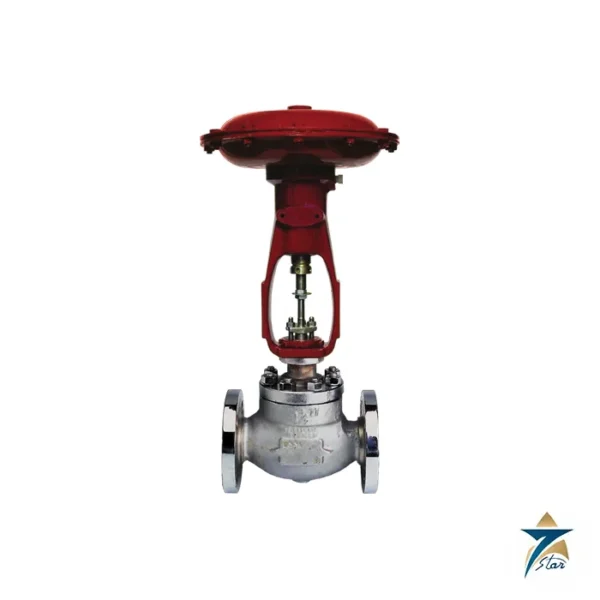
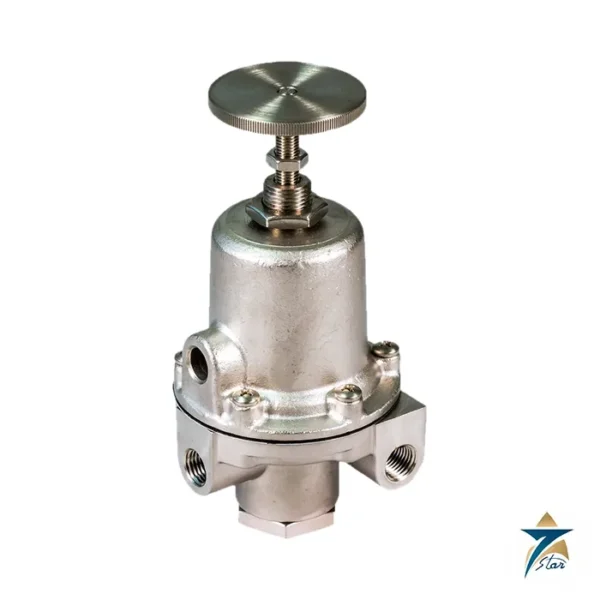
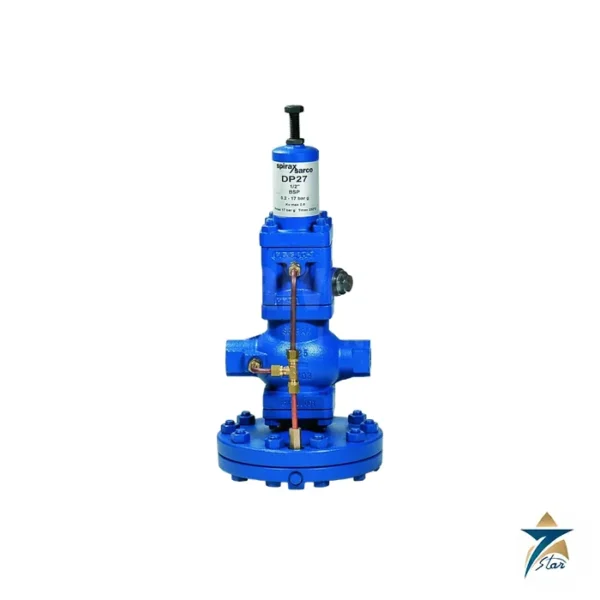
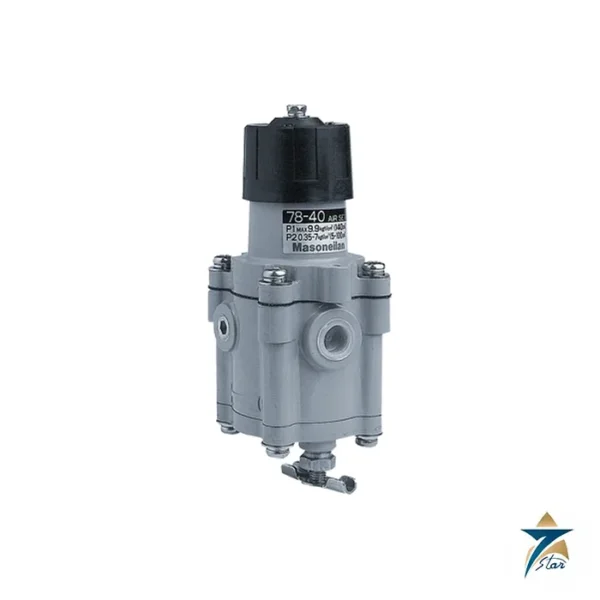
Seven Star LLC supplies models from the Fisher Tank Blanketing range in Oman and the GCC. Compare the related models below and request a quote for the one that matches your application.






















Reviews
There are no reviews yet.