Fisher ACE95jr tank blanketing valve: what it is and how it is specified
The Fisher ACE95jr is a compact, self-contained tank blanketing valve. It admits a controlled amount of inert gas, usually nitrogen, into the vapor space of a storage tank so that the tank keeps a slight positive pressure while liquid is pumped out or vapors cool and shrink. Seven Star LLC supplies the ACE95jr in Oman and the GCC as an independent supplier in Muscat, and this page collects the data an engineer needs before asking for a quotation.
The model name is a series designation rather than a coded string, so there is no long ordering key to decode. What you actually specify around the ACE95jr is a set of choices: the end connection (three NPT sizes, three CL150 raised-face sizes, or an NPS 1 sanitary flange), the flow coefficient (Cv 0.2 or Cv 0.4), the elastomer (NBR, FKM, FDA-grade EPDM or FFKM), the control spring that sets the blanket pressure window, and any accessories such as gauges, a purge meter or a pressure switch.
Typical reasons buyers choose the ACE95jr are its fully balanced plug, which keeps the setpoint steady when supply pressure moves, its bubble-tight shutoff, and the fact that it can be set for very small positive or even vacuum-side pressures. The body is 316 stainless steel, so it suits clean chemical, pharmaceutical and food-related tanks as well as hydrocarbon storage.
ACE95jr technical specifications
| Parameter |
Specification |
| Manufacturer / part number |
Fisher (Emerson) / ACE95jr, bulletin 74.1 (D102722X012) |
| Function |
Self-contained, fully balanced tank blanketing valve with external pressure registration |
| Threaded sizes |
1/2 NPT, 1 x 1/2 NPT, 1 NPT |
| Flanged sizes |
NPS 1/2 / DN 15, NPS 1 / DN 25 and NPS 1 x 1/2 / DN 25 x 15 in CL150 RF; NPS 1 / DN 25 sanitary flange |
| Flow coefficient |
Cv 0.2 or Cv 0.4; IEC coefficients XT 0.655, FD 0.86, FL 0.89 |
| Maximum operating inlet pressure |
200 psig / 13.8 bar |
| Maximum differential pressure |
Up to 200 psig / 13.8 bar |
| Maximum operating control pressure |
1.5 psig / 0.10 bar |
| Maximum emergency outlet (casing) pressure |
20 psig / 1.4 bar |
| Control ranges |
-5 to -0.5, -1 to 1, 0.5 to 5, 4 to 10 and 8 to 15 in. w.c.; 0.5 to 1.5 psig (34 to 103 mbar) |
| Main valve characteristic |
Linear; bubble-tight shutoff |
| Body / trim |
316 stainless steel body; 304 and 316 stainless steel trim |
| Diaphragm / actuator |
PTFE diaphragm; 316 stainless steel or carbon steel actuator |
| Elastomer temperature limits |
NBR -20 to 180°F / -29 to 82°C; FKM 0 to 212°F / -18 to 100°C; EPDM (FDA) and FFKM -20 to 212°F / -29 to 100°C |
| Approximate weight |
30 lb / 14 kg with all accessories |
How the ACE95jr controls tank pressure
A large PTFE actuator diaphragm senses the vapor-space pressure through an external sensing line. While tank pressure sits above the spring setting, the diaphragm stays lifted and the plug is seated. When product is pumped out, or the vapors condense after a cool night, the pressure falls below the setting; the spring force then drives the diaphragm down, pushes the plug open and lets nitrogen flow into the tank. As pressure recovers, the diaphragm rises and the plug closes again.
The plug is balanced, meaning the inlet pressure acts equally up and down on it, with a rolling diaphragm taking up the seal without friction. The practical result is that changes in the nitrogen header pressure do not shift the tank setpoint, which is the usual weakness of unbalanced blanketing regulators. Because the control spring ranges are expressed in inches of water column, the valve responds to very small pressure changes that would not move a conventional pressure regulator.
Control pressure ranges and flow capacity
The control spring decides the blanket pressure. The bulletin lists the following windows, and the range selected is stamped on the nameplate at the factory; the setpoint is the only field-adjustable feature of the valve.
| Control range |
Spring part number |
| -5 to -0.5 in. w.c. / -12 to -1 mbar |
GC220701X22 |
| -1 to 1 in. w.c. / -2 to 2 mbar |
GC220701X22 |
| 0.5 to 5 in. w.c. / 1 to 12 mbar |
GC220701X22 |
| 4 to 10 in. w.c. / 10 to 25 mbar |
GC220702X22 |
| 8 to 15 in. w.c. / 20 to 37 mbar |
GC220703X22 |
| 0.5 to 1.5 psig / 34 to 103 mbar |
GC220708X22 |
Capacity is quoted in nitrogen of 0.97 specific gravity. At 100 psig inlet the Cv 0.2 trim passes 860 SCFH (23.0 Nm³/h) and the Cv 0.4 trim 1720 SCFH (46.1 Nm³/h); at 20 psig inlet the figures are 210 and 480 SCFH. At very low inlet pressures the table assumes an outlet pressure of 5 in. w.c. or less. For other blanketing gases the nitrogen figures are multiplied by a correction factor, for example 1.270 for natural gas, 0.985 for air and 0.797 for dry CO2.
Sizing the ACE95jr for a tank
Required flow is the sum of two parts: gas that replaces pumped-out liquid and gas that replaces vapor contraction on thermal cooling. The direct displacement method uses only the first part and the manufacturer warns to use it with great caution, because it ignores temperature swings; it suits constant-temperature tanks with non-volatile, non-flammable product. The API 2000 approach adds the thermal term, estimated for tanks up to 840,000 gal / 3180 m³ as roughly tank volume times 0.0238 SCFH of air per gallon (or 0.169 Nm³/h per m³), with a 1.015 factor for nitrogen.
To convert pump-out rate to gas demand, multiply US gpm by 8.021 to obtain SCFH, or m³/h by 1.01 to obtain Nm³/h. Whichever method you use, the tank still needs separate emergency venting, because a blanketing valve is not a relief device.
Where the ACE95jr fits and related Fisher parts
The ACE95jr sits at the small end of the Fisher blanketing line. For larger gas demand or very low set pressures on bigger tanks, the same product line includes the direct-operated Type Y692 (NPS 1-1/2 and 2 bodies) and the pilot-operated Type 1190 with an EGR main valve. Choose the ACE95jr when the nitrogen demand is modest, the tank nozzle is small and stainless steel or sanitary construction matters.
Optional accessories listed for the valve are an inlet pressure gauge, a low-pressure control pressure gauge, a purge meter (rotameter) that keeps a small flow through the sensing line, a pressure switch for high or low alarms, an outlet check valve, an inlet filter, and a single array manifold that combines the sensing and gas connections in one tank nozzle. The manifold needs the supply pipe to reach at least 6 in. / 152 mm into the vapor space beyond the roof.
Selection and ordering checklist for ACE95jr
- Blanketing gas (nitrogen, natural gas, air or CO2) and its supply pressure range.
- Tank volume, maximum pump-out rate and the lowest expected ambient temperature, so both sizing terms can be calculated.
- Required blanket setpoint, including whether a vacuum-side or sub-inch setting is needed.
- Cv choice of 0.2 or 0.4 based on the capacity table.
- End connection: NPT, CL150 RF or sanitary, with the tank nozzle size.
- Elastomer by process and temperature: NBR, FKM, FDA-grade EPDM or FFKM; sour service materials if H2S is present.
- Accessories: gauges, purge meter, pressure switch, check valve, filter or manifold.
Installation, commissioning and maintenance
The valve is preset at the factory to the stated setpoint. On site, run the sensing line and the gas-to-tank line above the maximum liquid level and slope them down toward the tank with no traps, so condensate cannot collect and block them. Use full-size, self-draining outlet piping and keep block and vent valves at full line size, mounted above the tank. A strainer or inlet filter ahead of the valve protects the small orifice and balanced plug from scale and debris.
During commissioning, open the supply slowly and watch tank pressure against the setting while liquid is moved. Periodic checks should confirm that the sensing line is clear, the purge flow (if fitted) is steady, and the valve closes fully when the tank is at pressure. Keep spare elastomer kits matched to the installed material, and record the nameplate range with each tank so a replacement valve can be ordered correctly.
Typical applications in Oman and the GCC
Blanketing valves of this size appear on day tanks, chemical dosing tanks, additive and solvent storage, lube oil and condensate drums, and small product tanks at refineries, petrochemical units, power stations and desalination plants. High summer temperatures and strong day-to-night swings cause pronounced vapor contraction at dusk, so the thermal term in sizing deserves attention. Dust and salt-laden humidity argue for the stainless steel body and for keeping the sensing line connections protected and tight.
Information to send with an RFQ
- Part number ACE95jr and quantity, with the required Cv and end connection.
- Tank volume, product, maximum pump-out rate and design pressure and vacuum.
- Blanketing gas and supply pressure, plus the setpoint in mbar or in. w.c.
- Elastomer, sour service or sanitary requirement and any accessories.
- Nameplate photo of an existing valve if this is a replacement.
Documents and quotation
The manufacturer’s datasheet for the ACE95jr is attached on this page for reference. Please confirm the setpoint, Cv and elastomer against your own duty data before ordering.
Send the part number ACE95jr together with your tank and gas details to Seven Star LLC, and we will respond with a quotation covering availability and delivery to Oman and the GCC.
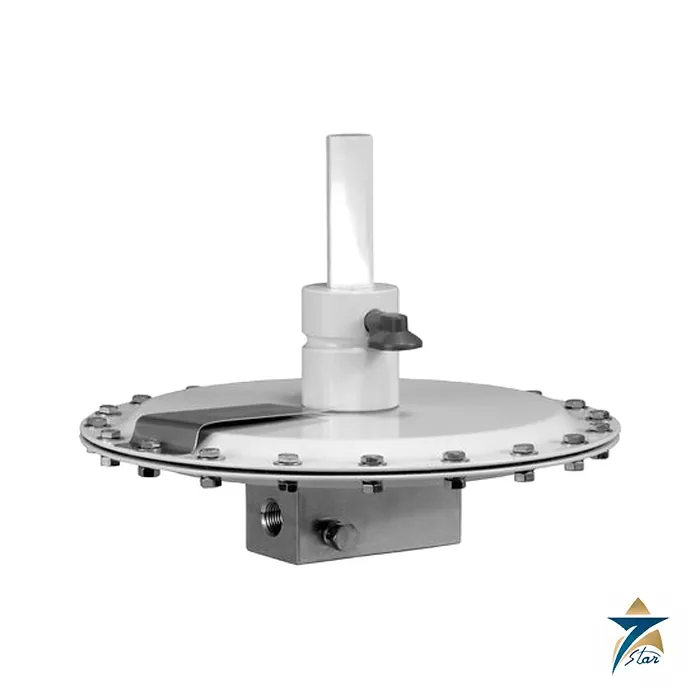
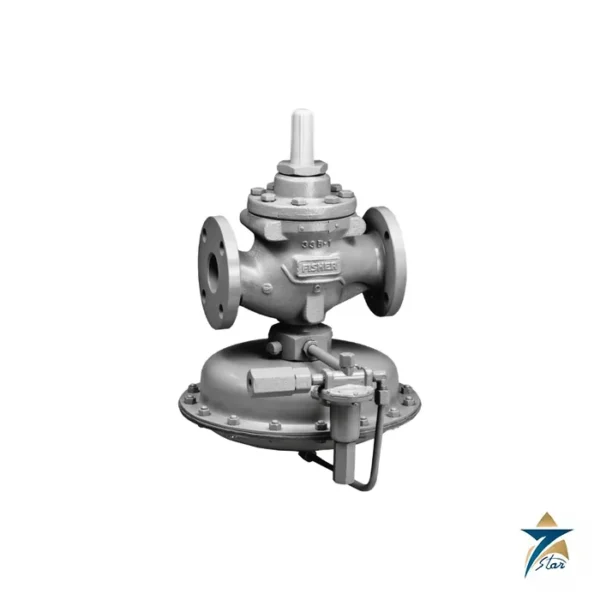
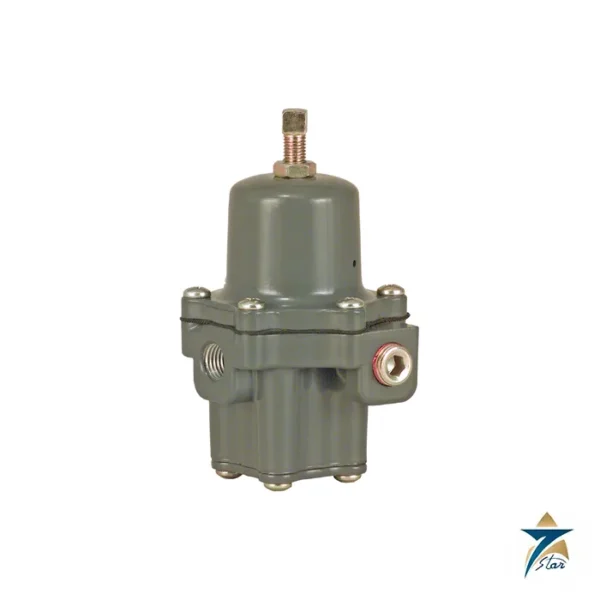
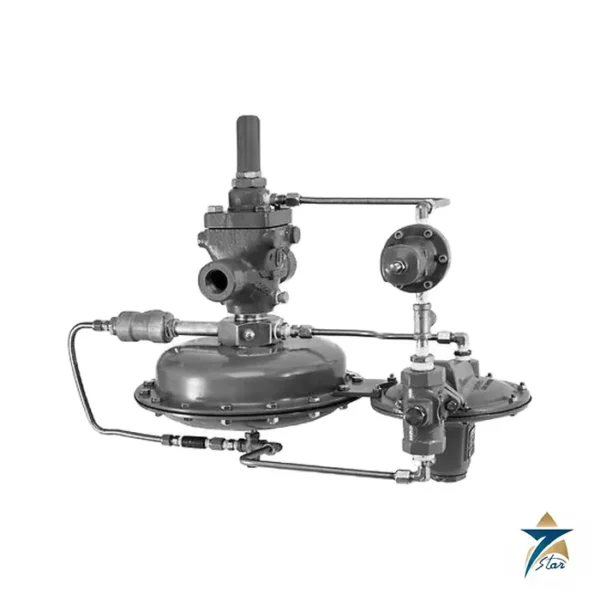
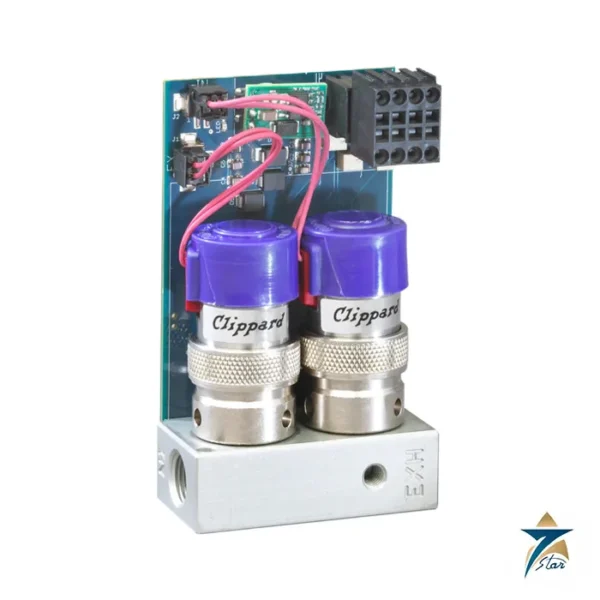
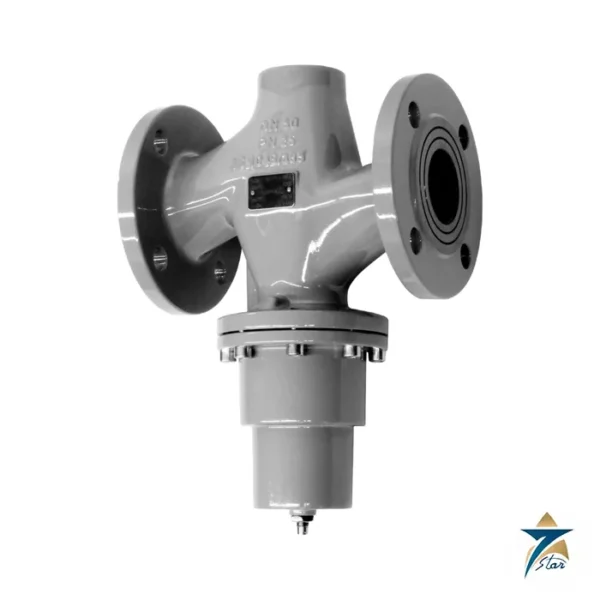
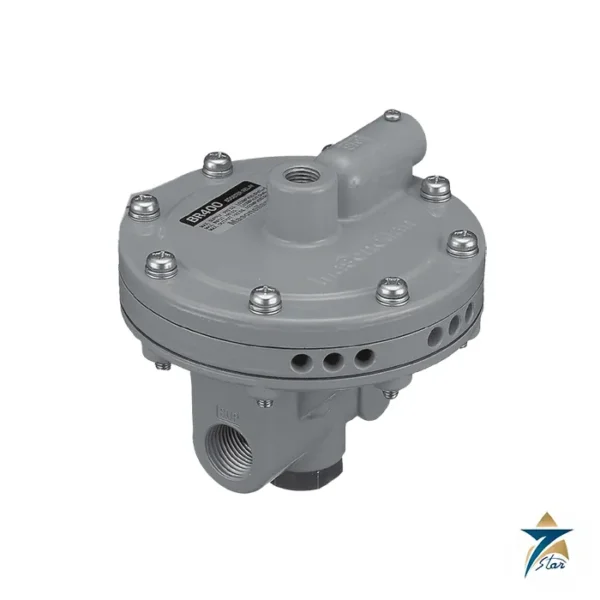
Other Models in the Fisher Tank Blanketing Range
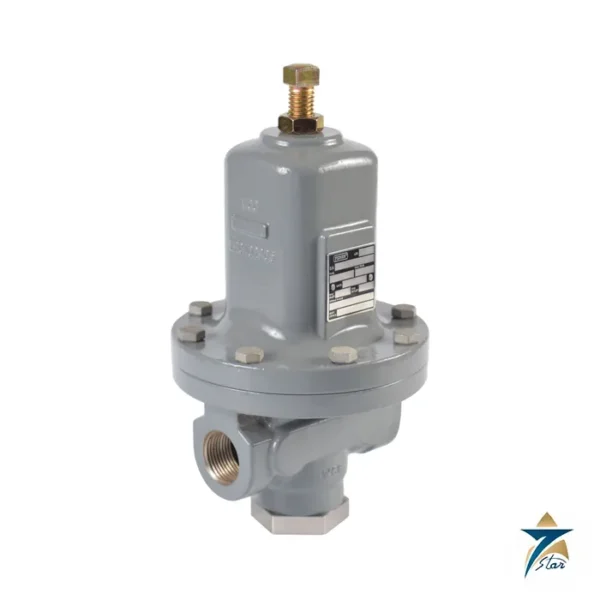
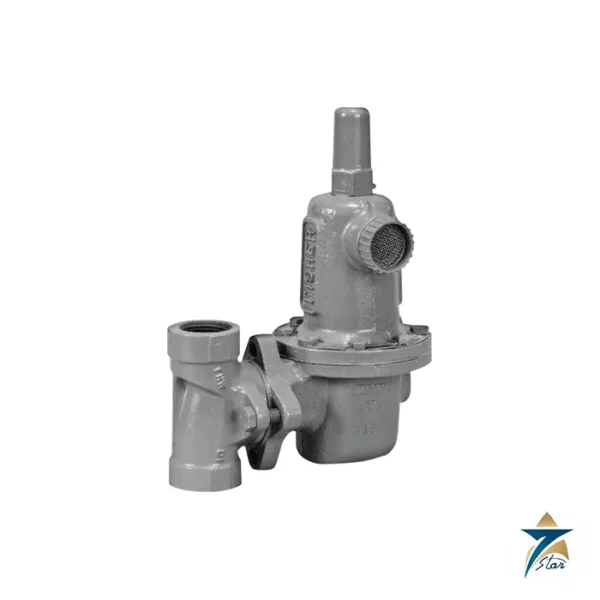
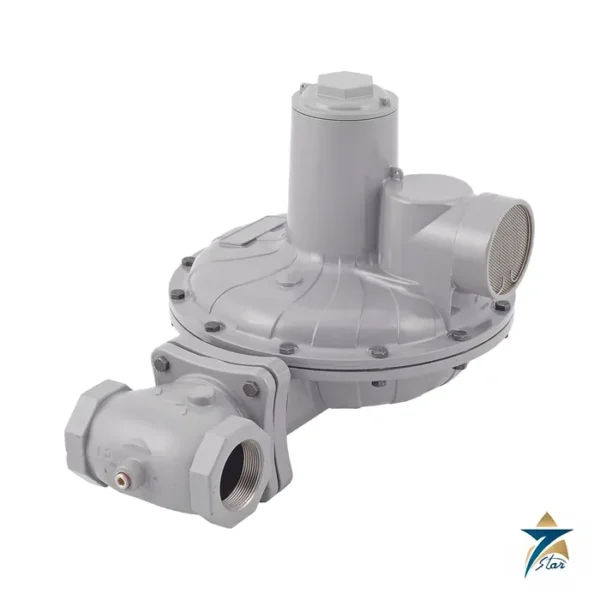
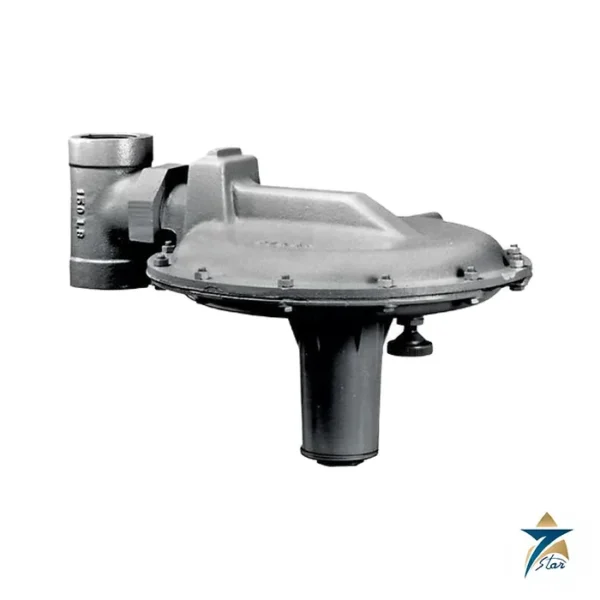
Seven Star LLC supplies models from the Fisher Tank Blanketing range in Oman and the GCC. Compare the related models below and request a quote for the one that matches your application.























Reviews
There are no reviews yet.