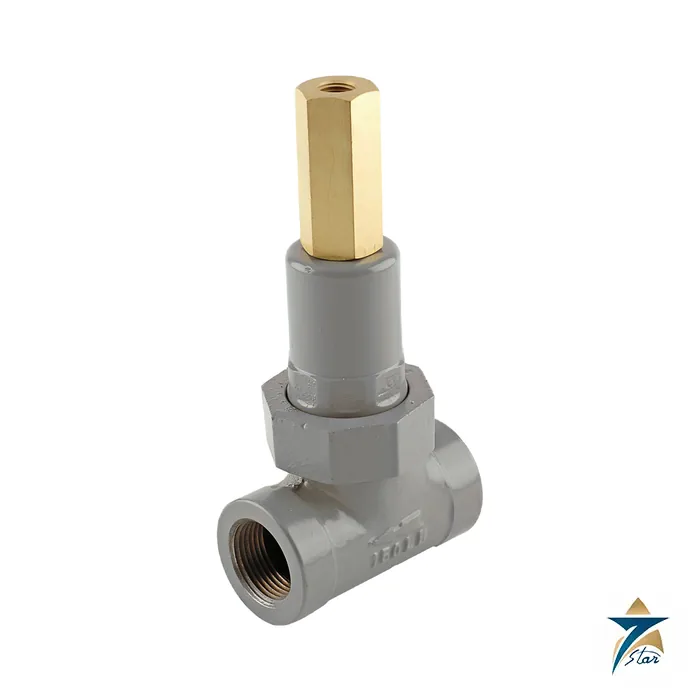
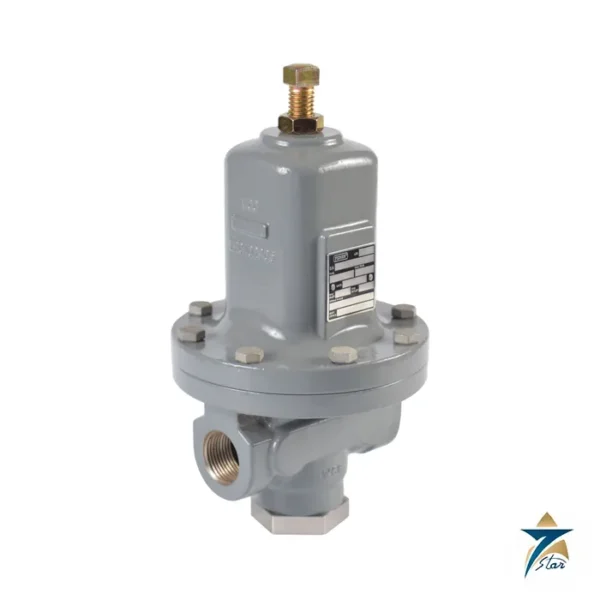
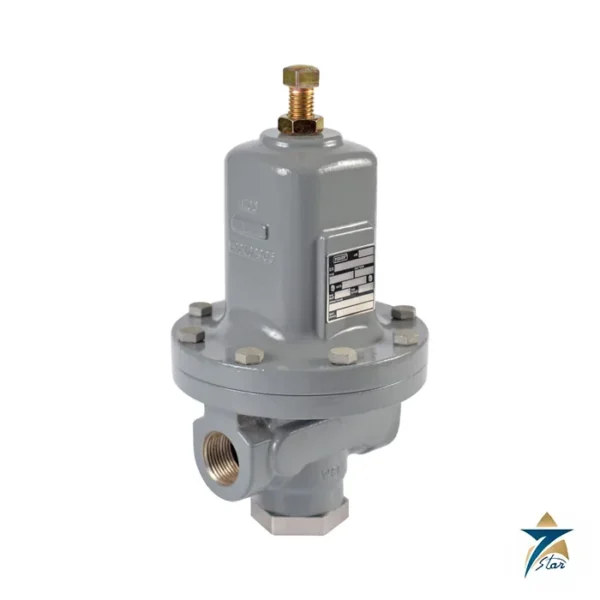
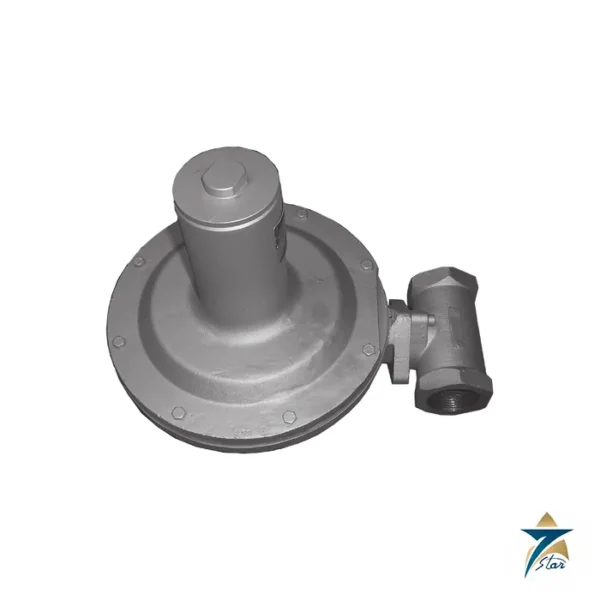
1805 series relief valve: 3/4 to 2 NPT globe body with O-ring seat
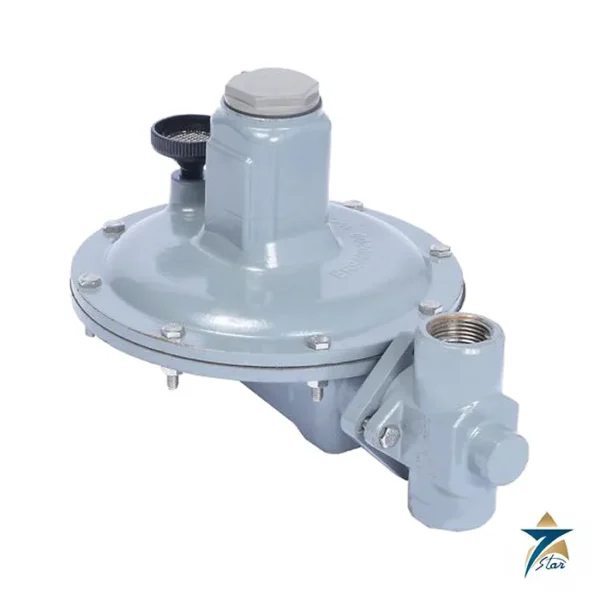
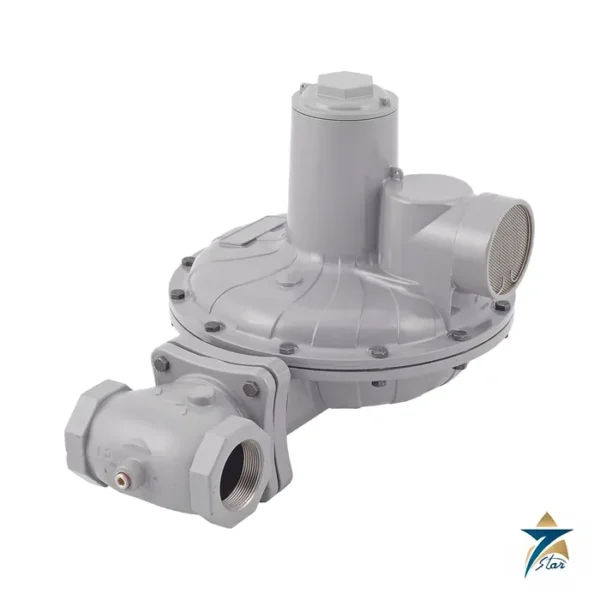
The 1805 series is a family of spring-loaded relief valves in a globe body, sizes 3/4, 1, 1-1/2 and 2 NPT, with relief pressure settings from 5 to 125 psig (0.34 to 8.6 bar) and a maximum inlet pressure of 150 psig (10.3 bar) including pressure build-up. The manufacturer designed it for farm tap applications, where a relief valve is needed between the first and second stage regulators, and it suits natural gas, air, propane or any operating medium that does not attack the internal parts. Tight shutoff comes from a nitrile (NBR) O-ring seated on a valve seat, and a single adjusting screw sets the relief pressure.
1805 series specifications and construction types
| Parameter |
Specification |
| Manufacturer / part number |
Fisher 1805 series relief valves (1805-2, -3, -4, -5, -7) |
| Body style and sizes |
Globe body; 3/4, 1, 1-1/2 or 2 NPT |
| Maximum inlet pressure |
150 psig / 10.3 bar including build-up |
| Set-pressure ranges |
3/4 or 1 NPT: 5-35 psig, 10-60 psig, 20-125 psig; 1-1/2 or 2 NPT: 5-20 psig, 10-50 psig, 35-125 psig |
| Temperature |
-29 to 66°C (-20 to 150°F) |
| Body materials |
Cast iron (all sizes); ductile iron NACE option on 3/4 and 1 NPT |
| Diaphragm and O-rings |
Nitrile (NBR) |
| Other parts |
Aluminum valve guide orifice and O-ring holder; brass diaphragm plate; stainless steel O-ring washer and vent screen; ductile iron union nut |
| Flow coefficient C1 |
35 (3/4 to 1 NPT body), with IEC coefficients Xt 0.73 and FD 0.39; 1-1/2 to 2 NPT with Xt 0.94 and FD 0.44 |
| Weight |
2 kg (5 lb) for 3/4 to 1 NPT; 6 kg (13 lb) for 1-1/2 to 2 NPT |
| Type |
Size |
Features |
| 1805-2 |
3/4 or 1 NPT |
Cast iron spring case; closing cap with 1/4 NPT vent over the adjusting screw |
| 1805-3 |
1-1/2 or 2 NPT |
Cast iron spring case; closing cap with 1/4 NPT vent |
| 1805-4 |
3/4 or 1 NPT |
Cast iron spring case |
| 1805-5 |
1-1/2 or 2 NPT |
Cast iron spring case |
| 1805-7 |
3/4 or 1 NPT |
Closing cap with 1/4 NPT vent and screen in outlet |
How the 1805 relieves and recloses
Upstream pressure registers beneath the diaphragm, reaching it through the gap between the O-ring holder and the valve guide orifice on the 3/4 and 1 NPT bodies. When upstream pressure exceeds the spring setting the diaphragm lifts the O-ring holder, carrying the O-ring off the seat so that gas vents to atmosphere. When pressure drops below the setting the spring pushes the diaphragm plate and holder back and the O-ring seats again, which stops the flow. A closing cap and 1/4 NPT vent allow all vented gas to be piped away safely. Optional materials for sour gas follow NACE MR0175 and MR0103 recommendations.
Where the 1805 fits and how it relates to the Fisher 289 and 63EG
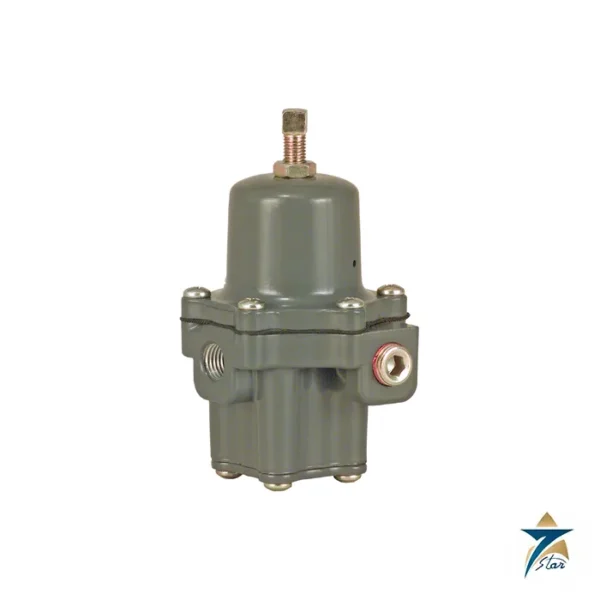
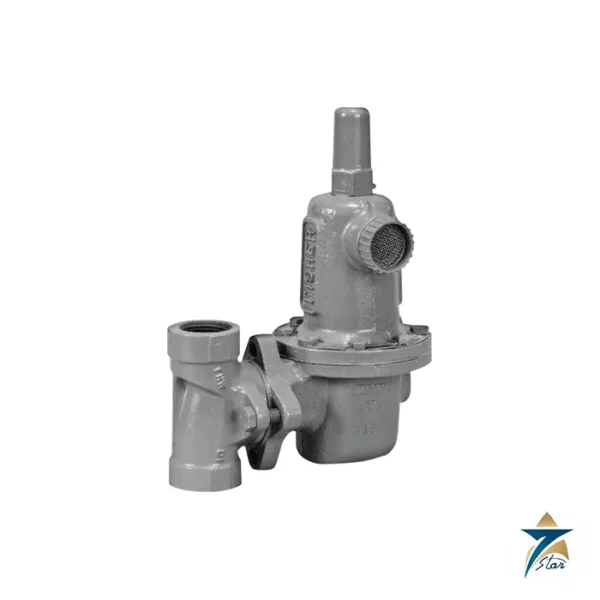
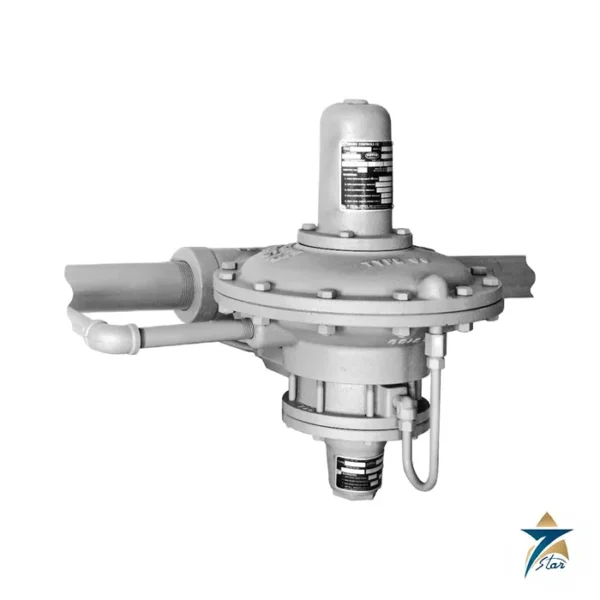
For very small low-pressure systems the Fisher 289 series is the neat compact option; the 1805 fills the middle range with 3/4 to 2 NPT bodies and settings up to 125 psig. For larger flow or tighter control, the Fisher 63EG relief valve or backpressure regulator and the MR98 series are alternatives. In a two-stage regulation line the 1805 sits between the first and second stage regulators so that a failed first stage cannot over-pressure the second stage piping. It is a relief device, not a certified safety relief valve for process vessels.
1805 selection and ordering checklist
- Body size and spring range that include the required set pressure with margin for build-up.
- Maximum upstream pressure not above 150 psig (10.3 bar).
- Medium: natural gas, air, propane or other non-corrosive gas.
- Standard cast iron or NACE-oriented ductile iron construction.
- Closing cap with vent piping, or screened outlet (1805-7), as required.
- Required capacity with the C1 and IEC coefficients.
- Ambient and gas temperatures within -29 to 66°C.
Installation and maintenance
Install the valve with its vent directed to a safe location, protect the vent screen from insects and sand, and check that vent piping adds no back-pressure that raises the effective set point. Because a union nut allows the cage assembly to be removed quickly, trim inspection and O-ring replacement take only minutes. Replace the nitrile O-ring and diaphragm at turnaround, and re-check the set point after any spring change by using a gauge and a controlled pressure source.
Typical 1805 applications in Oman and the GCC
Typical Gulf uses include wellhead and flowline fuel gas skids, gas conditioning for engines and generators, LPG and propane installations at camps and facilities, and compressed air receivers. Heat and sun on above-ground piping should be considered when choosing the set point near the maximum allowable build-up.
1805 set-pressure ranges
| Body size |
Relief range |
Spring colour |
| 3/4 or 1 NPT |
5 to 35 psig (0.34 to 2.4 bar) |
Green spring |
| 3/4 or 1 NPT |
10 to 60 psig (0.69 to 4.1 bar) |
Silver spring |
| 3/4 or 1 NPT |
20 to 125 psig (1.4 to 8.6 bar) |
Blue spring |
| 1-1/2 or 2 NPT |
5 to 20 psig (0.34 to 1.4 bar) |
Red spring |
| 1-1/2 or 2 NPT |
10 to 50 psig (0.69 to 3.4 bar) |
Blue spring |
| 1-1/2 or 2 NPT |
35 to 125 psig (2.4 to 8.6 bar) |
Yellow spring |
Information to send with a 1805 enquiry
- Medium and normal and maximum inlet pressure.
- Set pressure and relieving flow.
- Connection size and construction type.
- Any sour service requirement.
- Quantity and destination.
Site conditions in Oman for the 1805
Valves and their accessories in Oman work in demanding conditions: high ambient temperatures, direct sun on outdoor pipe racks, dust, and corrosive coastal air at many oil, gas and water sites. When you specify the 1805, confirm the pressure and temperature ratings, body and trim materials and any sour-service or hazardous-area requirements against the actual line data, and check that seals and soft parts suit the process medium and the full temperature range.
For reliable operation, plan access for maintenance, define which spare parts are kept on site, and record the configuration of each installed 1805. Sending the complete process data sheet with your RFQ allows the selection to be checked before the order is placed.
Documents and quotation for the 1805 series
A manufacturer bulletin for the 1805 series is attached on this page. Seven Star LLC is an independent supplier in Muscat.
Send the 1805 type, size and set pressure and we will confirm availability and quote.

























Reviews
There are no reviews yet.