A UV flame sensor for gas turbines and other harsh burner installations
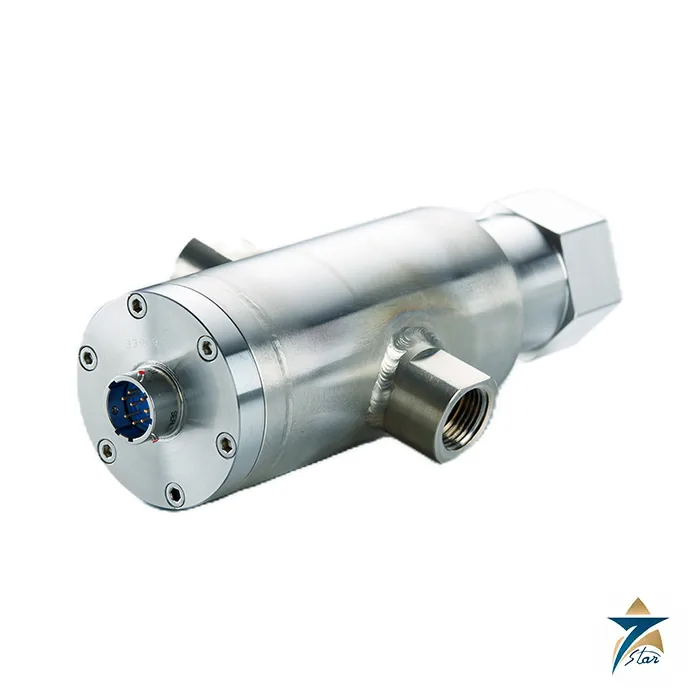
The DURAG D-GT 800 is a flame sensor for monitoring gas and oil flames, primarily in gas turbines or in particularly harsh environments. DURAG describes a highly sensitive photo element in a sturdy housing that suits high combustion chamber overpressure and strong vibration, and a photodiode that can detect almost all blue-burning flames, such as gas flames with only a low radiation component in the visible range. Flame monitoring covers the UV range from 190 to 570 nm.
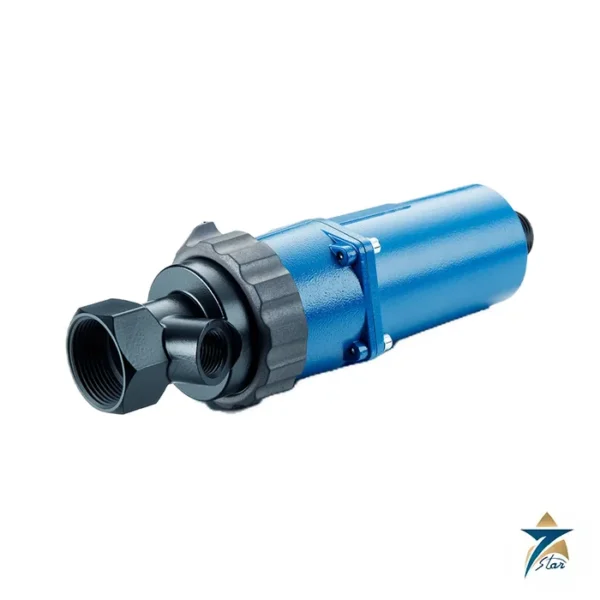
It is self-monitoring and fail-safe in conjunction with a control unit or burner control, and can be ordered with air or water cooling for very high temperatures. The D-GT 801 variant is listed without a cooling jacket, and ATEX-approved versions are marked /Ex.
Technical specifications
| Parameter |
Specification |
| Function |
Flame sensor for gas and oil flames; gas turbines and harsh environments |
| Spectral range |
UV, 190 to 570 nm flame monitoring |
| Photo elements |
D-GT 800/801 UAF and UA (selection table below) |
| Operational mode |
Intermittent, continuous and 72-hour operation without permanent supervision |
| Safety |
Self-monitoring and fail-safe in conjunction with a control unit or burner control |
| Control units |
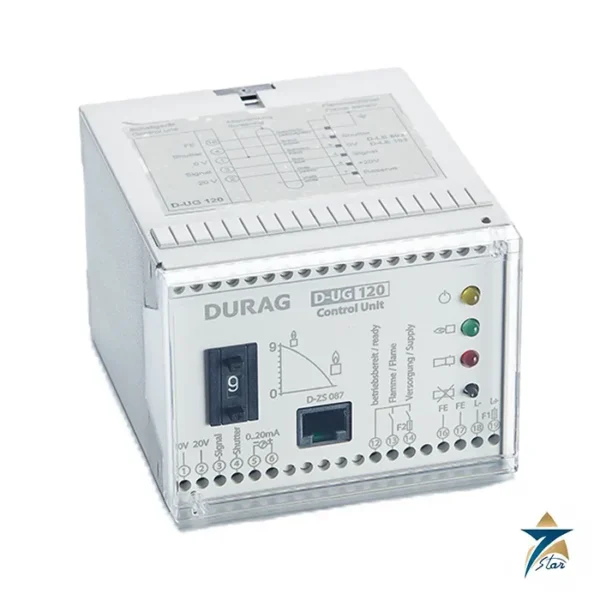
D-UG 120, D-UG 660 control units; D-GF 150 burner control |
| Protection |
IP67 with axial plug (-P); IP66 for the Ex version (…/Ex) |
| Ex protection (…/Ex) |
II 2G Ex d T4/T5/T6 |
| Viewing angle |
6 degrees |
| Permissible ambient temperature |
Without cooling -20 to +120 degC; air cooling -20 to +200 degC; water cooling -20 to +300 degC |
| Vibration |
10 g |
| Max. combustion chamber overpressure |
30 bar |
| Dimensions |
Diameter 100 mm; length approx. 190 mm |
| Weight |
Approx. 1.5 kg without cooling; approx. 2.0 kg with cooling |
| Sighting tube connection |
3/4 inch NPT (F) |
| Cooling connection |
1/2 inch NPT (F) |
| Certifications listed (D-GT 800/801 only) |
DVGW, EAC, ATEX |
Choosing the photo element
| Sensor |
Gas |
Oil |
Feature |
| D-GT 800/801 UAF |
Conditionally suited |
Ideally suited |
Intensive ambient light, for example neighbouring burners |
| D-GT 800/801 UA |
Well suited |
Ideally suited |
Low NOx component |
The datasheet ratings are from experience. The D-GT 800 is offered with air or water cooling where the sighting tube sees very high temperatures, and the Ex version suits hazardous-area installation. Listed accessories are the D-ZS 093 UV-A, UV-B and IR test light source (230 V, 50 Hz) and the D-ZS 140 and D-ZS 141 terminal boxes.
What to confirm before ordering
Confirm the fuel, the photo element, whether cooling (air or water) is needed, the connection type (cable gland, axial plug or Ex), the control unit it will connect to, and the combustion chamber pressure. See related combustion safety items under flame detection and sensors, including the DURAG D-HG 400 ignition device.
How the DURAG D-GT 800 UV flame sensor works
A flame emits radiation across several wavelength ranges, including ultraviolet light. The D-GT 800 looks at the flame through a sighting tube and uses a UV-sensitive photo element to convert that light into an electrical signal. The signal goes to a control unit or burner control, which decides whether a flame is present. Because the unit is self-monitoring and fail-safe together with the control unit, a failure in the sensor or its cable is treated as loss of flame, so the fuel supply is shut and the system moves to a safe state.
The sensor looks at a narrow viewing angle of 6 degrees, which lets it be pointed at the flame root and reduces the influence of neighbouring burners.
Where the D-GT 800 is used
- Gas turbine combustion chambers, where pressure and vibration are high.
- Burners firing gas or oil in hot or dirty surroundings.
- Hazardous-area installations with the Ex version.
- Burner management systems that use a DURAG D-UG 120, D-UG 660 or D-GF 150 control unit.
Selection checklist for the D-GT 800
- Fuel: gas or oil, and the photo element chosen from the UAF and UA versions in the selection table.
- Ambient light: UAF suits intensive background light such as from neighbouring burners.
- Temperature at the sensor: no cooling up to 120 degrees C, air cooling up to 200 degrees C and water cooling up to 300 degrees C.
- Combustion chamber overpressure up to 30 bar and vibration up to 10 g.
- Hazardous area: Ex version with the marking II 2G Ex d T4/T5/T6 and IP66.
- Connections: 3/4 inch NPT sighting tube, and 1/2 inch NPT cooling connection.
- Control unit and wiring to the sensor, including the plug type and cable length.
- Accessories such as the sighting tube adapters listed in the datasheet.
Installation, commissioning and maintenance notes
Aim the sensor at the flame area through a sighting tube that has a clean, unrestricted view and, where the manual asks for it, a purge connection. Keep the cooling air or water running whenever the sensor sees high temperature. During commissioning, check the flame signal at all load points and under start-up and shut-down, and verify that a loss of flame trips the system. Inspect the sighting window for soot, since a dirty window lowers the signal, and test the safety function at the interval set by the plant procedure.
Requesting a quotation for the DURAG D-GT 800
Send the fuel, burner type, cooling requirement, Ex requirement and the control unit. Seven Star LLC serves industrial customers in Oman and the GCC and replies with a quotation based on the information provided.
Flame monitoring in the safety concept
The flame sensor is one element of a burner safety chain. Its response time, signal limits and the shutdown action of the control unit must match the safety requirements of the turbine or boiler, and the whole chain should be tested together.
Cooling and sighting tube considerations
Cooling is chosen from the temperature at the sensor housing, not from the flame temperature. The sighting tube should be short and straight where possible, free of obstructions and sealed so that hot gas does not leak back. Keep cooling lines and cables protected from heat and vibration.
Documentation to keep after commissioning
Record the signal levels, the control unit settings and the date of each test, so later changes in the flame signal can be compared with the original values.
Documents and quotation
The attached DURAG datasheet (08/2016 in the footer) is one page and covers the D-GT 800 and D-GT 801. Send the complete type code and quantity with your enquiry.











Reviews
There are no reviews yet.