A conventional UV and dual-IR flame detector for open fires
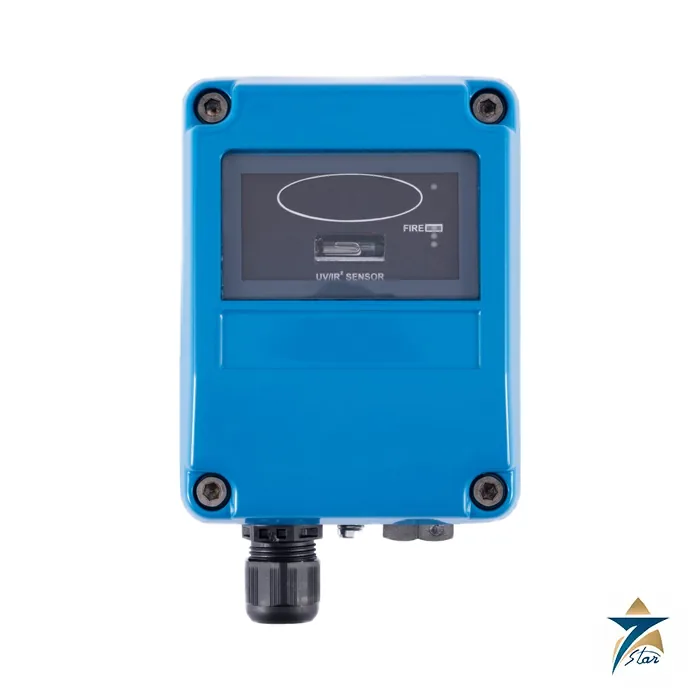
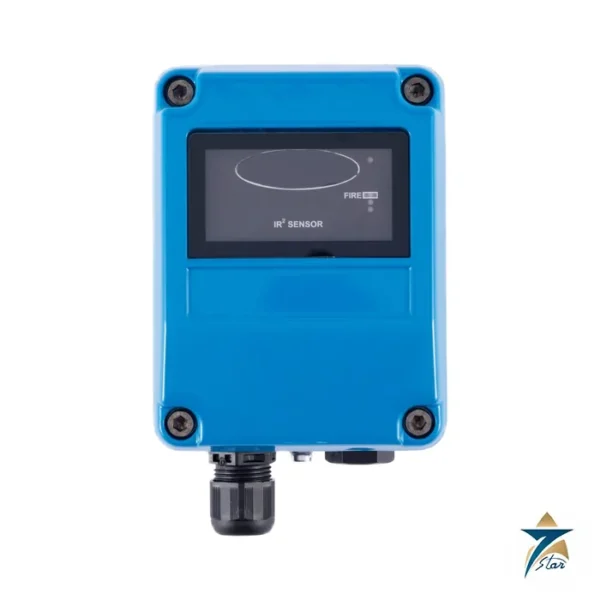
The Apollo 55000-064 is a conventional flame detector (UV / IR2) designed to protect areas where open fires may be expected. Apollo states it detects most flames from hydrocarbon fires with 4.3 micrometre emissions through to invisible fires such as hydrogen. It is suitable for indoor and outdoor areas and has selectable output options of relay contacts or a 4 to 20 mA signal as standard.
Operation combines one ultraviolet sensor and two infrared sensors that respond to different wavelengths. The signals are processed and checked for flame characteristics, and an alarm is raised only when both UV and IR light are detected simultaneously. False alarms from flickering sunlight, arc welding and lightning are eliminated by the combination of UV and dual IR signal processing.
Technical specifications
| Parameter |
Specification |
| Part number |
55000-064 |
| Supply / test signal voltage |
14-30 V dc |
| Quiescent current |
8 mA (RL2 energised); 4 mA current loop, RL2 off; 3 mA (RL2 off) |
| Alarm current |
28 mA (RL1 and RL2 energised); 20 mA current loop, both off; 9 mA (RL1 energised) |
| Relay rating |
0.75 A max; 48 V dc max; 30 W max (resistive loads only) |
| Range (High / Class 1) |
0.1 m2 n-heptane at 25 m |
| Range (Low / Class 3) |
0.1 m2 n-heptane at 12 m |
| Field of view |
90 degree minimum cone |
| Spectral response |
UV 185 to 260 nm; IR 1.0 to 2.7 micrometres |
| Operating / storage temperature |
-10 C to +55 C; -20 C to +65 C |
| Humidity / IP |
0-95 % RH, no condensation or icing; IP65 |
| Dimensions / weight |
142 mm (h) x 108 mm (w) x 79 mm (d); 1.75 kg |
| Housing / entries |
Blue die-cast zinc alloy; 2 x 20 mm cable glands |
| Standards |
EN 54-10 (vibration, impact and shock; sensitivity settings); Class 1 for n-heptane and methylated spirit tests |
Response and settings
The response table gives a 0.1 m2 yellow n-heptane flame at 25 m and a 0.25 m2 clear methylated-spirit flame at 25 m at high sensitivity, both tested and approved at Class 1 to EN 54-10. Sensitivity and response speed are selected by DIL switch settings, which are described in the Conventional Flame Detector User Guide rather than in this specification.
Features listed by Apollo include Class 1 sensitivity detecting a 0.1 m2 fire at 25 m, high optical interference immunity and selectable response speed. The detector is sensitive to flickering low-frequency (1 to 15 Hz) infrared radiation together with ultraviolet emitted during combustion.
Selection and what to confirm before ordering
This is a conventional (non-addressable) detector. Confirm that your panel supports its relay or 4 to 20 mA outputs and the zone wiring, and check the DIL switch configuration needed for response time and sensitivity. The datasheet shows no hazardous-area certification, so it is for non-classified areas.
Confirm the target fuel and fire size, distance and angle, ambient temperature, and any exposure to sources such as welding. For addressable XP95 systems see the Apollo XP95 IR2 flame detector 55000-280.
Positioning the 55000-064 for reliable coverage
A flame detector can only respond to radiation it can see, so siting is the most important design decision. Map the likely fire sources first, such as fuel pumps, loading points, generators or solvent handling areas, then place the detector so those sources fall inside its cone of view and within the range for the selected sensitivity class. Avoid positions where pipework, structural steel, stacked goods or vehicles can block the line of sight. Tilting the detector slightly downward helps reduce the build-up of dirt and water on its front face and limits the view of the open sky.
Where a large area or a complex layout must be covered, more than one detector viewing from different angles reduces shadowed zones. Record the final positions and viewing directions on the fire alarm layout drawings so that later modifications to the plant do not quietly create blind spots.
Wiring and commissioning on a conventional system
Decide early whether the relay contacts or the 4 to 20 mA output will be used, as this affects the panel interface, the zone design and the cable schedule. Use the two cable entries with suitable glands to maintain the IP65 rating, and seal unused entries. Set the DIL switches for sensitivity and response speed according to the user guide before the cover is closed, and note the settings on the commissioning record.
During commissioning, confirm the alarm and fault signals reach the control panel and the connected fire protection actions, and carry out functional testing by the method described in the manufacturer documentation. Inform the site team before testing so that alarms are not mistaken for real events.
Heat, sun and dust at Omani and GCC sites
The specified operating range tops out at +55 °C, and a detector mounted in direct sun on a metal structure in an Omani summer can approach or exceed its ambient limit. Choose shaded positions or arrange local site shading where possible, and check surface temperatures during the hottest months. Sand and dust settling on the detector face reduce the radiation reaching the sensors and therefore its effective range, while coastal humidity and salt spray can affect glands and fixings over time.
Inspection and maintenance
Include each flame detector in the periodic fire system maintenance schedule. Clean the front face gently with materials that do not scratch or leave residue, check the mounting bracket and glands for corrosion or loosening, verify that nothing new obstructs the field of view, and repeat the functional test. Increase the inspection frequency in dusty plants or near the coast.
Documents and quotation
The manufacturer document for the 55000-064 is listed under Documents on this page: Apollo PP5050 Conventional Flame Detector (UV / IR2) specification (Issue 2, 2025). Browse related items in Fire & Gas Detectors. For price, availability and lead time, send an RFQ with the exact part number, quantity and project details; Seven Star LLC is an independent supplier based in Muscat and confirms stock and delivery on quotation.


























Reviews
There are no reviews yet.