Brand:

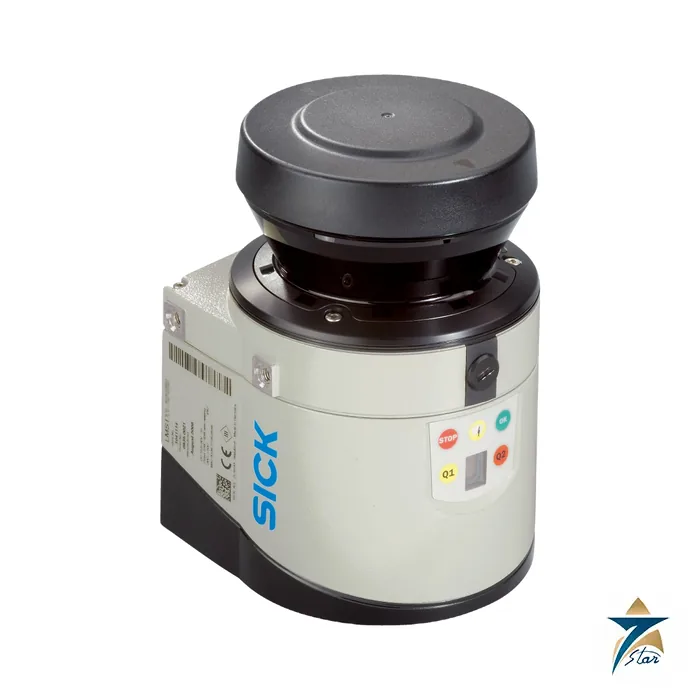
SICK LMS151-10100 Outdoor 2D LiDAR Sensor, 270 deg, 50 m Range

Description

Overview

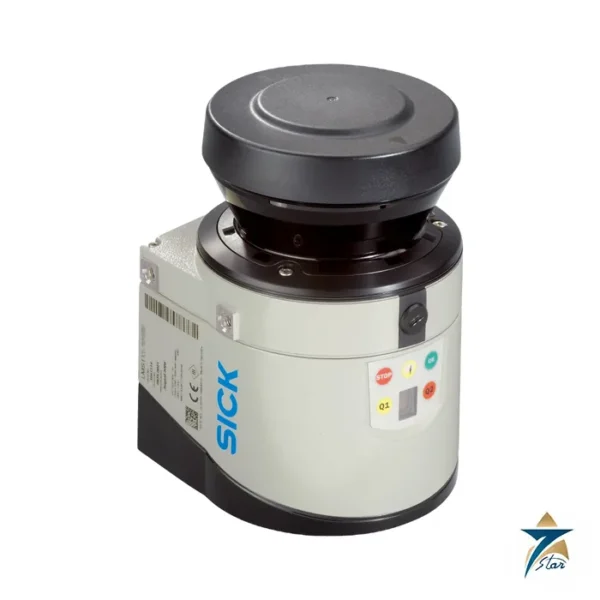
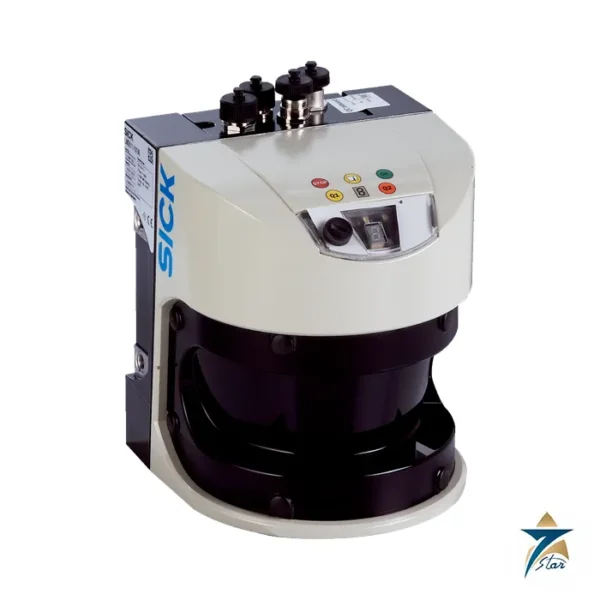
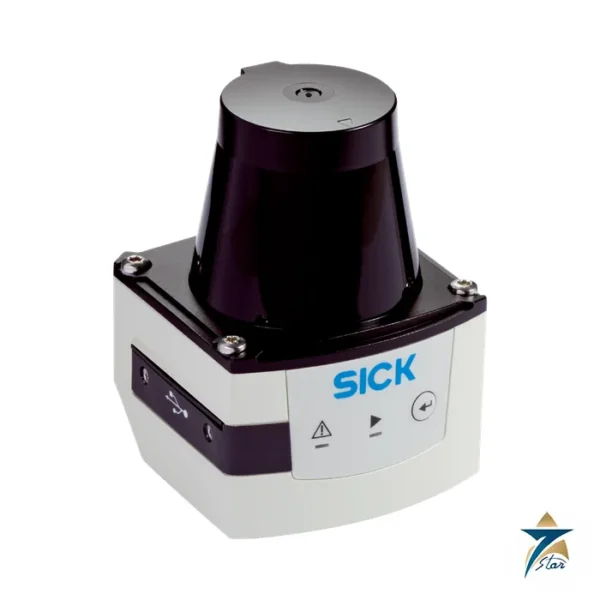
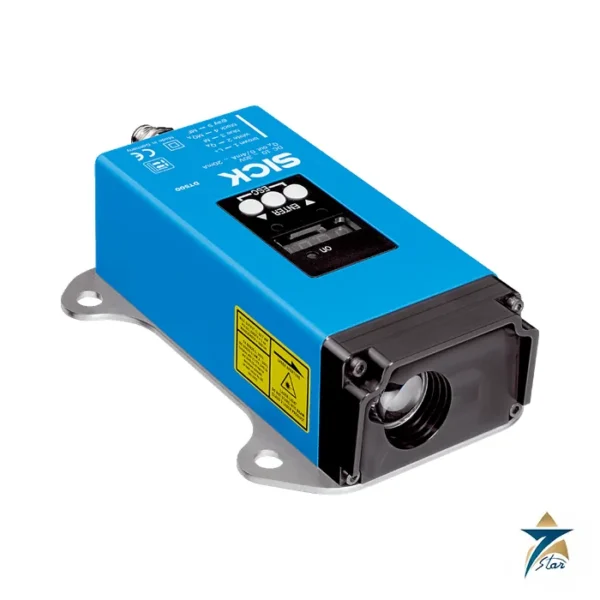
The SICK LMS151-10100 is the long-range heated member of the LMS1xx two-dimensional LiDAR family. It rotates an infrared laser through 270 degrees and reports the distance to the first and second echo for every angular step, producing a contour of the scene in front of it. Compared with the other LMS1xx codes it reaches much further: the working range is 0.5 m to 50 m, with a scanning range of 50 m on a target of 90 percent remission and 18 m on a dark target of 10 percent remission.

Because it combines the IP67 housing, a built-in heater and fog correction, the sensor is specified for outdoor and indoor service between minus 30 and plus 50 degrees Celsius. Two echoes are evaluated per measurement, which helps it look through light rain or dust, and a field evaluation function lets it switch outputs without an external computer.

Seven Star LLC is an independent supplier serving Oman and the GCC. The information on this page reflects the manufacturer data sheet for part number 1047607.

Measurement performance of the LMS151-10100

The scanning frequency is 25 Hz or 50 Hz and the angular resolution is 0.25 or 0.5 degrees, depending on the chosen setting. The systematic error is plus or minus 30 mm and the statistical error is 12 mm, both given as typical values that vary with ambient conditions. Response time is 20 ms or more. The remission range runs from 3 percent to more than 1,000 percent when reflectors are used, and ambient light immunity reaches 80,000 lx, enough for direct Gulf sunshine falling on the optics.

The device stores 10 field sets and can evaluate 10 cases simultaneously. These fields are drawn in the configuration software over the scan area; when an object enters a field, a digital output switches. That makes it possible to build zone monitoring, gate control and vehicle detection tasks without a PLC performing the contour maths.

Technical specifications of the SICK LMS151-10100

Parameter Value
Type / part number LMS151-10100 / 1047607
Application Outdoor, indoor
Light source / laser class Infrared 905 nm / class 1
Aperture angle 270 degrees
Scanning frequency 25 Hz or 50 Hz
Angular resolution 0.25 or 0.5 degrees
Working range 0.5 m to 50 m
Scanning range at 10 percent remission 18 m
Scanning range at 90 percent remission 50 m
Evaluated echoes 2
Fog correction / heating Yes / Yes
Systematic / statistical error plus or minus 30 mm / 12 mm (typical)
Field sets / simultaneous cases 10 / 10
Supply voltage 10.8 V DC to 30 V DC
Power consumption typically 8 W, heating typically 35 W
Connection 1 x M12 round connector
Interfaces Ethernet TCP/IP, RS-232, CAN
Digital inputs 4, of which 2 suitable for encoders
Digital outputs 3
Enclosure rating / protection class IP67 / III
Dimensions (L x W x H) 105 mm x 102 mm x 162 mm
Weight 1.1 kg
Operating temperature minus 30 to plus 50 degrees Celsius
Storage temperature minus 30 to plus 70 degrees Celsius
MTBF more than 100 years

The data sheet states that the sensor does not constitute a safety component under machine safety legislation, so it must not replace a certified protective device.

How LMS151-10100 differs from other LMS1xx variants

Three siblings are often confused. The LMS100-10000 is an indoor device with IP65 housing, no heater and a 20 m range. The LMS111-10100 adds the heater and IP67 housing but keeps the 20 m range. The SICK LMS151-10100 keeps the heater and IP67 housing and extends the working range to 50 m, which is why it is chosen for long gate lanes, yard monitoring and large storage areas.

The I/O arrangement also differs: this code lists 4 digital inputs, two of which are suitable for encoders, while the LMS111-10100 lists 2 digital and 2 encoder inputs. If your wiring uses the encoder inputs for conveyor tracking, read the interface section of the right data sheet before ordering.

Typical applications in Oman and the GCC

The longer reach makes the sensor suitable for open sites. In ports and logistics yards it can watch a crane track or a truck lane, in mines and quarries it profiles conveyor loads and stockpile faces, and in power and utility plants it monitors fenced areas and approach roads. Heavy industry uses it to measure crane positions and detect obstacles on rails.

Direct sunlight, dust haze and large day-to-night temperature changes are normal in the region; the heating, fog correction and the 80,000 lx immunity address precisely those conditions. For personnel protection, however, a safety-rated scanner is needed.

Installation and commissioning of the LMS151-10100

Fix the housing with the M5 mounting holes, which are 7.5 mm deep, on a rigid bracket with a clear 270 degree view. Tilt the scanner slightly downward so water runs off the optics cover. Supply 10.8 V to 30 V DC, sized for the heater peak of 35 W above the 8 W operating load, and connect the Ethernet cable to the 4-pin D-coded M12 port.

Configure scan frequency, resolution and fields with the vendor tool, test each field with a typical test object and save the configuration. For long distances, verify that the target remission is high enough: dark materials reach only the 18 m figure, while reflective tape or bright surfaces approach 50 m.

Care and maintenance of SICK LMS151-10100

The optics cover collects dust and salt film in coastal air. The contamination warning LED signals when cleaning is due; use a soft cloth with a mild cleaner. Check that mounting screws, connector locks and cable glands remain tight and sealed. With an MTBF of more than 100 years the electronics are rarely the limiting item.

Keep a copy of the configuration file with the part number 1047607 so a replacement sensor can be loaded with identical fields in minutes.

Related items you may also need: SICK RFH510-1004301 RFH5xx Rfid Read/Write Device | SICK SRS50-HFV0-K22 Motor Feedback | SICK GRSE18-N2442 GR18 Through-Beam Sensor | All SICK products.

Documents and quotation

The manufacturer data sheet for the SICK LMS151-10100 is provided with this page and includes the dimensional drawing, connection diagrams and the working range diagram.

Send your RFQ with the part number LMS151-10100, the quantity and the delivery location in Oman or the GCC. Seven Star LLC will check availability of the SICK LMS151-10100 and can add brackets, cables and power supplies to the same quotation.

Other Models in the LMS1xx Range

Seven Star LLC supplies models from the LMS1xx range in Oman and the GCC. Compare the related models below and request a quote for the one that matches your application.

ModelCategory
SICK LMS111-10100 Outdoor 2D LiDAR Sensor, 270 deg, 20 mLaser Distance, LiDAR & Radar SensorsView details
SICK LMS151-10100 Outdoor 2D LiDAR Sensor, 270 deg, 50 m RangeLaser Distance, LiDAR & Radar SensorsYou are viewing this model
Datasheets & Documents
  • PDF Datasheet SICK LMS151-10100 Outdoor 2D LiDAR Sensor, 270 deg, 50 m Range Datasheet Download
Reviews (0)

Reviews

There are no reviews yet.

How would you rate this product?

It takes about 10 seconds — just tap a star. Your email is never published.

About brand

SICK is the German maker of industrial sensors: photoelectric and proximity sensors, safety laser scanners and light curtains, encoders, distance sensors, code readers and gas analysers. Erwin Sick, an optics engineer, founded it in Munich in 1946, and in 1952 it introduced its first marketable accident-prevention light curtain, which protected press operators by stopping the machine when a hand broke the light beam. The company moved to Waldkirch in the Black Forest in 1956 and is still headquartered there. It is a privately held company, and has been an Aktiengesellschaft (AG) since 1996.

SICK company profile

Founded 1946, Munich, Germany, by Erwin Sick (1909–1988)
Headquarters Waldkirch, Baden-Württemberg, Germany (since 1956)
Ownership Privately held; after the founder's death in 1988 his widow Gisela Sick became the main shareholder. Legal form SICK AG since 1996
Size More than 12,000 employees and group revenue of about EUR 2.3 billion (company figures for 2023)
First breakthrough Accident-prevention light curtain for presses, shown in Hanover in 1952
International growth First foreign subsidiary in France in 1972, United States in 1976; today sales and service companies worldwide
Product families Photoelectric, inductive, capacitive, magnetic and ultrasonic sensors; safety laser scanners, light curtains, safety controllers and relays; encoders and motor feedback systems; distance sensors and LiDAR; barcode and 2D code readers and machine vision; gas analysers, dust and flow measurement for process and emissions monitoring

Milestones

  • 1946: Erwin Sick receives a licence to run his engineering firm in Munich.
  • 1952: The first marketable accident-prevention light curtain is presented in Hanover and goes into series production.
  • 1956: The company moves to Waldkirch with 25 employees.
  • 1972 and 1976: Subsidiaries are founded in France and the United States.
  • 1996: SICK becomes an Aktiengesellschaft.
  • Today: Sensors for factory and logistics automation, machine safety and process analysis, with a large share of revenue outside Germany.

Choosing a SICK sensor

For object detection, the sensing principle comes first. A retro-reflective sensor (WL series) sends light to a reflector and switches when an object breaks the beam; it is reliable over long distances and easy to align. A sensor with background suppression (WTB series) detects an object at a set distance and ignores what is behind it, which suits conveyors with shiny or dark backgrounds. A through-beam pair (WS/WE) gives the longest range and the highest reliability in dust. For transparent bottles and film, use a model built for transparent objects (for example WL12G-3B or WL150-P420). The digits in the code also matter: "P" usually means a PNP output and "N" NPN, and the last digits set the connector or cable. For machine guarding, a safety laser scanner such as nanoScan3 or microScan3 protects an area, while a safety controller such as Flexi Soft combines several safety devices.

Where SICK products are used

In Oman and the GCC, SICK sensors are used in packaging and bottling lines, food and beverage plants, logistics and airport baggage handling, cement and steel plants, ports and cranes, automated warehouses, and on machines built by European OEMs. SICK safety scanners guard robots and automated guided vehicles, and its encoders give position feedback on motors, hoists and conveyors.

SICK products we list

Family Examples
Photoelectric sensors WL12-3P2431, WTB12-3P2431, GTB6-P4211, VL18-4P3240, WL12G-3B2531, WS/WE100, KT5W contrast, W26 IO-Link
Proximity, cylinder and ultrasonic sensors IME12-08NPSZC0S, IME18-05BPSZC0S, MZT8, UM18 4-20 mA, UM30, UFN3 fork
Machine safety nanoScan3, microScan3, S300 Professional, Flexi Soft FX3-CPU1, FX3-XTIO, ReLy OSSD
Encoders and motor feedback DFS60B, AFM60 PROFINET, AFS60 SSI, ATM60 PROFIBUS, SRS50, EFS50
Distance sensors and code readers DT50, DL50, DT35, Lector632

Ordering SICK products: what we need

Send the type code and the 7-digit SICK part number from the label (for example WTB12-3P2431 together with its part number). For a replacement sensor, add the output (PNP or NPN), connection (M8, M12 or cable) and sensing distance. For encoders, add the interface (incremental, SSI, PROFIBUS, PROFINET), resolution and shaft type. For safety scanners, tell us the model and whether the existing configuration needs to be kept.

Frequently requested SICK models: SICK WTB4-3 Miniature Photoelectric Proximity Sensor, SICK IME18-08NPSZW2K Inductive Proximity Sensor, SICK DT35-B15251 Laser Distance Sensor, SICK microScan3 Safety Laser Scanner, SICK RZT7-03ZUS-KWB T-Slot Cylinder Sensor.

Facts checked against SICK's published company history and annual figures, October 2026.

FAQ

Questions about the SICK LMS151-10100 Outdoor 2D LiDAR Sensor, 270 deg,

Answers from our engineering team on installation, compatibility and integration.

01What is the maximum range of the LMS151-10100?
The working range is 0.5 m to 50 m, with 50 m on a 90 percent remission target and 18 m on a 10 percent remission target.
02Is the LMS151-10100 suitable for outdoor use?
Yes. It has IP67 housing, a heater, fog correction and an operating range of minus 30 to plus 50 degrees Celsius with 80,000 lx ambient light immunity.
03What interfaces does the LMS151-10100 provide?
It offers Ethernet TCP/IP, RS-232 and CAN, plus 4 digital inputs (2 suitable for encoders) and 3 digital outputs.
04How does the LMS151-10100 differ from the LMS111-10100?
Both are heated IP67 units, but the LMS151-10100 reaches 50 m on bright targets while the LMS111-10100 reaches 20 m.
05Is the LMS151-10100 a safety sensor?
No. The data sheet states it is not a safety component under machine safety legislation.