

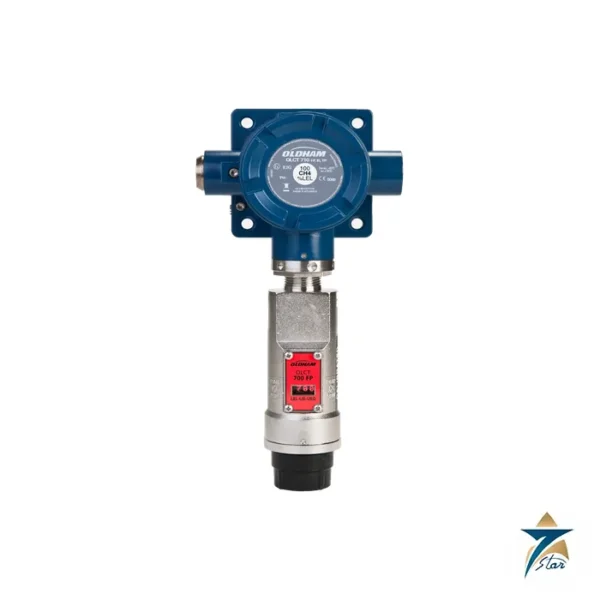
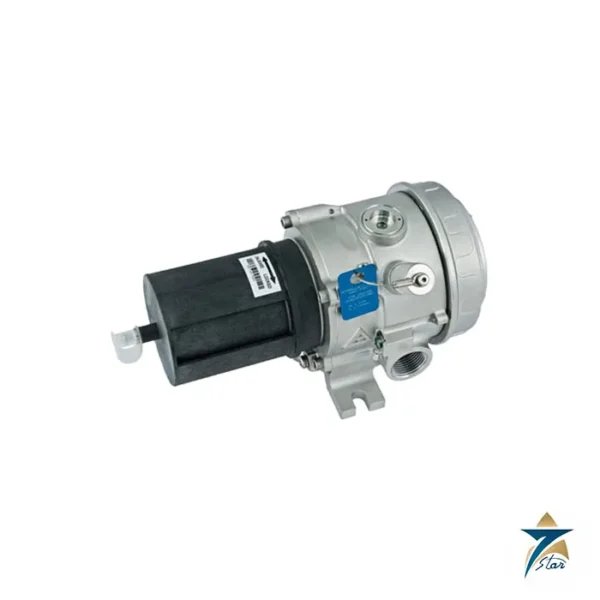
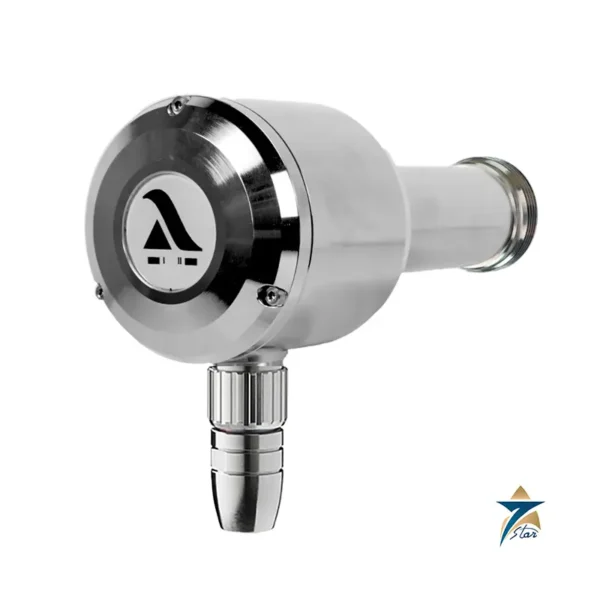
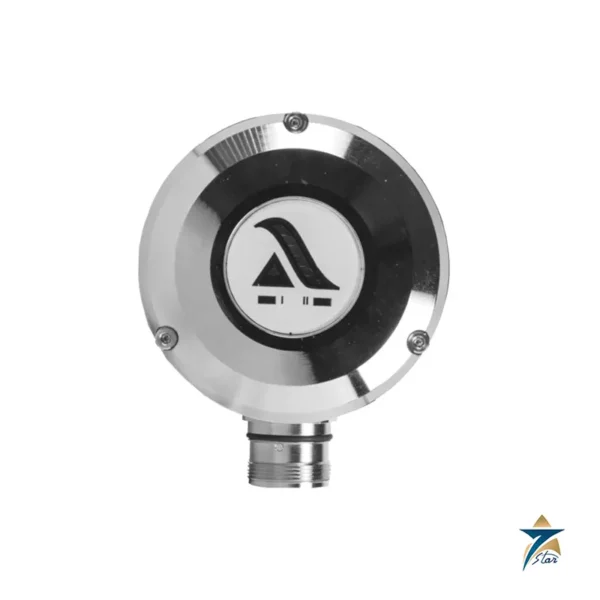
The Oldham OLCT 100 gas detector in its IR version is an infrared CO2 or combustible gas detector and transmitter built to withstand harsh environments such as offshore platforms, petrochemical and chemical industries, naval installations, and wastewater treatment plants.
The detector provides a 4-20 mA analogue transmitter output for direct connection to gas detection controllers and safety systems, with SIL2 capability for safety instrumented applications.
Infrared technology is often the only solution for environments where catalytic sensors fail, because the measurement does not depend on combustion and is resistant to poisons. The OLCT 100 uses a double source / four beam optical arrangement with heated optics and dirty optics compensation, maintaining accuracy as contamination builds on the window.
The IP67 enclosure suits outdoor and offshore installation, and non-intrusive calibration allows the detector to be adjusted without opening the housing, reducing the risk of moisture ingress and simplifying maintenance.
| Specification | Value |
|---|---|
| Manufacturer | Oldham |
| Model | OLCT 100 IR |
| Measured Gases | CO2 or combustible gas |
| Technology | Infrared |
| Output | 4-20 mA analogue |
| Safety | SIL2 capability |
| Protection | IP67 |
| Optics | Double source / four beams, heated |
| Calibration | Non-intrusive |
| Lifespan | Greater than 10 years |
For fixed gas detection projects in harsh environments, the Oldham OLCT 100 gas detector is a proven choice, and Seven Star LLC supplies the Oldham OLCT 100 gas detector with verified specifications for your site.
For fixed gas detection projects across the Gulf, the Oldham OLCT 100 gas detector is a commonly specified instrument. It provides the 4-20 mA signal your controller expects, and Seven Star LLC supplies the OLCT 100 with project documentation and engineering support.
For multi-detector projects, the Oldham OLCT 100 gas detector configuration is repeated across the installation with consistent documentation.
Seven Star LLC supplies the Oldham OLCT 100 IR gas detector for fixed gas detection projects across the Gulf, with verified specifications and technical support. Our team assists with gas type selection, calibration planning, and integration with detection controllers.
We serve oil and gas, petrochemical, marine, and utility customers with reliable B2B supply of gas detection equipment throughout the GCC.
Installation of the OLCT 100 IR follows the standard fixed gas detection practice: the detector is mounted at the monitoring point and connected to a gas detection controller over the 4-20 mA loop. The IP67 enclosure allows outdoor and offshore mounting, and the non-intrusive calibration method keeps the housing sealed during adjustment.
Routine operation is essentially maintenance-free because the infrared source and detector arrangement is immune to the poisoning that affects catalytic sensors, and the heated optics keep condensation from disturbing the measurement.
Seven Star LLC sources the Oldham OLCT 100 IR directly through the manufacturer distribution network, giving Gulf customers access to current production units and the full documentation package.
For projects involving multiple detectors, we support spare parts planning, calibration gas supply, and the interchangeability checks that keep installed gas detection systems maintainable.
Daily operation of the detector is limited to verifying the controller reading and the fault status. Because the IR measurement does not consume the sensing element, the long-term cost of ownership is lower than catalytic detection in poisoned environments.
Calibration intervals are established by site practice and gas detection standards, and the non-intrusive procedure allows bump testing and span adjustment with the housing sealed. For maintenance teams, the diagnostic information from the transmitter supports early identification of optics contamination and component ageing.
For the Oldham OLCT 100 gas detector or any related control and instrumentation requirement, contact the Seven Star LLC team. Submit a formal inquiry through our RFQ page with your measurement range, connection and configuration, and our specialists will respond with a detailed commercial proposal and the relevant Oldham documentation.
Good infrared detection starts with correct siting. Combustible hydrocarbon vapours heavier than air collect near grade, while lighter gases and hot releases rise, so the mounting height should follow the density of the target gas and the site gas detection philosophy. Place each head close to likely leak sources such as pump seals, compressor skids, flanged manifolds and loading points, and orient it so that the optical window is protected from direct water jets and heavy sand deposition.
During commissioning, confirm the gas type and range on the nameplate against the cause-and-effect matrix, check the loop wiring and screen termination at the controller end, and verify that the controller alarm thresholds match the detector range. Zero the head in clean air, then apply a certified test gas through the calibration accessory and record the response. A documented zero and span check at hand-over gives the maintenance team a baseline for later trending.
Desert and coastal sites in the region combine high ambient temperature, humidity swings, salt-laden air and blowing sand. These conditions shorten the life of catalytic sensors and increase the value of infrared measurement. The Oldham OLCT 100 gas detector is a practical fit for wellhead and gathering stations in the interior of Oman, gas processing facilities, refineries and terminals at Sohar and Duqm, and pumping stations on water and wastewater networks where hydrocarbons or CO2 must be monitored.
Seven Star LLC supplies OLCT 100 IR heads and related accessories to operators, EPC contractors and maintenance teams across the GCC. Send the existing tag list or the model code from the nameplate, and our engineers will check the gas type, range and certification against your requirement before we issue an offer.
Browse Oldham products by category: Fire & Gas Detector, Logic Controller.
Choose the option that best fits your needs to get the fastest response from our team.
Automatically fill the RFQ form with this product's details for a faster process.
Manually enter multiple part numbers, specific brands, or custom requirements.













Reviews
There are no reviews yet.