Brand:

ION Science TVOC 2 Fixed VOC Gas Detector 4-20 mA

Description

Overview

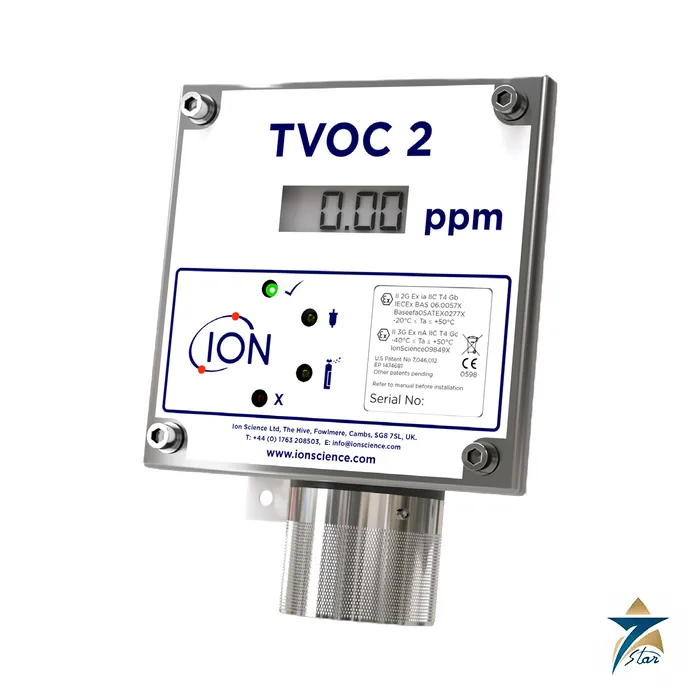
The ION Science TVOC 2 is a fixed photoionisation detector for continuous measurement of total volatile organic compounds in the air of a plant, a process area or an offshore module. Seven Star LLC is an independent supplier serving Oman and the GCC. The manufacturer’s brochure, version 1.1, presents it as a simple, diffusion-based monitor with a 4 to 20 mA output that can be wired into a distributed control system, and this page rewrites its content for engineers who need to compare fixed VOC monitors.

A fixed PID is chosen when the question is not whether a flammable limit has been reached but whether solvent, fuel or process vapour is present at a level that matters to health, quality or the environment. The ION Science TVOC 2 updates its output every second, so trends in a spray booth or a sample room appear in the control system almost as they happen.

How the ION Science TVOC 2 measures

At the heart of the unit is the MiniPID 2 sensor, an ultraviolet lamp ionising the vapours drawn to it. The brochure highlights diffusive sampling: air reaches the sensor without a pump, which reduces contamination compared with pumped systems and cuts lamp cleaning and servicing. An optional sensor cap allows a pipe connection when a sample has to be piped in, and an adaptor allows pumped sampling if required. The sensor also benefits from a fence electrode design and anti-contamination construction that give built-in humidity resistance with no need to compensate.

Three user-selectable ranges are available from the one instrument: 0 to 10 ppm, 0 to 100 ppm and 0 to 1000 ppm. The detector is independently verified by the manufacturer as the best performing PID on the market, and the PID sensor is easily accessible and can be changed in seconds, so no hot work permit is needed for servicing.

Specification table for ION Science TVOC 2

Parameter Published value
Ranges 0 to 10, 0 to 100, 0 to 1000 ppm, user selectable
Sampling Diffusion; can be pumped with an adaptor
Response T90 under 35 seconds
Accuracy 0 to 100 ppm plus or minus 5 percent at calibration point; 100 to 1000 ppm plus or minus 10 percent at calibration points
Display 7 segment, 4 digit LCD with 4 colour LEDs
Output 4 to 20 mA, requires 8 to 35 Vdc supply; selectable 2 mA and 3.5 mA alarm levels
Power 5 to 28 Vdc, maximum 130 mA; intrinsically safe use 8 to 30 Vdc
Calibration Via magnetic switch, 100 ppm isobutylene with calibration kit accessory
Operating conditions -20 to 50 degrees C, 0 to 95 percent RH non-condensing
Protection Designed to IP65; sensor IP54
Mass Instrument 1.4 kg, packed 1.6 kg
Dimensions 188 x 126 x 78 mm
Approvals II 2G Ex ia IIC T4 Gb, Baseefa05ATEX0277X, IECEx BAS 06.0057X

How TVOC 2 differs from other fixed VOC monitors

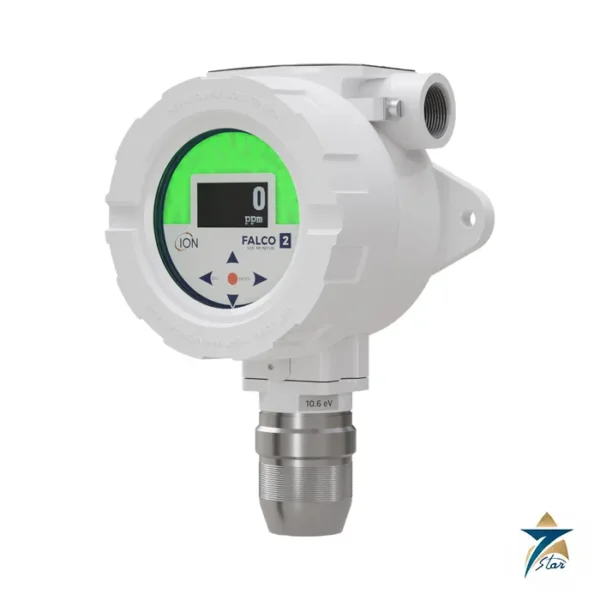
Within the manufacturer’s fixed range, the later Falco 2 adds Modbus, relays, a flameproof housing and a pumped option. The ION Science TVOC 2 stays deliberately simple: one 4 to 20 mA output, diffusion sampling, three ranges and a compact 1.4 kg housing. It draws only up to 130 mA and runs from 5 to 28 Vdc, so it can reuse existing three-wire instrument cabling. If your control system only needs an analogue signal and your area is moderately humid but not condensing, this simpler unit is often sufficient.

Applications for TVOC 2 in Oman and the GCC

The brochure lists manufacturing, processing, offshore, refineries and petrochemical, chemical, waste water treatment, pulp and paper, pharmaceutical, indoor air quality, solvent recovery systems, and industrial painting and coating. Typical Gulf uses include spray paint booths in fabrication yards, solvent storage rooms in pharmaceutical plants, and wastewater headworks where hydrocarbon vapours accumulate. The offshore reference makes it a candidate for platform modules where a compact analog sensor is easier to integrate than a full analyser.

Hazardous area use

ATEX approval allows a three-wire TVOC system to be used in Zone 2 hazardous areas without safety barriers. ATEX and IECEx approvals together allow use in Zone 1 with safety barriers, in line with the II 2G Ex ia IIC T4 Gb marking. When using barriers, supply the instrument within the 8 to 30 Vdc intrinsic safety window given in the brochure and keep the ambient temperature between -20 and +50 degrees C.

Installation and set-up of ION Science TVOC 2

Choose a location that reflects the breathing or leak zone, away from direct sources of dust or spray. Wire the three-core cable to the supply and the control system input, select the measuring range, and calibrate with 100 ppm isobutylene using the calibration kit and the magnetic switch. Set the 4 to 20 mA fault levels to 2 mA or 3.5 mA to match the control system. Register the instrument online within one month to extend the warranty to two years.

Integration with a control system

The 4 to 20 mA output is the interface most plants already know. Map 4 mA to zero and 20 mA to the end of the selected range, so a 0 to 100 ppm setting gives 0.16 mA per ppm. Configure the high alarm in the control system with a deadband to avoid chatter, and choose the 2 mA or 3.5 mA fault level so that a failed sensor cannot be confused with a clean reading. Because the unit refreshes its output every second, the logging interval of the historian, rather than the detector, usually limits the resolution of trends. Document the range chosen at each location on the loop sheet, since the same hardware can be set to three different spans and a mismatch between field and control room scaling is a common commissioning error.

Where several points share a trunk cable, give each detector a clearly labelled tag and keep the calibration certificate with the loop folder. That discipline shortens later audits and makes it easy to see which locations have been calibrated recently.

Care and maintenance

Because the diffusive design avoids a pump, maintenance is mostly periodic calibration, visual checks of the display and cleaning of the sensor when the response slows. The sensor can be removed and replaced in seconds. Keep a record of each calibration and bump test as part of the site gas detection programme.

Ordering notes for TVOC 2

Provide the target compounds, expected concentration, area classification and power supply. Request the calibration kit and the optional sensor cap or pump adaptor if needed. Please confirm any order code details against the nameplate when you are replacing an existing unit.

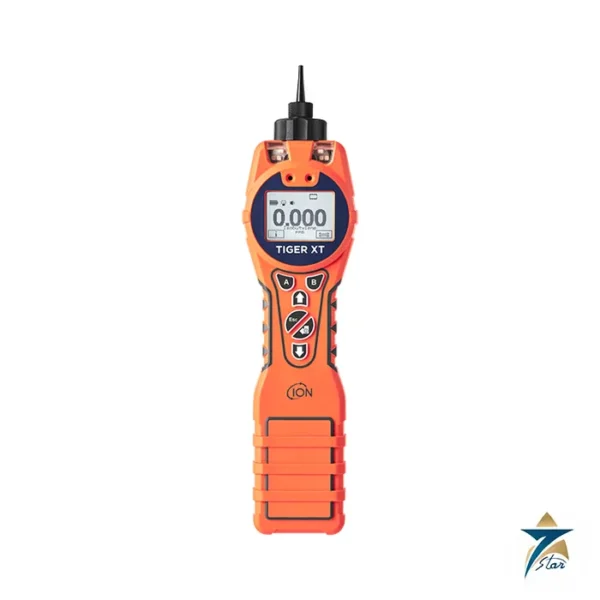
Related items you may also need: ION Science Titan 2 Fixed Benzene Monitor | ION Science Tiger XT Handheld VOC Detector | Dräger Flame 1500 (IR3) Flame Detector | All ION Science products.

Documents and quotation

The manufacturer’s TVOC 2 brochure is attached to this page as a datasheet. Send your RFQ with the part number TVOC 2, the quantity and your delivery location in Oman or the GCC, and we will reply with availability.

Datasheets & Documents
  • PDF Datasheet ION Science TVOC 2 Fixed VOC Gas Detector 4-20 mA Datasheet Download
Reviews (0)

Reviews

There are no reviews yet.

How would you rate this product?

It takes about 10 seconds — just tap a star. Your email is never published.

About brand

ION Science is a British maker of gas detection instruments, based in Fowlmere, Cambridgeshire. It has been active since 1989 and is best known for photoionisation detectors (PIDs) that measure volatile organic compounds at low concentrations. Its portable and fixed instruments are used for worker exposure monitoring, leak detection and environmental surveys.

Seven Star LLC is an independent supplier in Muscat. We list ION Science detectors for oil and gas, petrochemical and environmental users in Oman and the GCC.

ION Science company profile

Active since 1989, United Kingdom
Head office Fowlmere, Cambridgeshire
Core technology Photoionisation detection (PID) with patented Fence Electrode design
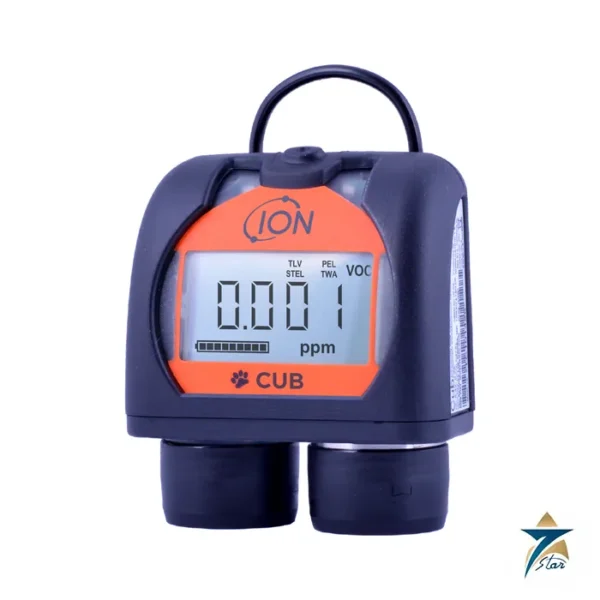
Product families Tiger XT and Cub portable PIDs, Titan benzene monitor, Falco fixed detectors

Milestones

  • 1989: ION Science begins operating.
  • 1998: Patents its PID sensor.
  • 2002: Patents the Fence Electrode for humidity-resistant PIDs.
  • 2017: Opens its head office in Fowlmere.

ION Science product series

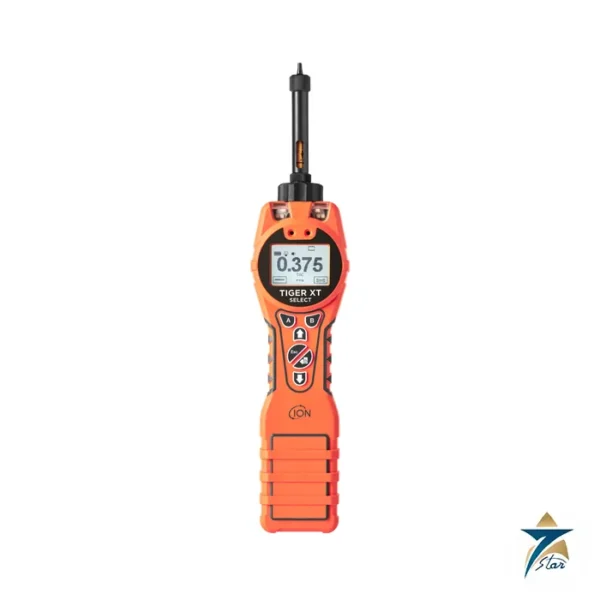
The Tiger XT is a handheld VOC detector for hazardous areas, and the Titan 2 is a fixed benzene monitor.

A PID uses ultraviolet light to ionise volatile organic compounds and measures the resulting current, which allows detection down to ppb levels. Response factors convert the reading for each specific compound. General VOC detectors measure the total, while benzene-specific monitors separate benzene from other hydrocarbons, which matters because benzene has very low exposure limits.

Where ION Science detectors are used

Leak detection, confined space entry checks, worker exposure monitoring, refinery and terminal benzene monitoring, and environmental and soil surveys.

Ordering ION Science detectors: what we need

Send the model, the compounds and ranges, lamp type, hazardous-area requirement and accessories such as probes, filters and calibration kits.

Facts checked against ION Science's published company history, October 2026.

FAQ

Questions about the ION Science TVOC 2 Fixed VOC Gas Detector 4-20 mA

Answers from our engineering team on installation, compatibility and integration.

01What ranges does the ION Science TVOC 2 measure?
Three user-selectable ranges are available: 0 to 10 ppm, 0 to 100 ppm and 0 to 1000 ppm, from a single instrument.
02Does the ION Science TVOC 2 need a pump?
No. It uses diffusive sampling to limit contamination, though an adaptor allows pumped sampling and an optional sensor cap allows a pipe connection.
03What output does the TVOC 2 give?
It gives a 4 to 20 mA analogue signal, powered from 8 to 35 Vdc, with selectable 2 mA or 3.5 mA fault alarm levels for control system use.
04Can the ION Science TVOC 2 be used in hazardous areas?
Yes. It is marked II 2G Ex ia IIC T4 Gb; ATEX allows Zone 2 use without barriers in a 3 wire system and Zone 1 use with safety barriers.
05How is the TVOC 2 calibrated?
Calibration is made through the magnetic switch using 100 ppm isobutylene supplied with the calibration kit accessory.