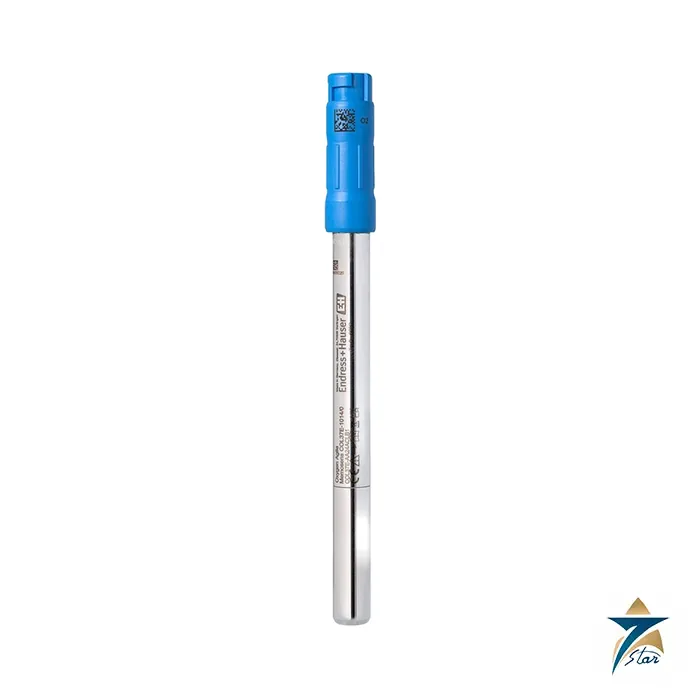
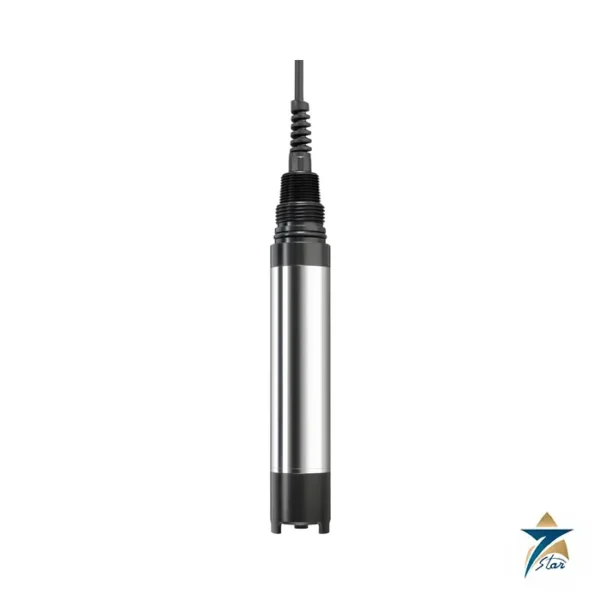
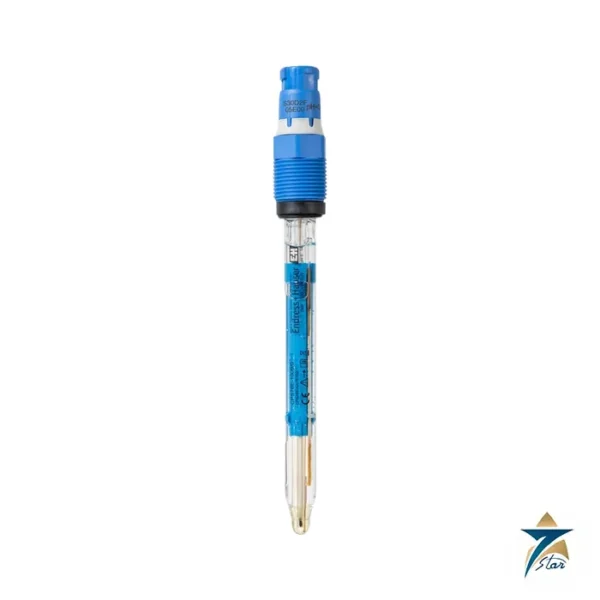
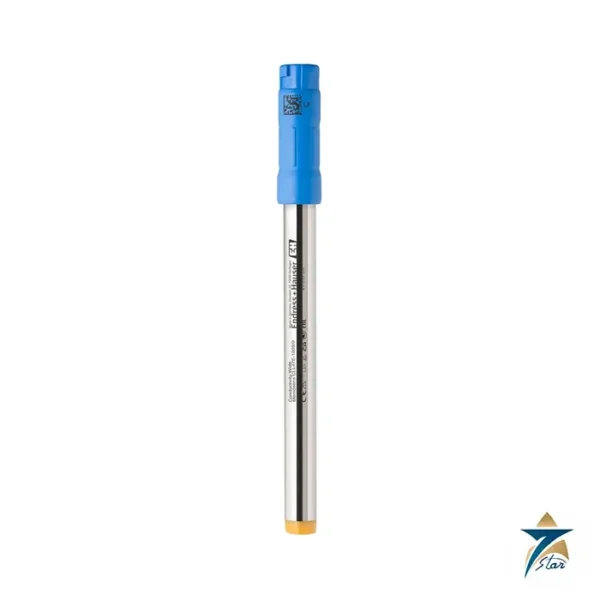
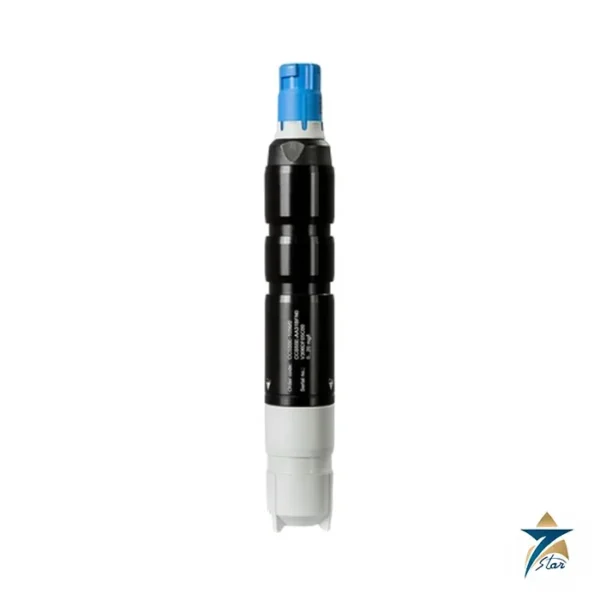
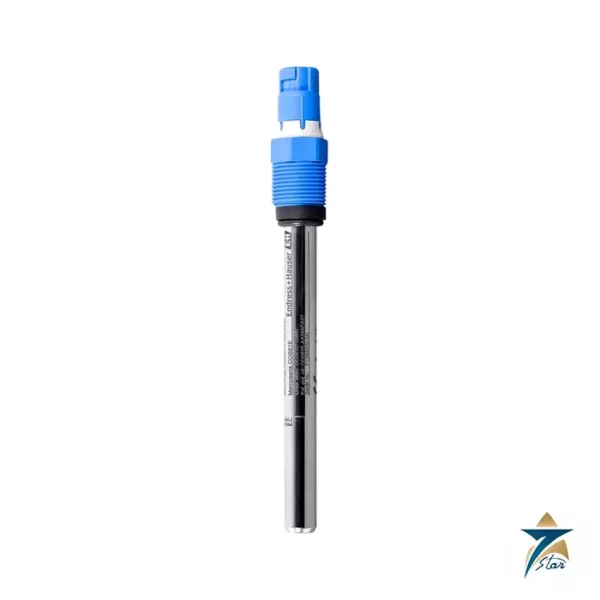
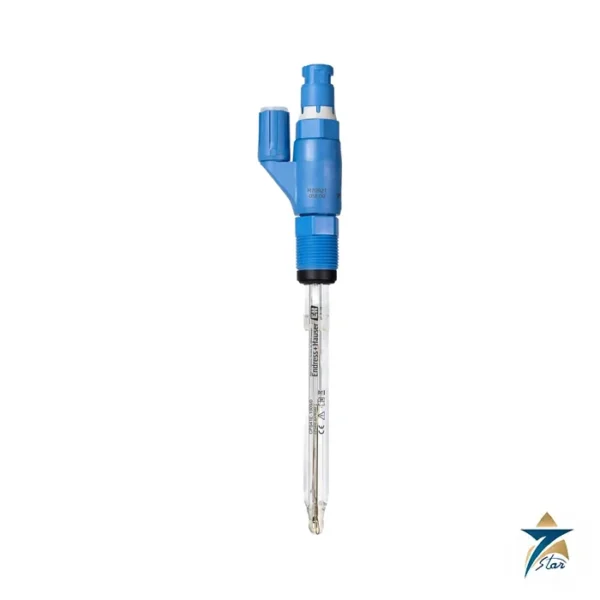
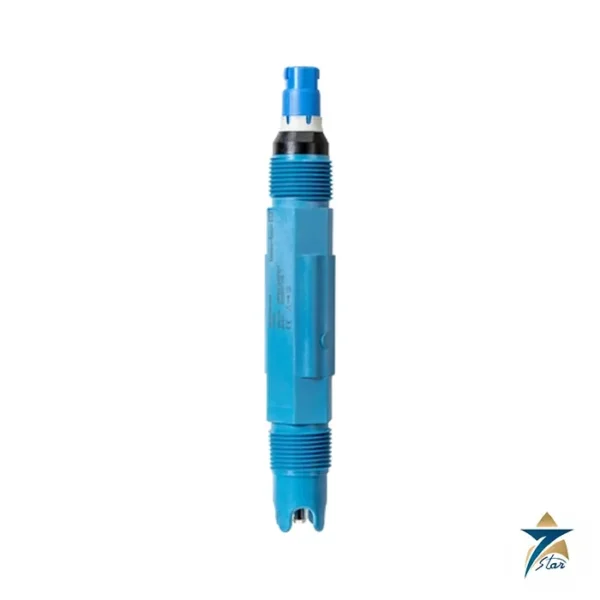
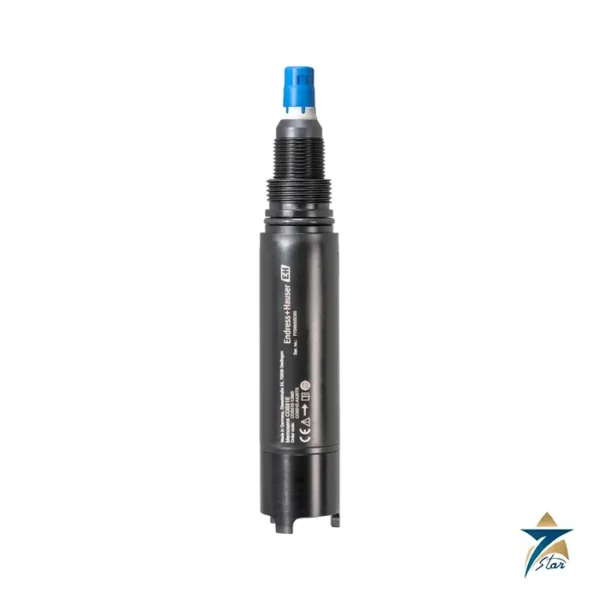
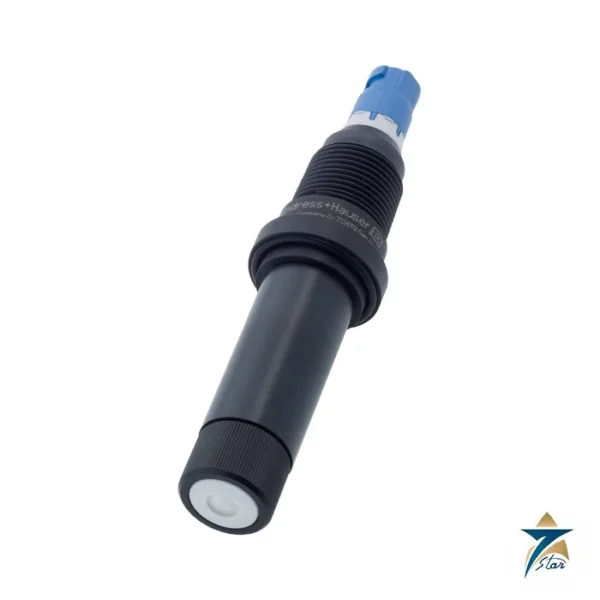
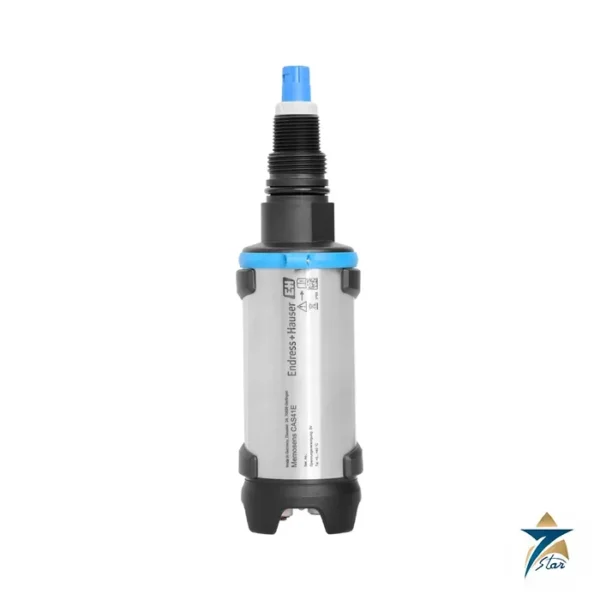
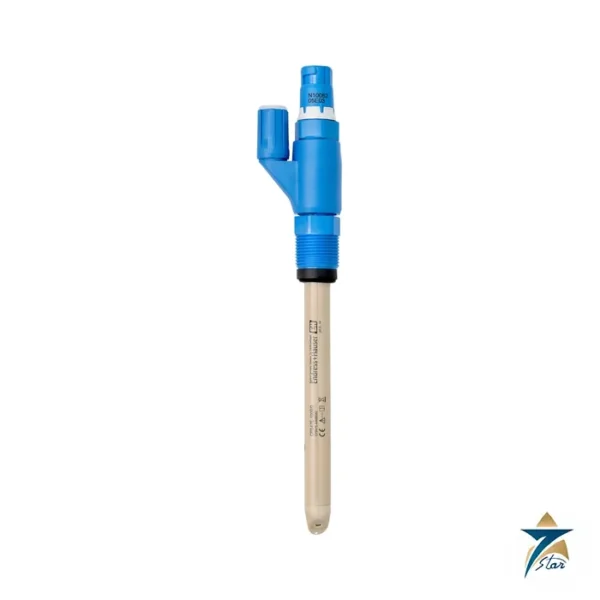
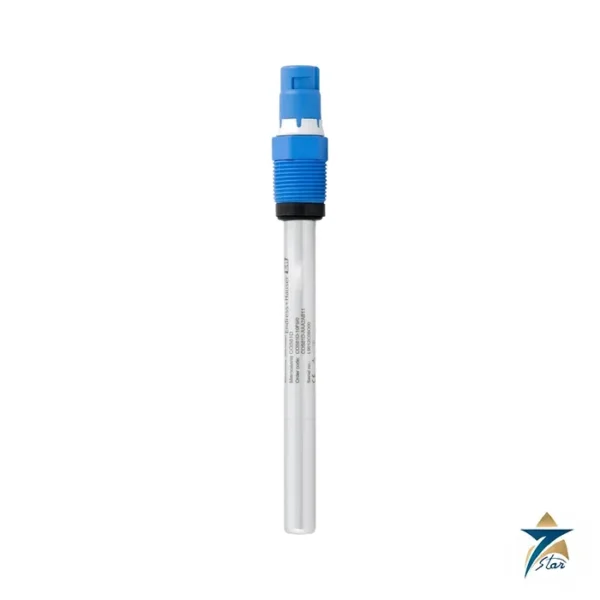
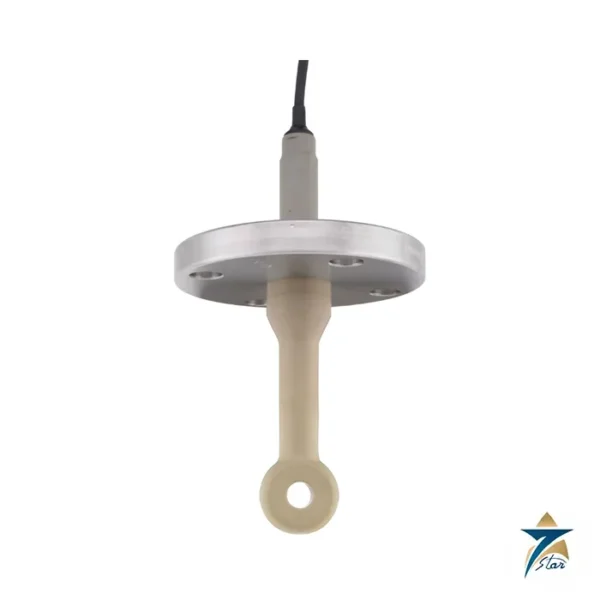
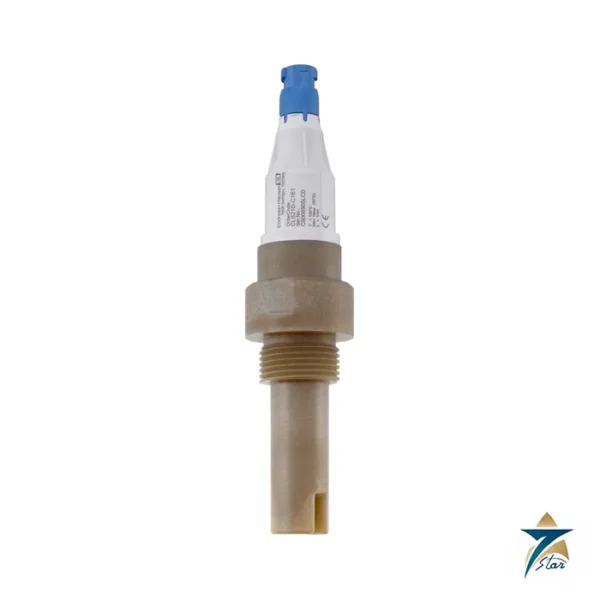
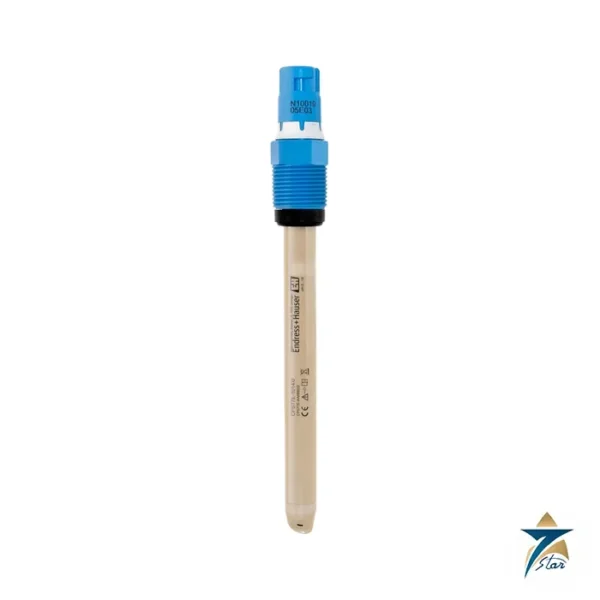
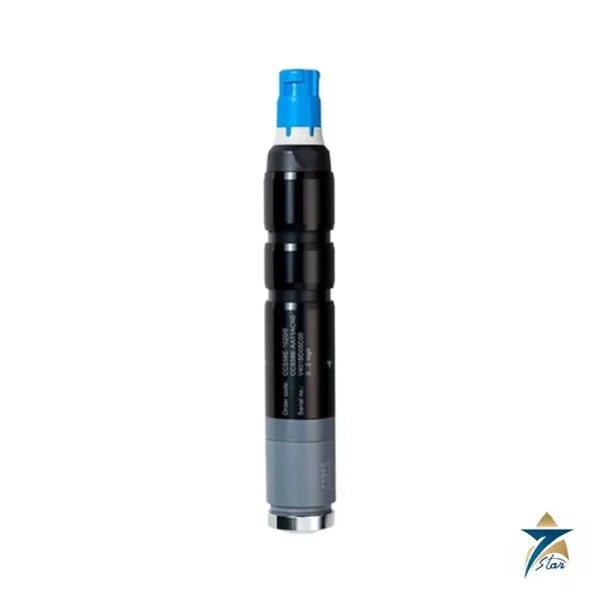
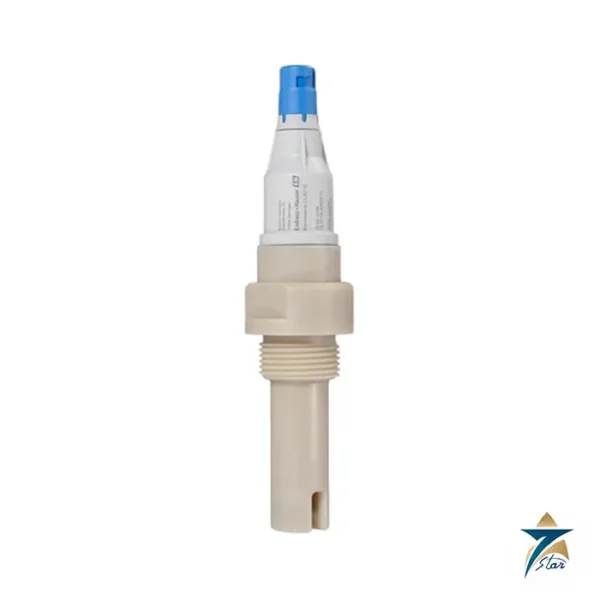
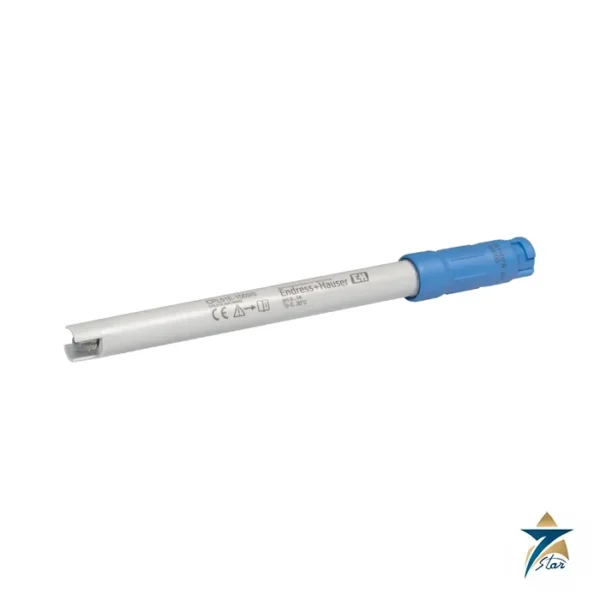
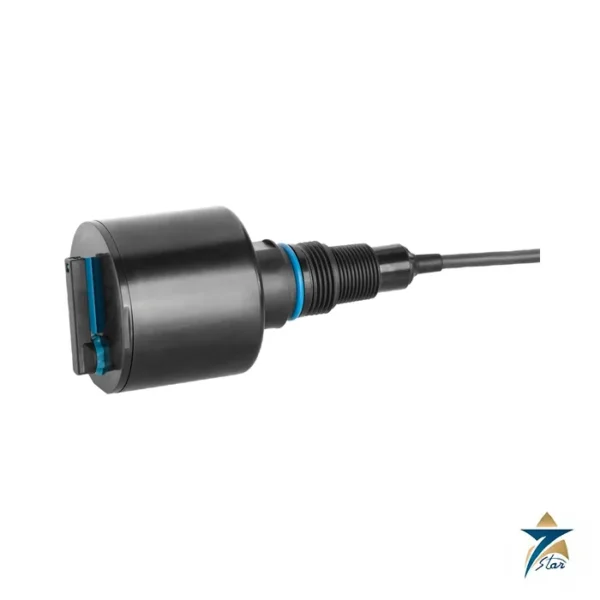
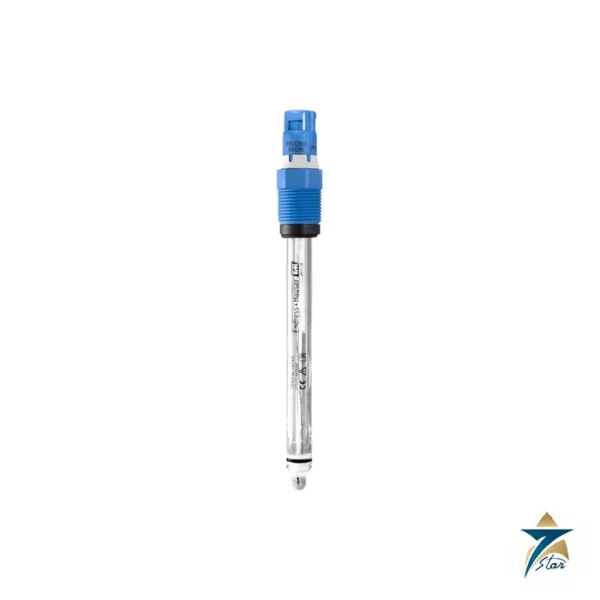
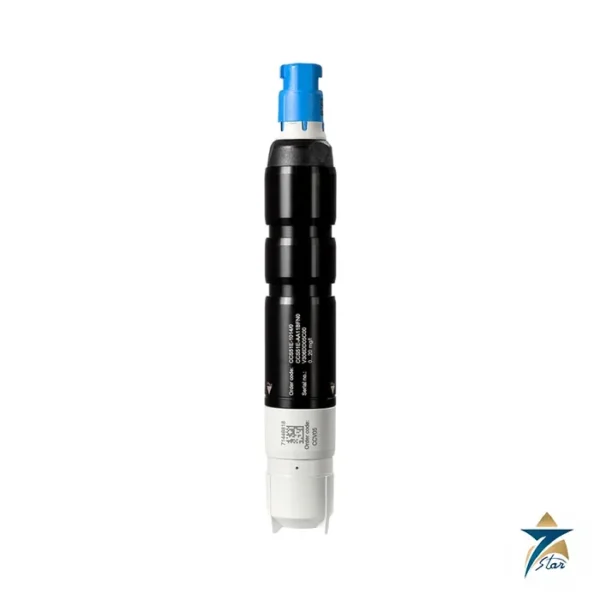
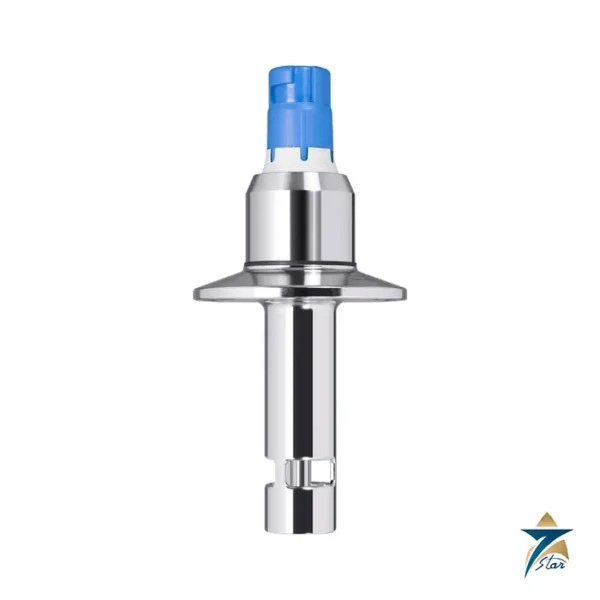
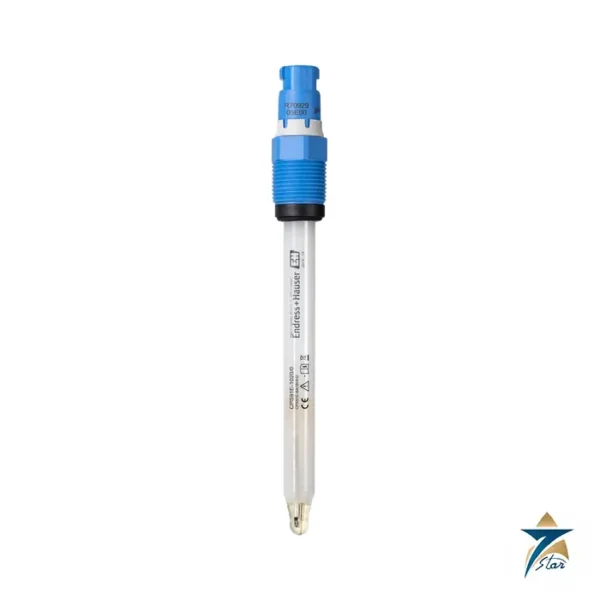
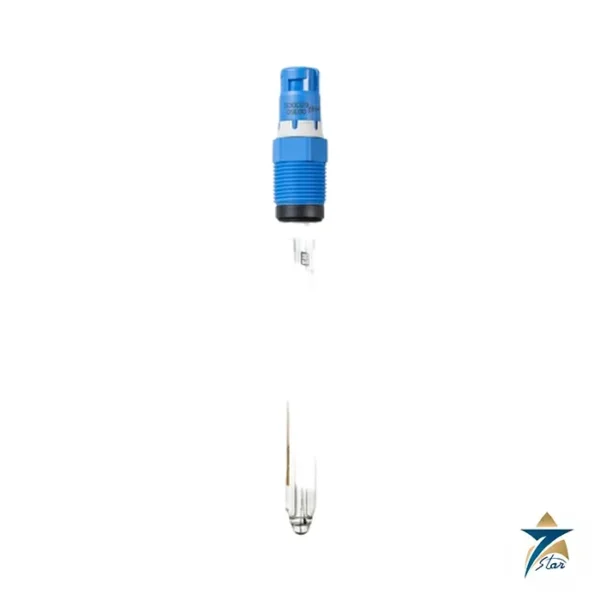
Endress+Hauser COL37E Memosens Optical Oxygen Sensor

Description

COL37E measures dissolved oxygen by light, not by electrolyte

With Endress+Hauser COL37E there is no membrane to change and no electrolyte to refill. The sensor optics shine pulses at the back of a carrier coated with oxygen-sensitive markers. The decay time of the red glow is long when no oxygen is around and short when oxygen masks the markers: the raw value is about 14 microseconds in air and about 56 microseconds in oxygen-free media. The sensor outputs temperature, partial pressure and the raw value.

Seven Star LLC is an independent supplier serving Oman and the GCC and is not affiliated with the manufacturer. COL37E suits laboratories and mobile teams who sample surface water, wastewater and process water and want a digital probe that remembers its own calibration.

COL37E specification sheet

Parameter Value
Measured variables Dissolved oxygen in mg/l, ug/l, ppm, ppb, % SAT or hPa; gaseous oxygen in hPa or % vol; temperature
Measuring range 0 to 200 % SAT at 25 degrees C and 1013 hPa; up to 1000 hPa maximum
Response time t90 and t98 under 20 s, air to nitrogen
Maximum measured error Plus or minus 1 percent or 8 ug/l of reading, the higher value applies
Process / ambient temperature Minus 5 to 60 degrees C
Storage Minus 25 to 50 degrees C, up to 95 percent humidity non-condensing
Protection IP 68 (IP 69 also noted in the datasheet)
Temperature sensor Pt1000 Class A to DIN IEC 60751
Weight 0.1 kg
Wetted metal Stainless steel 1.4435 (AISI 316L) shaft and spot cap
Seals / spot layer EPDM O-rings; silicone spot layer

What the numbers mean in daily use

Because COL37E reports 0 to 200 % SAT, supersaturated samples from algae-rich basins stay on scale. The accuracy statement is for the optimum range rather than for the entire span, which the datasheet states explicitly. A dissolved-oxygen result that looks low in solvent-contaminated effluent may be an artefact: halogenated solvents, ketones and toluene cross-sensitise the layer, so keep the probe out of them.

How COL37E differs from other oxygen sensors

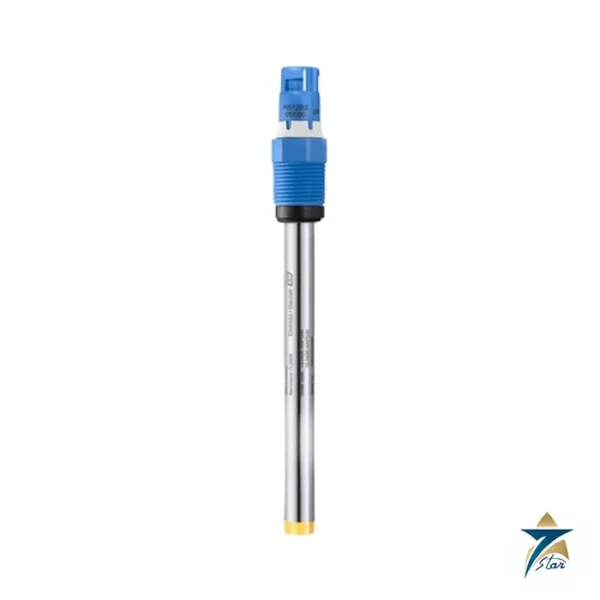
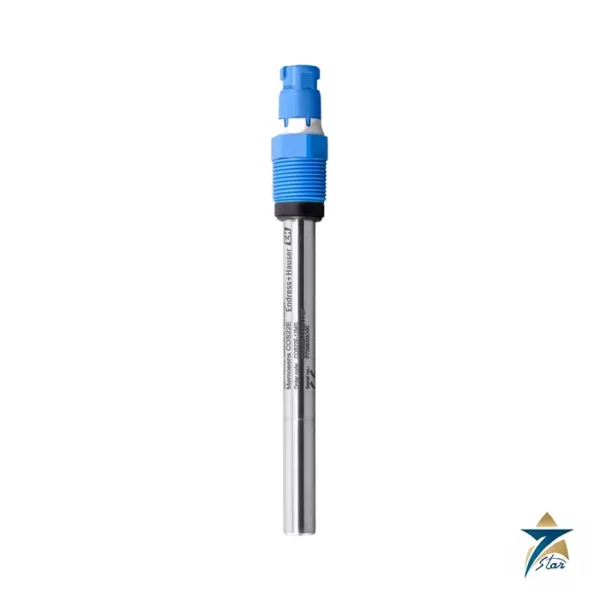
The COS51E and COS22E sensors of the same maker are amperometric or hygienic process sensors for pipeline installation, while COL37E is a short laboratory body with an optical spot, a narrower temperature window of minus 5 to 60 degrees C, and no process connection. It does not need a cabled transmitter; it plugs into a handheld such as CML18 and can be used with Liquiline To Go.

Spares, zero gel and handheld

The datasheet lists the CYK10 data cable, the CYK20 laboratory cable, the COY8 oxygen-free and chlorine-free zero-point gel for verification and zero calibration, the CML18 handheld, Memobase Plus CYZ71D software and a maintenance kit with a replacement spot cap, O-rings, tool, calibration bottle and certificate. Order the kit whenever the spot layer is scratched, since a damaged cap spoils the luminescence reading.

Selection hint: if your laboratory already owns a CML18 and a Memobase Plus licence, COL37E adds oxygen to the same kit as the pH and conductivity probes, so no second handheld is needed. If you need a continuous reading from a pipe or tank, ask us about a process oxygen sensor rather than this short laboratory body.

Typical sampling jobs for COL37E in Oman and the GCC

Surface water, wastewater and process water are the applications named in the datasheet. At a GCC sewage works the aeration basin, the anoxic zone and the outfall can each be spot-checked in a few seconds, because response is under 20 s and nothing needs conditioning. Environmental teams profiling coastal discharge points or inland wadi pools also benefit, since the sensor can be carried in a handheld kit and needs no electrolyte. Remember that the measuring window stops at 60 degrees C and that the sample must be free of halogen solvents, ketones and toluene.

For laboratory teams, the integrated Pt1000 sensor corrects temperature automatically and the stored calibration data allow a GLP-style record without handwritten sheets. A typical weekly routine is to verify the zero point with COY8 gel, check the saturation reading in air-saturated water and look at the spot cap for scratches before deciding whether the maintenance kit is due.

Operating practice

  • Use only halogen-, ketone- and toluene-free media.
  • Zero and check the sensor with COY8 gel when you suspect drift.
  • Rinse and dry the sensor head, then store within the minus 25 to 50 degrees C range.
  • Log the adjustment in Memobase Plus for GLP traceability.

COL37E questions answered briefly

How does Endress+Hauser COL37E measure oxygen? By luminescence quenching: orange light pulses excite a luminescent layer and the dark red response decay time shrinks as oxygen increases; Stern-Volmer is used for the result.

What is the response time of COL37E? Both t90 and t98 are under 20 s from air to nitrogen at 25 degrees C and 1013 hPa.

Which chemicals harm COL37E? Halogen-containing solvents such as dichloromethane and chloroform, ketones such as acetone and toluene cause cross-sensitivity or complete sensor failure.

What accuracy does COL37E reach? The maximum measured error is plus or minus 1 percent or 8 ug/l of the measured value, whichever is higher, in the optimum range.

What is in the COL37E maintenance kit? A spot cap, O-ring mounting tool, maintenance instructions, calibration bottle, O-rings and a certificate.

Documents and quotation

The datasheet for COL37E is linked from this product page. Send an RFQ naming COL37E, the quantity and whether a maintenance kit or COY8 gel is required, and we will respond with availability and lead time. If the probe is intended to replace an older oxygen electrode, please include its model so that we can compare range and handheld compatibility with the COL37E datasheet before you order.

Other Models in the Memosens Lab Range

Seven Star LLC supplies models from the Memosens Lab range in Oman and the GCC. Compare the related models below and request a quote for the one that matches your application.

ModelCategory
Endress+Hauser CLL47E Memosens 4-Electrode Conductivity SensorLiquid Analysis SensorsView details
Endress+Hauser CPL51E Memosens Laboratory pH SensorLiquid Analysis SensorsView details
Endress+Hauser COL37E Memosens Optical Oxygen SensorLiquid Analysis SensorsYou are viewing this model
Datasheets & Documents
  • PDF Datasheet Endress+Hauser COL37E Memosens Optical Oxygen Sensor Datasheet Download
Reviews (0)

Reviews

There are no reviews yet.

How would you rate this product?

It takes about 10 seconds — just tap a star. Your email is never published.

About brand

Endress+Hauser makes process measurement instruments for flow, level, pressure, temperature and liquid analysis. Georg H. Endress and Ludwig Hauser started the business in Lörrach, Germany, on 1 February 1953, first selling level meters, and the Endress+Hauser name has been used since 1957. The group is headquartered in Reinach, Switzerland, and has been wholly owned by the Endress family since 1975.

Seven Star LLC is an independent supplier listing Endress+Hauser flowmeters, level and pressure transmitters, temperature assemblies and liquid analysis products for buyers in Oman and the GCC. Instruments are matched from the full order code on the nameplate.

Endress+Hauser company profile

Origin Founded in Lörrach, Germany, on 1 February 1953 by the Swiss engineer Georg H. Endress and Ludwig Hauser
Headquarters Endress+Hauser AG, Reinach (Basel-Landschaft), Switzerland
Ownership Family owned; the Endress family has been the sole shareholder since 1975, and a family charter commits the company to stay family owned
Size About 16,500 employees and sales of about EUR 3.7 billion (2023, as reported by the company)
Product families Proline flowmeters, Micropilot and Levelflex radar, Liquiphant switches, Cerabar and Deltabar pressure, iTEMP and iTHERM temperature, Liquiline and Memosens liquid analysis

Milestones

  • 1953: Georg H. Endress and Ludwig Hauser start the business in Lörrach on 1 February, first selling level meters.
  • 1957: The Endress+Hauser name comes into use.
  • 1975: The Endress family becomes sole shareholder.
  • 2023: About 16,500 employees and sales of about EUR 3.7 billion, as reported by the company.

Endress+Hauser product lines

Line Measuring principle Typical use
Promass F 300, Promass 80F, 83F/84F Coriolis mass flow Direct mass flow and density of liquids and gases, hydrocarbon transfer and chemical dosing
Promag P 300, P 500, H 300, W 400, W 10, 50P Electromagnetic flow Water, wastewater, slurries and other conductive liquids
Prowirl F 200, 72F Vortex flow Steam, gas and low-viscosity liquids
Prosonic Flow 92F, t-mass 65F Ultrasonic and thermal mass flow Water lines; compressed air and industrial gases
Micropilot FMR62, FMR67, FMR60, FMR10B, FMR20, FMR50, FMR52 Free-space radar level, 80 GHz and 26 GHz Tanks, process vessels, silos and open water channels
Levelflex FMP51, FMP50, FMP54, FMP55 Guided wave radar level Level and interface in vessels, separators and bypass chambers
Liquiphant FTL51, Prosonic S FMU90 Vibronic point level; ultrasonic level High and low level alarms, pump protection, open channel flow
Cerabar PMC71B, PMP51B, PMP71, Deltabar PMD78B, PMD75 Pressure and differential pressure Process pressure, hydrostatic level and DP flow
iTEMP TMT82, TMT162, iTHERM TM101, TR66, TR10 Temperature transmitters and thermometers RTD and thermocouple points with thermowells
Liquiline CM444, CM442, Memosens CPS11E, Stamolys reagents Liquid analysis pH, ORP, conductivity, dissolved oxygen and nutrient analysis in water treatment and process

Where Endress+Hauser instruments are used

In Oman and the GCC, Endress+Hauser instruments are common in oil and gas production and processing, refineries and petrochemicals, desalination and water networks, wastewater treatment, power plants and food and beverage plants. Coriolis meters measure hydrocarbon and chemical flows, electromagnetic meters cover water and wastewater, radar transmitters handle tank and silo level, and Liquiline analysers monitor water quality. Proline 300 and 500 flowmeters include Heartbeat Technology for in-situ verification, which reduces the need to remove a meter for checks.

Ordering Endress+Hauser instruments: what we need

The order code on the nameplate (for example PMP71-1QA1S11RDADU) defines every option: measuring range, process connection, materials, output, approvals and display. Send it with the serial number; Endress+Hauser can retrieve the original configuration from the serial number. For a new instrument add the medium, operating and design pressure and temperature, range, line size or tank geometry, process connection, wetted materials, output or protocol (4-20 mA HART, PROFIBUS, FOUNDATION Fieldbus, Modbus) and the hazardous-area approval required. Older models such as Promass 80/83 or Micropilot M are replaced by current Proline or 80 GHz Micropilot devices.

Facts checked against Endress+Hauser company history and product information, October 2026.

FAQ

Questions about the Endress+Hauser COL37E Memosens Optical Oxygen Sensor

Answers from our engineering team on installation, compatibility and integration.

01How does Endress+Hauser COL37E measure oxygen?
By luminescence quenching: orange light pulses excite a luminescent layer and the dark red response decay time shrinks as oxygen increases; Stern-Volmer is used for the result.
02What is the response time of COL37E?
Both t90 and t98 are under 20 s from air to nitrogen at 25 degrees C and 1013 hPa.
03Which chemicals harm COL37E?
Halogen-containing solvents such as dichloromethane and chloroform, ketones such as acetone and toluene cause cross-sensitivity or complete sensor failure.
04What accuracy does COL37E reach?
The maximum measured error is plus or minus 1 percent or 8 ug/l of the measured value, whichever is higher, in the optimum range.
05What is in the COL37E maintenance kit?
A spot cap, O-ring mounting tool, maintenance instructions, calibration bottle, O-rings and a certificate.