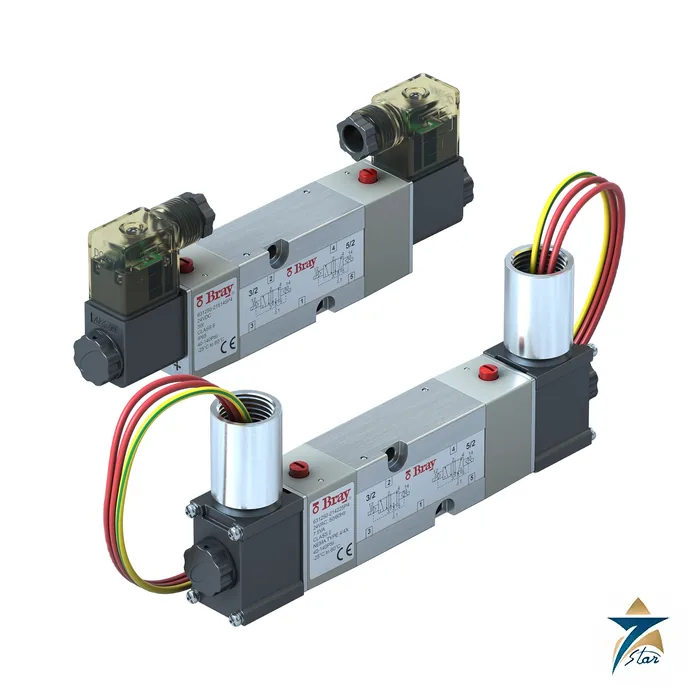
Bray Series 63 NAMUR solenoid valve for pneumatic actuators
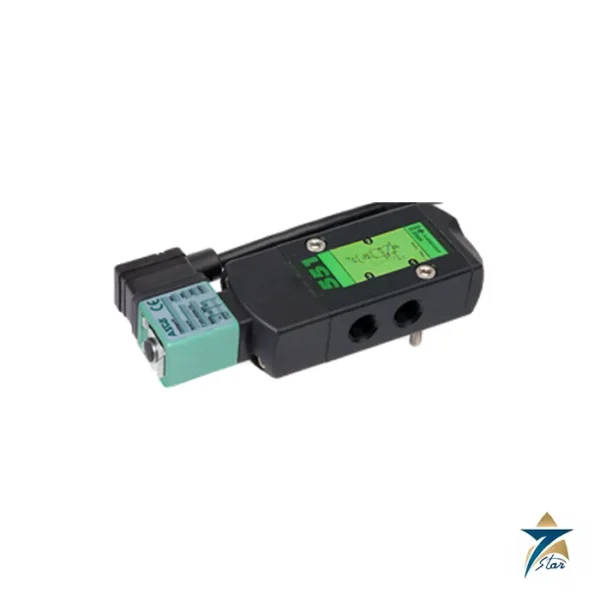
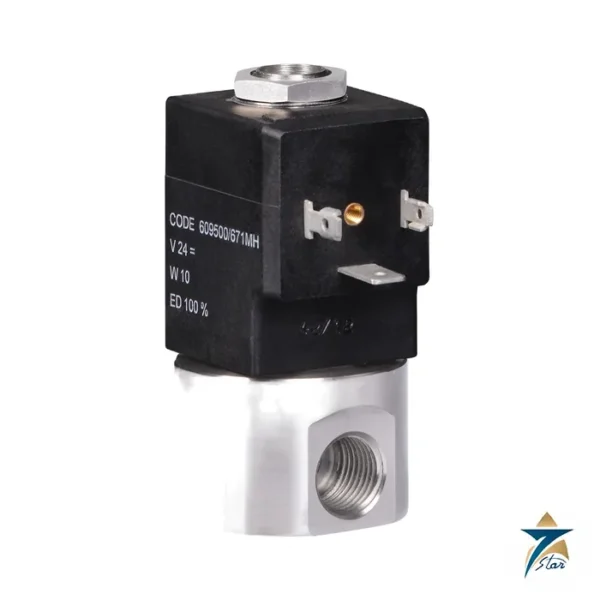
The Bray Series 63 is a spool-type solenoid valve built to mount directly on the NAMUR interface (VDI/VDE 3845) of a pneumatic quarter-turn actuator, such as the Bray Series 92/93 rack and pinion actuator. Its job is simple and critical: it switches the instrument air that opens or closes the valve. Because it bolts straight onto the actuator, no tubing is needed between solenoid and actuator, which shortens installation time and removes leak points. Seven Star LLC supplies Bray actuators and controls in Oman and the GCC as an independent supplier in Muscat.
The Series 63 can be configured for single-acting (spring return) or double-acting actuators, with a single coil or two coils, and with general purpose, weatherproof or explosion-proof coil housings. This flexibility is why the same Series 63 appears on small water valves and on hazardous-area oil and gas valves.
Series 63 technical specifications
| Parameter |
Specification |
| Manufacturer / part number |
Bray / Series 63 solenoid valve |
| Type |
Spool-type, convertible between 3/2 and 5/2 function |
| Port size |
1/4 in. NPT |
| Mounting |
Direct NAMUR mount, VDI/VDE 3845, any position |
| Supply media |
Clean dry air |
| Operating pressure, high flow |
22 psi (1.5 bar) minimum to 130 psi (9 bar) maximum |
| Operating pressure, UL-recognized |
30 psi (2 bar) minimum to 130 psi (9 bar) maximum |
| Ambient temperature |
AC: -13°F to +140°F (-25°C to +60°C); DC: -13°F to +77°F (-25°C to +25°C) |
| Coil enclosure |
Weatherproof NEMA 4/4X; explosion-proof Class I Div 1 coil option; IP65 DIN |
| Coil options |
Single or dual coil; flying leads or DIN connector |
| Electrical connection |
1/2 in. NPT for NEMA housings; PG9 cable gland for DIN housings |
| Duty cycle |
Continuous |
| Manual override |
Turn-and-lock |
| Certifications |
CSA, CE, UL (some models only); coil approvals include Bureau Veritas and PED/CE per the specification sheet |
How a NAMUR solenoid controls a pneumatic actuator
A pneumatic actuator needs a pressure signal to move. In a double-acting actuator, air is applied to one side of the pistons to open and to the other side to close, and a 5/2 solenoid (five ports, two positions) routes supply to one port while venting the other. In a single-acting spring return actuator, air drives the valve one way and the spring brings it back when the air is vented, which uses a 3/2 solenoid (three ports, two positions). The Series 63 changes between the two functions by swapping a port configuration plate, so the same body covers both duties and keeps the spare parts list short.
When the coil is de-energised, the spool returns to its rest position and the actuator goes to its fail position: the spring side for a single-acting actuator, or the position chosen for a double-acting design. For spring return actuators the closed-loop option on the 3/2 solenoid directs air to the spring side of the actuator, which Bray states prevents corrosion of the actuator and, in practice, keeps outside dust and humid air away from the spring chamber. This is a real benefit on coastal or desert sites, where unsealed spring chambers corrode.
Coil, voltage and hazardous-area options for Series 63
Coils are offered in various AC and DC voltages, so a plant can match its control supply, commonly 24 V DC, 120 V AC or 230 V AC. The weatherproof coil is molded and potted with 18 inch leads and Class F insulation per the specification sheet; the IP65 DIN coil is epoxy encased, also Class F. For hazardous locations, an explosion-proof coil meets Class I Division 1 standards, and the controls for hazardous locations sheet lists the Series 63 under NEC Class I Div 1 groups A, B, C, D and Class II Div 1 groups E, F, G. Always confirm the hazardous-area classification of your own site and the required certificate before ordering, because the area scheme (NEC or ATEX/IECEx) must match the local requirement.
Where the Series 63 fits in a Bray valve package
A typical Bray automated valve package combines a valve (for example a Series 30/31 butterfly valve), a Series 92/93 pneumatic actuator, a Series 63 solenoid and a position feedback unit such as the Series 5A or 5C switch box or the Series 54 proximity sensor. The Series 63 is compatible with the Bray devices that offer industrial communication protocols, including CommPro and the Series 54. For modulating duty the solenoid is replaced by a positioner such as the Series 6A or 6P; the solenoid stays on the actuator only when on/off control is needed. The related Series 60 solenoid is a separate Bray model for other mounting needs.
Selection and ordering checklist for Series 63
- Actuator type (single-acting or double-acting) to set 3/2 or 5/2 function and whether the closed-loop option is wanted.
- Single or dual coil, depending on whether a second coil is needed for redundancy or separate open and close signals.
- Voltage and AC or DC, with the hazardous-area class if applicable.
- Coil housing: NEMA weatherproof, explosion-proof or IP65 DIN, and the cable entry.
- Air supply pressure and flow: confirm the high-flow or UL-recognized pressure window.
- NAMUR interface size on the actuator.
Installation and maintenance of the Series 63 solenoid
The supply must be clean, dry instrument air. Moisture and particles shorten the life of any spool valve, and in hot humid climates a coalescing filter and a dryer upstream are inexpensive protection. Mount the solenoid with the supplied seals on the NAMUR face, check the O-rings are seated, and tighten the screws evenly. Do not use thread tape on the 1/4 in. NPT ports in a way that allows fragments to enter the spool. Test the manual override before commissioning, by turning and locking it, then release it and confirm the actuator returns when the coil is de-energised.
For maintenance, check coil resistance and the cable entry gland, replace weathered coils and keep one spare solenoid for each voltage in use. In explosion-proof housings, never open the coil enclosure while energised in the hazardous area.
Series 63 applications in Oman and the GCC
Pneumatic quarter-turn valves are common across water treatment, desalination, power generation and process plants in the region. The Series 63 matches these on-off isolation duties on cooling water, firewater and chemical dosing lines. The hazardous-area version is used where valve control sits within classified areas of oil and gas or petrochemical sites, subject to the site area classification. High ambient temperatures need attention: the DC coil range tops out at +77°F (+25°C) according to the specification, so check the ambient temperature at the actuator and use AC coils or a ventilated enclosure where needed.
Information to send with a Series 63 RFQ
- Actuator model and NAMUR size, and the actuator action.
- Coil voltage, AC or DC, single or dual coil.
- Hazardous-area classification and certificate scheme.
- Air supply pressure, ambient temperature and cable entry type.
Documents and quotation
The Bray Series 63 recommended specification sheet is attached on this page with the construction, connection and approval requirements.
Send the actuator and coil requirements and Seven Star LLC will confirm the Series 63 configuration and quote supply to Oman and the GCC.



























Reviews
There are no reviews yet.