Endress+Hauser FMB53 Deltapilot M suspended cable hydrostatic level probe
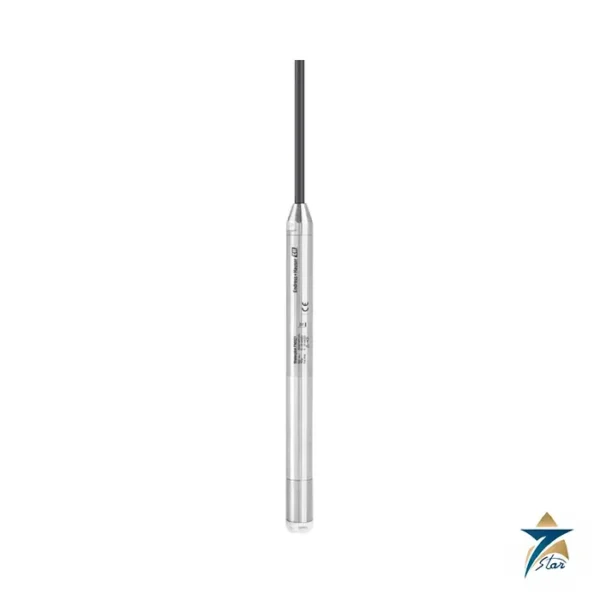
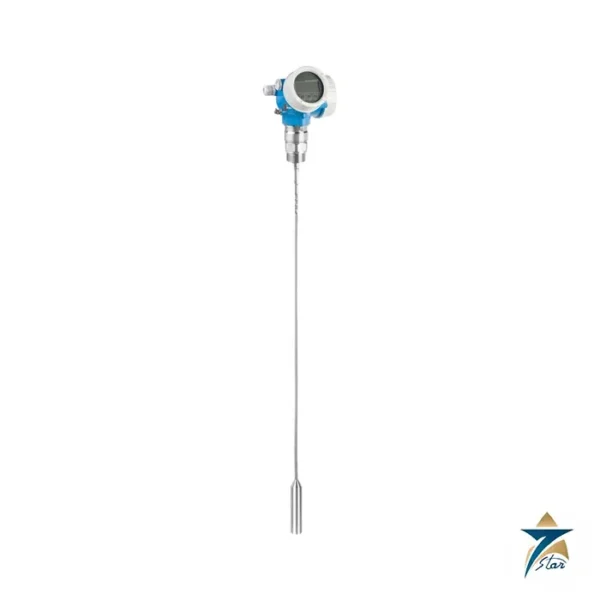
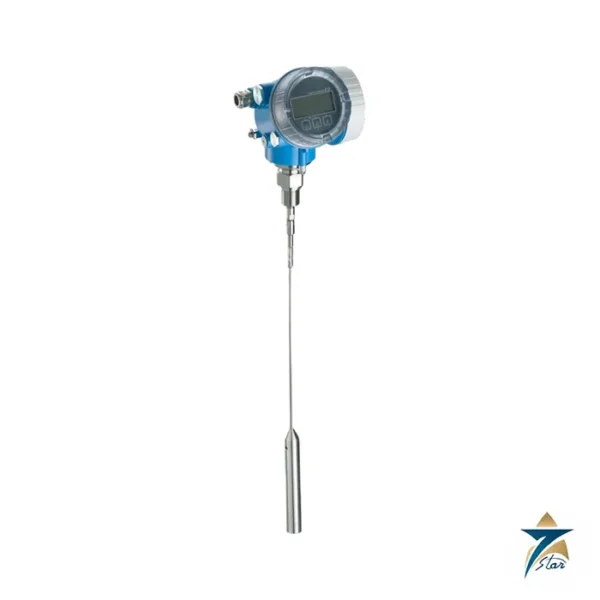
The Endress+Hauser FMB53 is the suspended-cable version of the Deltapilot M. It has no process connection on the vessel. Instead the sensor hangs from a suspension clamp on a vented extension cable, and the housing with the display is fixed to a wall or pipe with a mounting bracket. That layout is built for open wells, boreholes, reservoirs, sumps and shafts, where there is no flange to bolt to and the electronics belong at ground level or on a nearby post.
Seven Star LLC supplies the FMB53 in Oman and the GCC as an independent supplier in Muscat. This page describes the FMB53, how it is installed and what to give us for a quotation.
FMB53 technical specifications
| Parameter |
Specification |
| Manufacturer / part number |
Endress+Hauser / FMB53 (Deltapilot M, suspended cable version) |
| Probe (cable) length |
500 mm to 300 000 mm (20 in to 11 810 in); cable over 120 m is delivered on a reel |
| Measuring cells (URL) |
100 mbar, 400 mbar, 1.2 bar, 4 bar or 10 bar; hydrostatic range up to about 100 m of water |
| Reference accuracy |
±0.2 % standard; platinum option down to ±0.1 % on the larger cells |
| Cable |
PE or FEP, shielded, vented; PE 0.13 kg/m, FEP 0.18 kg/m |
| Cable length tolerance |
±17.5 mm below 5 m, ±37.5 mm from 5 to 10 m, ±50 mm from 10 to 100 m |
| Process temperature |
PE cable –10 to +70 °C; FEP cable –10 to +80 °C |
| Ambient temperature (housing) |
–40 to +70 °C with PE cable, –40 to +80 °C with FEP cable (without display); –20 to +70 °C with display |
| Mounting hardware |
Suspension clamp (316L, glass-filled polyamide jaw, 0.4 kg) required; wall and pipe bracket 0.2 kg for pipes 1¼ to 2 in |
| Process diaphragm |
Alloy C276 plain, gold-rhodium or gold-platinum coated; 316L measuring cell tube |
| Output / communication |
4 to 20 mA HART 6.0, PROFIBUS PA or FOUNDATION Fieldbus |
| Dynamic behaviour (HART current output) |
Dead time up to 500 ms, T63 up to 250 ms; warm-up up to 8 s |
| Housing |
F31 aluminium or F15 stainless steel, with a pipe bend at the cable entry |
Data are from the Endress+Hauser technical information for the Deltapilot M FMB50 to FMB53 series. The final limits depend on the options chosen.
How the FMB53 hangs and measures
The sensing principle is the same as in the other Deltapilot M probes. The liquid column presses on the process diaphragm, an oil fill passes the pressure to a silicon element, and the element is protected by a second rear diaphragm so that moisture cannot reach it. What sets the FMB53 apart is that the cable is both the signal path and the support. The extension cable runs up to the suspension clamp, which holds the weight of the cable and probe, and then continues through a pipe bend into the housing. The level zero point is the position of the process diaphragm, so measure the cable length from the clamp to the planned zero level and allow for the protective cap height.
FMB53 suspension clamp, bracket and cable accessories
The suspension clamp is mandatory with the FMB53 and carries order number 52010869, or it can be selected in the order code as an enclosed accessory. The mounting bracket for the housing, part number 71102216, is supplied with the FMB53. For very long runs the datasheet requires two suspension clamps when a PE cable is longer than 300 m. A cable shortening kit, part number 71125862, can be ordered for the FMB53 only, which helps when the well depth is not known until the pump is out. The clamp is 316L with a glass-filled polyamide jaw, and the housing adapter is AISI 304.
Where the FMB53 fits and related Deltapilot M models
If there is a flange or thread on the vessel roof, the FMB52 does the same job with the housing on top of the connection, and for rigid probes to 4 m the FMB51 applies. The FMB50 is the external wall-mounted version. Choose the FMB53 when the tank is open, has no spare nozzle, or the housing needs to sit apart from the vessel for access or heat reasons. Compared with the separate-housing option of the FMB52, the FMB53 includes the suspension and bracket as a standard design, so the whole installation is one assembly.
Selecting and ordering an FMB53
- Cable length: measure from the clamp position to the lowest level, adding the cap allowance; mention if you need a shortening kit for field adjustment.
- Cable type: PE for liquids up to 70 °C (drinking-water grade available), FEP up to 80 °C.
- Range: convert the maximum column to pressure (about 98 mbar per metre of water) and add the margin for density changes.
- Diaphragm: plain Alloy C276 for most liquids, gold-rhodium for hydrogen-rich water, gold-platinum for acids, alkalis or sea water.
- Housing and entry: F31 or F15, with the cable gland or plug that suits your wiring.
- Approvals: the datasheet lists ATEX, IECEx, FM, CSA and NEPSI among its Ex approvals; the FMB53 mounting bracket does not carry the marine approval.
FMB53 installation, commissioning and maintenance
Fix the suspension clamp at the top of the well or on a cross member, set the cable to the planned length and lower the probe slowly so it does not swing against the wall. Where flow can move the probe, run it in a guide tube, preferably plastic, or secure it with a clamping fixture. Mount the housing bracket on a wall or a pipe of 1¼ to 2 in diameter, keep the cable entry facing down and tight, and leave a drip loop. After connecting, set the position zero shift with the keys on the electronics and confirm the 4 to 20 mA signal at the test terminals. The datasheet gives a maximum cable extraction force of 450 N.
Maintenance is light. When the probe is pulled for pump service, rinse it, check the cable jacket and clamp, and record the zero before and after so drift is visible over the long term. The stability data in the datasheet are 0.05 % of the upper range limit per year for the 4 and 10 bar cells, which means a good check interval is the pump service cycle.
Typical FMB53 applications in Oman and the GCC
In Oman and the GCC the FMB53 is a typical fit for water wells and boreholes, open reservoirs and ground storage tanks in water supply networks, seawater intake and outfall chambers at desalination and power plants, and wastewater sumps and stormwater pits. The housing can be mounted in the shade on a post, away from the heat of the open well, and it should have a sealed cable gland against the dust and the salt air near the coast.
Information to send with an FMB53 RFQ
- Part number FMB53 and the order code of any unit being replaced.
- Well or tank depth, lowest level and highest level, and the cable length needed.
- Medium, density and temperature, plus chemistry for the diaphragm choice.
- Cable type, output, housing, cable entry and hazardous-area class.
- Whether you want the shortening kit, a second clamp for long cable, and the quantity.
Documents and quotation
A copy of the Endress+Hauser technical information for the Deltapilot M FMB50 to FMB53 group is attached on this page, and the FMB53 data are included in it.
Send us the FMB53 information above and Seven Star LLC will prepare a quotation for Oman and the GCC.
Other Models in the Eh Deltapilot M Range
Seven Star LLC supplies models from the Eh Deltapilot M range in Oman and the GCC. Compare the related models below and request a quote for the one that matches your application.


















Reviews
There are no reviews yet.