FMR51 Micropilot: non-contact radar level for liquids in demanding plants
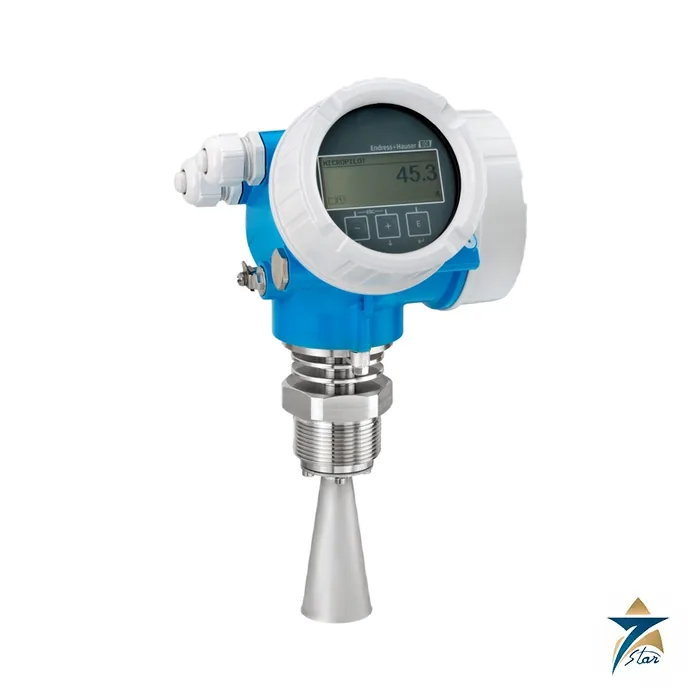
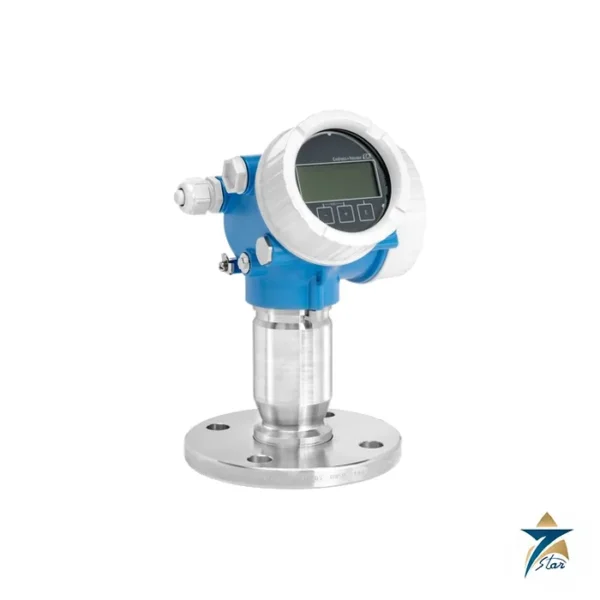
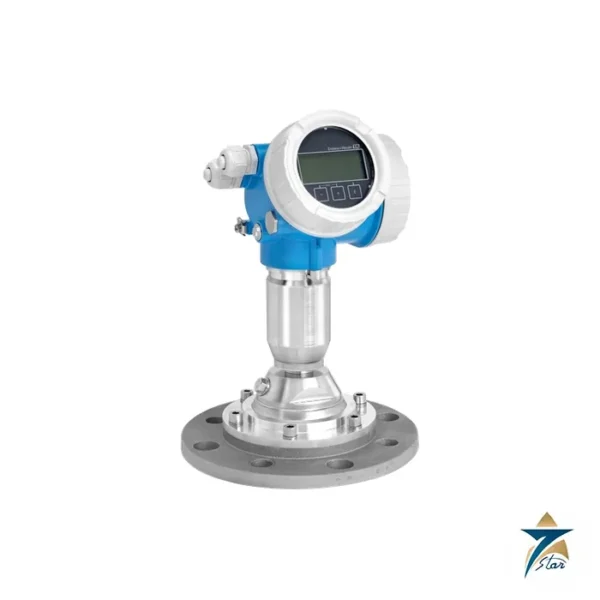
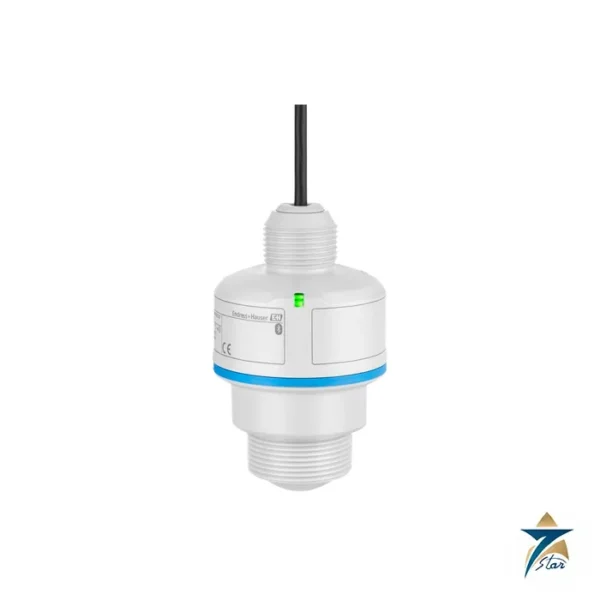
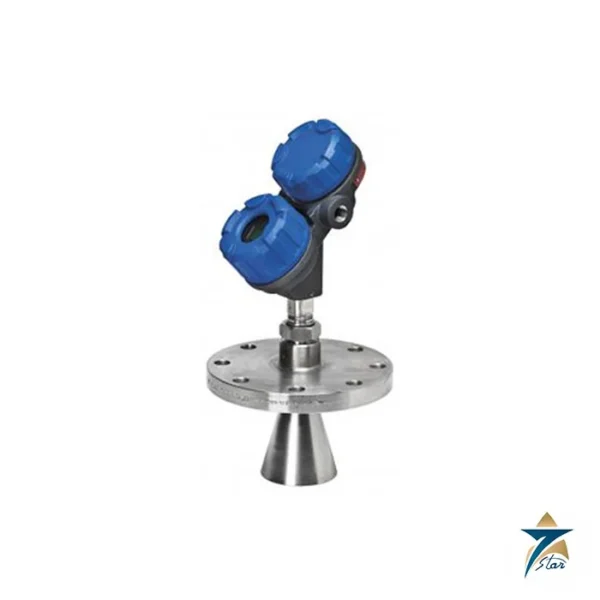
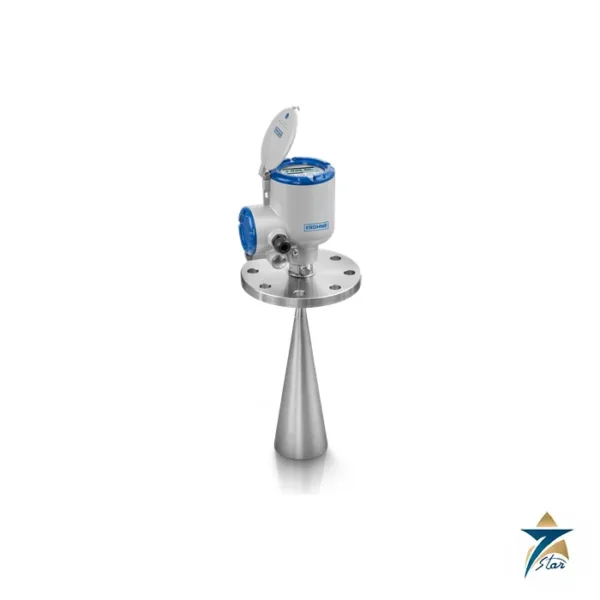
The Endress+Hauser Micropilot FMR51 is a time-of-flight radar level transmitter working in the K-band (about 26 GHz). It measures the level of liquids, pastes and slurries continuously and without touching the medium, and is aimed at oil and gas and chemical applications where pressure, temperature and vapours rule out simpler technologies.
The FMR51 uses a horn antenna and is offered with HART, PROFIBUS PA and FOUNDATION Fieldbus communication, with optional Bluetooth for commissioning. Because the exact configuration is defined by the manufacturer’s order code, the FMR51 base type is the starting point: antenna size, process connection, housing, approvals and output are specified on top. Seven Star LLC supplies the FMR51 in Oman and the GCC as an independent supplier in Muscat.
FMR51 technical specifications
| Parameter |
Specification |
| Manufacturer / part number |
Endress+Hauser / Micropilot FMR51 |
| Principle |
Time-of-flight radar, K-band (approx. 26 GHz) |
| Measuring range |
Up to 40 m standard; up to 70 m with Advanced dynamics (depends on tank and application) |
| Accuracy |
±2 mm |
| Antenna |
Horn antenna, 40, 50, 80 and 100 mm (1-1/2 to 4 in) |
| Process temperature |
XT version -196 to +280 °C; HT version -196 to +450 °C |
| Process pressure |
-1 to 160 bar |
| Ambient temperature |
-50 to +80 °C |
| Outputs / communication |
4 to 20 mA HART, PROFIBUS PA, FOUNDATION Fieldbus; Bluetooth optional |
| Wiring |
2-wire (HART, PA, FF) or 4-wire (HART) |
| Process connections |
Thread (MNPT 1-1/2, R 1-1/2), flanges DN50 to DN150, ASME 2 to 6 in, JIS 10K/63K, Tri-Clamp (ISO 2852) |
| Wetted materials |
316L, Alloy C, PTFE, ceramic |
| Safety |
Overfill protection (WHG), SIL per IEC 61508 |
| Certificates listed |
ATEX, FM, CSA C/US, IECEx, UK Ex, INMETRO, NEPSI, KC, EAC and others |
| Material and design approvals |
EN 10204-3.1, NACE MR0175/MR0103, ASME B31.3, AD2000 |
| Marine approvals |
GL, ABS, LR, BV, DNV |
How the FMR51 radar works
The transmitter sends short microwave pulses down the antenna toward the product. The pulse is reflected at the surface and the electronics calculate level from the travel time of the echo. Because the signal does not depend on density, conductivity or temperature of the liquid, measurement stays stable when the process changes or when gas blankets and vapours are present.
Multi-Echo Tracking follows the product echo through the signal and filters false echoes from internals; Advanced dynamics extends the useful range. Heartbeat Technology provides diagnostics, verification and monitoring without interrupting the process, and HistoROM stores configuration for fast replacement.
System fit and related Micropilot models
The FMR51 sits in the middle of the Micropilot FMR5x range. For ammoniacal gas phase or strong build-up, the manufacturer points to the FMR54, with a stilling well or air purge respectively. Where hygiene is needed, or where 316L or Alloy C is not chemically resistant, the FMR50, FMR52 and FMR53 are listed as alternatives. The FMR51 is normally connected to a DCS, PLC or fieldbus segment and parameterised with FieldCare, DeviceCare or the SmartBlue app.
Selection and ordering checklist
- Process medium, dielectric constant and presence of foam, vapour or turbulence.
- Tank height, nozzle diameter and nozzle length to choose the horn size.
- Maximum process temperature and pressure to select the XT or HT version.
- Flange standard and rating (EN, ASME or JIS), or thread or Tri-Clamp.
- Output type: HART 2-wire/4-wire, PROFIBUS PA or FOUNDATION Fieldbus.
- Hazardous-area approval and SIL or overfill requirements.
- Certificates required, for example material test certificate to EN 10204-3.1 or NACE.
Installation, commissioning and maintenance
Mount the instrument on a nozzle with the horn clear of the nozzle wall and keep it away from fill streams, ladders and heating coils. The radar should be aligned vertically so the beam hits the surface. During commissioning, enter the tank empty distance and full span, then record an envelope curve to suppress fixed interfering echoes.
The device has no moving parts, so maintenance is mainly diagnostics, checking for build-up on the antenna and proof tests for safety loops. Heartbeat verification supports documented checks without removal from the tank.
Typical applications in Oman and the GCC
FMR51 is a fit for crude and product storage tanks, process vessels, separators, distillation columns and chemical tanks in oil and gas, refining and petrochemical plants. In desalination and power, it is used on chemical dosing tanks and fuel tanks. High ambient temperature and direct sun are within its -50 to +80 °C ambient rating, and the non-contact principle avoids fouling from sticky or salt-laden media.
Diagnostics and digital features of the FMR51
The FMR51 includes Heartbeat Technology for diagnostics, verification and monitoring, a foam detection function in its advanced diagnostics, a 5-point linearity protocol option and an RFID tag for identification. HistoROM keeps the device configuration so that a replacement unit can be put into service quickly with the same settings.
An optional display module and Bluetooth connection with the SmartBlue app allow setup from a safe distance without opening the housing, which is helpful on tall tanks and in hazardous locations. Customised parameterisation can be requested at order stage so the device arrives configured for your tank.
FMR5x selection guide
| Model |
Comment |
| Model |
Typical reason to choose |
| FMR51 |
Standard high-demand liquid level with horn antenna |
| FMR54 |
Ammonia gas phase or heavy build-up (stilling well, air purge) |
| FMR52 / FMR53 |
Hygienic or highly corrosive media |
| FMR50 |
Option when 316L or Alloy C is not resistant |
Information to send with an RFQ
- Model FMR51 and full order code if you already have it.
- Medium, tank dimensions and nozzle details.
- Pressure, temperature, communication and approval needs.
- Required certificates and quantity.
- Delivery location and schedule.
Related Endress+Hauser (E & H) products: Endress+Hauser Micropilot FMR50 Radar Level Transmitter, Endress+Hauser Micropilot M FMR231 Radar Level Transmitter, Endress+Hauser Micropilot FMR62 80 GHz Radar Level Transmitter, Endress+Hauser Micropilot FMR20 Compact Radar Level Transmitter, Micropilot FMR52 Radar Level Transmitter and Endress+Hauser Micropilot FMR10B 80 GHz Radar Level Sensor.
Documents and quotation
A datasheet is attached on this page for the FMR51 (Technical Information). Send us your process data and we will prepare a quotation as an independent supplier serving Oman and the GCC.





























Reviews
There are no reviews yet.