Two-wire TDR level and interface meter with rod, cable and coaxial probes
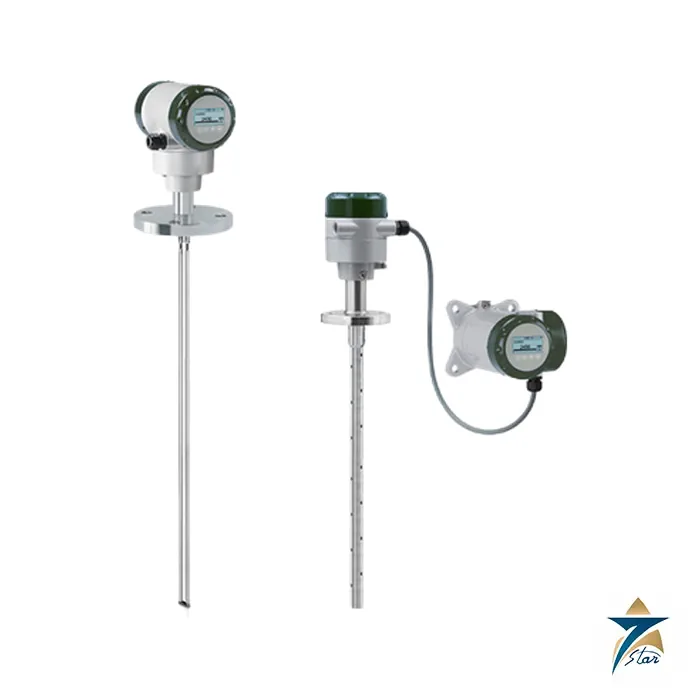
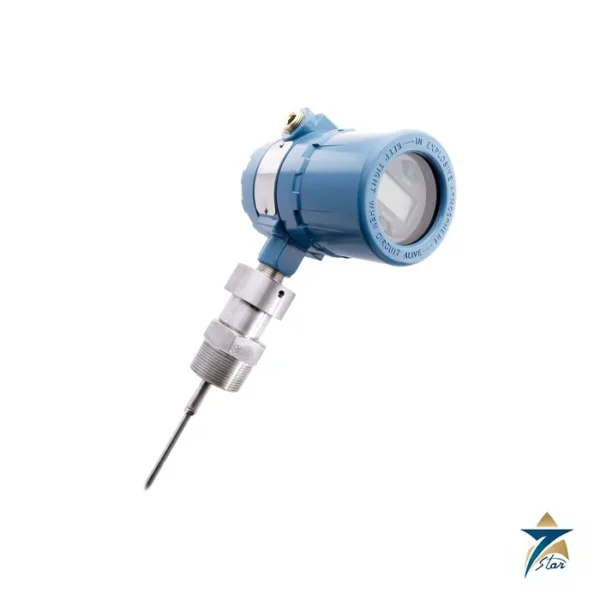
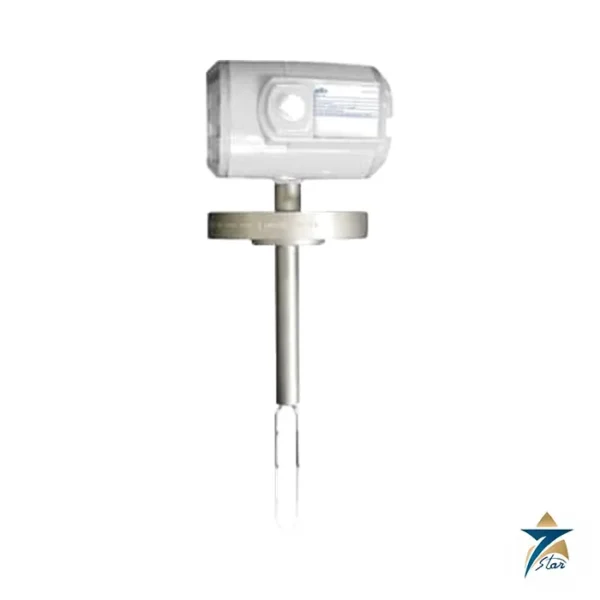
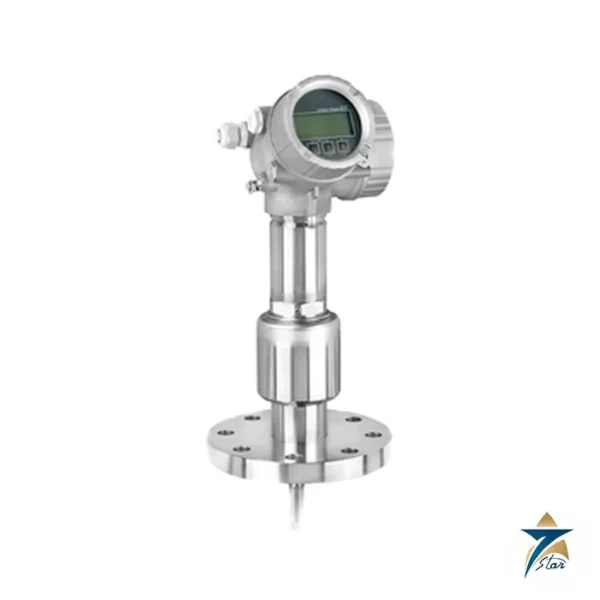
The Tokyo Keiso TGF7200 is a 2-wire continuous level meter for liquids and slurries based on time domain reflectometry (TDR), often called guided wave radar. A very low-power micropulse travels down a probe, reflects at the surface of the liquid or at an interface between two liquids, and returns; the meter calculates distance from the travel time. Because the pulse speed is nearly constant, temperature, pressure, density and dielectric constant of the product have very little effect on the reading.
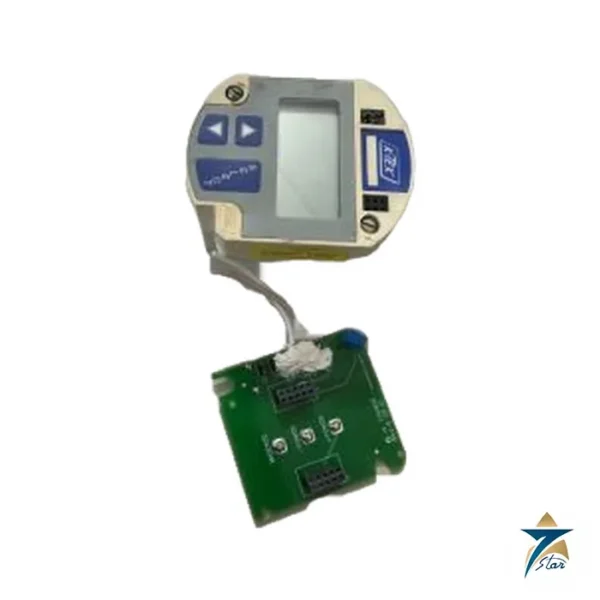
Tokyo Keiso suggests it for level control of buffer and sump tanks and for capacity management of storage tanks. It has no moving parts, the converter housing can be removed and rotated without opening the tank, and parameters such as zero point and range can be set from the front keypad without lifting the cover.
Technical specifications
Data from Tokyo Keiso technical guidance TG-L2247-E01 (2nd edition, October 2022).
| Parameter |
Specification |
| Manufacturer / model |
Tokyo Keiso TGF7200 micro pulse level meter (compact or remote housing) |
| Measuring principle |
Time Domain Reflectometry (TDR), 2-wire loop-powered |
| Outputs |
Level, distance, volume, mass and interface |
| Probe types |
TGF7211 single rod (8 mm; PTFE-coated 10 mm); TGF7212 twin rod; TGF7221 single cable (4 mm); TGF7222 twin cable; TGF7231 coaxial (22 mm or 42 mm) |
| Probe lengths |
Single rod 1.0 to 3.0 m (segment type to 5.5 m); twin rod 1.0 to 3.0 m; single cable 1.0 to 60.0 m; twin cable 1.0 to 14.0 m; coaxial 0.6 to 3.0 m (segment type to 5.5 m) |
| Accuracy |
3 mm (under 10 m); 0.03% of reading (10 m or more); interface 5 mm under 10 m; resolution 0.1 mm; repeatability 1 mm |
| Dielectric constant |
1.6 or more (single probes); 1.4 (twin probes); 1.3 (coaxial); 1.1 or more in TBF mode |
| Process-connection temperature |
PTFE seal to +150 °C (minimum -40 FKM/FPM, -50 EPDM, -20 Kalrez 6375); ceramic seal to +200 °C (FKM/FPM), +150 °C (EPDM) or +250 °C (Kalrez 7075, not twin cable) |
| Pressure |
PTFE process seal 0 kPa (abs) to 4.0 MPa; ceramic seal to 10.0 MPa |
| Current output |
4-20 mA or 3.8-20.5 mA; second output optional; error output 22 mA or 3.6 mA |
| Switch output (option) |
Relay, 1 normally open contact; 24 V DC / 6 A (1.1 A intrinsically safe) |
| Power supply |
24 V DC rated; 11.5 to 30 V DC (non-Ex, Ex i); 13.5 to 34 V DC (Ex d) |
| Housing |
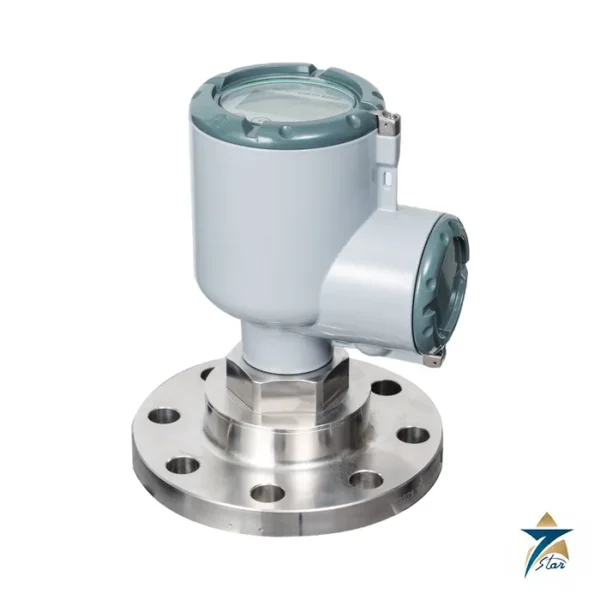
Aluminium alloy (polyester coating) or SS316L; IP66/IP68; NEMA 4X/6 |
| Ambient temperature |
-40 to +80 °C without display; -20 to +60 °C with display |
| Wetted materials |
Probe SS316L or Hastelloy C-22 depending on type; PTFE and ceramic process seals |
| Process connection |
G or NPT male thread; JIS or ASME RF flange |
| Explosion protection |
Japan Ex certificate CML 22JPN2442X (TGF7200C/F/S/D-JEx), with intrinsically safe and flameproof types |
Probe choice and limits
Single rod and single cable probes need a dielectric constant of 1.6 or more, twin probes 1.4 or more, and the coaxial probe 1.3 or more, so the coaxial type suits the lowest-dielectric liquids. The top dead zone is 50 mm and the bottom dead zone ranges from 20 mm (rod and coaxial) to 120 mm (single cable), so the probe length must be chosen with the lowest measured level in mind.
For interface measurement the bottom liquid must have a higher dielectric constant than the top liquid, the interface layer must be at least 50 mm thick and clearly formed. Maximum rate of change is 100 m/min under suitable conditions.
Ordering and documentation notes
Dimensions and masses are given for each housing and probe type, together with measurement-limit diagrams. The catalogue’s feature list gives an operating temperature range of -50 to -250 °C, which appears to be a misprint, and the specification table is the safer reference: process connection temperatures run from -50 °C to +250 °C depending on seal and probe. Please confirm the probe type, seal system, process connection and hazardous-area marking when you send an enquiry.
Installing the probe in the tank
Choose a nozzle position away from the inlet stream, agitators, heating coils and internal ladders, because objects close to a single rod or cable probe can produce reflections that the meter may read as level. Check the clearance to the tank wall and internal fittings recommended in the Tokyo Keiso documentation for the probe type selected. In tall tanks, follow the manual on how cable probes are fixed so that turbulence does not swing them against the wall. Handle rod and coaxial probes carefully during installation; a bent probe can change the measurement.
Commissioning the TGF7200
Before start-up, confirm that the probe length, tank height and reference point entered in the converter match the installed geometry. Set zero point and range through the front keypad, then compare the displayed level with a manual dip or sight glass at more than one level if the process allows. For interface duty, confirm the dielectric constants of both liquids and check the reading once a clear interface has formed. In hazardous areas, verify that the supply, cabling and barriers match the explosion protection type on the nameplate before energising the loop.
Operating conditions in Oman and the GCC
Outdoor tanks in the Gulf are exposed to strong sun, high air temperatures and wind-blown dust. Check that the ambient temperature at the converter stays within the limits in the specification table, especially for units with a display, and consider a remote housing or shading where the tank roof gets very hot. In coastal terminals and plants, salt-laden humid air attacks cable glands and housings; keep covers closed and cable entries sealed. Condensation and product build-up on the probe can occur with sticky or crystallising liquids, so include these conditions in the probe selection.
Routine checks and maintenance
The meter has no moving parts, so maintenance is mainly inspection: look for coating or deposits on the probe during planned tank entries, check housing seals and glands for moisture, and compare the reading with an independent measurement at regular intervals. Record any changes to settings so the configuration stays traceable.
Documents and quotation
The Tokyo Keiso TGF7200 catalogue is attached to this page as a PDF with probe specifications, dimensions, wiring and explosion-proof data. Send us the tank height, product, temperature, pressure and nozzle details so we can quote the correct probe and seal system. Seven Star LLC is an independent supplier in Muscat; price and lead time are confirmed per RFQ. Related range: level instrumentation and the Magnetrol Eclipse 706 guided wave radar level transmitter.











Reviews
There are no reviews yet.