Overview
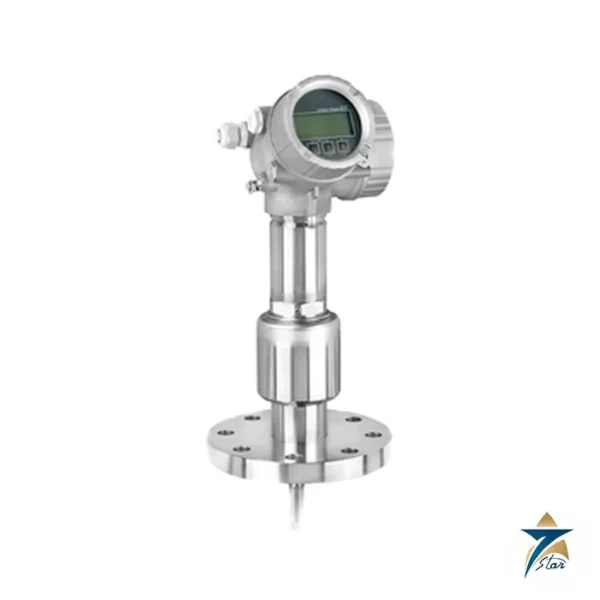
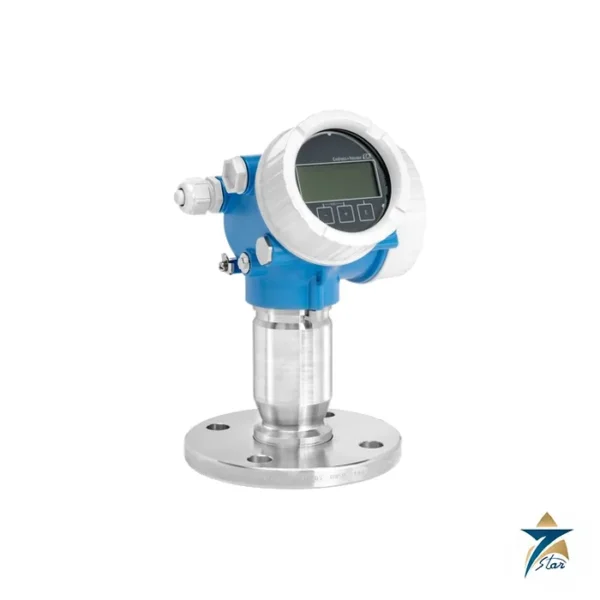
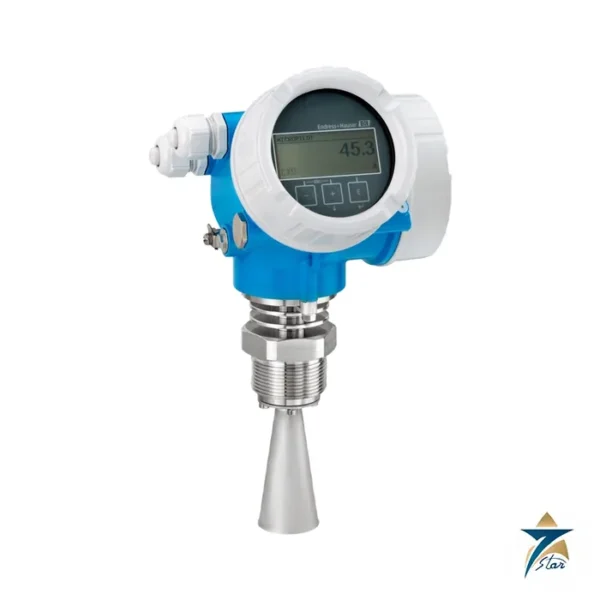
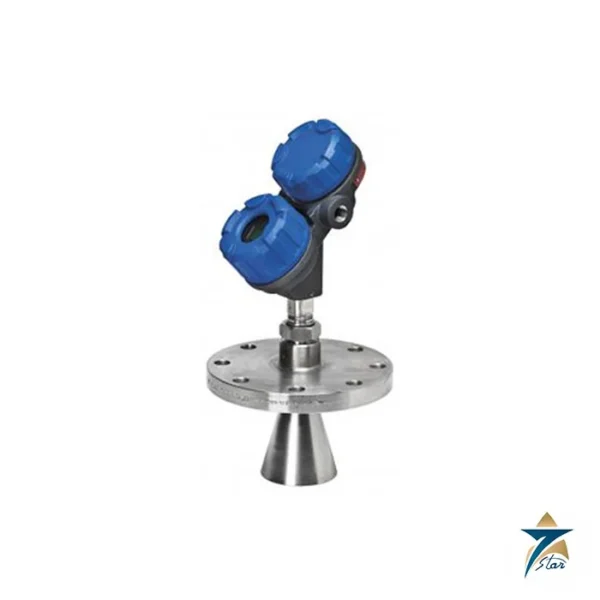
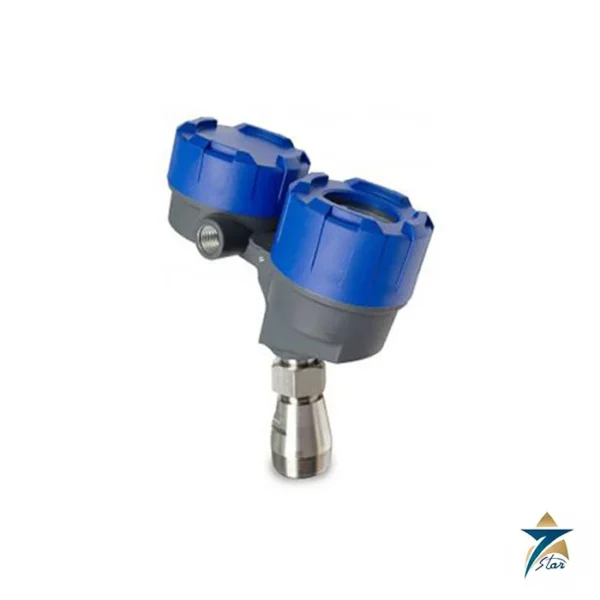
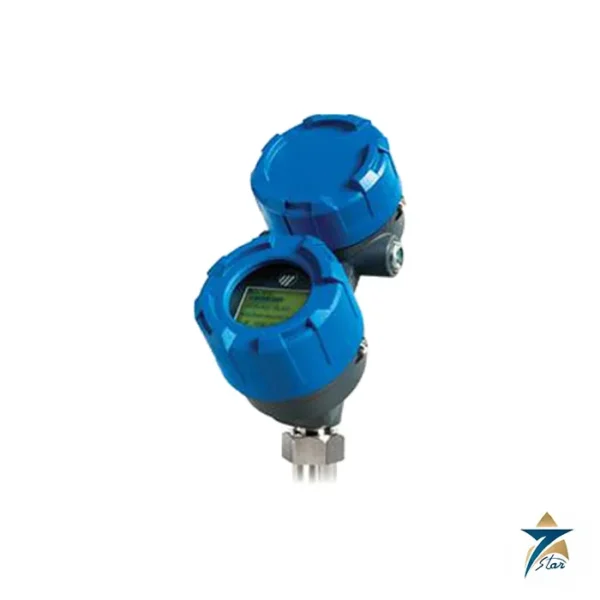
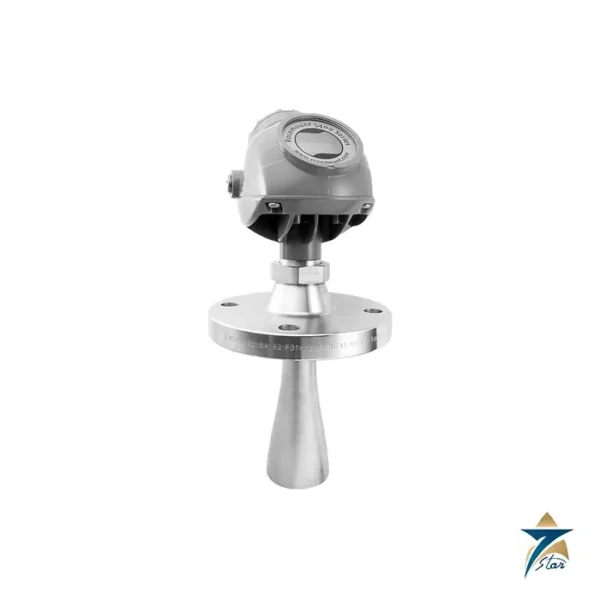
The Endress+Hauser Micropilot M FMR231 is a free-space radar level transmitter built for continuous, non-contact level measurement in liquids across a wide range of tank and vessel types. As a non-contact radar instrument, it measures level without touching the process fluid, avoiding the buildup, wear, and mechanical failure risks that affect contact-type level instruments in coating, viscous, or aggressive liquids.
Part of Endress+Hauser’s established Micropilot M radar family, the FMR231 is engineered for reliable performance across buffer tanks, storage vessels, and stilling wells. Seven Star LLC supplies the FMR231 to process, storage, and utility facilities across Oman and the GCC.
Operating Principle
The FMR231 emits microwave radar pulses from its antenna toward the liquid surface and measures the time-of-flight of the reflected signal to calculate distance, and therefore level, without any part of the sensor contacting the process fluid. Operating in the C-band at approximately 6GHz, the radar signal is largely unaffected by vapor, gas blankets, or changing process conditions that can disrupt other non-contact technologies like ultrasonic.
Engineering Design of the Endress+Hauser Micropilot M FMR231
The FMR231 measures up to 20 m (66 ft) in storage tanks with a calm surface and up to 10 m in buffer tanks, depending on the medium group, with accuracy of ±10mm or ±0.1% of measuring range under reference conditions. Process connections include threaded 1½-inch BSPT or NPT options in stainless steel or PVDF, flanged connections from DN50 to DN150 (PN16 and PN40 flange dimensions, process pressure up to 16 bar with flanges) in 316L stainless steel or PTFE-clad construction, and sanitary couplings (dairy, aseptic, Tri-Clamp) for hygienic applications. Process temperature range depends on the antenna version selected, from −20°C to 120°C with the PPS antenna up to −40°C to 150°C with the PTFE antenna and metal connection, and output is available as 4–20mA HART, PROFIBUS-PA, or Foundation Fieldbus.
Key Features
- Non-contact free-space radar level measurement
- Measurement range up to 20m in storage tanks and 10m in buffer tanks, depending on medium group
- Accuracy ±10mm or ±0.1% of measuring range
- C-band radar frequency (~6GHz)
- Threaded, flanged, and sanitary process connection options
- Process temperature −40°C to 150°C depending on antenna version
- Flange sizes to PN16 and PN40, up to 16 bar with flanges
- 4–20mA HART, PROFIBUS-PA, or Foundation Fieldbus output
Industrial Applications
The FMR231 is specified for continuous level monitoring in storage tanks, buffer vessels, and process tanks across Muscat, Sohar, and Salalah, particularly where coating, foam, or vapor conditions make contact-type or ultrasonic level instruments unreliable. Its sanitary connection options also extend its use into food, beverage, and pharmaceutical process vessels requiring hygienic-compliant level measurement.
Across the GCC’s water treatment, chemical processing, and storage terminal sectors, the FMR231’s non-contact radar principle and broad material/connection options let engineering teams standardize on a single instrument family across tanks with different process conditions, connection types, and hygiene requirements.
Technical Specifications
| Parameter |
Specification |
| Measurement Technology |
Free-space (non-contact) radar |
| Measurement Range |
Rod antenna, media group D: up to 20 m in storage tanks, 10 m in buffer tanks, 8 m with an agitator |
| Accuracy |
±10mm or ±0.1% of measuring range |
| Frequency |
C-band (approx. 6 GHz) |
| Process Connection |
Threaded 1½in, flanged DN50–DN150, sanitary options |
| Process Temperature |
-40 °C to +150 °C (PTFE antenna, metal connection); -20 °C to +120 °C (PPS antenna) |
| Flange Rating |
PN16 and PN40 flange dimensions; up to 16 bar with flanges |
| Output |
4–20mA HART, PROFIBUS-PA, Foundation Fieldbus |
| Product status (endress.com) |
No longer available; successors listed: Micropilot FMR53, Micropilot FMR60B |
| Antenna type |
Rod antenna with inactive length: PPS antistatic 360 or 510 mm; PTFE 390 or 540 mm; PTFE antistatic 390 or 540 mm |
| Beam angle (3 dB) |
30 degrees for rod antenna; beam diameter 1.61 m at 3 m, 3.22 m at 6 m distance |
| Range, rod antenna, storage tank |
Media group B 10 m, C 15 m, D 20 m |
| Range, rod antenna, buffer tank / agitator |
Buffer B 5 m, C 7.5 m, D 10 m; agitator B 4 m, C 6 m, D 8 m |
| Process limits, PPS antenna |
-20 to +120 °C, -1 to +16 bar; wetted 316L, Viton, PPS |
| Process limits, PTFE antenna |
Metal thread: -40 to +150 °C, -1 to +40 bar; flange: -1 to +16 bar; PVDF thread: -40 to +80 °C, -1 to +3 bar |
| Supply voltage HART (terminal) |
Standard 16 to 36 V at 4 mA, 7.5 to 36 V at 20 mA; Ex ia 16 to 30 V / 7.5 to 30 V; PA/FF 9 to 32 V (non-Ex) |
| Ambient temperature / protection |
-40 to +80 °C; housing IP65 NEMA 4X; antenna IP68 (NEMA 6P) |
| Housings |
F12 aluminium, F23 316L, T12 aluminium with separate connection compartment |
| Approvals |
ATEX/IECEx Ex ia, Ex d, Ex em, FM, CSA, TIIS, NEPSI; WHG overspill; SIL 2 for 4-20 mA output; marine GL/ABS/NK |
| Nozzle / wall rules |
Max nozzle height 100 mm (short antenna) or 250 mm (long antenna); not closer than 30 cm to tank wall |
Selecting the Right FMR231 Configuration
Getting the order code right is the most important step with any free-space radar. Before requesting a Micropilot M FMR231, confirm the tank geometry (open vessel, buffer tank or stilling well), the nozzle size and length, the product dielectric constant, and the expected process temperature and pressure. These factors decide the antenna type, the seal material and the process connection. For replacement units, read the full order code from the transmitter nameplate rather than relying on the short model name, because two FMR231 units can differ in frequency, approval, housing and output even when they look identical from outside.
- Record the complete order code and serial number from the nameplate
- Note the nozzle diameter, nozzle height and any internal obstructions
- Confirm whether the existing loop uses HART, PROFIBUS-PA or Foundation Fieldbus
- Check the hazardous-area approval required for the tank zone
Installation and Commissioning
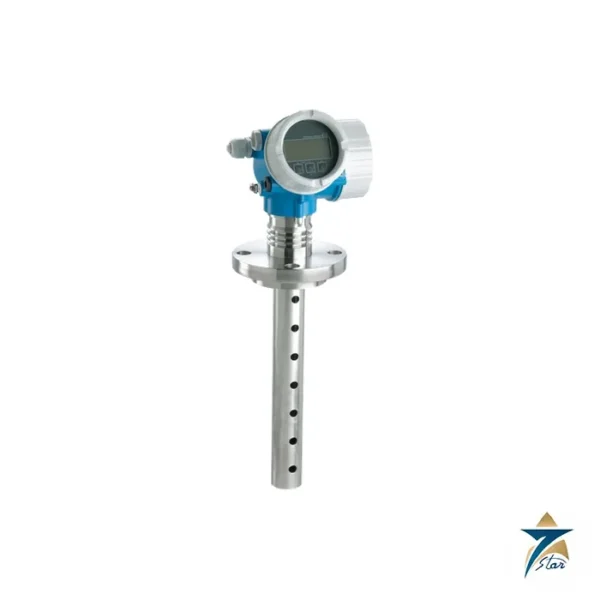
Mount the transmitter away from the fill stream, agitator blades and ladders, and keep the antenna clear of the tank wall so the radar beam is not reflected by internal structures. The rod antenna should protrude beyond the nozzle end where possible, since a long nozzle adds interfering echoes near the top of the measuring range. In stilling wells, use a smooth pipe with deburred slots or holes. During commissioning, enter the tank type, medium properties and empty/full distances, then record an interference echo map with the tank empty or at low level so that fixed reflections are suppressed from the evaluation.
Maintenance and Troubleshooting
A non-contact radar needs little routine work, but periodic checks keep the reading reliable. Inspect the antenna for heavy build-up during planned shutdowns, verify the seals, and compare the displayed level against a manual dip or sight glass. If the reading jumps or freezes, review the envelope curve: typical causes are a new obstruction, condensate on the antenna, a changed product or foam layer, or a lost echo map after a parameter reset. Keep a backup of the configuration parameters so that a replacement unit can be commissioned quickly.
Applications in Oman and the GCC
In the region, the FMR231 is well suited to water and wastewater treatment tanks, chemical dosing and storage vessels, and product tanks in desalination and utility plants, where high ambient temperature and dust make non-contact measurement attractive.
FMR231 Rod Antenna Versions and Usable Measuring Range
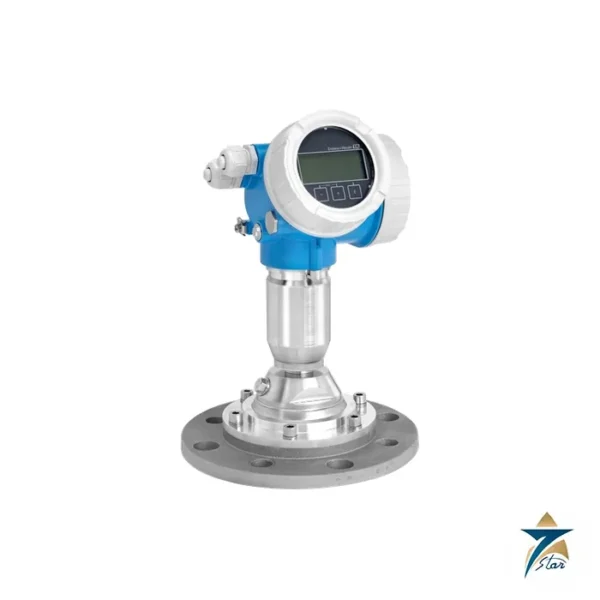
The Micropilot M FMR231 is the rod-antenna member of the Micropilot M family and works in the C-band. Endress+Hauser offers the rod in antistatic PPS (360 mm or 510 mm long), in fully insulated PTFE (390 mm or 540 mm) and in antistatic PTFE of the same lengths. The upper part of the rod is an inactive length, so the radar signal is launched below the nozzle. The short rods are intended for nozzles up to 100 mm high and the long rods for nozzles up to 250 mm high.
The rod antenna has a 3 dB beam angle of 30 degrees, the widest in the Micropilot M family, which gives a beam diameter of about 1.6 m at 3 m distance and 3.2 m at 6 m. The maximum configurable range is 20 m, but the usable range depends on the medium group and the vessel. In a storage tank with a calm surface the manufacturer gives 10 m for group B (DC 1.9 to 4), 15 m for group C (DC 4 to 10) and 20 m for group D (DC above 10).
With a moving surface in a buffer tank the same groups reach 5 m, 7.5 m and 10 m, and in a process tank with a single-stage agitator 4 m, 6 m and 8 m. Media of group A (DC 1.4 to 1.9) are outside the free-space capability of the rod antenna; for those the Technical Information points to the FMR230 horn in a stilling well. Stated accuracy is ±10 mm up to 10 m and ±0.1 % of the measuring range beyond, with 1 mm digital resolution.
FMR231 Product Status, Process Limits and Installation Rules
Endress+Hauser lists the Micropilot M FMR231 on endress.com as no longer available and names the Micropilot FMR53 and Micropilot FMR60B as the new generation. Engineers maintaining an installed FMR231 should check the antenna material before reusing process data: the PPS rod is limited to -20 to +120 °C and 16 bar, while the PTFE rod with metal thread is rated -40 to +150 °C and up to 40 bar, falling to 16 bar with flanges and 3 bar with a PVDF thread.
For mounting, the manufacturer recommends a distance from the wall of about one sixth of the tank diameter and never less than 30 cm, avoiding the tank centre and the filling stream. The inactive part of the rod must extend below the nozzle and the rod must hang vertically. The marker on the flange or boss is aligned towards the tank wall, and flange bolts should be retightened periodically at 60 to 100 Nm. The housing can be rotated 350 degrees for access to display and terminals.
Sourcing from Seven Star LLC
Seven Star LLC supplies the Micropilot M FMR231 and related Endress+Hauser level instruments from Muscat. Share the nameplate order code or your tank data sheet and we will help confirm the correct configuration before you order.
Request a Quote for E&H Micropilot M FMR231 RADAR LEVEL TRANSMITTER
Contact Seven Star LLC for a quotation and availability on the Endress+Hauser Micropilot M FMR231 radar level transmitter across Oman and the GCC. Our team can help select the correct antenna, connection, and seal material for your tank and process conditions.
Browse the full Endress+Hauser (E & H) range or see more Level Transmitter products supplied by Seven Star LLC in Oman and the GCC.
See also: Endress+Hauser Prosonic S FMU90 Ultrasonic Level and Flow Transmitter.

























Reviews
There are no reviews yet.