Brand:

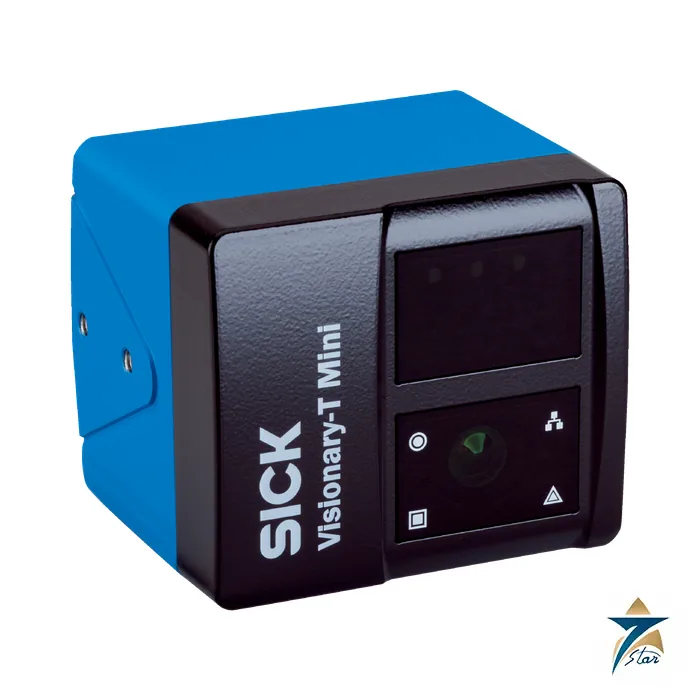
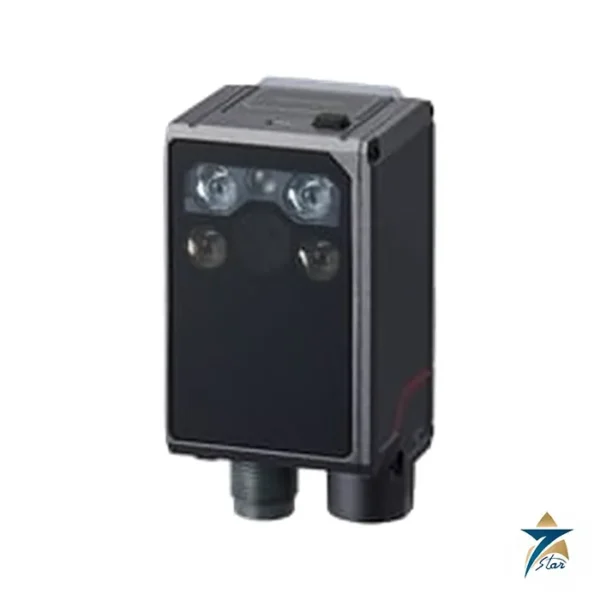
SICK V3S105-1AAAAAA Visionary-T Mini Machine Vision Sensor

Description

V3S105-1AAAAAA is a SICK Visionary-T Mini vision product (part no. 1112649) that inspects, measures or reads parts in a field of view rather than detecting a single point. The catalogue summary lists: product version: Visionary-T Mini CX; working range: ≤ 16 m; sensor resolution: 512 px x 424 px; laser class: 1; scan/frame rate: ≤ 30 fps.

How the V3S105-1AAAAAA works and where it fits

Vision sensors replace several simple sensors with one image-based device. The outputs and the interface listed in the table decide how results reach your PLC or MES.

Illumination and field of view dominate the practical result. The data sheet gives resolution, working distance and lighting; matching them to part size, surface finish and line speed is part of the application engineering.

Technical specifications

Parameter Specification
Type code V3S105-1AAAAAA
Part number 1112649
Product family Visionary-T Mini
Technology 3D snapshot time-of-flight
Streaming Yes
Configurable Yes
Pre-calibrated Yes
Working range ≤ 16 m
Angular resolution 0.14° x 0.14°
Illumination Integrated
Illumination color Infrared, laser, invisible, 855 nm, ± 5 nm
Laser class 1, P0
Task Detecting – Standard objects; Measuring – Dimension, contour and volume; Localizing, navigating and guiding – Guiding; Determining position – 3D position determination
Supply voltage 24 V DC
Power consumption Typ. 12 W, without digital I/Os;
Peak current 2 A
Enclosure rating IP65; IP67; IP69
Window material PMMA
Weight 520 g
Dimensions (L x W x H) 80 mm x 70 mm x 77 mm
Integrated application 2D and 3D data flow with the option of filtering data in the device
Sensor properties: Sensor resolution 512 px x 424 px
Scan/frame rate ≤ 30 fps
Switch-on delay Approx. 20 s The switch-on delay can increase considerably at ambient temperatures below 0 °C.
Response time Approx. 50 ms
Camera coexistence mode Automatic
Ethernet ✔ , TCP/IP, UDP/IP
Data transmission rate ≤ 310 Mbit/s
Configuration software SOPAS Engineering Tool, Telegram interface, API (C++)
Digital inputs/outputs 6 Maximum current per digital output: 100 mA.; Maximum total current for all digital outputs: < 500 mA.; Voltage drop at output for 100 mA: < 2 V.; Short-circuit protected.
Declarations and certificates in the data sheet EU declaration of conformity; UK declaration of conformity; ACMA declaration of conformity; China RoHS; cULus certificate; Information according to Art. 3 of Data Act (Regulation EU 2023/2854)

Type code V3S105-1AAAAAA and what to check before ordering

On the electrical side, the data sheet gives power draw typ. 12 W, without digital I/Os;; resolution 0.14° x 0.14°; supply 24 V DC; response time approx. 50 ms.

Before choosing the mounting position, check shock: 30 g, 11 ms (IEC 60068-2-27:2008); storage temperature: –20 °C … +80 °C; vibration: 5 g, 10 Hz … 500 Hz (IEC 60068-2-6:2008, IEC 60068-2-64:2008); weight: 520 g; operating temperature: –10 °C … +50 °C; dimensions: 80 mm x 70 mm x 77 mm; enclosure rating: IP65; IP67; IP69.

Confirm the enclosure rating and temperature range in the table for the installation site.

Protect the front window against splashes and cleaning agents specified as unsuitable in the manual.

Documents and quotation

Attached to this page: the SICK data sheet for V3S105-1AAAAAA, part no. 1112649, as published by SICK. Send the type code, quantity and delivery location through the RFQ form and Seven Star LLC, an independent supplier in Muscat, will respond with a quotation. Similar products sit under Machine Vision. Confirm the full code against the device it replaces; if this page and the data sheet ever disagree, follow the data sheet.

Datasheets & Documents
  • PDF Data Sheet SICK V3S105-1AAAAAA official data sheet (part no. 1112649) Download
Reviews (0)

Reviews

There are no reviews yet.

How would you rate this product?

It takes about 10 seconds — just tap a star. Your email is never published.

About brand

SICK is the German maker of industrial sensors: photoelectric and proximity sensors, safety laser scanners and light curtains, encoders, distance sensors, code readers and gas analysers. Erwin Sick, an optics engineer, founded it in Munich in 1946, and in 1952 it introduced its first marketable accident-prevention light curtain, which protected press operators by stopping the machine when a hand broke the light beam. The company moved to Waldkirch in the Black Forest in 1956 and is still headquartered there. It is a privately held company, and has been an Aktiengesellschaft (AG) since 1996.
SICK company profile

Founded 1946, Munich, Germany, by Erwin Sick (1909–1988)
Headquarters Waldkirch, Baden-Württemberg, Germany (since 1956)
Ownership Privately held; after the founder's death in 1988 his widow Gisela Sick became the main shareholder. Legal form SICK AG since 1996
Size More than 12,000 employees and group revenue of about EUR 2.3 billion (company figures for 2023)
First breakthrough Accident-prevention light curtain for presses, shown in Hanover in 1952
International growth First foreign subsidiary in France in 1972, United States in 1976; today sales and service companies worldwide
Product families Photoelectric, inductive, capacitive, magnetic and ultrasonic sensors; safety laser scanners, light curtains, safety controllers and relays; encoders and motor feedback systems; distance sensors and LiDAR; barcode and 2D code readers and machine vision; gas analysers, dust and flow measurement for process and emissions monitoring

Milestones

  • 1946: Erwin Sick receives a licence to run his engineering firm in Munich.
  • 1952: The first marketable accident-prevention light curtain is presented in Hanover and goes into series production.
  • 1956: The company moves to Waldkirch with 25 employees.
  • 1972 and 1976: Subsidiaries are founded in France and the United States.
  • 1996: SICK becomes an Aktiengesellschaft.
  • Today: Sensors for factory and logistics automation, machine safety and process analysis, with a large share of revenue outside Germany.

Choosing a SICK sensor

For object detection, the sensing principle comes first. A retro-reflective sensor (WL series) sends light to a reflector and switches when an object breaks the beam; it is reliable over long distances and easy to align. A sensor with background suppression (WTB series) detects an object at a set distance and ignores what is behind it, which suits conveyors with shiny or dark backgrounds. A through-beam pair (WS/WE) gives the longest range and the highest reliability in dust. For transparent bottles and film, use a model built for transparent objects (for example WL12G-3B or WL150-P420). The digits in the code also matter: "P" usually means a PNP output and "N" NPN, and the last digits set the connector or cable. For machine guarding, a safety laser scanner such as nanoScan3 or microScan3 protects an area, while a safety controller such as Flexi Soft combines several safety devices.

Where SICK products are used

In Oman and the GCC, SICK sensors are used in packaging and bottling lines, food and beverage plants, logistics and airport baggage handling, cement and steel plants, ports and cranes, automated warehouses, and on machines built by European OEMs. SICK safety scanners guard robots and automated guided vehicles, and its encoders give position feedback on motors, hoists and conveyors.
SICK products we list

Family Examples
Photoelectric sensors WL12-3P2431, WTB12-3P2431, GTB6-P4211, VL18-4P3240, WL12G-3B2531, WS/WE100, KT5W contrast, W26 IO-Link
Proximity, cylinder and ultrasonic sensors IME12-08NPSZC0S, IME18-05BPSZC0S, MZT8, UM18 4-20 mA, UM30, UFN3 fork
Machine safety nanoScan3, microScan3, S300 Professional, Flexi Soft FX3-CPU1, FX3-XTIO, ReLy OSSD
Encoders and motor feedback DFS60B, AFM60 PROFINET, AFS60 SSI, ATM60 PROFIBUS, SRS50, EFS50
Distance sensors and code readers DT50, DL50, DT35, Lector632

Ordering SICK products: what we need

Send the type code and the 7-digit SICK part number from the label (for example WTB12-3P2431 together with its part number). For a replacement sensor, add the output (PNP or NPN), connection (M8, M12 or cable) and sensing distance. For encoders, add the interface (incremental, SSI, PROFIBUS, PROFINET), resolution and shaft type. For safety scanners, tell us the model and whether the existing configuration needs to be kept.

Facts checked against SICK's published company history and annual figures, October 2026.

Frequently Asked Questions

What is the SICK V3S105-1AAAAAA?
It is a SICK machine vision sensor (Visionary-T Mini), part no. 1112649. The catalogue summary reads: Product version: Visionary-T Mini CX; Working range: ≤ 16 m; Sensor resolution: 512 px x 424 px; Laser class: 1.
What supply does the V3S105-1AAAAAA need?
Supply voltage is 24 V DC. Check the output and interface rows in the table for the signal levels.
What protection rating and temperature range are given?
Enclosure rating: IP65; IP67; IP69. Ambient operating temperature: –10 °C ... +50 °C. Confirm both against the site before ordering.
Does the page include the data sheet?
Yes. The official SICK data sheet for part no. 1112649 is attached as a PDF and linked on this page; where it differs from the page text, the data sheet applies.
What should be confirmed before ordering the V3S105-1AAAAAA?
Compare the full type code and part number 1112649 with the device being replaced, check supply, output or interface and mounting, and send the details through the RFQ form. Seven Star LLC is an independent supplier, not a SICK partner.