Slim standard reflector for retro-reflective sensors
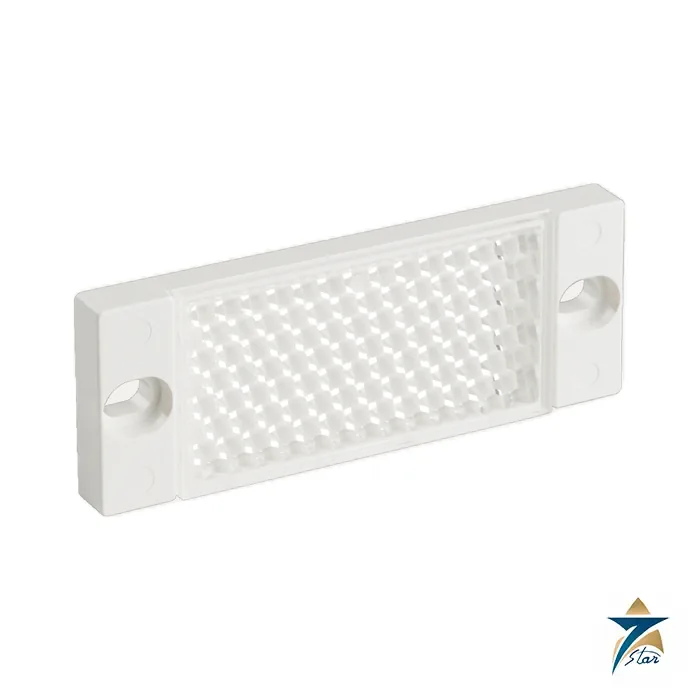
The SICK PL30A (part no. 1002314) is a slim rectangular reflector for retro-reflective photoelectric sensors. SICK lists it in the Reflectors and optics segment as a standard reflector with screw-on mounting, so it can be bolted straight onto a frame, guard or conveyor side rail opposite a sensor. The narrow 30 mm by 82.2 mm outline suits places where a square reflector would not fit, such as a profile channel or a slim machine frame.
A reflector carries no electronics and no output of its own. Its job is to return the sensor beam so that an interrupted beam signals an object. That makes it an inexpensive, low-maintenance part, but also one whose size and quality set the usable range of the sensor it works with.
Technical specifications
| Parameter |
Specification |
| Manufacturer |
SICK |
| Type |
PL30A |
| Part no. |
1002314 |
| Product segment |
Reflectors and optics |
| Product |
Reflectors |
| Product version |
Standard reflectors |
| Description |
Rectangular, screw connection |
| Mounting system type |
Screw-on |
| Material |
PMMA/ABS |
| Dimensions (W x H x L) |
30 mm x 7.6 mm x 82.2 mm |
| Ambient operating temperature |
-20 °C … +65 °C |
| Conformity document |
RoHS manufacturer declaration |
Choosing a reflector for the beam path
The reflector is only half of a retro-reflective pair, and the sensor data sheet states the sensing range for a named reference reflector. SICK sensor data sheets in this range frequently quote the larger PL80A as the reference. A smaller reflector such as the PL30A returns less light, so the practical range is shorter than the figure printed for the reference part. Where the beam must be long, pick the largest reflector the mounting space allows. Where the beam is short and the space is narrow, the PL30A is a sensible choice.
Mount the reflector on a rigid, vibration-free surface, perpendicular to the beam within a few degrees, and keep the surface clean. Dust, oil film or condensation on the prisms reduces the returned light just as dirt on the sensor lens does. The data sheet also advises mounting the reflector without heavy mechanical stress or tension on the plastic body, so do not overtighten the screws.
Typical places for a slim 82 mm reflector include conveyor guide rails, door frames and narrow aluminium profiles. Because its height above the mounting surface is only 7.6 mm, it also leaves room for guards and covers that sit close to the beam path.
Matching sensors and ordering details
The data sheet describes one orderable article: type PL30A, part no. 1002314, listed under www.sick.com/Reflectors with further versions on the same page. There is no variant coding to decode on a standard reflector, so the type code and part number are the complete order reference. When specifying a sensor and reflector together, quote both part numbers on the request and state the required distance and polarisation type of the sensor.
How a prismatic reflector works and why it matters
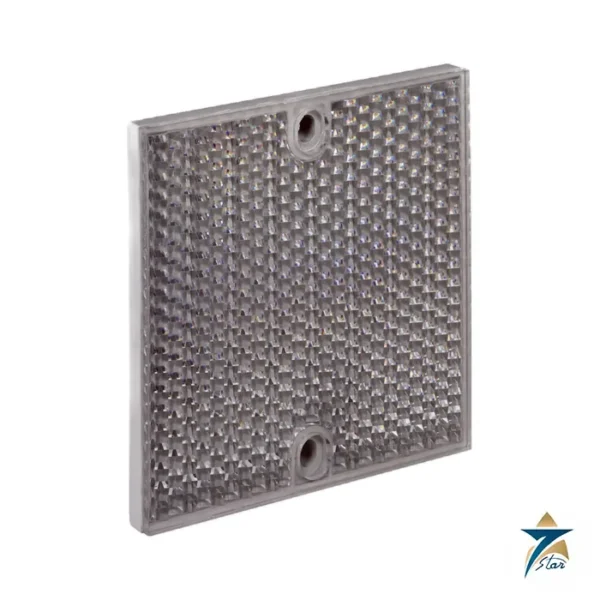
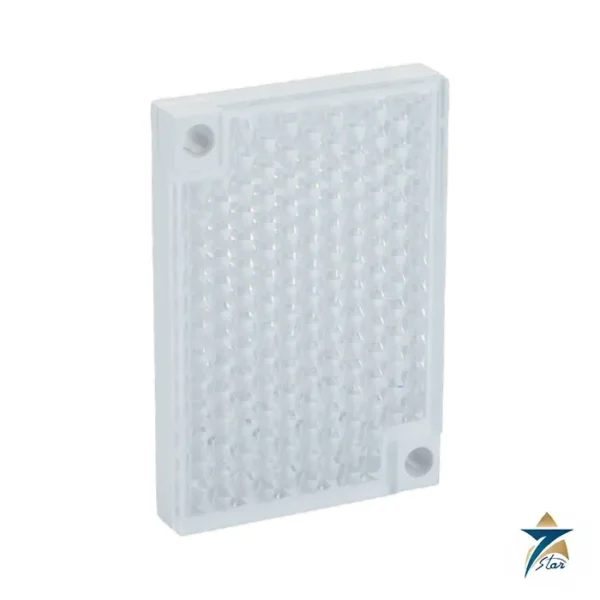
Standard reflectors such as the PL30A use a field of small corner-cube (triple) prisms moulded into the PMMA front. Each prism returns light back towards its source almost regardless of small tilt angles, which is what makes retro-reflective sensing forgiving to align. This geometry is also why polarised retro-reflective sensors work with prismatic reflectors: the prisms rotate the polarisation of the returned light, and the sensor can tell the reflector apart from a shiny object such as a metal can or a foil-wrapped pack. Ordinary mirrors, reflective tape of the wrong type or a polished surface do not produce the same effect, so replacing a damaged reflector with a random reflective sticker often leads to false signals.
Key characteristics of the PL30A
- Slim rectangular outline, 30 mm wide and 82.2 mm long, for narrow profiles and rails.
- Low build height of 7.6 mm above the mounting surface.
- Screw-on fixing for a secure, repeatable position that does not loosen like adhesive types can.
- PMMA prism surface with ABS body, rated for -20 to +65 °C ambient.
- No power supply, wiring or configuration needed.
Use in Omani and GCC conditions
In warehouses, bottling and packaging lines and logistics centres across Oman, the main enemy of a reflector is dust. Fine sand and process dust settle on the prism surface and reduce the returned signal, which first appears as intermittent switching and later as a permanent “object present” state. Include reflectors in the routine cleaning round and wipe them with a soft, damp cloth rather than solvents or abrasive pads that can scratch the PMMA. The upper limit of +65 °C covers most indoor installations, but reflectors fixed to metal structures in direct sun, such as outdoor gates or loading bay doors, can become hotter than the surrounding air; shade them or mount them where the surface temperature stays within the rating. In humid coastal sites, condensation on the prisms behaves like dirt, so avoid mounting points where cold air from cooling units blows directly on the reflector.
Alignment and installation steps
- Fix the sensor first and point it along the intended beam path.
- Mount the PL30A opposite the sensor on a rigid surface, roughly at right angles to the beam.
- Tighten the screws evenly and only enough to hold the reflector firmly.
- Use the sensor’s alignment or signal-strength indicator to centre the beam on the reflector.
- Test with the smallest and the most reflective objects that pass through the beam.
What to include in an RFQ
State type PL30A and part number 1002314, the quantity, and the sensor model it will work with. If the existing reflector is a different SICK type, give its part number too, so the replacement can be checked for size and sensing range.
Documents and quotation
The official SICK data sheet for PL30A (part no. 1002314) is attached to this page, and the figures in the table above are taken from it. Seven Star LLC is an independent supplier in Muscat and quotes SICK items against a written request. In your enquiry, give the exact type code, part number, quantity and delivery location, and say whether you need accessories such as a matching sensor or fixing screws. Data sheets carry a note that content is subject to change without notice, so confirm current details before ordering. More items are listed under automation accessories, and you may also look at the SICK WTB4-3 miniature photoelectric sensor.







Reviews
There are no reviews yet.