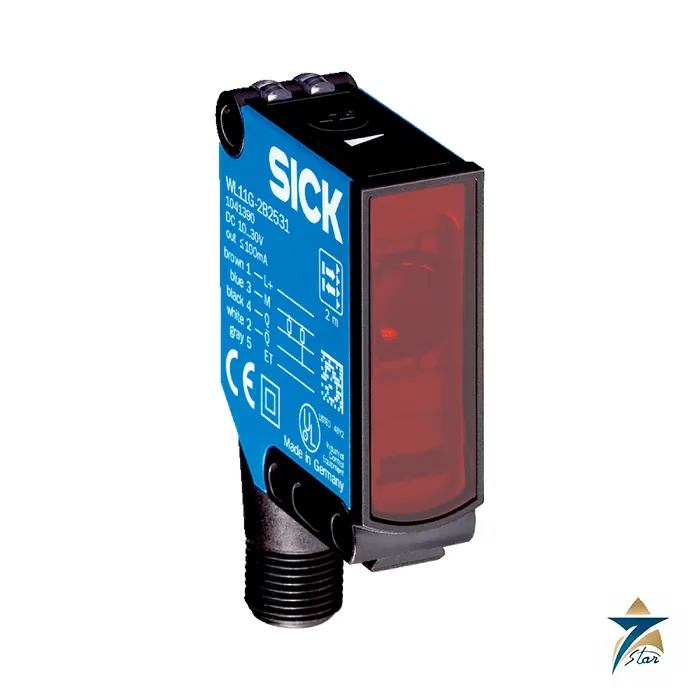
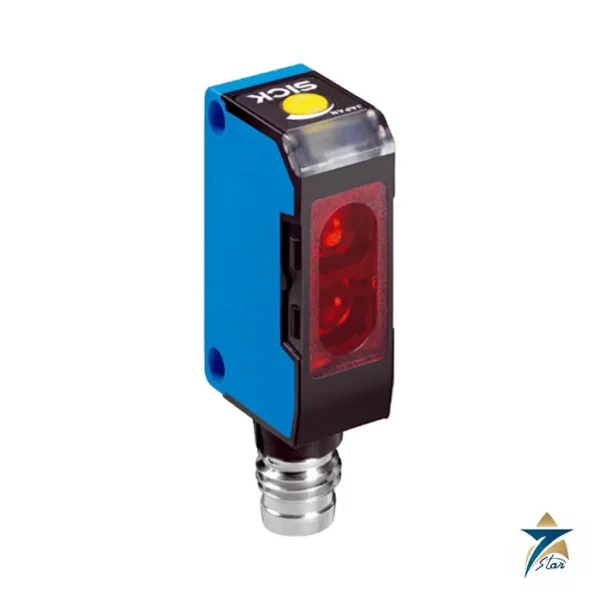
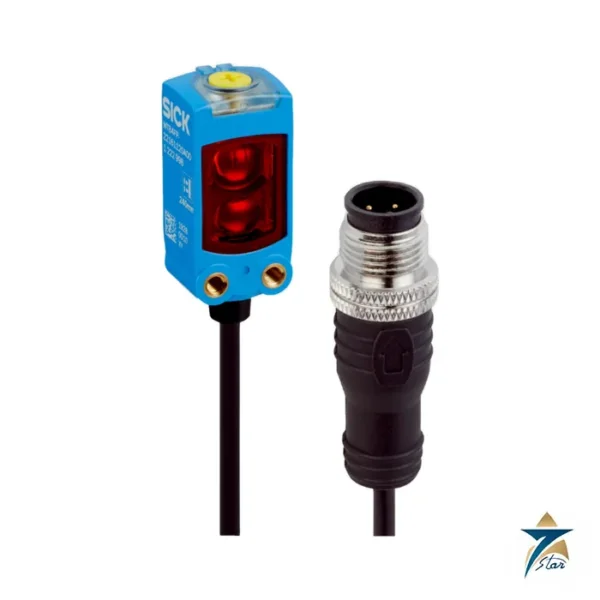
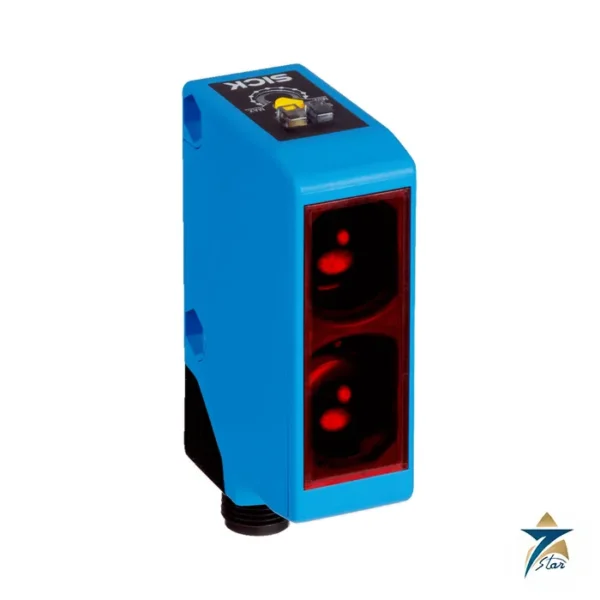
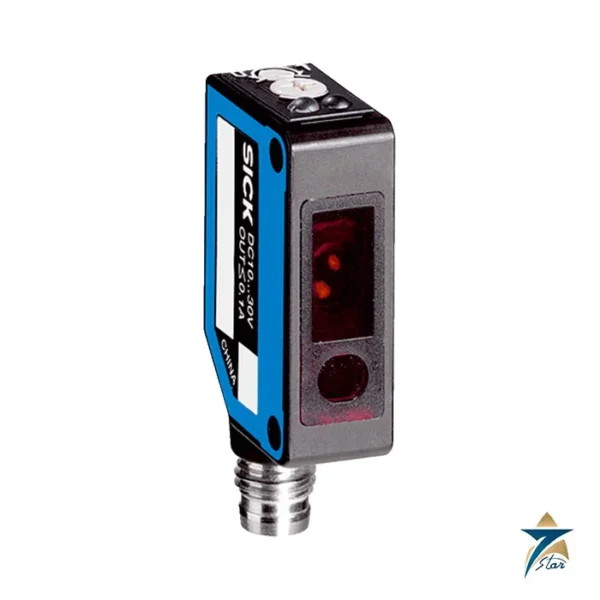
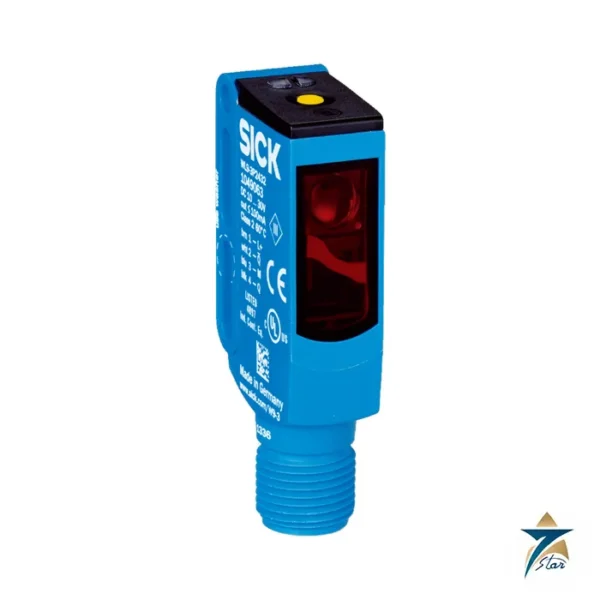
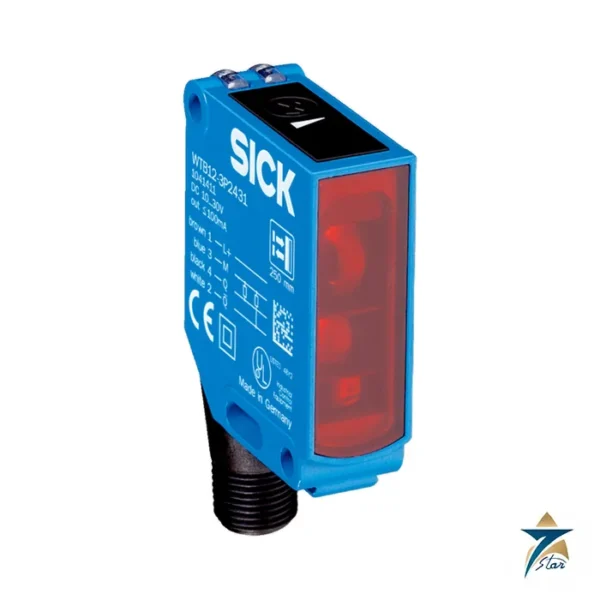
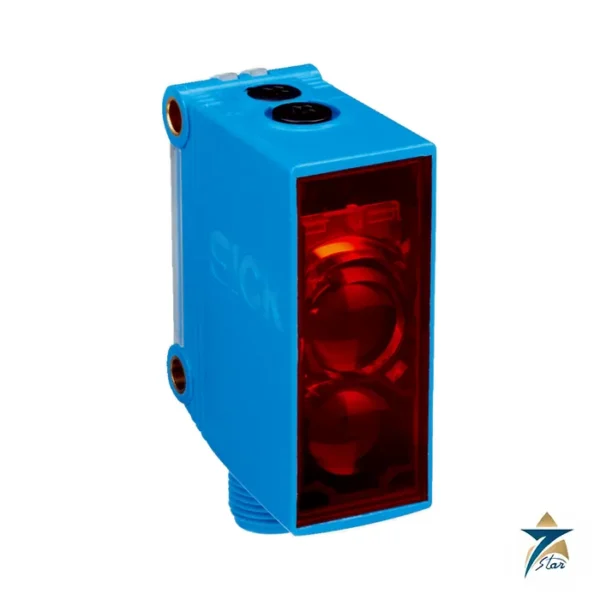
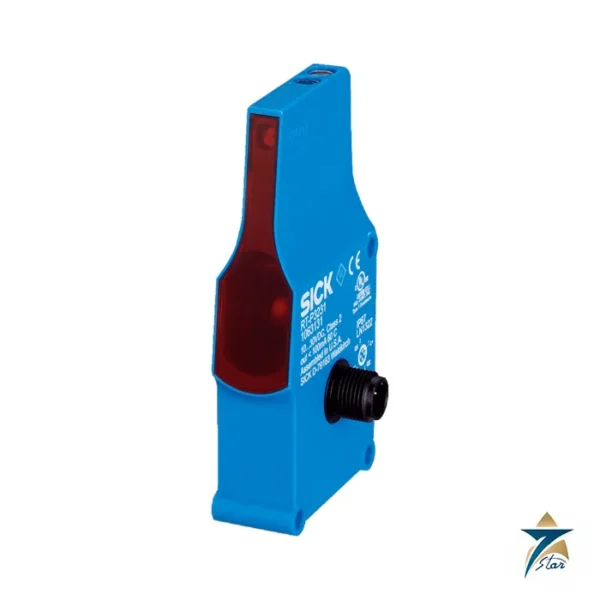
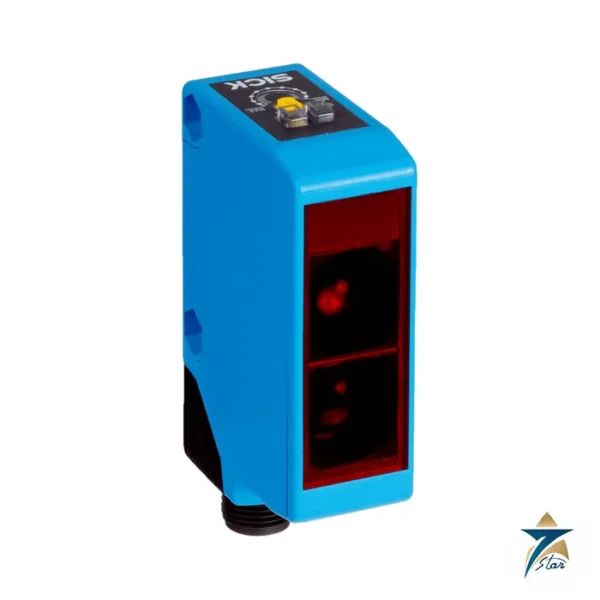
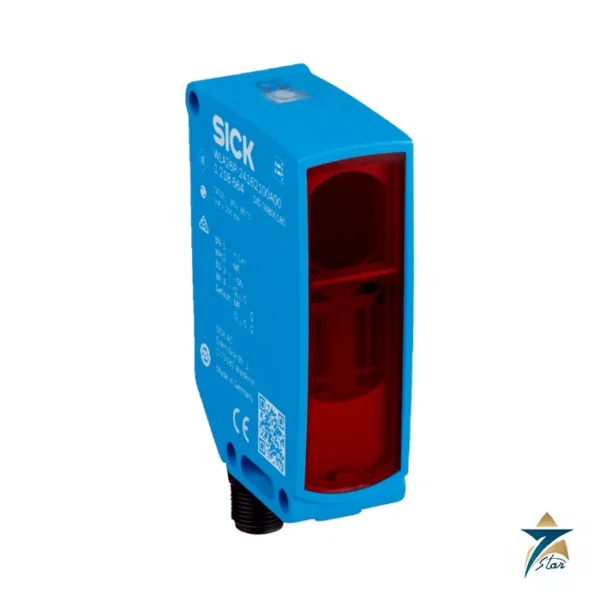
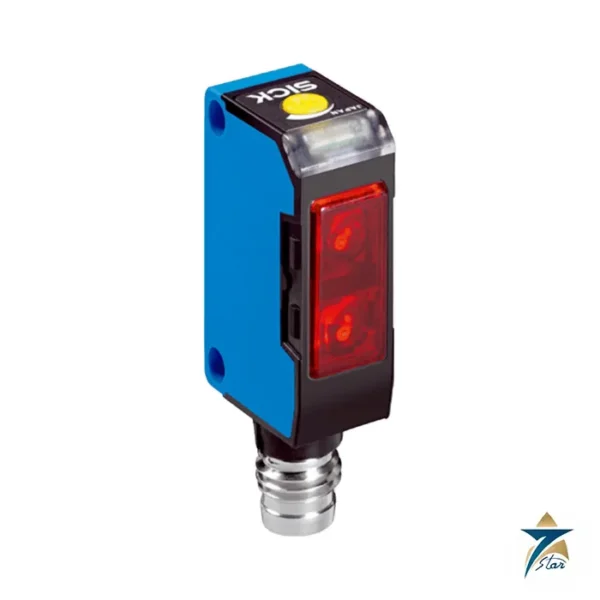
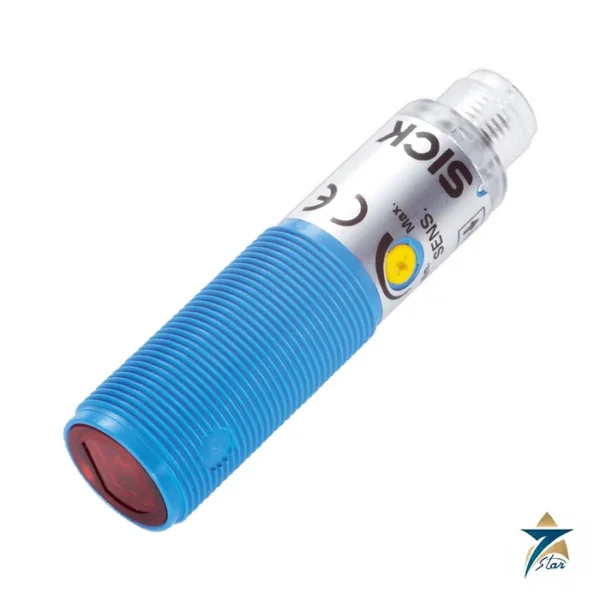
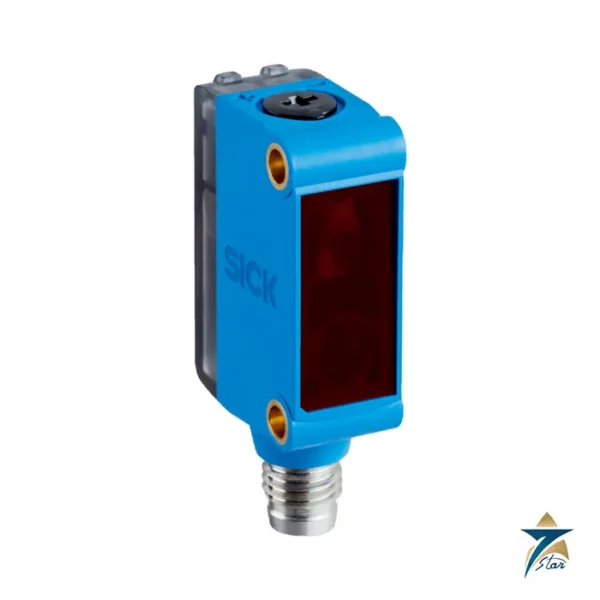
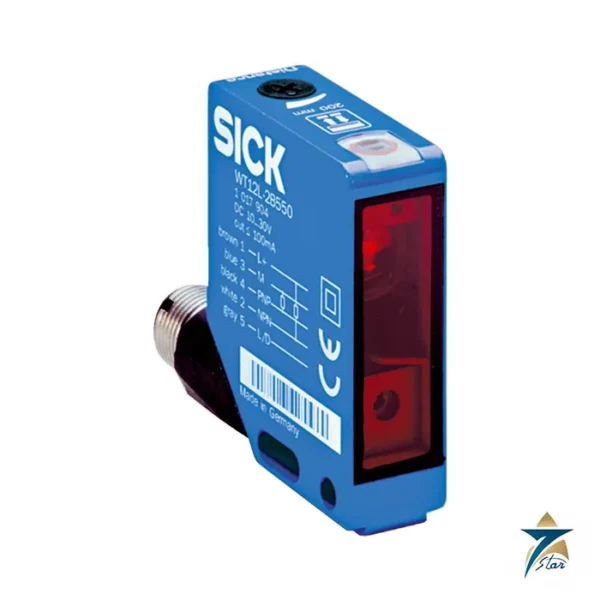
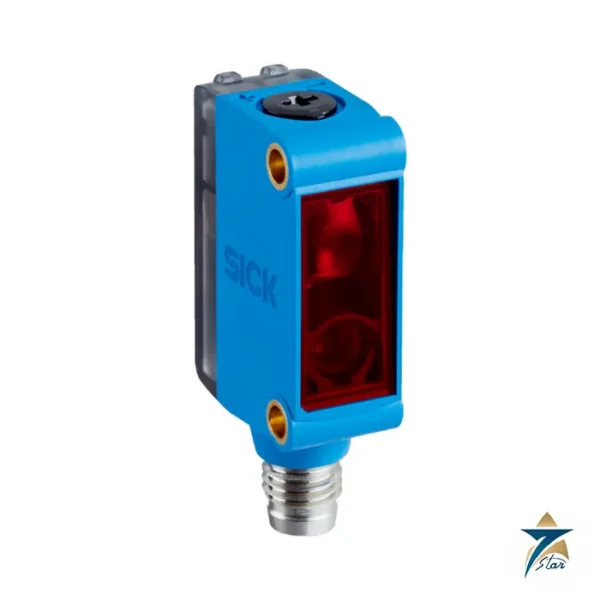
WL11G-2B2531 is a SICK W11 retro-reflective photoelectric sensor (part no. 1041390). Sender and receiver sit in one housing; the beam travels to a reflector and back, and the output changes when an object interrupts it. The sensing range maximum is 0 m … 4 m. Output: PNP ; NPN, light/dark switching; connection: Plug, M12, 5-pin.
What the WL11G-2B2531 does on a line: beam, reflector, interruption
The data sheet describes the optics as autocollimation (coaxial), without a reflector minimum distance. In practice that means the sensor can work close to the reflector, which helps in tight machine envelopes, and the receiver looks along the same axis as the sender. A polarisation filter is fitted: it passes only light that the reflector has rotated, so shiny objects are less likely to be mistaken for the reflector. A retro-reflective sensor sends its beam to a reflector and expects it back; an object in the path interrupts the beam and the output changes. Range figures are quoted against a reference reflector. A smaller or dirty reflector gives less operating reserve, so leave margin instead of using the full range.
Light source: LED, visible red light, light spot Ø 25 mm (1.5 m). Adjustment: potentiometer, 11 turns. The data sheet lists this special application: detecting transparent objects. Response time ≤ 330 µs, switching frequency 1,500 Hz.
Technical specifications
| Parameter |
Specification |
| Type code |
WL11G-2B2531 |
| Part number |
1041390 |
| EAN |
4047084171291 |
| Product family |
W11 |
| Functional principle |
Photoelectric retro-reflective sensor |
| Functional principle detail |
Without reflector minimum distance (autocollimation/coaxial optics) |
| Dimensions (W x H x D) |
15.6 mm x 48.5 mm x 42 mm |
| Housing design (light emission) |
Rectangular |
| Sensing range max. |
0 m … 4 m |
| Sensing range |
0 m … 4 m |
| Focus |
Approx. 1.5° |
| Type of light |
Visible red light |
| Light source |
LED |
| Light spot size (distance) |
Ø 25 mm (1.5 m) |
| Angle of dispersion |
Approx. 1.5° |
| Wave length |
640 nm |
| Adjustment |
Potentiometer, 11 turns |
| Special feature |
Detecting transparent objects |
| Special applications |
Detecting transparent objects |
| Supply voltage UB |
10 V DC … 30 V DC |
| Ripple |
< 5 Vpp |
| Current consumption |
30 mA |
| Switching output |
PNP ; NPN |
| Switching mode |
Light/dark switching |
| Switching mode selector |
Selectable via L/D control cable |
| Signal voltage PNP HIGH/LOW |
Uv – 3 V / approx. 0 V |
| Signal voltage NPN HIGH/LOW |
Approx. Uv / < 3 V |
| Output current Imax. |
≤ 100 mA |
| Response time |
≤ 330 µs |
| Switching frequency |
1,500 Hz |
| Attenuation along light beam |
> 8 % |
| Connection type |
Plug, M12, 5-pin |
| Circuit protection |
A ; C ; D |
| Protection class |
III |
| Weight |
120 g |
| Polarizing filter |
Yes |
| Housing material |
Plastic, ABS |
| Optics material |
Plastic, PMMA |
| Enclosure rating |
IP66; IP67; IP69K |
| Special feature (2) |
Detecting transparent objects |
| Ambient operating temperature |
–30 °C … +60 °C |
| Ambient temperature, storage |
–40 °C … +75 °C |
| MTTFD |
823 years |
| DCavg |
0 % |
| Declarations and certificates in the data sheet |
EU declaration of conformity; UK declaration of conformity; ACMA declaration of conformity; Moroccan declaration of conformity; China RoHS; ECOLAB certificate; cULus certificate; Photobiological safety (DIN EN 62471) certificate |
Type code WL11G-2B2531 and part number 1041390
The type code starts with the family (WL11G) and carries housing and option digits; it does not replace the part number. Use 1041390 to identify exactly this version, because sibling versions with another connection, output or range have different numbers. Remember the reflector is a separate item unless the specification table lists one as supplied.
Other active types in the same SICK family, each with its own part number:
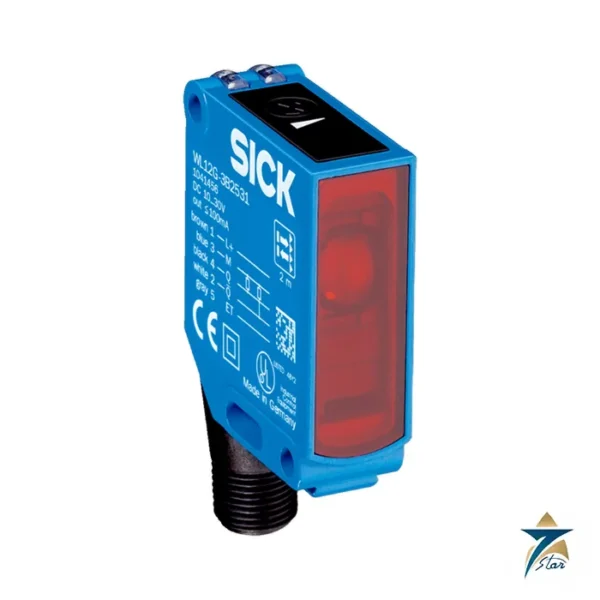
- WL11G-2B2531P04 (part no. 1047437)
Mounting, wiring and alignment notes
Wire it to a supply of 10 V DC … 30 V DC. Protection is IP66; IP67; IP69K, and the permitted ambient range in operation is –30 °C … +60 °C. The body measures 15.6 mm x 48.5 mm x 42 mm and weighs 120 g. No reflector is listed as supplied, so add a suitable reflector to the order and check the operating reserve against the distance you need. Check PNP/NPN and light/dark switching against the controller input before you mount the sensor.
Commissioning the beam on a transparent-object line
Align the sensor and reflector with the line stopped and nothing in the beam path. Use the visible red light spot to centre the beam on the reflector, then fix the bracket so that vibration cannot move it. Because this type is listed for detecting transparent objects, the sensitivity setting matters more than with opaque products: pass a sample bottle, film or tray through the beam and adjust the potentiometer until the output switches reliably for the clear item but does not respond to small changes such as a slightly dusty reflector.
Test with the real production speed and the thinnest, clearest product the line will carry. Record the final potentiometer position and the chosen light or dark switching setting on the machine documentation, so the same result can be reproduced after a replacement.
Operating the WL11G in Omani heat, dust and humidity
The operating range ends at +60 °C, so avoid mounting positions directly above ovens, shrink tunnels or hot sealing stations, and keep the sensor out of direct afternoon sun on outdoor conveyors. Heat from the sun on a dark machine frame can raise the local temperature well above the shaded air reading common in Oman and the wider GCC.
Dust on the front optics or the reflector reduces the returned light, and with transparent objects the margin between a clear item and a clean beam is already small. In sandy environments or near cardboard handling, place the sensor and reflector where falling dust cannot settle, angle them slightly downward where the layout allows, and plan regular wiping. The IP66, IP67 and IP69K ratings support washdown, but in humid coastal plants condensation on cold optics after a cleaning cycle can cause short false signals until the surface clears.
Routine maintenance and fault finding
Clean the optics and the reflector with a soft cloth and a mild cleaner suitable for plastic; abrasive pads or solvents can scratch the PMMA optics. Check that the M12 connector is fully tightened and that the cable is supported so it does not pull on the connection. If detection becomes unreliable, first confirm alignment and cleanliness, then re-check the sensitivity with a known sample before assuming the sensor is faulty.
Documents and quotation
The SICK data sheet for WL11G-2B2531 (part no. 1041390) is attached to this page as a PDF, exactly as SICK publishes it, so you can check it against your wiring and mounting drawings. To request a price, give us the part number, the quantity and where the goods should go, using the RFQ form. Related items are listed under Sensors & Transmitters. Confirm before ordering that the version matches your installation: connection, output type and ratings. The data sheet prevails over this summary.


Reviews
There are no reviews yet.