Barium-sulfate PTFE sheet for strongly alkaline media
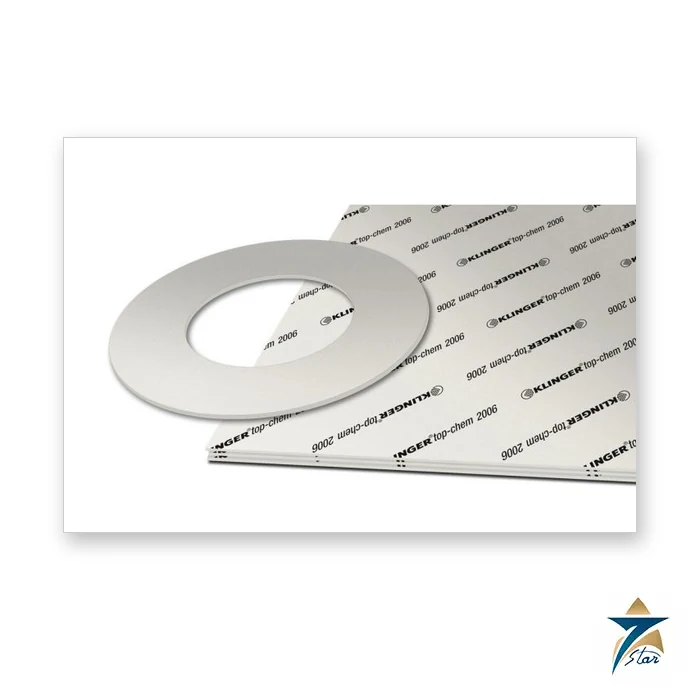
KLINGER top-chem 2006 is made from PTFE filled with barium sulfate and, according to Klinger, is free from pigments. It offers excellent resistance in strongly alkaline applications and good mechanical properties at medium and low temperatures and loads, and is used mainly in the chemical industry.
Features named on the product page are use mainly in alkaline media, consistent material composition and resistance to cold flow; the benefits are excellent chemical resistance, very good mechanical properties at medium temperatures and no ageing. Sheets are 1500 x 1500 mm and 1.0 to 3.0 mm thick.
Technical specifications
| Parameter |
Specification |
| Manufacturer / model |
Klinger (Rich. Klinger Dichtungstechnik), KLINGER top-chem 2006 |
| Basis composition |
PTFE filled with barium sulfate (pigment-free) |
| Colour |
White |
| Sheet size |
1500 x 1500 mm |
| Thickness |
1.0, 1.5, 2.0, 3.0 mm |
| Tolerances |
Thickness per DIN 28091-1; length and width plus or minus 50 mm |
| Certificates and approvals as printed |
Oxygen-tested, DIN-DVGW, DNV approval, TA-Luft (Clean air), FDA conformity (components comply with FDA requirements), VDI 2200 blowout |
| Industries listed |
General industry, chemical, oil and gas, energy, infrastructure, pulp and paper, marine, automotive, food and beverage, pharma |
| Compressibility, ASTM F 36 M (2.0 mm) |
4 % |
| Recovery, ASTM F 36 M |
40 % |
| Stress relaxation, DIN 52913, 30 MPa, 16 h |
18 MPa at 150 °C (30 MPa) |
| Klinger cold/hot compression, 50 MPa, thickness decrease |
12 % at 23 °C; 41 % at 260 °C |
| Tightness, DIN 28090-2 |
0.01 mg/(s x m) |
| Specific leak rate, VDI 2440 |
3.60E-06 mbar x l/(s x m) |
| Thickness / weight increase after immersion (percent): 100 % H2SO4 18 h at 23 °C; 100 % HNO3 18 h at 23 °C; 33 % NaOH 72 h at 110 °C |
no value printed (H2SO4); 1 / 2 (HNO3); 1 / 1 (NaOH) |
| Density |
3.0 g/cm3 |
| Thermal conductivity |
0.40 W/mK |
| ASME code sealing factors, 2.0 mm, tightness class 0.1 mg/(s x m) |
y 12 MPa, m 3.1 |
| Chemical resistance chart in datasheet |
A (small or no attack) in all twelve media groups printed on the chart |
All values are typical values for a 2.0 mm sheet as printed in the Klinger datasheet; other thicknesses can differ.
Alkali service and the limits of top-chem 2006
The immersion test is the relevant evidence: 33 % sodium hydroxide for 72 hours at 110 °C produced 1 % thickness and 1 % weight increase. Nitric acid at 100 % gave 1 and 2 %, and no value is printed for sulfuric acid, so use top-chem 2005 or 2000 for acid duty. White, pigment-free material is also useful where colour contamination of the product is a concern.
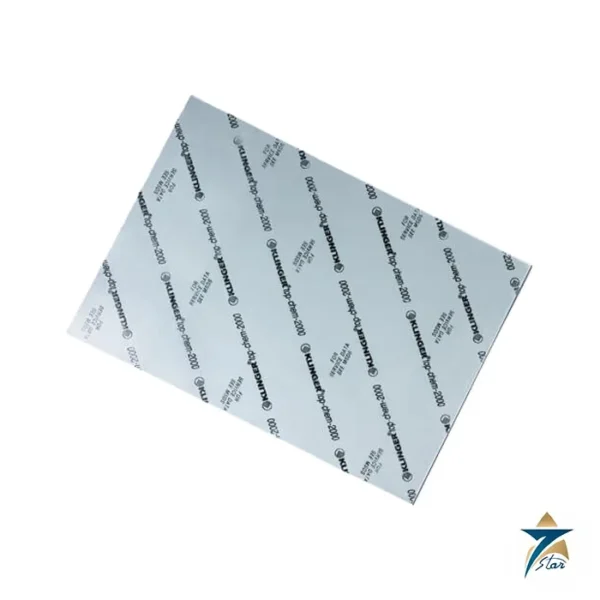
The density of 3.0 g/cm3 is the highest of the PTFE grades. Hot compression at 260 °C is 41 %, stress relaxation at 150 °C is 18 MPa and the y and m factors are 12 MPa and 3.1, so keep temperature and bolt load in the medium range. The certificate list is shorter than for top-chem 2000: oxygen-tested, DIN-DVGW, DNV, TA-Luft, FDA conformity of components and VDI 2200 blowout.
Related KLINGER gasket sheets
Sheets that cover the same chemical-industry ground as top-chem 2006 are summarised below.
| Model |
Basis |
Colour |
Positioning printed by Klinger |
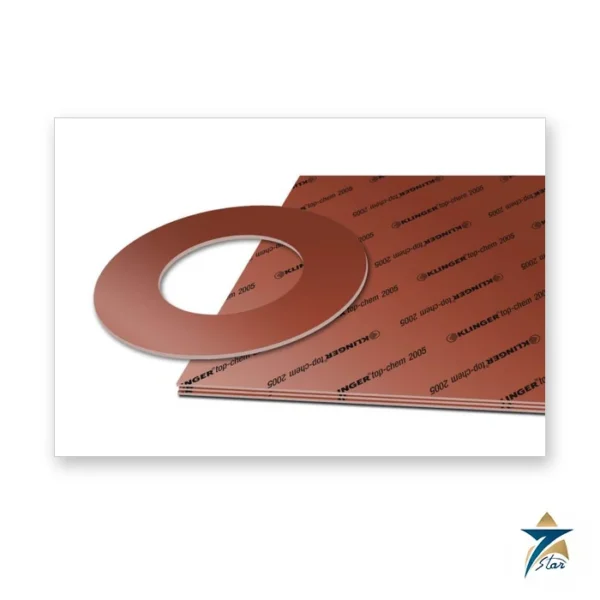
| KLINGER top-chem 2005 |
PTFE filled with inorganic fillers |
Red |
Strongly acidic media |
| KLINGER top-chem 2000 |
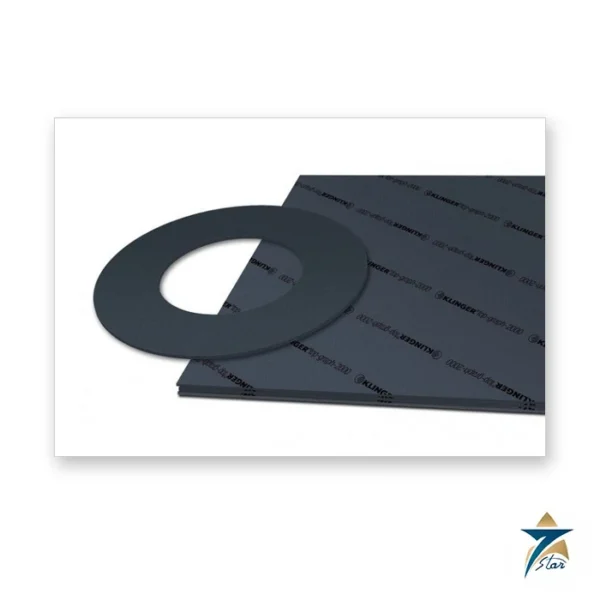
PTFE filled with silicon carbide |
Grey |
Heavy-duty, high mechanical load at high temperature |
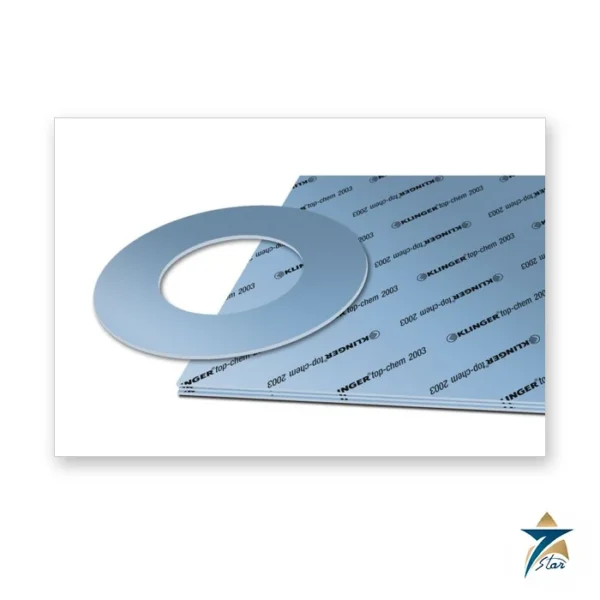
| KLINGER top-chem 2003 |
PTFE filled with hollow glass microspheres |
Blue |
Sealing at low surface load; acids and alkalis |
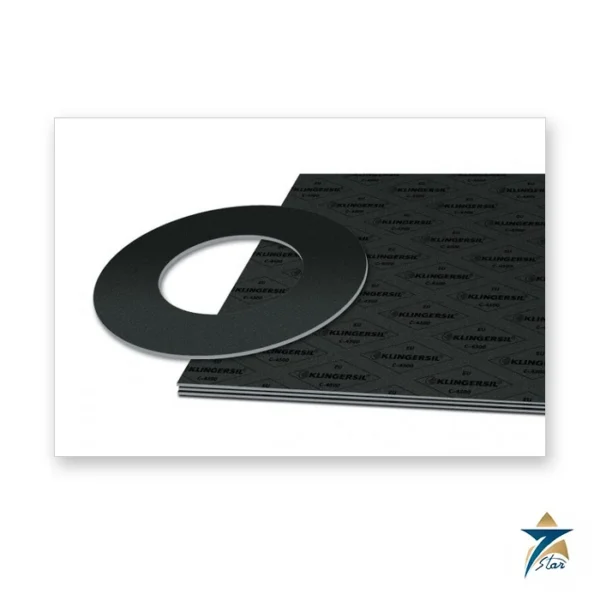
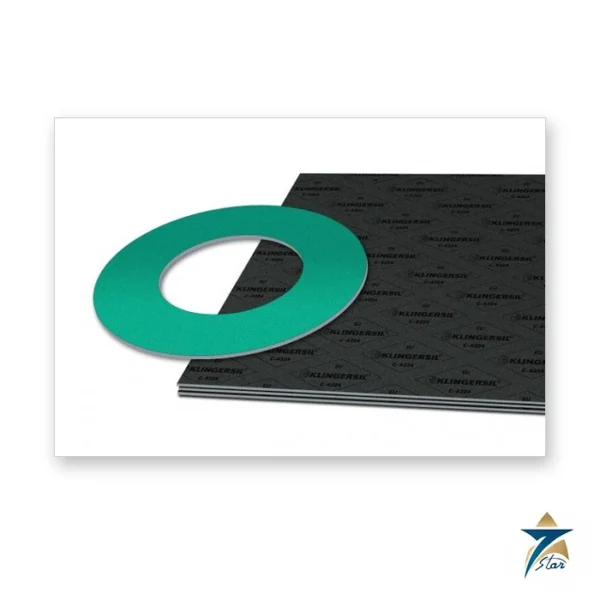
| KLINGERSIL C-4500 |
Carbon fibres, heat-resistant additives, NBR |
Black |
Alkaline media and superheated steam; chemical industry |
Documents, ordering details and quotation
Specify the alkali concentration and temperature, and whether a pigment-free sheet is required. To quote correctly we need the medium and concentration, working and test pressure, temperature, flange standard and facing, bolting, thickness and whether you want a whole sheet or gaskets cut to size. Klinger states that its values are typical and that site conditions vary, so confirm the grade with your own engineering or with Klinger before ordering for a critical duty. See also our wider range of gaskets, seals and pipe fittings.
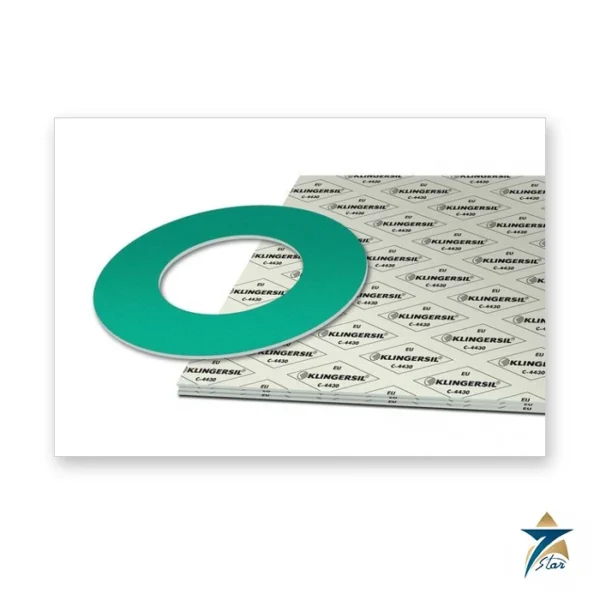
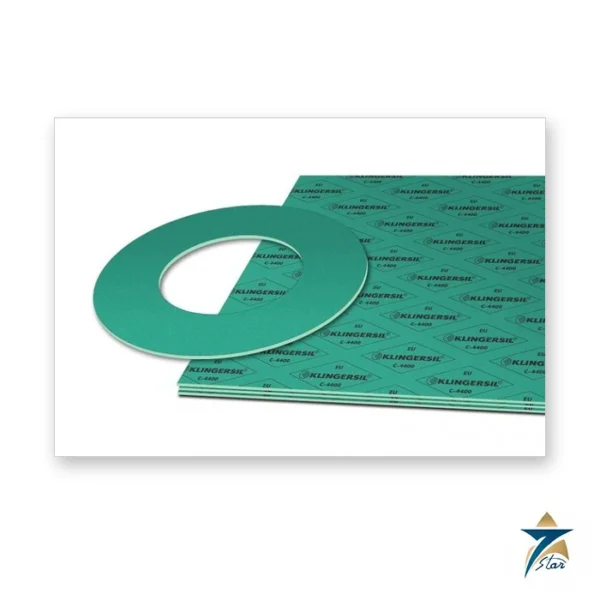
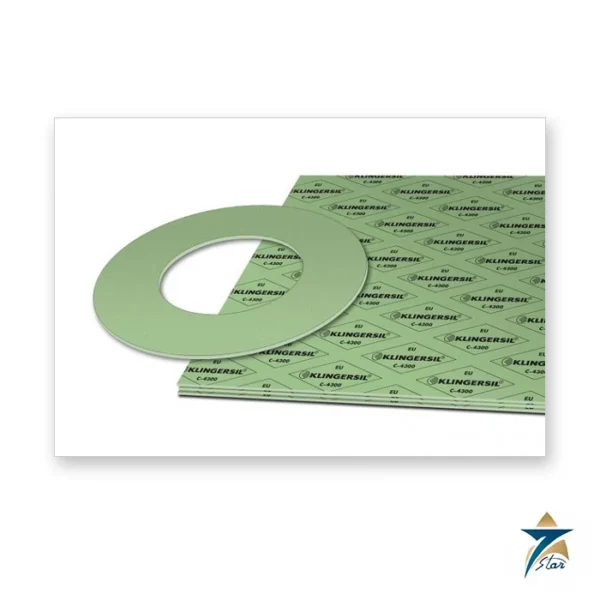
Related Klinger products: Klinger top-chem 2005 Acid-Resistant PTFE Gasket Sheet, Klinger top-chem 2000 SiC-Filled PTFE Gasket Sheet, Klinger top-chem 2003 Glass-Microsphere PTFE Gasket Sheet, Klinger top-graph 2000 Graphite Fibre NBR Gasket Sheet, Klinger KLINGERSIL C-4400 Aramid Fibre NBR Gasket Sheet and Klinger KLINGERSIL C-4300 Aramid Fibre NBR Gasket Sheet.























Reviews
There are no reviews yet.