Overview
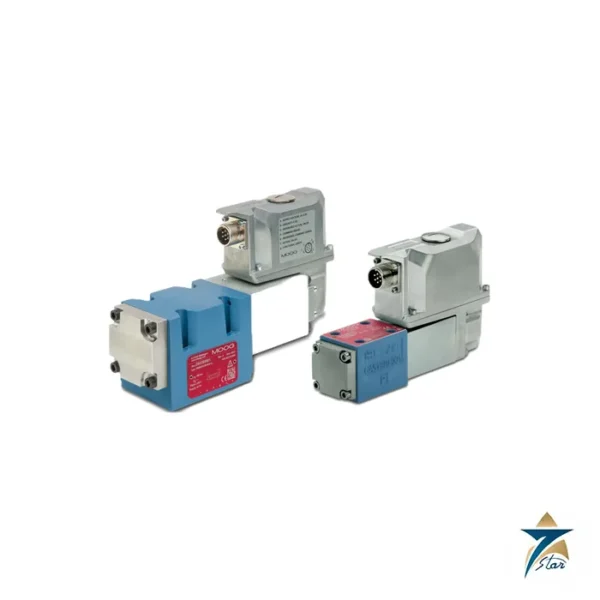
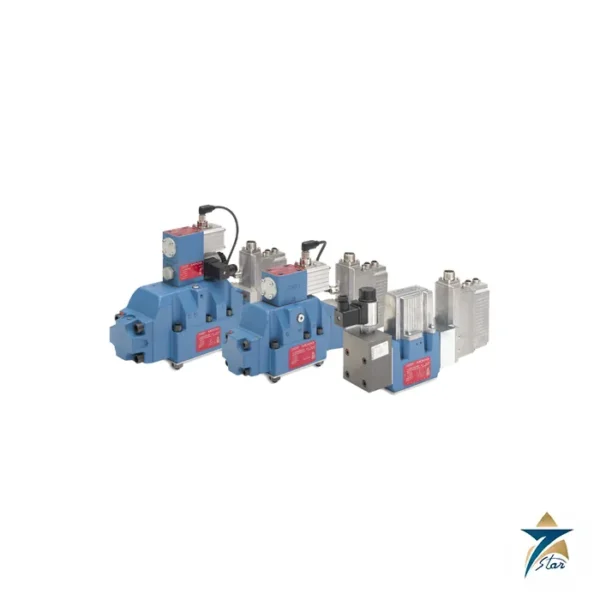
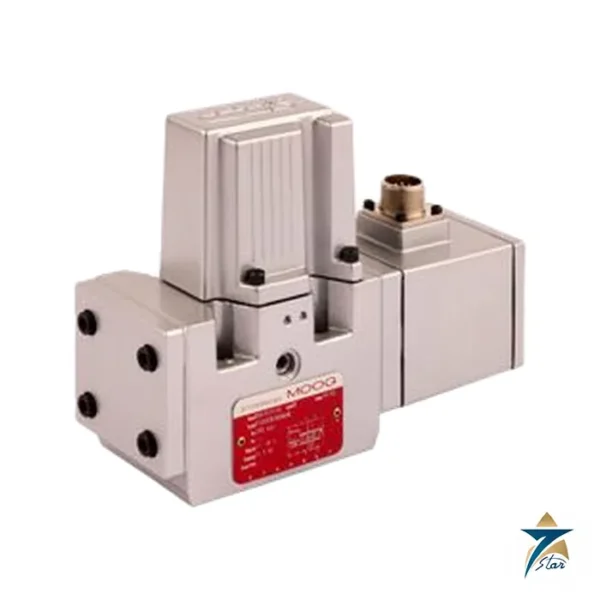
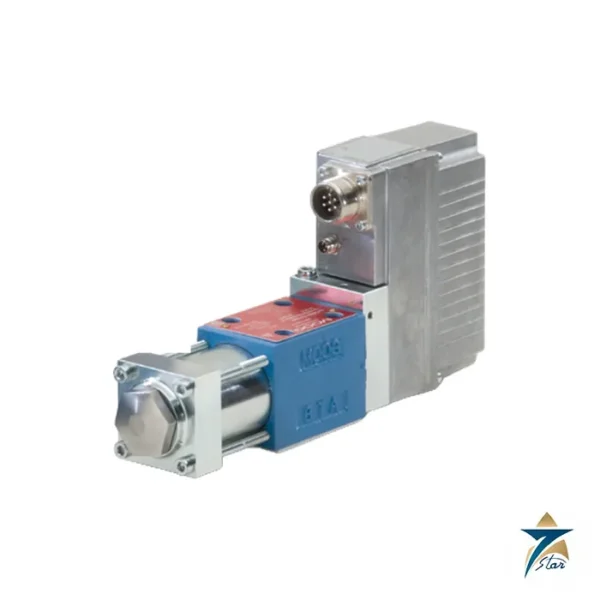
Moog is a leader in the development and manufacture of high-performance hydraulic valves. The Moog servo valves and proportional valves are continuous valves, characterized by output variables such as spool position, pressure and volume flow that remain proportional to the input signal. This is achieved by feedback of the spool position into a mechanical or electrical control loop, giving precise, repeatable control of hydraulic systems in demanding applications.
Moog valves are supplied in standard and custom sizes for industrial, aerospace and defense applications, with the servo valve range complemented by proportional valves for higher nominal volume flows. The valve portfolio is completed with specifications for supply pressure, flow ranges and mounting interfaces that meet the needs of hydraulic power units
Engineering and Design
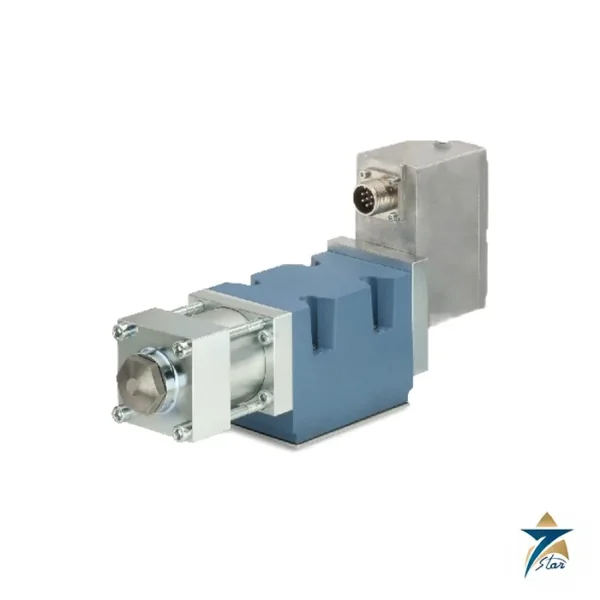
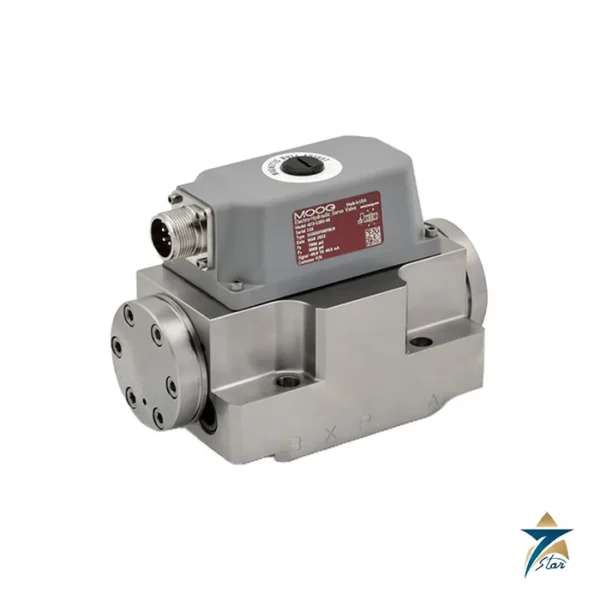
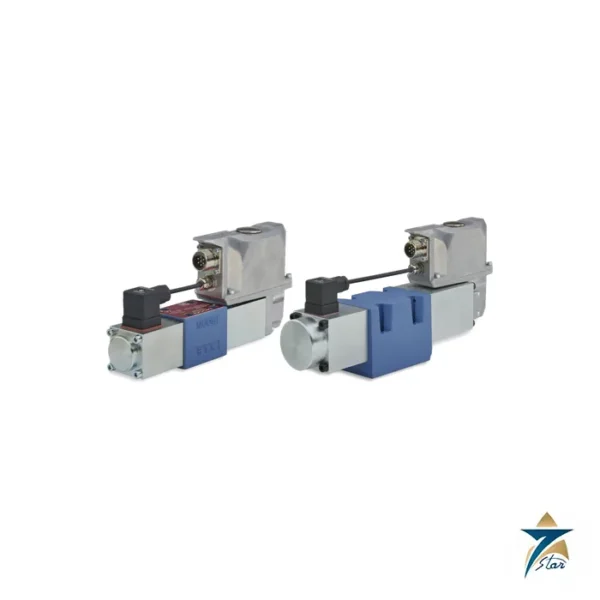
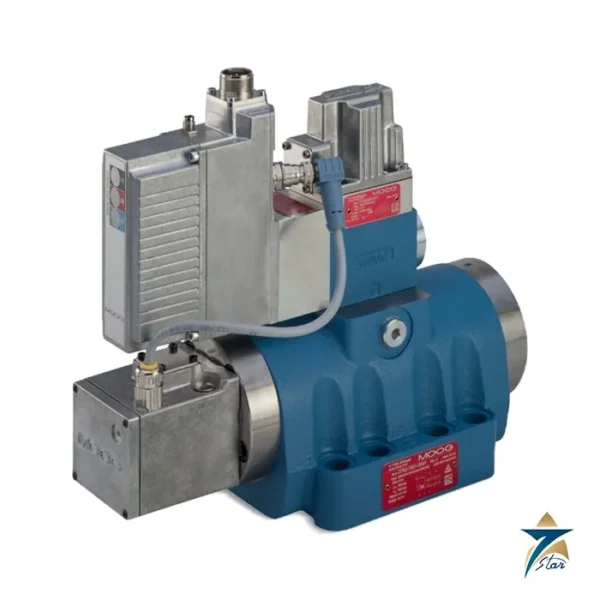
Moog servo valves feature a valve spool inserted into a bushing, the spool-in-bushing design, which allows outstanding dynamics and excellent accuracy. Moog proportional valves use a valve spool fitted directly in the valve housing, the spool-in-body design, which makes them particularly suitable for higher nominal volume flows. Both designs are available in a variety of standard and custom sizes, as direct operated and pilot operated versions, and with different performance characteristics.
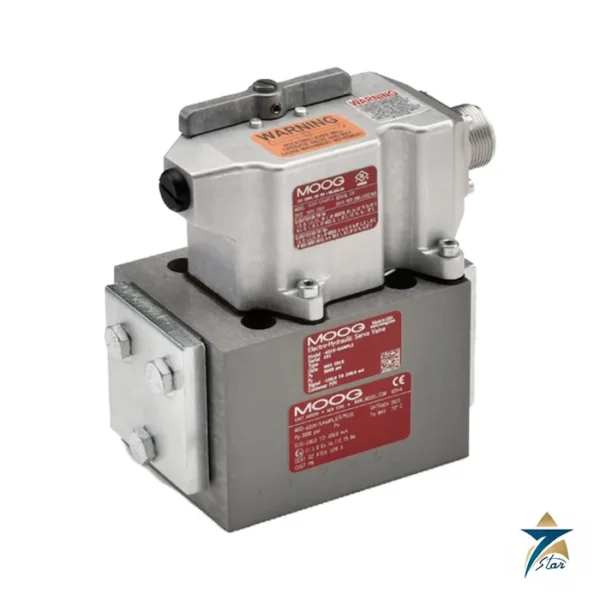
In a servo valve, a small electrical input signal controls the position of the spool through a torque motor and hydraulic amplifier, and the spool position is fed back into the control loop to maintain accurate flow output. In proportional valves the same principle is applied with a simpler construction better matched to larger flow capacities. Moog valves enable high-precision control of position, velocity, pressure and force in a wide range of applications across aerospace, defense and industrial markets including metal forming, plastics machinery and steel production.
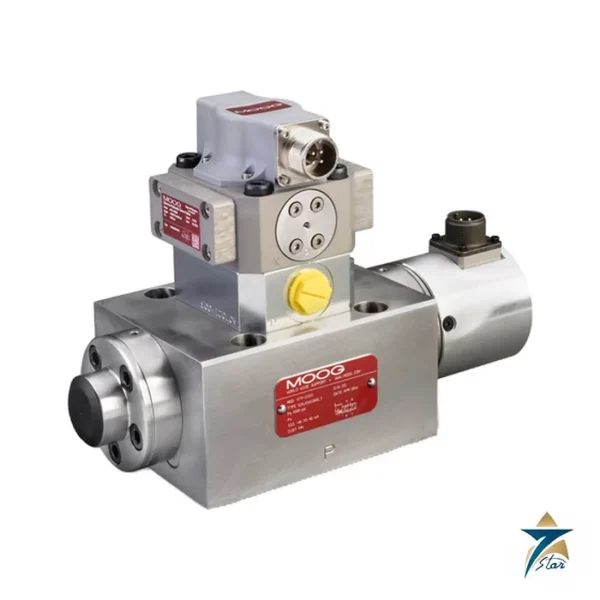
Moog valves are supplied in standard and custom sizes for industrial, aerospace and defense applications, with the servo valve range complemented by proportional valves for higher nominal volume flows. The direct operated versions suit lower flow duties with fast response, while pilot operated versions drive larger spools using a smaller pilot stage. All configurations are available with the electrical interface and feedback options required by the machine control system. For large process forces Moog direct drive and pilot operated valve designs cover the range from small torque motor driven stages to large spool flow stages, and all valve versions are documented with the step response, flow and leakage data needed for hydraulic system design. Moog servo valves are engineered for the most demanding closed-loop hydraulic applications. The torque motor and flapper-nozzle or jet-pipe pilot stage provide the fast response and high resolution needed for precise position, velocity and force control, while the main spool performance is verified by dynamic testing at production. For plant engineers, the documented frequency response and flow characteristics simplify selection and spare part management for existing hydraulic systems.
Key Features
- Continuous valves with output proportional to input signal
- Spool-in-bushing design for outstanding dynamics
- Spool-in-body design for higher nominal flow
- Direct operated and pilot operated configurations
- Mechanical or electrical spool position feedback
- High-precision control of position, velocity, pressure and force
Applications
Moog servo valves and proportional valves are used in aerospace flight control and actuation systems, defense platforms, industrial automation, energy equipment, marine systems, metal forming and presses, plastics machinery, and steel production. They control position, velocity, pressure and force in hydraulic circuits where precision and dynamic response are critical.
Specifications
| Type |
continuous servo valves and proportional valves |
| Output variables |
spool position, pressure, volume flow |
| Servo valve design |
spool-in-bushing |
| Proportional valve design |
spool-in-body |
| Feedback |
mechanical or electrical spool position feedback |
| Configurations |
direct operated and pilot operated |
| Sizes |
standard and custom |
| Markets |
aerospace, defense, industrial automation, energy, marine |
| 761 Series valve design |
2-stage, mechanical feedback, spool and bushing, dry torque motor, nozzle-flapper pilot |
| 761 Series mounting pattern |
ISO 10372-04-04-0-92 |
| 761 Series rated flow at 35 bar per spool land |
0.5 to 75 l/min (0.125 to 19.5 gpm) |
| 761 Series rated flow basis |
Quoted at 35 bar per spool land (70 bar total drop) |
| 761 Series max operating pressure, ports P, A, B, X |
315 bar aluminium body; 350 bar steel body |
| 761 Series minimum operating pressure |
See Moog 761 manual |
| 761 Series frequency response (-3 dB) |
45 Hz up to 450 Hz, by version |
| 761 Series step response |
Under 16 ms down to under 4 ms, by version |
| 761 Series weight |
1.0 kg aluminium body; 1.7 kg steel body |
| 761 Series fluid and ambient temperature |
-29 to +135 °C |
| 761 Series fluid cleanliness (ISO 4406) |
17/14/11 functional, 15/13/10 for long life |
Moog 761 Series Servo Valve: Flow, Pressure and Dynamic Performance Data
Among the Moog mechanical-feedback servo valves, the 761 Series (model numbers such as G761-3003B) is the ISO 10372 size 04 valve and the successor of the 760 series. It is a two-stage valve with a dry torque motor, a symmetrical nozzle-flapper pilot and a four-land spool running in a hardened bushing. A carbide-tipped feedback wire returns spool position to the torque motor. Moog rates it for 3-way and, preferably, 4-way throttling in position, speed, pressure and force control loops.
Rated flow spans 0.5 to 75 l/min, always quoted at 35 bar pressure drop per spool land. Ports P, A, B and X accept 315 bar with the aluminium body and 350 bar with the steel body, and a minimum operating pressure applies (see the Moog 761 manual). Standard flow tolerance is plus or minus 10 percent. Typical threshold is 0.5 percent or better and hysteresis 3 percent or better.
Dynamics depend on the response class. Standard-response versions reach -3 dB between 45 and 80 Hz with step responses of 6 to 16 ms. High-response versions, which Moog recommends for most position, pressure and force loops, reach 90 to 140 Hz with 3 to 7 ms steps. Very-high-response versions with a smaller spool and high-flow pilot reach 350 to 450 Hz and settle in under 4 ms. All curves are measured at 210 bar with 40 percent signal amplitude.
Moog 761 Series Installation, Fluid Cleanliness and Electrical Connection
The valve mounts in any position on an ISO 10372-04-04-0-92 pattern and weighs 1.0 kg in aluminium or 1.7 kg in steel. The mounting surface must be flat within 0.025 mm over 100 mm, and fixing uses M8 × 45 socket head screws of grade 10.9 or 5/16 inch equivalents. A fifth port (X) can be configured in the field for separate pilot supply by moving a set screw. Fluid and ambient temperature limits are -29 to +135 °C, with FKM or EPR seals.
Moog specifies mineral oil to DIN 51524 parts 1 to 3 or ISO 11158, cleanliness of ISO 4406 17/14/11 for functional safety and 15/13/10 for long service life, protected by a 10 micron absolute non-bypass pressure filter ahead of the valve. The torque motor has two coils brought out on a four-pin connector that mates with MS3106F14S-2S, allowing single, series or parallel wiring; standard coils range from 8 mA at 1000 Ω to 200 mA at 22 Ω. Intrinsically safe 761K versions exist.
Why Seven Star LLC
Seven Star LLC supplies Moog servo valves and proportional valves for industrial hydraulic systems in Oman and the GCC, including replacement units for presses, plastics machinery and power generation equipment.
Moog Servo and Proportional Valves – Frequently Asked Questions
What is the difference between a Moog servo valve and a proportional valve?
Servo valves use a spool-in-bushing design for outstanding dynamics and accuracy. Proportional valves use a spool-in-body design, which suits higher nominal volume flows.
What can Moog valves control?
Position, velocity, pressure and force in closed-loop hydraulic systems.
Are direct and pilot operated versions available?
Yes. Direct operated versions suit lower flow duties with fast response, while pilot operated versions drive larger spools using a smaller pilot stage.
Which industries use them?
Industrial, aerospace and defense applications, including metal forming, plastics machinery and steel production.
Where can I buy Moog servo valves in Oman?
Seven Star LLC supplies Moog servo and proportional valves in Oman and the GCC. Request a quote below for price and lead time.
Request a Quote for Moog Servo Valves and Proportional Valves – Hydraulic Control
Contact Seven Star LLC for Moog servo valves and proportional valves for your hydraulic system | Inquiry Form
Related Products







Reviews
There are no reviews yet.