Silica-filled fawn PTFE sheet for strong acid service
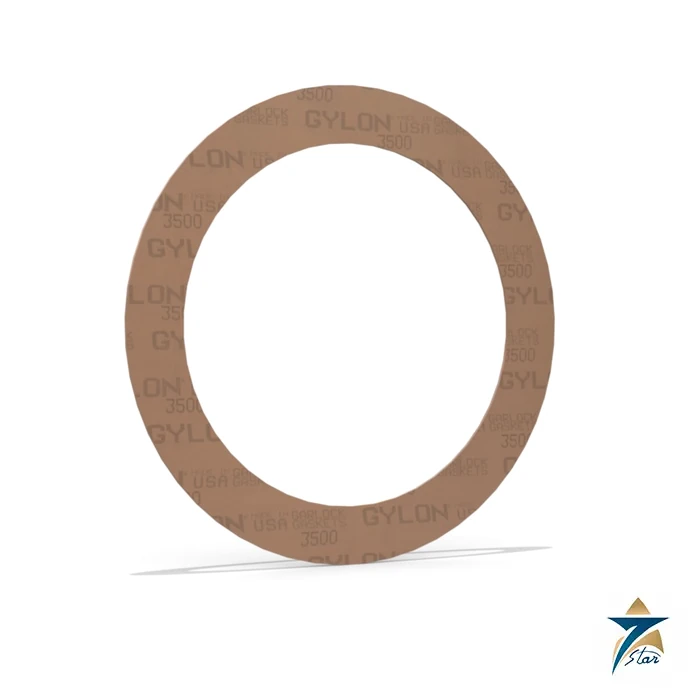
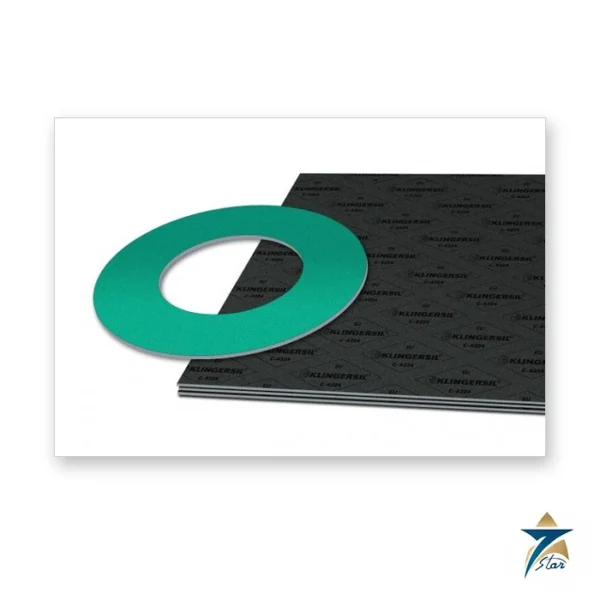
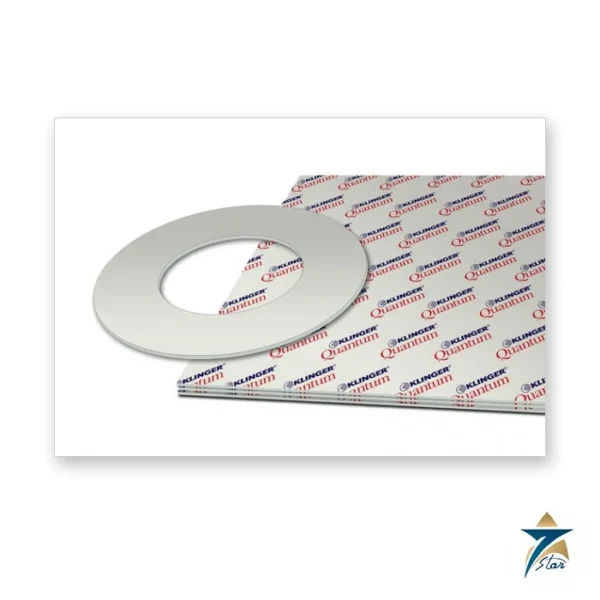
GYLON Style 3500 is the fawn PTFE sheet filled with silica. It is the GYLON style Garlock lists for strong acids, except hydrofluoric acid, along with solvents, hydrocarbons, water, steam, chlorine and cryogenics.
Garlock’s feature list includes a tight seal, improved performance over conventional PTFE, reduced creep relaxation, excellent bolt-torque retention, a manufacturing process that limits cold flow, and branding and colour coding that reduce misapplication. The material will not support flame or bacterial growth, and the spec sheet cites ABS, FDA and USDA.
Technical specifications
| Parameter |
Specification |
| Manufacturer / style |
Garlock, GYLON Style 3500 |
| Composition |
PTFE with silica |
| Colour |
Fawn |
| Fluid services |
Strong acids (except hydrofluoric), steam, solvents, hydrocarbons, chlorine and cryogenics |
| Temperature, minimum / ideal operating limit / maximum |
-450 °F (-268 °C) / 400 °F (204 °C) / 500 °F (260 °C) |
| Pressure, minimum / ideal operating limit / maximum |
Full vacuum / 750 psig (52 bar) / 1200 psig (83 bar) |
| P x T maximum |
350,000 psig x °F (12,000 bar x °C) for 1/32 and 1/16 in; 250,000 (8,600) for 1/8 in |
| Specifications printed |
ABS; FDA; USDA; will not support flame or bacterial growth |
| Compressibility, ASTM F36 |
7 to 12 % |
| Recovery, ASTM F36 |
40 % |
| Creep relaxation, ASTM F38 |
18 % |
| Tensile strength across grain |
2000 psi (13.8 N/mm2) |
| Specific gravity / density |
2.10 |
| Design factors, ASTM F586 (m; y) |
1/16 in and under: m 5.0, y 2750 psi (19.0 N/mm2); 1/8 in: m 5, y 3500 psi (24.1 N/mm2) |
| Gasket constants, ROTT |
1/16 in: Gb 949, a 0.253, Gs 2.6; 1/8 in: Gb 1980, a 0.169, Gs 0.393 |
| Sealing characteristics |
ASTM F37B Fuel A at 1000 psi (7 N/mm2) gasket load and 9.8 psig (0.7 bar): 0.22 ml/hr; DIN 3535 nitrogen at 4640 psi (32 N/mm2) and 580 psig (40 bar): less than 0.015 cc/min |
| Catalogue example on garlock.com |
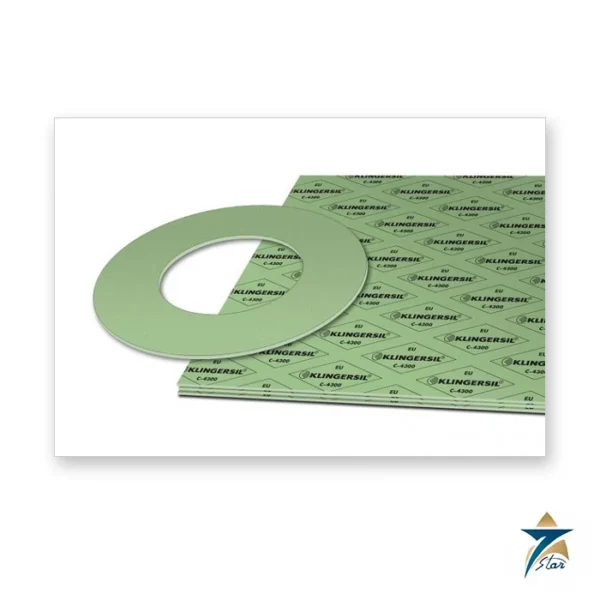
0.094 in x 60 x 60 in sheet (2.4 x 1524 x 1524 mm), fawn, branded |
Values are the typical properties printed in the Garlock spec sheet (August 2023). Garlock marks them as a general guide.
Specifying Style 3500: limits and design values
The silica filler gives a sheet that is firmer than 3504 but softer than 3510: compressibility 7 to 12 %, specific gravity 2.10 and creep relaxation 18 %. The ASME design factors are m 5.0 with y 2750 psi (19.0 N/mm2) up to 1/16 in, and m 5 with y 3500 psi (24.1 N/mm2) at 1/8 in, so allow for adequate seating stress.
The datasheet excludes hydrofluoric acid from the strong acids listed for Style 3500, while Garlock lists the graphite-filled Style 3530 for highly concentrated hydrofluoric acid. Pressure goes to 1200 psig (83 bar) with 750 psig ideal, and temperature to 500 °F with 400 °F ideal, both based on ANSI raised-face flanges at Garlock’s preferred torque. Close to the limits, ask Garlock Applications Engineering.
Related Garlock gasket sheets
Choose among the GYLON styles by filler and chemistry, as summarised here.
| Garlock style |
Composition |
Colour |
Media and use printed by Garlock |
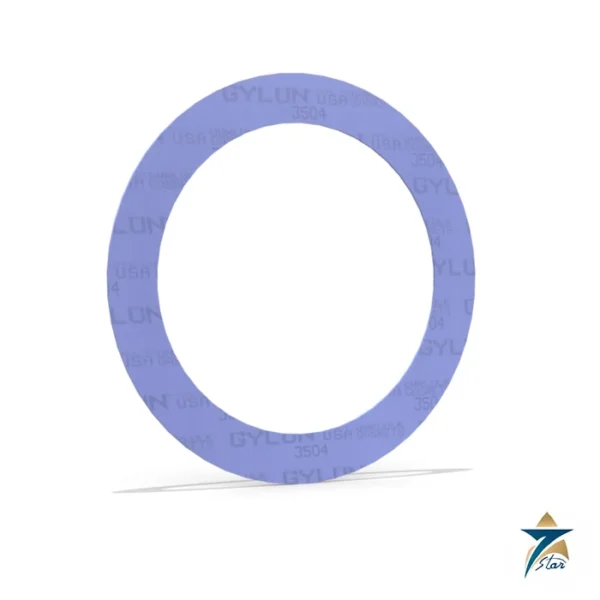
| GYLON Style 3504 |
PTFE with aluminosilicate microspheres |
Blue |
Many acids, some caustics, hydrocarbons, solvents, hydrogen peroxide, refrigerants, cryogenics |
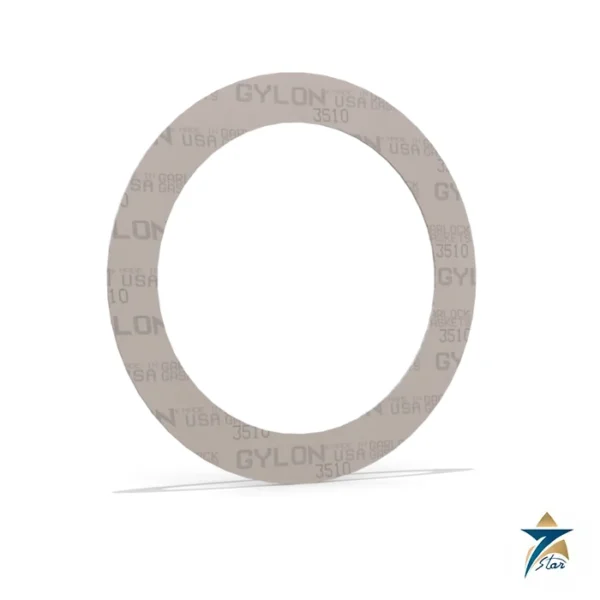
| GYLON Style 3510 |
PTFE with barium sulfate |
Off-white |
Strong caustics, moderate acids, chlorine, gases, steam, hydrocarbons, cryogenics |
| GYLON Style 3530 |
PTFE with graphite |
Black |
Monomer service, cryogenics, concentrated hydrofluoric acid, volatile hazardous air pollutants |
| GYLON Style 3565 ENVELON |
PTFE with aluminosilicate microspheres (ENVELON) |
White exterior, blue interior |
Moderate acids and caustics, hydrocarbons, glass-lined equipment |
Documents, ordering details and quotation
Tell us the acid, concentration and temperature when asking for Style 3500. To price the job we need the medium, pressure, temperature, flange details, available bolt load, thickness and quantity, and whether sheet or finished gaskets are wanted. The datasheet figures are typical test values, so have the final selection reviewed against the real operating conditions, and ask Garlock for a chemical compatibility opinion where the medium is unusual. Related products are in gaskets, seals and pipe fittings.










Reviews
There are no reviews yet.