Silicon-carbide-filled PTFE for heavy-duty chemical and steam joints
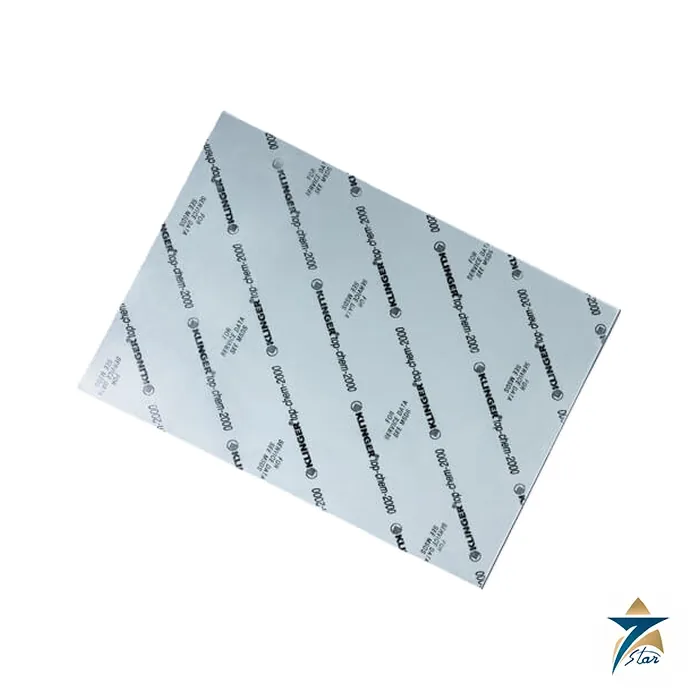
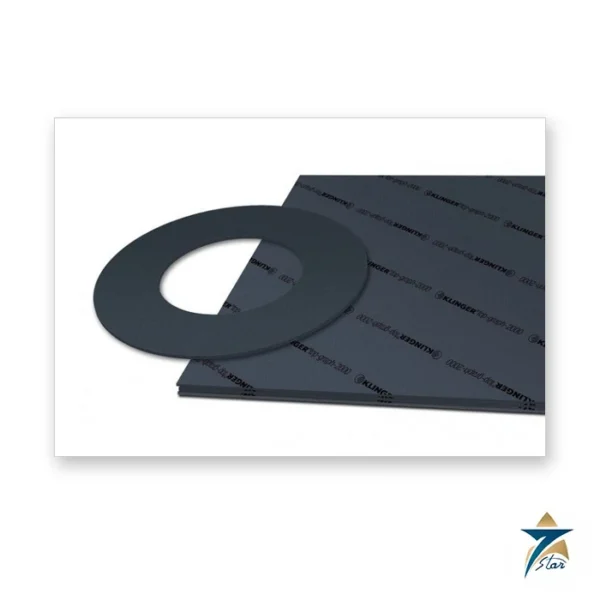
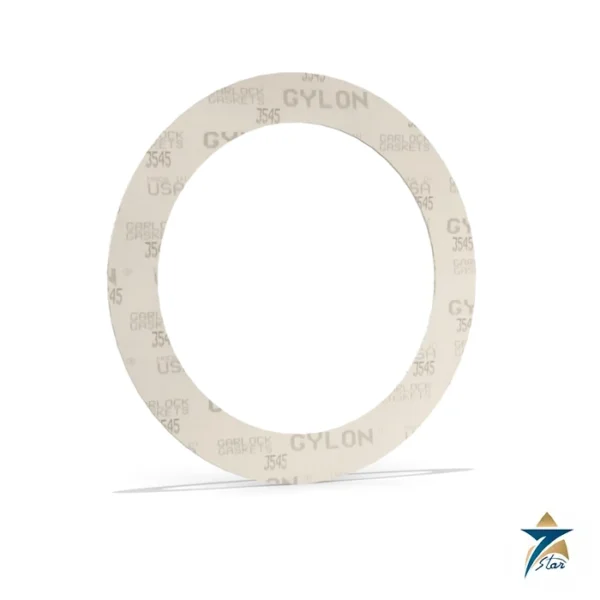
KLINGER top-chem 2000 is Klinger’s universal heavy-duty PTFE gasket, filled with silicon carbide. It is built for applications with high mechanical requirements at high temperatures, and the datasheet headline calls it the universal heavy-duty gasket filled with silicon carbide, with Fire Safe certificate.
Klinger names excellent resistance in strongly acidic and alkaline applications, as well as steam and oxygen, and describes use across the chemical and petrochemical industries and shipbuilding for chemical transport. The benefits are resistance to high surface pressure at elevated temperature, high retention of bolt load, superior chemical resistance and no ageing.
Technical specifications
| Parameter |
Specification |
| Manufacturer / model |
Klinger (Rich. Klinger Dichtungstechnik), KLINGER top-chem 2000 |
| Basis composition |
PTFE filled with SiC (silicon carbide) |
| Colour |
Grey |
| Sheet size |
1500 x 1500 mm |
| Thickness |
1.0, 1.5, 2.0, 3.0 mm |
| Tolerances |
Thickness per DIN 28091-1; length and width plus or minus 50 mm |
| Certificates and approvals as printed |
Oxygen-tested, DIN-DVGW, DVGW H2-ready (ZP 5123), DIN 16421 (W 270), KTW-BWGL, WRAS approval, TA-Luft (Clean air), Fire-Safe acc. to DIN EN ISO 10497, FDA compliant (PTFE), Regulation (EU) No. 1935/2004 (incl. 10/2011), DNV approval, VDI 2200 blowout |
| Industries listed |
General industry, chemical, oil and gas, energy, infrastructure, pulp and paper, marine, automotive, food and beverage, pharma |
| Compressibility, ASTM F 36 M (2.0 mm) |
4 % |
| Recovery, ASTM F 36 M |
50 % |
| Stress relaxation, DIN 52913, 30 MPa, 16 h |
28 MPa at 150 °C (30 MPa); 36 MPa at 260 °C (50 MPa) |
| Klinger cold/hot compression, 50 MPa, thickness decrease |
5 % at 23 °C; 11 % at 260 °C |
| Tightness, DIN 28090-2 |
0.08 mg/(s x m) |
| Specific leak rate, VDI 2440 |
4.46E-06 mbar x l/(s x m) |
| Thickness / weight increase after immersion (percent): 100 % H2SO4 18 h at 23 °C; 100 % HNO3 18 h at 23 °C; 33 % NaOH 72 h at 110 °C |
1 / 1 (H2SO4); 1 / 2 (HNO3); 1 / 3 (NaOH) |
| Density |
2.5 g/cm3 |
| Thermal conductivity |
0.60 W/mK |
| ASME code sealing factors, 2.0 mm, tightness class 0.1 mg/(s x m) |
y 15 MPa, m 3.2 |
| Chemical resistance chart in datasheet |
A (small or no attack) in all twelve media groups printed on the chart |
All values are typical values for a 2.0 mm sheet as printed in the Klinger datasheet; other thicknesses can differ.
Why the filler matters and what to confirm
The silicon carbide filler gives a stiff sheet: compressibility is only 4 % and thickness decrease under 50 MPa is 11 % at 260 °C, while stress relaxation is still 36 MPa at 260 °C. Immersion data in the datasheet show weight and thickness changes of only 1 to 3 % in concentrated sulfuric and nitric acid and in hot caustic soda, so attack by these media is small.
Because it is stiff, it needs adequate bolt load to seat; the y factor is 15 MPa and the m factor 3.2. The wide certificate list includes DIN-DVGW, DVGW H2-ready, KTW-BWGL, WRAS, TA-Luft, Fire-Safe, FDA compliance for PTFE, Regulation (EU) 1935/2004 and VDI 2200 blowout.
Related KLINGER gasket sheets
The other top-chem grades differ mainly in filler, which sets how they behave in acids, alkalis and low-load joints.
| Model |
Basis |
Colour |
Positioning printed by Klinger |
| KLINGER top-chem 2003 |
PTFE filled with hollow glass microspheres |
Blue |
Sealing at low surface load; acids and alkalis |
| KLINGER top-chem 2005 |
PTFE filled with inorganic fillers |
Red |
Strongly acidic media |
| KLINGER top-chem 2006 |
PTFE filled with barium sulfate |
White |
Strongly alkaline media; pigment-free |
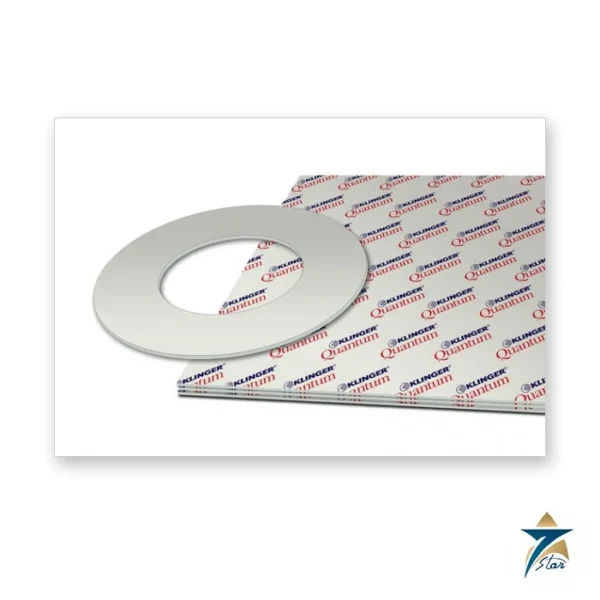
| KLINGER Quantum |
Fibre and filler compound, HNBR |
White |
Flexibility at high temperature; FDA conformity |
Choosing thickness and grade for a joint
Selecting top-chem 2000 starts with the medium, but the flange is just as important. Because the sheet compresses only about 4 % at 2.0 mm, it rewards flat, rigid flanges with sound bolting and is less forgiving of warped, pitted or lightly bolted joints. Where the flange faces are in good condition and the bolts can deliver the seating stress implied by the y factor of 15 MPa, the thinnest practical gasket generally gives the best result, since a thinner PTFE-based gasket presents less material to creep and less area to blowout. Thicker sheets from the 1.0 to 3.0 mm range are more appropriate where the faces are uneven or where a replacement gasket must fill a gap left by an existing design.
If the joint is lightly loaded, for example glass-lined, plastic or enamelled equipment, the top-chem 2003 with hollow glass microspheres listed in the comparison table is designed for sealing at low surface load. If the duty is dominated by one aggressive family of media, compare the 2005 for strongly acidic and the 2006 for strongly alkaline service before settling on the silicon carbide grade.
Cutting, fitting and bolting up
- Cut gaskets from the 1500 x 1500 mm sheet with sharp tools so the inner and outer edges are clean; ragged edges invite creep and leakage paths.
- Make sure the gasket inside diameter does not protrude into the bore, where it would be exposed to flow erosion.
- Clean the flange faces and remove all traces of the old gasket. Fit the new gasket dry unless Klinger’s instructions say otherwise.
- Tighten bolts in a cross pattern in several passes up to the calculated bolt load, using a calibrated torque tool.
- Record the bolt load used, so the next shutdown starts from known values.
Leaks after installation and what they usually mean
A joint that leaks on start-up has most often not been loaded enough for this stiff material, or has been loaded unevenly. Check the bolting pattern and the condition of the flanges before blaming the gasket. A gasket that has extruded or thinned at one side points to excessive or uneven load, or to a flange misalignment that the gasket was asked to absorb. Do not reuse a compressed gasket after the joint has been opened; cut a new one from sheet.
Service conditions in Oman and the GCC
Chemical plants, desalination sites and marine installations along the Omani coast combine aggressive process media with high outdoor temperatures. Pipework exposed to the sun can heat flanges well above the ambient air during the day and cool them at night, so bolted joints undergo repeated thermal cycling. The stress relaxation results printed for top-chem 2000 make it a reasonable candidate for this, but re-checking bolt load after the first heat cycle is good practice. Store sheet flat, indoors and away from dust so the surface is clean when gaskets are cut. On ships and coastal sites, choose bolting and flange materials that resist salt corrosion, since a corroded stud loses preload regardless of gasket quality.
Documents, ordering details and quotation
State the acid or alkali and its concentration, together with temperature, so that top-chem 2000 can be checked against the other fillers. To quote correctly we need the medium and concentration, working and test pressure, temperature, flange standard and facing, bolting, thickness and whether you want a whole sheet or gaskets cut to size. Klinger states that its values are typical and that site conditions vary, so confirm the grade with your own engineering or with Klinger before ordering for a critical duty. See also our wider range of gaskets, seals and pipe fittings.




Reviews
There are no reviews yet.