Brand:

Hochiki HCP-E(SCI) Addressable Manual Call Point with Isolator

Description

Overview

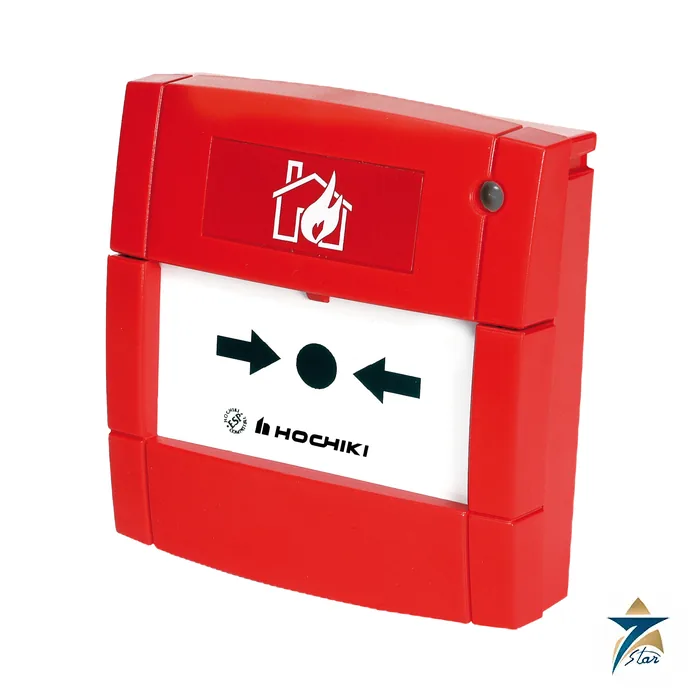
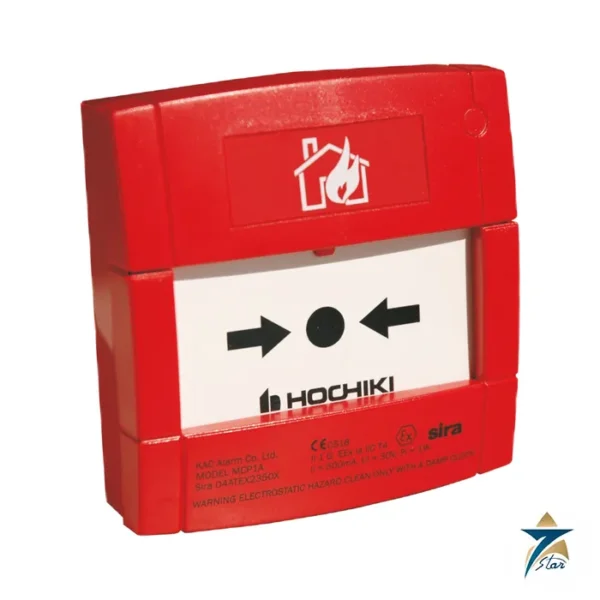
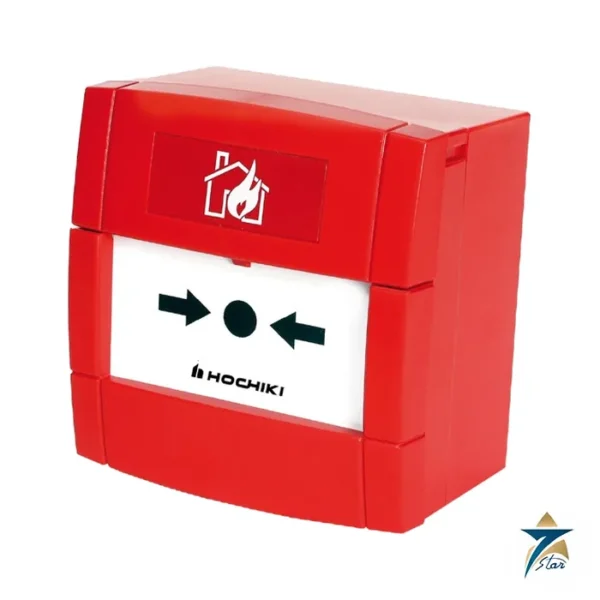
Hochiki HCP-E(SCI) is an addressable manual call point for the ESP analogue protocol with a short-circuit isolator built into the unit itself. A person who sees a fire breaks the element or presses the resettable element, the call point signals the panel on the loop, and the isolator protects the rest of the loop if a cable fault occurs next to the device. It is supplied with a red casing as the standard version.

Call points are among the most frequently ordered spares on any fire system because they are exposed to impact, vandalism and accidental operation. In Oman, call points are specified in refinery administration buildings, camp corridors, utility buildings and factories, usually at every exit route. Seven Star LLC is an independent supplier serving Oman and the GCC. We quote this device by exact ordering code.

Feature summary for Hochiki HCP-E(SCI)

  • Fast response on the ESP analogue addressable protocol.
  • Integral short-circuit isolator, so no separate isolator module is needed beside it.
  • Bi-coloured status LED showing red or amber.
  • Non-frangible element fitted as standard, in line with EN54.
  • Addressing with the TCH-B200 Hand Held Programmer.
  • Surface or flush mounting, with the SR MOUNTING BOX needed for surface fixing and sold separately.
  • LPCB approval to EN54-11 and EN54-17, carried by the red casing only.
  • A SIL Level 2 approved variant and a printed SMOKE VENT label variant are mentioned for the family.

How the Hochiki HCP-E(SCI) LED behaves

The bi-coloured LED is selectable between pulsing and non-pulsing operation for communications polling, provided the fire alarm control panel supports that feature. The LED shows red during normal polling and stays continuously red once the call point has been operated. It turns amber when a short-circuit is present on the loop next to the unit, but switches to red if the call point is activated at the same time.

A built in test function started from the control panel by inserting a test key in the underside of the unit lets the system check the integrity of the device. Two terminal blocks accept the loop wiring. A sheet note in the data sheet warns that when the element is changed from glass to flexible, the operation should be confirmed by pressing the resettable element.

Hochiki HCP-E(SCI) specification

Parameter Value
Device type Addressable manual call point with short-circuit isolator
Ordering codes HCP-E(SCI) red, HCP-E/Y(SCI) yellow, HCP-EO(SCI) orange, HCP-E(BLU)-SCI blue
Back box SR MOUNTING BOX, red, required for surface fixing, sold separately
Ingress protection IP24, not approved by BRE
Case material Modified polyphenylene oxide
Operating voltage 17 to 41 VDC
Low power mode current 180 microamps maximum, 100 microamps typical
Quiescent current 350 microamps maximum, 250 microamps typical
Alarm current 10.0 mA maximum, 5 mA typical
Contact resistance 100 milliohm maximum closed, 100 kilohm minimum open
Short circuit threshold, typical 430 ohm
Transmission Digital communication using ESP
Operating temperature -10 degrees C to +50 degrees C
Storage temperature -30 degrees C to +70 degrees C
Maximum humidity 95 percent RH, non-condensing, at 40 degrees C
Weight and size 110 g, 89 mm wide, 93 mm high, 27.5 mm deep
With surface back box 161 g, depth 59.5 mm

Choosing between the colour codes

The family includes a red casing under HCP-E(SCI), a yellow casing under HCP-E/Y(SCI), an orange casing under HCP-EO(SCI) and a blue casing under HCP-E(BLU)-SCI. Red is the usual fire alarm colour. The data sheet specifically notes that only the red casing carries LPCB approval certification, so a project that needs approved call points for fire alarm duty should select the red code. The other colours are normally used for secondary functions such as extinguishing release or process shutdown, subject to local rules.

How Hochiki HCP-E(SCI) differs between its casing variants

All four casing codes share the same electronics and the same ESP protocol, so the electrical values in the table above apply to each of them. The practical differences are the case colour, the approval status and the intended duty. The red HCP-E(SCI) is the approved fire alarm version, while the yellow, orange and blue codes serve other signalling jobs. The surface back box adds 51 g and 32 mm of depth to the 110 g, 27.5 mm flush unit, which matters when the call point is fixed on a narrow corridor wall next to a door frame.

Because the isolator is inside the call point, a loop with many call points gains many isolation points automatically. That helps the system designer keep the number of devices lost to a single cable fault small, and it removes the need to count separate isolator modules into the loop capacity of the panel.

Mounting and installation

  • For flush mounting the unit can be fixed as supplied.
  • For surface mounting, add the SR MOUNTING BOX, which raises the depth to 59.5 mm.
  • Connect loop wiring to the two terminal blocks and keep the loop in and out sides identified.
  • Set the address with the TCH-B200 Hand Held Programmer before closing the cover.
  • Verify the isolator action by testing with a controlled short-circuit during loop commissioning, following the panel procedure.

The IP24 rating means this call point is intended for indoor use. For a wet outdoor location a different, weatherproof call point is required; do not rely on the surface back box for that purpose.

Maintenance

Replace broken elements promptly and test each call point at the interval your inspection plan requires, using the test key supplied for the family. Check that the label is clean, the element is seated and the housing has no cracks. A call point with a persistent amber LED points to a short-circuit on the adjacent loop wiring and should be traced before the next scheduled test.

Ordering Hochiki HCP-E(SCI)

In the request, give the colour code, the quantity, the number of surface back boxes needed and the loop protocol. State the Oman or GCC project location for lead time planning.

Related items you may also need: Hochiki ACD-EN Intelligent Multi Sensor | Hochiki CDX FIREbeam Conex Conventional Beam Smoke Detector | Hochiki ALN-EN Intelligent Photoelectric Smoke Sensor (ESP) | All Hochiki products.

Documents and quotation

The manufacturer data sheet for the HCP-E(SCI) is attached to this page with the voltage, current, size and ordering codes listed above. Send an RFQ with the part number, colour code and quantity through the enquiry form, and we will reply with availability.

Datasheets & Documents
  • PDF Datasheet Hochiki HCP-E(SCI) Addressable Manual Call Point with Isolator Datasheet Download
Reviews (0)

Reviews

There are no reviews yet.

How would you rate this product?

It takes about 10 seconds — just tap a star. Your email is never published.

About brand

Hochiki is a Japanese fire detection company, established in Tokyo in 1918 as Japan's first fire alarm manufacturer, with leading insurance companies among its founders. It makes smoke and heat detectors, beam detectors, addressable fire alarm systems and emergency lighting. Hochiki America has operated in the US since 1972.

Seven Star LLC is an independent supplier in Muscat. We list Hochiki detectors for fire alarm contractors in Oman and the GCC.

Hochiki company profile

Founded 1918, Tokyo, Japan
Founders Members of Japan's insurance industry
US operations Since 1972
Systems Conventional and addressable fire detection
Product families ESP intelligent detectors and multi-sensors, FIREbeam beam detectors, CDX conventional detectors, control panels

Milestones

  • 1918: Hochiki is founded in Tokyo.
  • 1972: Hochiki America begins US operations.

Hochiki product series

The ACD-EN is an intelligent multi sensor detector for Hochiki addressable systems.

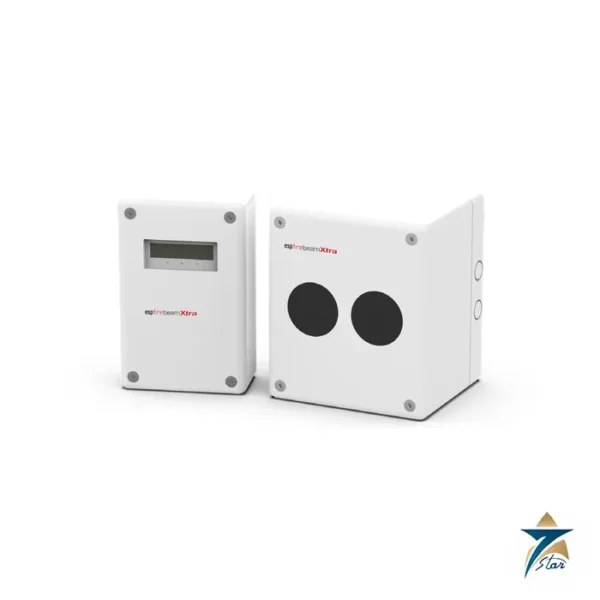
Beam smoke detectors include the CDX FIREbeam Conex and CDX FIREbeam Xtra conventional detectors and the ESP FIREbeam Xtra addressable detector.

Multi sensor detectors combine smoke and heat sensing to detect different fire types and reduce false alarms. Beam detectors send an infrared beam across an open space and alarm when smoke reduces the signal, covering large areas with fewer devices.

Detectors must match the panel protocol and be installed and tested to the local fire code.

Where Hochiki detectors are used

Offices, hotels, schools and hospitals, and large open spaces such as warehouses, atriums and halls where beam detectors cover long distances.

Hochiki products we list

Family Examples
Fire & Gas Detectors ACD-EN Intelligent Multi Sensor, CDX FIREbeam Conex Conventional Beam Smo…, ESP FIREbeam Xtra Addressable Beam Smoke…

Ordering Hochiki detectors: what we need

Send the part number, protocol (conventional or ESP addressable), the beam range and the panel in use.

Facts checked against IFSEC Global centenary coverage and Hochiki company profiles, October 2026.

FAQ

Questions about the Hochiki HCP-E(SCI) Addressable Manual Call Point

Answers from our engineering team on installation, compatibility and integration.

01What is the Hochiki HCP-E(SCI) call point?
It is an intelligent analogue addressable manual call point for the ESP protocol with an integral short-circuit isolator, bi-coloured LED and a non-frangible element fitted as standard.
02Which colour versions exist for the HCP-E(SCI)?
The data sheet lists red HCP-E(SCI), yellow HCP-E/Y(SCI), orange HCP-EO(SCI) and blue HCP-E(BLU)-SCI, and notes that only the red casing carries LPCB approval.
03What voltage and current does the HCP-E(SCI) use?
It operates from 17 to 41 VDC with a typical quiescent current of 250 microamps, maximum 350 microamps, and an alarm current of 5 mA typical, 10 mA maximum.
04Does the HCP-E(SCI) need a back box?
It can be flush mounted as supplied, but surface mounting needs the SR MOUNTING BOX, which is sold separately and increases the depth to 59.5 mm.
05How is the HCP-E(SCI) addressed?
It is addressed with the TCH-B200 Hand Held Programmer, and its LED turns amber when a short-circuit is present or red when the unit is operated.