Brand:

Hochiki CCP-E-IS Intrinsically Safe Conventional Call Point

Description

Overview

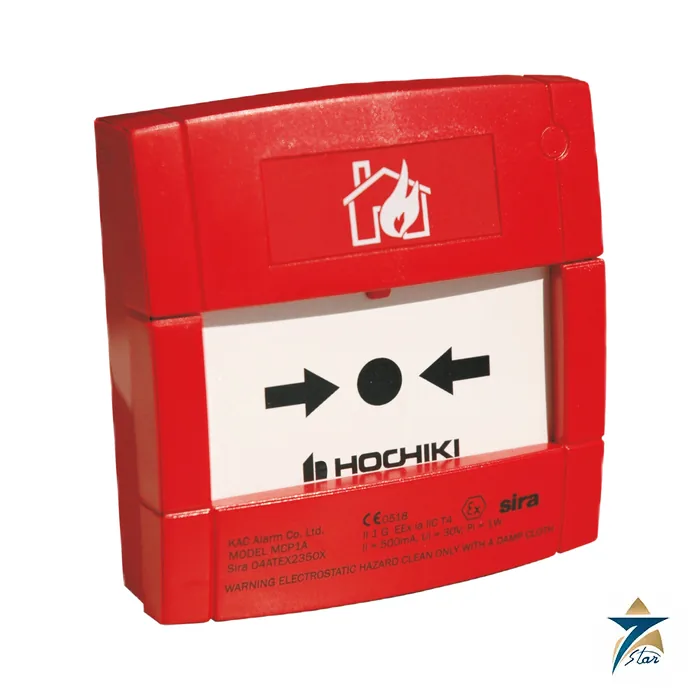
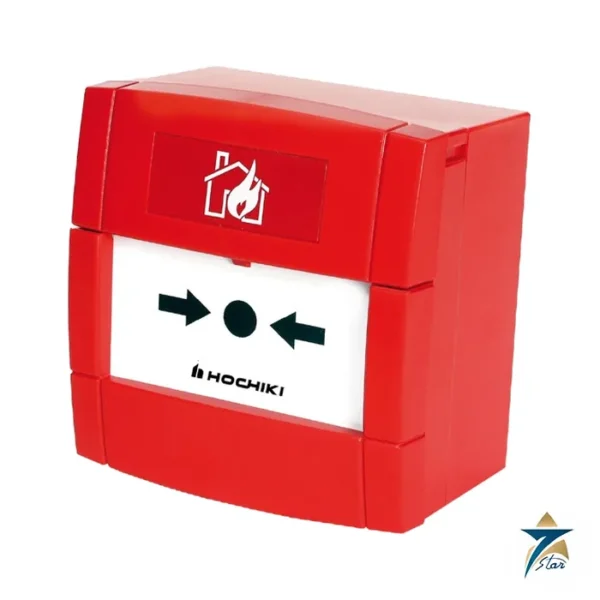
The Hochiki CCP-E-IS is an intrinsically safe conventional manual call point built for zones where an ordinary red break-glass unit would never be allowed through the permit-to-work system. It follows the familiar KAC World Series housing, so a person who has used a standard call point anywhere in the world will know instantly how to operate it, yet the electronics and the terminal arrangement are prepared for hazardous-area loops fed through an approved barrier. In the maker’s catalogue it is described as a conventional call point with an ATEX classification of II 1G Eex ia IIC T4, and the supplied label identifies the sensitive element as one that can be fitted either as a frangible glass element or as a non-frangible plastic element.

Buyers in Oman often meet this part on the bill of quantities of a gas processing train, a fuel storage terminal, a jetty, or a chemical store where the fire alarm loop passes through a Zener barrier or galvanic isolator panel. The part number is exact: Hochiki CCP-E-IS is the flush unit, and it is not delivered with a back box. Seven Star LLC is an independent supplier serving Oman and the GCC.

Key features of Hochiki CCP-E-IS

  • Intrinsically safe design with ATEX classification II 1G Eex ia IIC T4, suitable for the most demanding gas group listed in the datasheet.
  • Approved to EN 54 part 12, the European product standard for manual call points.
  • Accepts either a frangible glass element or a non-frangible plastic element, which lets a site choose between a break-glass action and a resettable plastic action.
  • Terminals take a solid conductor up to 2.5 mm2, so ordinary loop cable from the barrier cabinet can be landed without ferrules or reduction tricks.
  • Rugged polyphenylene oxide moulding in red, with an operating range from minus 10 to plus 55 degrees Celsius.
  • A SIL 2 approved variant exists in the same range, which is a separate ordering item and not this part.

Technical specifications of Hochiki CCP-E-IS

Ordering code CCP-E-IS
Product type Intrinsically safe conventional call point
Operating voltage 15 to 30 VDC
Operating temperature range minus 10 to plus 55 degrees Celsius
Storage temperature range minus 30 to plus 70 degrees Celsius
ATEX classification II 1G Eex ia IIC T4
Maximum humidity 95 percent RH, non-condensing, at 40 degrees Celsius
Ingress protection IP24
Colour and material Red, polyphenylene oxide
Weight, flush unit 93 g
Dimensions, flush unit H 88 x W 88 x D 20 mm
Weight with surface-mount back box 173 g (back box sold separately)
Dimensions with surface-mount back box H 88 x W 88 x D 52 mm
Terminal capacity Up to 2.5 mm2 solid conductor
Element options Frangible glass or non-frangible plastic

Where Hochiki CCP-E-IS is used in Oman and the GCC

A manual call point is the last line of defence when automatic detection has not yet seen a fire, and in a classified area the person who finds the fire may be standing on a pump deck or a loading gantry. Typical placements for this model include escape routes of oil and gas production facilities, tank farm bund exits, LPG bottling plants, solvent stores in manufacturing estates, and fuel handling areas at airports and ports. Because the unit is a conventional two-wire device, it can share a zone with intrinsically safe detectors from the same range and with an ordinary resistor or switch-based monitoring scheme on the panel side of the barrier.

The IP24 rating tells you what to expect: the front is protected against splashing water, not against hose-down. For washdown areas or heavy dust, plan a suitable weatherproof cover or choose a different enclosure family; the CCP-E-IS suits sheltered process-area walls, canopy columns, and plant-room exits.

Selection and compatibility notes

Intrinsic safety is a system property, not a property of one box. The call point has to be matched with a barrier or isolator whose entity parameters are acceptable, with cable whose capacitance and inductance are within the permitted limits, and with a hazardous-area certificate that your inspector can trace. The operating voltage window of 15 to 30 VDC is the electrical range of the call point itself; the loop supply voltage that reaches it after the barrier drop must stay inside that window. Before ordering, confirm the zone, the gas group and the temperature class on your hazardous-area dossier, and compare them with II 1G Eex ia IIC T4.

Remember that this item does not include a back box. If the call point will be mounted on the surface of a wall, order the surface-mount back box separately, which brings the depth to 52 mm and the weight to 173 g. For flush mounting in a cavity or a panel, the 20 mm deep flush unit is used by itself. When you request a quotation, quote the full code Hochiki CCP-E-IS and state whether back boxes are needed.

How CCP-E-IS differs from other Hochiki call points

Hochiki also builds ordinary conventional call points and addressable call points for protocol loops; those are meant for safe areas. The IS version differs in its certified classification, its terminal layout intended for barrier-fed wiring, and the 15 to 30 VDC voltage statement. A SIL 2 approved variant is mentioned by the maker for applications where a safety integrity level is required; if your project specification calls for SIL, state that at enquiry stage so the correct code is identified rather than assumed.

Installation and commissioning

Mount the call point where it is visible, unobstructed and reachable along the exit route, following your local fire code and the project fire strategy. Isolate the zone at the panel, land the loop conductors in the terminals with no more than the maximum 2.5 mm2 solid conductor per terminal, and keep intrinsically safe cabling segregated from non-intrinsically safe cabling in trunking and at the barrier cabinet, using the colour or labelling your standard requires. Fit the chosen element, close the cover and test with the manufacturer’s test key or the method written in the installation sheet. A functional test should confirm that the panel reports an alarm on the correct zone and that the end-of-line monitoring returns to normal after reset.

Maintenance and inspection

Hazardous-area equipment has an inspection regime of its own, often following the detailed, close and visual grades of the relevant installation standard. Check the housing for cracks, make sure the label with the ATEX marking is still readable, confirm that the sealing between the cover and body is intact, and look for corrosion at the terminals. Clean the housing only with a damp cloth, because the plastic can build up an electrostatic charge. Replace broken elements with the type the unit was ordered with and record the test in the site fire alarm logbook.

Ordering notes for Hochiki CCP-E-IS

When you send an enquiry, tell us the quantity, the barrier model you intend to use, whether surface back boxes are also required, and the delivery location in Oman or the wider GCC. Because several call point codes look alike, always quote the complete ordering code. Lead times, packaging and shipment method are confirmed in the quotation.

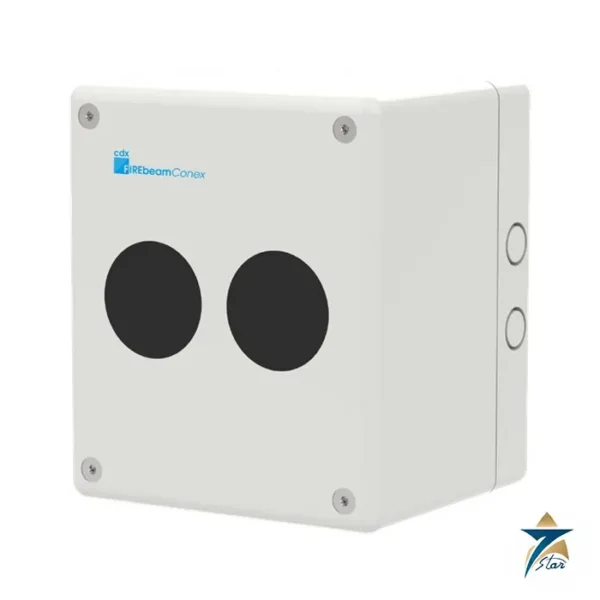
Related items you may also need: Hochiki CDX FIREbeam Conex Conventional Beam Smoke Detector | Hochiki ACD-EN Intelligent Multi Sensor | Hochiki ESP FIREbeam Xtra Addressable Beam Smoke Detector | All Hochiki products.

Documents and quotation

The manufacturer datasheet for CCP-E-IS is attached to this product page and lists the ordering code, the electrical and environmental limits, and the dimensions used above. To receive a quotation, send an RFQ with the part number Hochiki CCP-E-IS and the quantity you need, together with project name and any certification you must see on the delivery documents.

Datasheets & Documents
  • PDF Datasheet Hochiki CCP-E-IS Intrinsically Safe Conventional Call Point Datasheet Download
Reviews (0)

Reviews

There are no reviews yet.

How would you rate this product?

It takes about 10 seconds — just tap a star. Your email is never published.

About brand

Hochiki is a Japanese fire detection company, established in Tokyo in 1918 as Japan's first fire alarm manufacturer, with leading insurance companies among its founders. It makes smoke and heat detectors, beam detectors, addressable fire alarm systems and emergency lighting. Hochiki America has operated in the US since 1972.

Seven Star LLC is an independent supplier in Muscat. We list Hochiki detectors for fire alarm contractors in Oman and the GCC.

Hochiki company profile

Founded 1918, Tokyo, Japan
Founders Members of Japan's insurance industry
US operations Since 1972
Systems Conventional and addressable fire detection
Product families ESP intelligent detectors and multi-sensors, FIREbeam beam detectors, CDX conventional detectors, control panels

Milestones

  • 1918: Hochiki is founded in Tokyo.
  • 1972: Hochiki America begins US operations.

Hochiki product series

The ACD-EN is an intelligent multi sensor detector for Hochiki addressable systems.

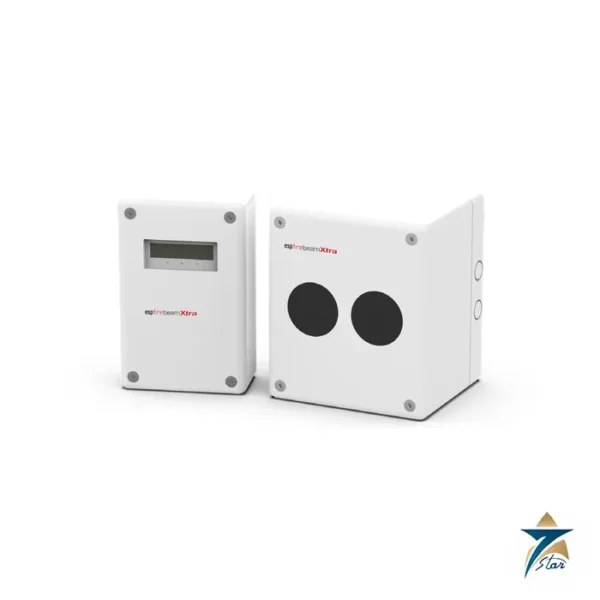
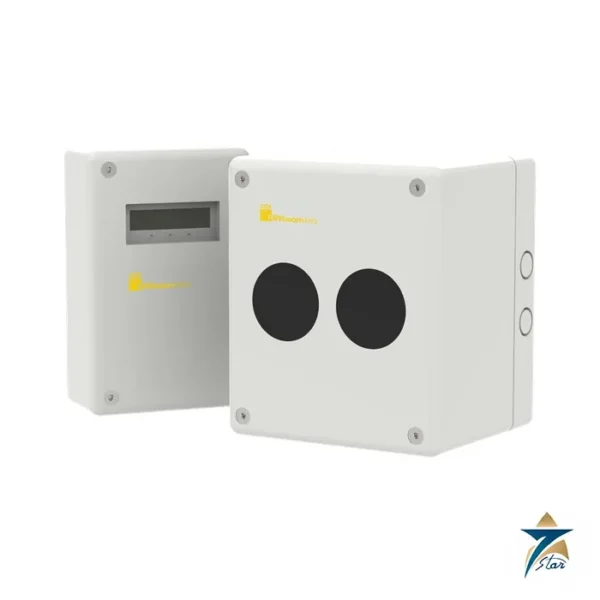
Beam smoke detectors include the CDX FIREbeam Conex and CDX FIREbeam Xtra conventional detectors and the ESP FIREbeam Xtra addressable detector.

Multi sensor detectors combine smoke and heat sensing to detect different fire types and reduce false alarms. Beam detectors send an infrared beam across an open space and alarm when smoke reduces the signal, covering large areas with fewer devices.

Detectors must match the panel protocol and be installed and tested to the local fire code.

Where Hochiki detectors are used

Offices, hotels, schools and hospitals, and large open spaces such as warehouses, atriums and halls where beam detectors cover long distances.

Hochiki products we list

Family Examples
Fire & Gas Detectors ACD-EN Intelligent Multi Sensor, CDX FIREbeam Conex Conventional Beam Smo…, ESP FIREbeam Xtra Addressable Beam Smoke…

Ordering Hochiki detectors: what we need

Send the part number, protocol (conventional or ESP addressable), the beam range and the panel in use.

Facts checked against IFSEC Global centenary coverage and Hochiki company profiles, October 2026.

FAQ

Questions about the Hochiki CCP-E-IS Intrinsically Safe Conventional

Answers from our engineering team on installation, compatibility and integration.

01Is the Hochiki CCP-E-IS supplied with a back box?
No. The flush unit is supplied without a back box. A surface-mount back box is a separate item and raises the depth from 20 mm to 52 mm.
02What hazardous-area classification does the CCP-E-IS carry?
The datasheet gives an ATEX classification of II 1G Eex ia IIC T4, which means it is intrinsically safe and rated for use through an approved barrier.
03What operating voltage range does the CCP-E-IS accept?
The specification lists 15 to 30 VDC. The voltage reaching the device after the barrier drop must remain inside that range.
04Can the CCP-E-IS use a plastic element instead of a glass element?
Yes. The call point supports either a frangible glass element or a non-frangible plastic element, depending on how the site wants the unit to act.
05What ingress protection does the CCP-E-IS have?
The datasheet states IP24, so it suits sheltered locations. For washdown or heavy dust a protective cover or another enclosure should be considered.