Fisher 3582 and 3582i positioners with the 582i converter
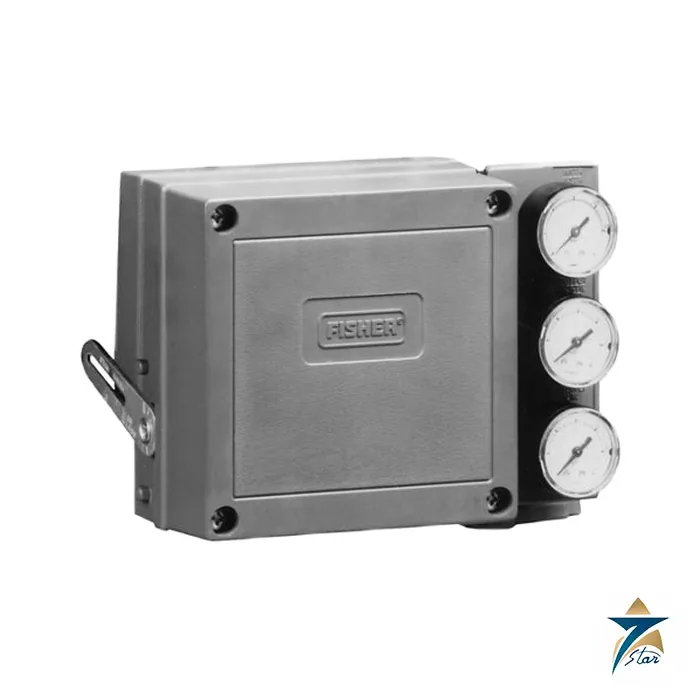
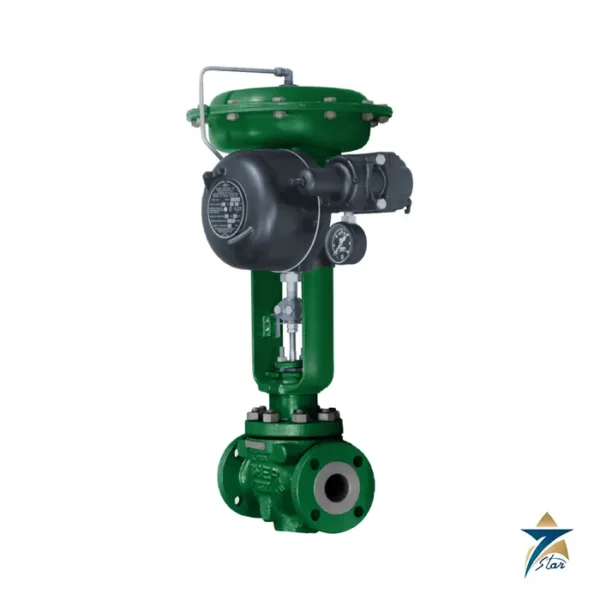
The Fisher 3582 is a pneumatic valve positioner for diaphragm-actuated, sliding-stem control valves. It takes a pneumatic signal from a controller and adjusts the supply pressure going to the actuator until the stem position is proportional to that signal. Add the 582i electro-pneumatic converter and the same positioner becomes the 3582i, which accepts a 4 to 20 mA DC signal instead. The family also includes a nuclear-service version, the 3582NS, and several configurations that differ in bypass valve and gauge fitting. Seven Star LLC supplies Fisher 3582 and 3582i positioners in Oman and the GCC as an independent supplier in Muscat. This page follows the Fisher product bulletin 62.1:3582 (D200062X012, November 2019).
3582 and 3582i technical specifications
| Parameter |
Specification |
| Manufacturer / part number |
Fisher (Emerson) / 3582, 3582i (582i converter) |
| Input signal |
3582: 0.2 to 1.0 bar (3 to 15 psig), 0.4 to 2.0 bar (6 to 30 psig) or split range; 3582i: 4 to 20 mA DC, 30 V DC maximum compliance, split range possible |
| Output signal |
Pneumatic, up to 95 percent of maximum supply; field-reversible direct or reverse action |
| Supply pressure |
Recommended 0.3 bar (5 psi) above actuator requirement; maximum 3.4 bar (50 psig) or the actuator rating |
| Supply medium |
Air or natural gas (the 3582i is not approved for natural gas) |
| Independent linearity |
3582: ±1 % of output span; 3582i: ±2 % |
| Hysteresis |
3582: 0.5 % of span; 3582i: 0.6 % |
| Open loop gain |
100 for 3 to 15 psig range; 55 for 6 to 30 psig range |
| Air consumption (steady state, 2.0 bar supply) |
3582: 0.48 normal m³/h; 3582i: 0.57 normal m³/h |
| Maximum supply air demand (2.0 bar) |
6.7 normal m³/h |
| Valve stem travel |
Up to 105 mm (4.125 in.), adjustable to lesser travel |
| Temperature limits |
Standard −40 to 71 °C; 3582NS −40 to 82 °C; high-temperature 3582A and C −18 to 104 °C without gauges |
| Connections |
1/4 NPT pressure; 1/2-14 NPT conduit for 3582i |
| Approximate weight |
3582: 2.5 kg; 3582i: 3.6 kg |
How the 3582 positioner works
Supply air feeds a relay and, through a fixed restriction, a nozzle that is covered or uncovered by a flapper. The input signal acts on a bellows. When the signal rises, the bellows moves a beam that brings the flapper closer to the nozzle, nozzle pressure builds, and the relay raises the output pressure to the diaphragm actuator, which drives the stem down. A cam on the feedback axis follows stem movement and tilts the beam back until the flapper reaches an equilibrium. When the signal falls, an internal range spring and the bellows move the flapper away, nozzle pressure drops and the relay exhausts actuator pressure. Changing from direct to reverse action is a field adjustment. Because the bleed air continually purges the internals, the instrument tolerates harsh atmospheres.
The 582i electro-pneumatic converter
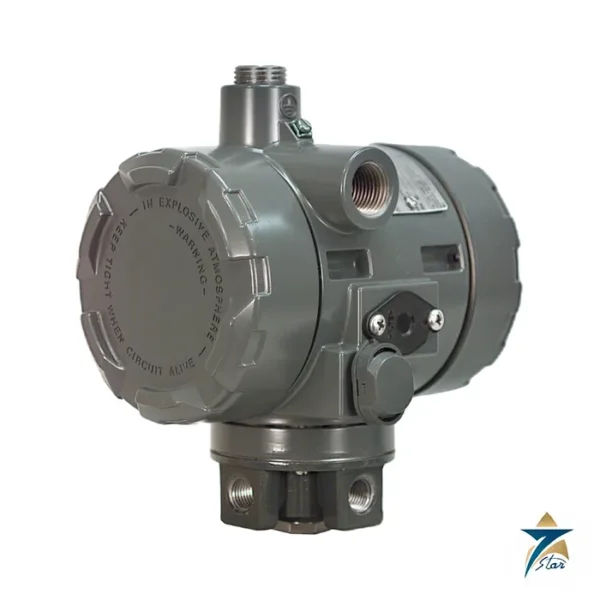
The 582i is a modular nozzle-and-flapper unit that converts a DC current signal into a proportional pneumatic signal and feeds it to the positioner, so no remote transducer is needed. It can be factory fitted or retro-fitted in place of the gauge block on a 3582. Upgrading in the field may require a change of mounting and input range, so check this with the supplier first. The 582i housing is classified CSA Type 3, FM NEMA 3 / IP54, ATEX IP64 and IECEx IP54, with intrinsically safe, type n and flameproof classifications listed for CSA, FM, ATEX and IECEx.
3582 type numbers and what they mean
| Type |
Configuration |
| 3582 |
Pneumatic positioner with bypass and instrument, supply and output gauges |
| 3582A |
Without bypass and without gauges |
| 3582C |
Without bypass, with automotive tire valves in place of gauges |
| 3582D |
With bypass and tire valves |
| 3582G |
Without bypass, with three gauges |
| 3582NS |
Nuclear service, with or without bypass, tire valves, EPDM parts |
| 3582i |
3582 with 582i converter for 4 to 20 mA input |
Choosing a Fisher 3582 or 3582i
- Control signal: pneumatic (3582) or 4 to 20 mA (3582i). The 3582i is not for natural gas supply.
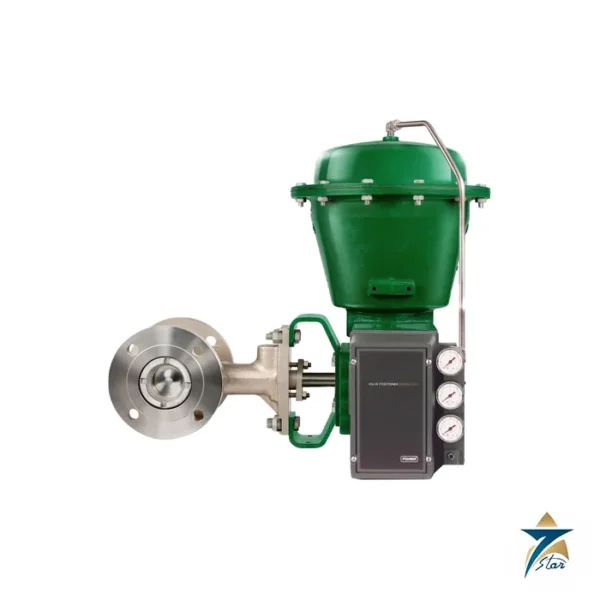
- Actuator: diaphragm-actuated sliding-stem valves up to 105 mm stem travel; a rotary valve needs a different positioner family such as the 3610J.
- Bypass and gauges: choose the type letter to suit whether you want a bypass for manual operation, gauges or tire valves.
- Range: 3 to 15 or 6 to 30 psig input, or a split range in two or three sections. Two-way split ranges are listed as 3 to 9 and 9 to 15 psig, or 4 to 12 and 12 to 20 mA on the 3582i.
- Characterised cams B and C, connectors for diagnostic testing and a high-vibration option are offered.
- Hazardous area: ATEX Group II Category 2 gas and dust classification is stated for the pneumatic positioner; electrical approvals apply to the 582i.
Installation, calibration and maintenance
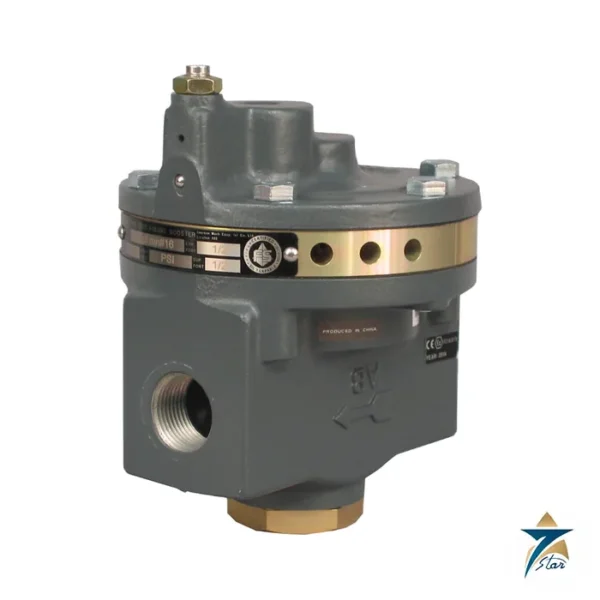
Mount the instrument with the vent on the side or the bottom when weatherproofing matters. Zero and span adjustments are accessible with the cover removed and use a screwdriver or spanner. Supply medium should be clean, dry and oil-free, particularly on EPDM-equipped instruments. Common maintenance work is replacing the relay diaphragms and O-rings, cleaning the nozzle and checking the bellows connections. Because the 3582 family is common across plants, one set of spares covers many positioners. Pair it with a filter regulator and, for fast stroking of large actuators, a 2625 volume booster.
Where the 3582 is used in Oman and the GCC
Pneumatic positioners remain widespread on older diaphragm-actuated control valves in refineries, gas plants, power stations and desalination plants. Retaining a 3582 with a 582i converter allows a plant to move a valve from pneumatic to 4 to 20 mA control without replacing the valve or actuator. The corrosion-resistant case and bleed-air purge suit humid coastal sites, and the high-temperature construction suits valves located near hot piping.
Related Fisher instruments
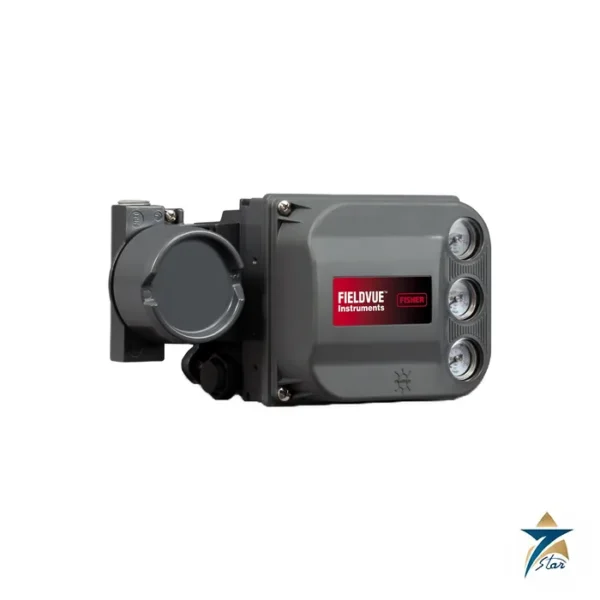
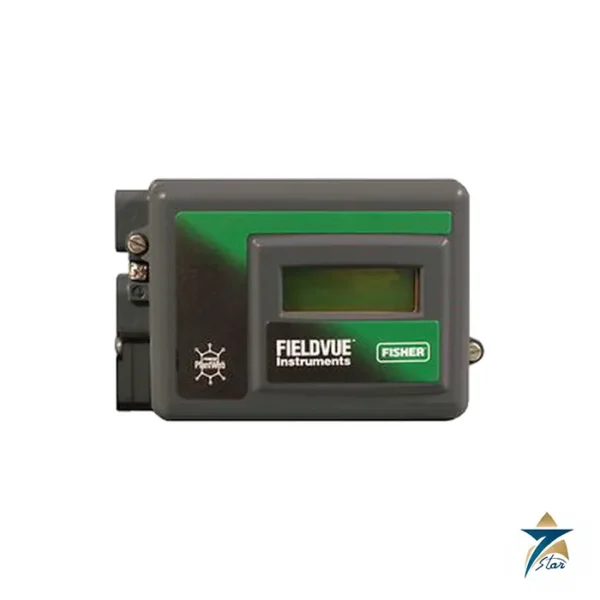
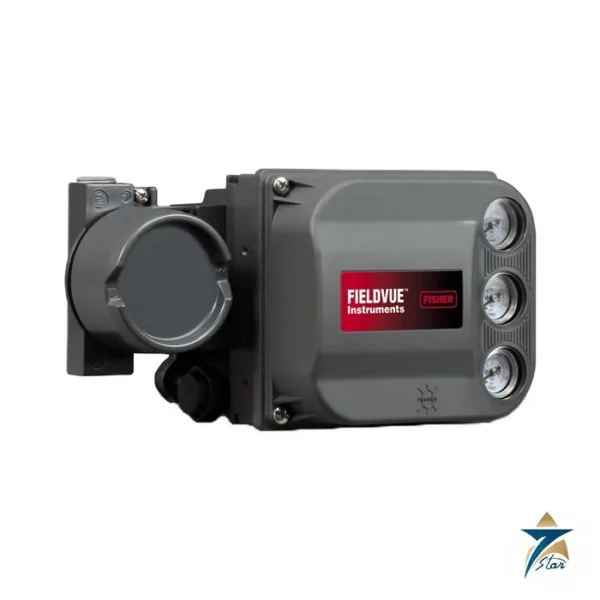
For newer installations see the FIELDVUE DVC2000 and DVC6200, or the 3610J pneumatic positioner for rotary valves. Related accessories include the 2625 volume booster.
Information to send with an RFQ
- Type letter wanted (3582, 3582A, 3582C, 3582D, 3582G or 3582NS) and whether it should be pneumatic or 3582i.
- Valve and actuator model, stem travel and actuator pressure range.
- Input signal range or split-range requirement and direct or reverse action.
- Supply medium and pressure, ambient temperature and approval needed.
- Cam option, diagnostic connectors and high-vibration option.
Documents and quotation
The Fisher 3582 and 3582i product bulletin is attached to this page as a datasheet. Send the details above and we will confirm the matching type and prepare a quotation.





















Reviews
There are no reviews yet.