- Automation & ControlView all 1,715 products
- AC Drives
- Industrial Communications
- PLC & I/O Cards
- Vibration Monitoring
- Automation Accessories
- Controllers & Data Acquisition
- CCTV & Security
- Safety Switches & Guard Locking
- Encoders
- Isolator & Barrier
- Industrial Computers
- Servo Drives
- Motor Soft Starters
- HMI Displays
- Pneumatic Cylinders
- Automation Software
- Machine Vision
- Robotics
Brand: IMI STI
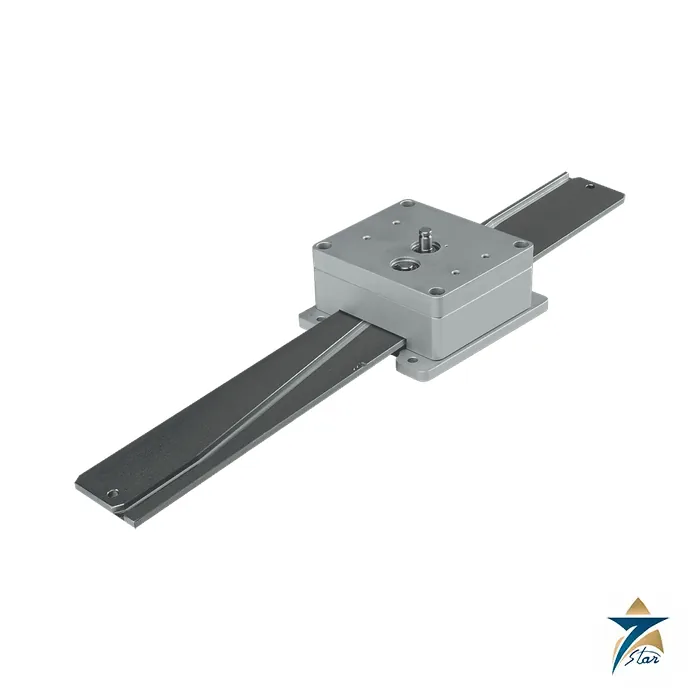
IMI STI MC Linear-to-Rotary Motion Converter
Description
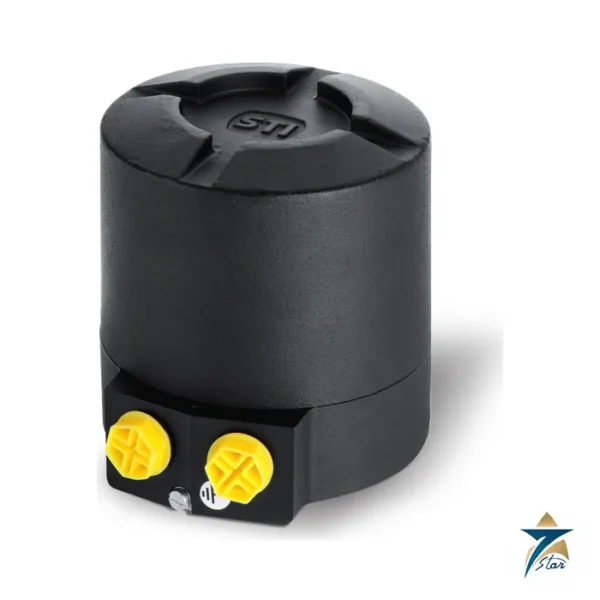
IMI STI MC motion converter: what it is
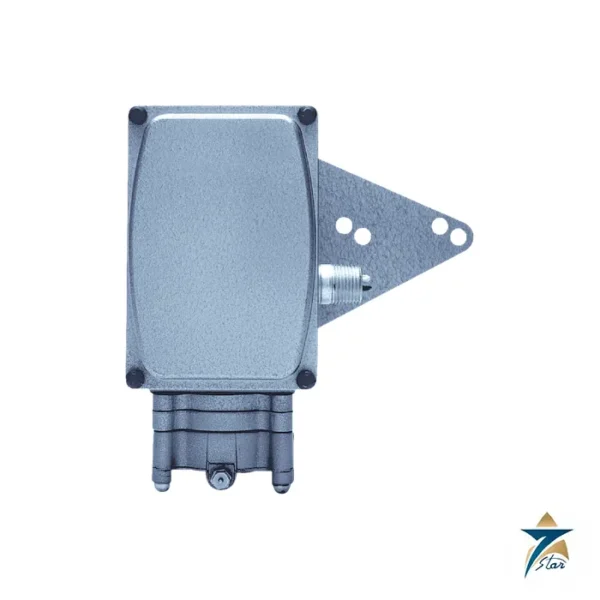
The IMI STI MC is a mechanical motion converter. It takes the up-and-down movement of a linear valve stem or actuator rod and turns it into a 90° rotary output, so that a rotary positioner, position transmitter or limit-switch box can be fitted to a linear control valve. Many positioners are designed with a rotary shaft input; the MC provides that input without a long exposed lever.
MC is the model name given by the manufacturer. The brochure lists two housing materials and a coupling kit that can be adjusted or exchanged to suit different accessories, rather than a long ordering code. Seven Star LLC, an independent supplier in Muscat, quotes the MC for Oman and the GCC against your actuator stroke and accessory details.
MC technical specifications
| Parameter | Specification |
|---|---|
| Manufacturer / part number | IMI STI / MC |
| Function | Linear-to-rotary motion converter for positioners and feedback devices |
| Output angle | 90° |
| Housing material | Anodised aluminium or stainless steel 316 |
| Operating temperature | -40 to 120 °C; lower or higher on request |
| Minimum stroke, standard cam | Above 70 mm |
| Linearity error | 1.1 % for strokes from 90 up to 400 mm |
| Weight | Aluminium 1.2 kg; stainless steel 316 2.7 kg |
| Compatible actuators | Linear, single and double acting |
| Ambient suitability | Standard, offshore, sandstorm and copper-free conditions |
| Special features | Self-cleaning system; backlash recovery system; adjustable and changeable coupling kit |
How the MC converts motion
On a conventional installation a positioner on a linear valve is driven by a lever and a pin that follow the stem. The lever swings through an arc, the pin slides in a slot, and the geometry produces a feedback signal that is not perfectly proportional to stem position. On short strokes the effect is worse, because a small linear travel has to be turned into a usable rotation of the positioner shaft.
The MC replaces that arrangement with a lever mechanism enclosed in a small box. The stem or rod movement is picked up by the mechanism and delivered as a 90° rotation at the output shaft, with a design aimed at keeping linearity error low. A backlash recovery system takes up clearance so the feedback does not dither on direction reversals, and the self-cleaning action helps the mechanism stay free in dusty or icy conditions.
Where the MC fits in the system
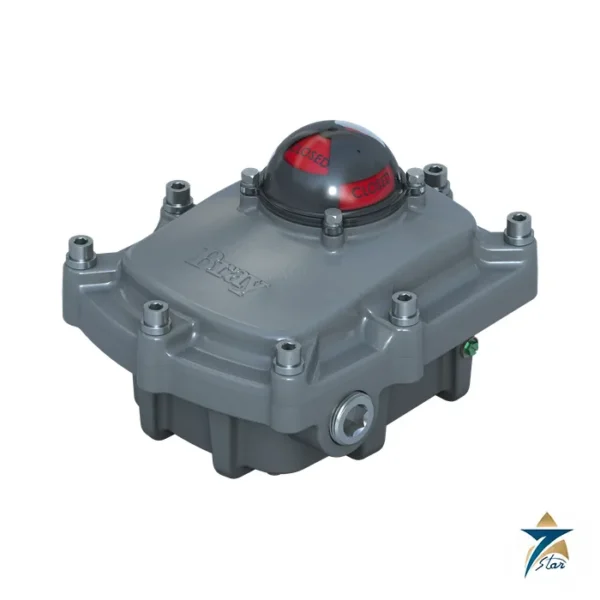
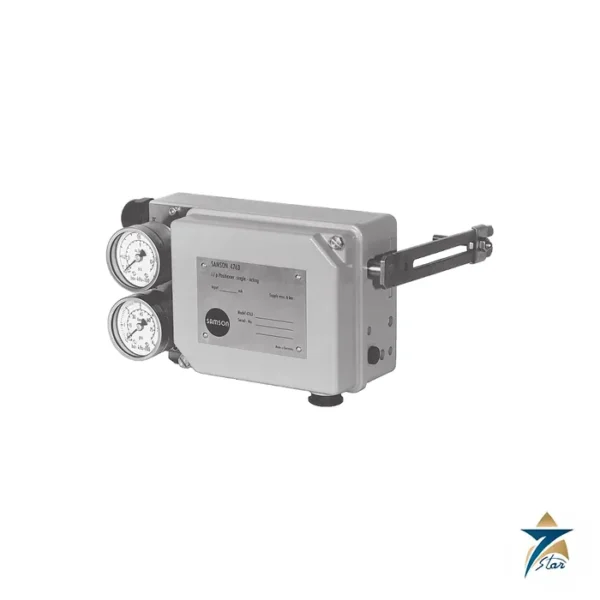
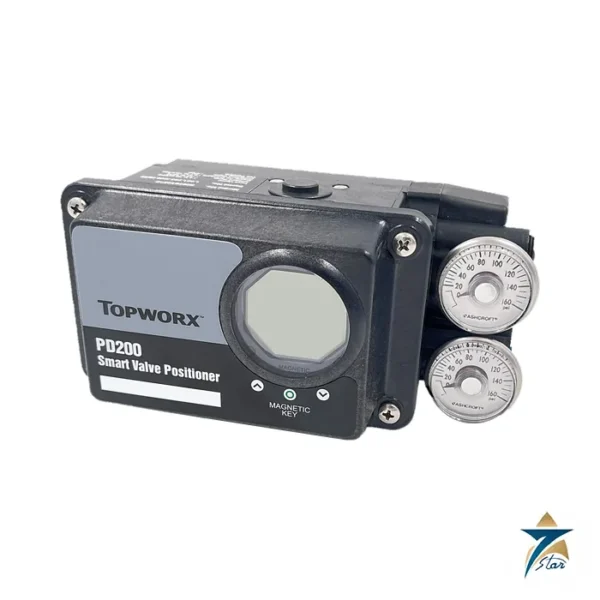
The MC is an accessory, installed between the actuator and the feedback or control device. Typical partners are rotary-shaft analog and digital positioners, electronic position transmitters such as the IMI STI 2030, and limit-switch boxes. The coupling kit is designed so that the mounted accessory receives no radial force, which protects the accessory bearing and gives a steadier signal over time.
It is used with single and double acting linear actuators, for example the manufacturer SC/V linear actuator and SC damper actuator that appear in its related-products list. Whether a given positioner can be coupled depends on the coupling kit, so state the positioner model when you enquire.
Selection and ordering checklist for MC
- Actuator stroke: the standard cam suits strokes above 70 mm, and the linearity figure applies from 90 up to 400 mm.
- Housing material: anodised aluminium (1.2 kg) or stainless steel 316 (2.7 kg), depending on corrosion exposure.
- Positioner, transmitter or limit switch to be coupled, with its shaft and mounting dimensions.
- Ambient temperature, with -40 to 120 °C as the listed range.
- Single or double acting actuator and the direction of motion on air failure.
- Mounting interface on the actuator yoke or bracket.
Installation and maintenance of the MC
Mount the MC on the actuator so that its pickup follows the stem along the full stroke. Set the cam to the actual stroke in the field; the brochure notes that the device can be adapted to any stroke on site, which helps when the final stroke is only confirmed at commissioning. Fit the coupling kit to the positioner shaft, check that nothing binds at either end of the travel, then calibrate the positioner in the normal way.
Because the mechanism is enclosed, there is little to service. The manufacturer describes it as maintenance free, with a robust construction not affected by dust, ice, temperature or other contaminants. A visual check at turnaround for loose mounting bolts and a check of the coupling are sufficient in most plants.
Typical applications in Oman and the GCC
Linear control valves in refineries, gas plants, desalination plants and power stations often run in heat and blowing sand. An open lever-and-pin linkage collects dust and can be knocked by maintenance staff; an enclosed converter avoids both. The MC is also used where the stroke is short, such as small globe valves, where a standard lever would give poor resolution to the positioner. The upper temperature of 120 °C gives margin on valves close to hot lines.
Benefits of the MC compared with a lever arrangement
| Feature | Practical effect |
|---|---|
| No exposed lever moving during the stroke | Less risk of damage and no pinch point for personnel |
| 90° output with low linearity error | More accurate feedback to the positioner |
| Backlash recovery system | Stable signal on direction reversals |
| Self-cleaning, maintenance-free design | Suited to dust, ice and temperature swings |
| Field-adjustable stroke | One unit can be set to the final actuator travel |
Information to send with your MC enquiry
- Actuator make, model and stroke length.
- Positioner, transmitter or switch box model to be mounted.
- Housing material preference.
- Ambient temperature and site conditions.
- Quantity and delivery location.
Documents and quotation
A manufacturer brochure for the MC is attached on this page, including the technical specifications and benefit list. An instruction manual is published by the manufacturer; ask us if you want it before installation.
Send the part number MC with your actuator and positioner details and Seven Star LLC will prepare a quotation for Oman and the GCC.
Datasheets & Documents
- Brochure IMI STI MC Brochure Download
Reviews (0)
How would you rate this product? Cancel reply
About brand
IMI STI is an Italian manufacturer of pneumatic, hydraulic and direct-gas valve actuators, valve positioners and actuator accessories. It is based in Levate, near Bergamo, and is part of the IMI plc group (IMI Process Automation).
Seven Star LLC is an independent supplier in Muscat. We list IMI STI positioners, actuators and switches for valve automation in Oman and the GCC and source them by full model code.
IMI STI company profile
| Established | 1960, in Gorle (Bergamo), Italy |
|---|---|
| Manufacturing site | Levate (Bergamo), Italy, since 2014. The plant is about 15 km from the original Gorle site. |
| Group | IMI plc, Process Automation division. STI S.r.l. is the legal entity and IMI STI is the brand name. |
| Product families | Quarter-turn Scotch yoke actuators, linear actuators, lift-and-turn actuators, stepper actuators, valve positioners, limit switches, pressure switches and pneumatic accessories |
| Typical duty | Emergency shutdown and isolation valves, anti-surge valves, turbine bypass and steam valves, dampers and process control valves |
| Industries | Oil and gas, power, petrochemicals, process industries, water and metals |
Milestones
- 1960: STI is founded in Gorle, Bergamo.
- 2002: IMI plc acquires STI, according to the company's own literature.
- 2014: Manufacturing moves to the new plant in Levate, about 15 km from Gorle.
IMI STI product series
| Series | Type | Key published data |
|---|---|---|
| RTC | Pneumatic Scotch yoke quarter-turn actuator | Up to 12 bar supply, -30 to +100 °C ambient, 90° rotation; single-acting, double-acting or spring-return; air, nitrogen, sweet or sour gas; ISO 5211 mounting; SIL 3, ATEX, PED, IP66/67M |
| RTQ | High-torque pneumatic Scotch yoke actuator | For large ball, plug and butterfly valves in harsh environments; canted or symmetrical yoke |
| RTQD / RTQH | Direct-gas and hydraulic Scotch yoke actuators | RTQD: gas-over-oil, operating pressure up to 114 bar, -20 to +100 °C; RTQH: hydraulic version for sites with a hydraulic power supply |
| SC/V, SC | Pneumatic linear actuators | For globe and gate valves (SC/V) and for dampers (SC); SC/VLT is the lift-and-turn version |
| SHP | Smart high-performance positioner | HART 7, self-tuning, Cv up to 2.3, 2.5 to 10.5 bar supply, ATEX and IECEx, IP66 aluminium or stainless steel housing |
| SHP-SIS | Safety positioner | IEC 61508:2010 up to SIL 3, built-in partial stroke testing, -55 to +85 °C ambient |
| FasTrak FT, QuickTrak | Smart digital positioners and valve control systems | Digital positioning with valve diagnostics |
| SA/CL | Analog positioner | Analog positioner for control valve actuators |
| 2130 | Limit switch box | Position feedback for rotary valve actuators |
Scotch yoke actuators give their highest torque at the start and end of the stroke. That is where a ball, plug or butterfly valve needs the most break-out and seating torque, so a Scotch yoke can be smaller than a rack-and-pinion actuator for the same valve. A canted yoke moves the torque peak toward one end of the stroke, for valves whose highest demand is when they close. A symmetrical yoke gives the same curve in both directions.
Where IMI STI products are used
In the GCC, IMI STI actuators and positioners appear mostly on emergency shutdown (ESD) and blowdown valves, compressor anti-surge valves, steam turbine bypass valves and large dampers in oil and gas, refining, petrochemical and power plants. On shutdown valves the SHP-SIS positioner adds partial stroke testing, so the valve can be proven to move without taking the plant down.
Ordering and replacement: what we need
For an actuator, send the full model code from the nameplate, the valve type and size, required torque or thrust with safety factor, supply medium and pressure, fail position (fail-close, fail-open or fail-last), stroke time, mounting flange (ISO 5211) and stem adaptor, ambient temperature range and the hazardous-area certification required. For a positioner, send the model, actuator type, signal (4-20 mA, HART), whether partial stroke testing or a SIL rating is needed, and the cable entry thread. When a series has been superseded, we quote the successor that IMI names in its documentation and point out any differences in mounting or signal.
Facts checked against IMI Process Automation product pages and published company history, October 2026.
Browse IMI STI products by category: Valve Positioners, Valve Actuators.
FAQ
Questions about the IMI STI MC Linear-to-Rotary Motion Converter
Answers from our engineering team on installation, compatibility and integration.
01What does the MC motion converter do?
It converts the linear movement of a valve stem or actuator rod into a 90° rotary movement. This allows a rotary positioner, position transmitter or limit-switch box to be mounted on a linear actuator.
02What stroke range does the MC cover?
The standard cam is intended for strokes above 70 mm. The manufacturer quotes a linearity error of 1.1 % for strokes from 90 up to 400 mm.
03What materials and weights are available for the MC?
The housing is anodised aluminium or stainless steel 316. The aluminium version weighs 1.2 kg and the stainless steel version 2.7 kg.
04What temperature range is listed for the MC?
The listed operating range is -40 to 120 °C. Lower or higher temperatures can be requested from the manufacturer.
05Why use an MC instead of a lever and pin?
The enclosed mechanism avoids an exposed moving lever, includes backlash recovery, and is designed to give lower linearity error than a traditional lever-and-pin feedback, particularly on short strokes.


Reviews
There are no reviews yet.