Brand:

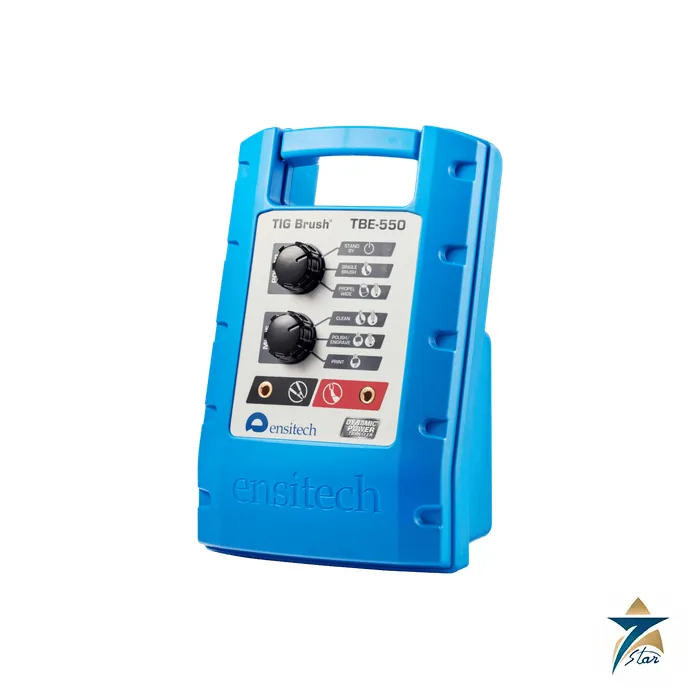
Ensitech TBE-550 TIG Brush Weld Cleaner

Description

Electrochemical weld cleaning for medium and heavy stainless work

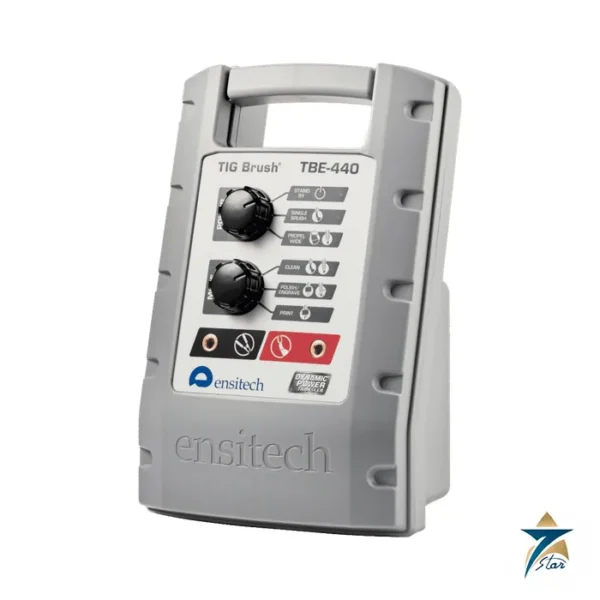
The Ensitech TBE-550 is the 550-class control unit of the TIG Brush system. It removes heat tint and oxides from stainless steel welds by combining electric current, heat and a cleaning fluid delivered through a conductive brush, and it passivates the cleaned surface in the same pass. Ensitech positions the 550 for mid to heavy-duty work where the smaller 330 and 440 units run short of power, for example on dirtier TIG, MIG or MAG welds.

The TBE designation marks the dual-voltage version for markets outside Australia and New Zealand. It accepts single-phase supplies from 120 to 230 VAC, while the TBX-550 is the 230 VAC-only variant. Output is managed by Ensitech’s patented Dynamic Power Transfer supply, which adjusts power as the brush wears so that current stays controlled.

Technical specifications

Parameter Specification
Manufacturer / model Ensitech / TIG Brush TBE-550
Market All regions except Australia and New Zealand
Mains voltage 120–230 VAC +5%/−10%, single phase
Input current Average of 6 A
Power supply Dynamic Power Transfer, 550 VA
Maximum operating output current 80 A
Overload control Smart Circuit
Duty cycle Rated for continuous use at 30 °C ambient on any mode and power setting
Application selection Rotary switch: Standby, Single Brush 16 V, PROPEL / Wide 11 V
Mode selection Rotary switch: Clean, Polish / Engrave, Print
Maximum brush size Dual
Cables Red EPDM 4 m with handle; black EPDM 4 m with clamp
Case 550 series, injection-moulded PC/ABS, IP64, blue
Dimensions (W × D × H) 245 × 190 × 370 mm
Weight 12 kg
Operating environment −30 °C to +45 °C
Standards compliance CE, C-Tick N22274

Choosing application tools and modes

The application switch matches the output voltage to the tool. Single-brush tools run at 16 V, while the PROPEL torch and wide brushes use the 11 V setting. Ensitech lists five tool options for the 550: the Classic Handle with Wand (M6 brush), the Classic Handle with LokWand (push-in brush), the PROPEL Torch, the Slimline PROPEL (push-in brush) and the Flexi Handle with Flexi Wand (5/16 in brush).

According to the manufacturer’s product page, the standard 550 Slimline kit contains the control unit, a Slimline application tool on a 4 m cable, the ground cable, ten push-in brushes, 1 L each of weld cleaning and neutralising fluid, PPE, a fluid jar, a spray bottle and the instruction manual. Other application tools are separate add-on items, so list them explicitly if you need more than the Slimline torch.

The Clean mode handles weld discolouration. Polish/Engrave and Print support surface finishing and marking with the corresponding Ensitech consumables. Because the unit is rated for continuous use at 30 °C, long cleaning runs do not require cooling breaks within that rating. Check the operating environment limit of 45 °C for hot workshop conditions.

Documents and quotation

The Ensitech TBE-550 specification sheet is attached under the documents tab. Ensitech also publishes the instruction manual, quick-start guides and safety data sheets for the cleaning fluids on its website. For other machines in this group, browse Weld Cleaning & Passivation or compare the Cougartron Fury200 weld cleaning machine.

For a quotation, send the model (TBE-550 or TBX-550), the kit and application tools required, quantities of brushes and fluids, the stainless grade and the typical weld size.

How the TBE-550 Cleans and Passivates Stainless Steel Welds

Welding stainless steel leaves a heat-affected zone with coloured oxide layers, often called heat tint. Under these oxides the surface can be depleted in chromium, which weakens the passive layer that gives stainless steel its corrosion resistance. If the heat tint is left in place, corrosion can start along the weld, especially in humid, salty or chemical environments.

Electrochemical weld cleaning removes the oxide layer by passing current through an electrolyte held in a conductive brush. The workpiece is connected to the ground cable, the brush is wetted with cleaning fluid, and as the operator moves the brush along the weld the combination of current, heat and fluid dissolves the discoloured layer. The process also promotes formation of a fresh passive layer. Compared with pickling paste based on hydrofluoric and nitric acid, electrochemical cleaning is faster to apply locally and avoids handling those strong acids, although the cleaning fluids still require the precautions given in their safety data sheets.

TBE-550 Operating and Maintenance Tips

  • Clean the area of loose spatter and grease first; the brush cleans oxides, not heavy contamination.
  • Choose the mode and output setting for the job: Clean for discolouration, and the dedicated settings for polishing or marking with the matching consumables.
  • Keep the brush wet and moving; standing still on one spot can mark the surface.
  • Neutralise and rinse the cleaned area after treatment as described in the instruction manual, so no fluid residue remains on the part.
  • Replace brushes when they are worn down, and keep the cables, handle and connections free of fluid build-up.
  • Wear the PPE recommended by the manufacturer, including eye protection and gloves, and work in a ventilated area.

Choosing Between Weld Cleaning Methods

Mechanical methods such as grinding or wire brushing can remove heat tint but leave a rougher surface and may embed iron particles if non-dedicated tools are used. Chemical pickling treats large areas but needs controlled handling and disposal of acids. Electrochemical cleaning with a unit like the TBE-550 is typically chosen for visible welds on finished parts, for on-site work and for workshops that want to avoid pickling paste. The 550 class is the step up for dirtier welds and for wide brushes where the smaller units would be slow.

Typical Applications in Oman & the GCC

Stainless steel fabrication for food and beverage plants, desalination and water treatment equipment, pharmaceutical and dairy installations, architectural balustrades and kitchen equipment all benefit from weld cleaning. In coastal locations, where chloride exposure accelerates tea staining and pitting, proper post-weld cleaning and passivation helps preserve the appearance and corrosion resistance of stainless steel.

Why Source the Ensitech TBE-550 from Seven Star LLC

Seven Star LLC supplies Ensitech equipment and spare parts to industrial, laboratory and project customers across Oman and the GCC. Our team works from the complete ordering code rather than a short description, because many manufacturers sell several closely related variants under similar names. When you request a quote, we compare the requested code with the manufacturer’s published data and, for a replacement, with the label of the installed unit, so that differences in version, accessories or scope of supply are raised before the order is placed.

Our team can help confirm the correct ordering code, list the accessories and consumables that are ordered separately, and collect the documentation your project or maintenance department needs for its records. To start, request a quote with the model, quantity, application and any site or project specification that applies.

Datasheets & Documents
  • PDF Datasheet Ensitech TBE-550 TIG Brush specifications Download
Reviews (0)

Reviews

There are no reviews yet.

How would you rate this product?

It takes about 10 seconds — just tap a star. Your email is never published.

About brand

Ensitech is an Australian company based in Sydney that makes the TIG Brush electrochemical weld cleaning system for stainless steel. The product was started by electrical engineer Clive White in the mid-2000s to remove heat tint from welded stainless steel without pickling paste. Ensitech now exports TIG Brush machines and fluids to more than 25 countries and set up a US arm in Chicago in 2013.

Seven Star LLC, an independent supplier in Muscat, lists the TBE-550 weld cleaner and sources Ensitech equipment and fluids for stainless steel fabricators.

Ensitech company profile

Founded Mid-2000s, Sydney, Australia
Founder Clive White
Headquarters Sydney, Australia
US subsidiary Ensitech Inc., Chicago, 2013
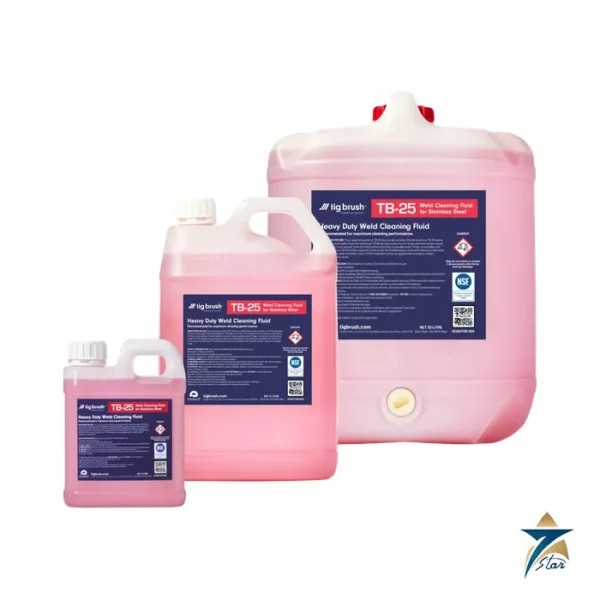
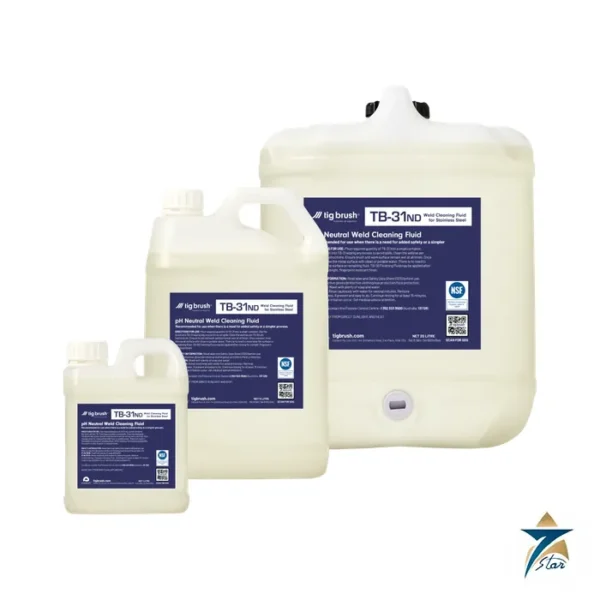
Product families TIG Brush TBE-330, TBE-440, TBE-550 and TBE-700 weld cleaners, TB-25 heavy-duty and TB-31ND pH-neutral weld cleaning fluids, brushes and wands

Milestones

  • 2009: TIG Brush is shown at National Manufacturing Week.
  • 2013: Ensitech Inc. opens in Chicago.

TIG Brush weld cleaning systems

The TIG Brush combines electric current, heat and a cleaning fluid applied through a conductive brush, in place of pickling paste or abrasive work on discoloured welds. The current range covers the 330, 440, 550 and 700 control units. TBE models accept 110–230 V supplies, while TBX models are built for 220–230 V only. Each unit works with interchangeable application tools such as the Slimline torch, LokWand, PROPEL torch and Flexi Handle.

Ensitech products we list

Family Examples
Weld Cleaning & Passivation TB-25 Heavy-Duty Weld Cleaning Fluid, TB-31ND pH Neutral Weld Cleaning Fluid, TBE-330 TIG Brush Weld Cleaner, TBE-440 TIG Brush Weld Cleaner, TBE-550 TIG Brush Weld Cleaner, TBE-700 TIG Brush Weld Cleaner

Ordering Ensitech equipment: what we need

Give the control unit model and series (TBE or TBX), the application tool you plan to use, and the stainless grade and typical weld type. For consumables, list the brush type and the cleaning and neutralising fluids by name. We check the selection against Ensitech documentation and provide the manufacturer's specification sheet on request.

Facts checked against AMTIL, Australian Export Awards and Stainless Steel World profiles, October 2026.

FAQ

Questions about the Ensitech TBE-550 TIG Brush Weld Cleaner

Answers from our engineering team on installation, compatibility and integration.

01What mains supply does the TBE-550 need?
The specification sheet lists 120–230 VAC single phase (+5%/−10%) with an average input current of 6 A.
02What is the maximum output current?
Ensitech rates the TBE-550 at 80 A maximum operating output current from a 550 VA Dynamic Power Transfer supply.
03Can it run continuously?
Yes. It is rated for continuous use at 30 °C ambient on any mode and power setting.
04Which modes does the unit offer?
The mode switch selects Clean, Polish/Engrave and Print. The application switch selects Standby, Single Brush (16 V) or PROPEL/Wide (11 V).
05How does the TBE-550 differ from the TBX-550?
The TBE version accepts 120–230 VAC, while the TBX-550 is intended for 230 VAC markets only. Other listed data are the same.