- Automation & ControlView all 3,156 products
- Automation Accessories
- AC Drives
- PLC & I/O Cards
- Industrial Communications
- Vibration Monitoring
- Controllers & Data Acquisition
- Isolator & Barrier
- Safety Switches & Guard Locking
- Encoders
- Motor Soft Starters
- CCTV & Security
- Pneumatic Cylinders
- HMI Displays
- Servo Drives
- Industrial Computers
- Machine Vision
- Automation Software
- Robotics
Brand: ION Science
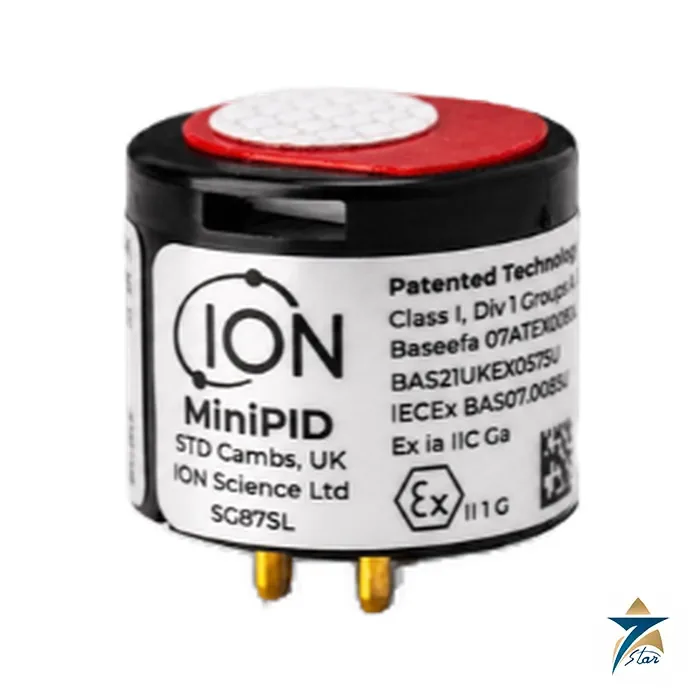
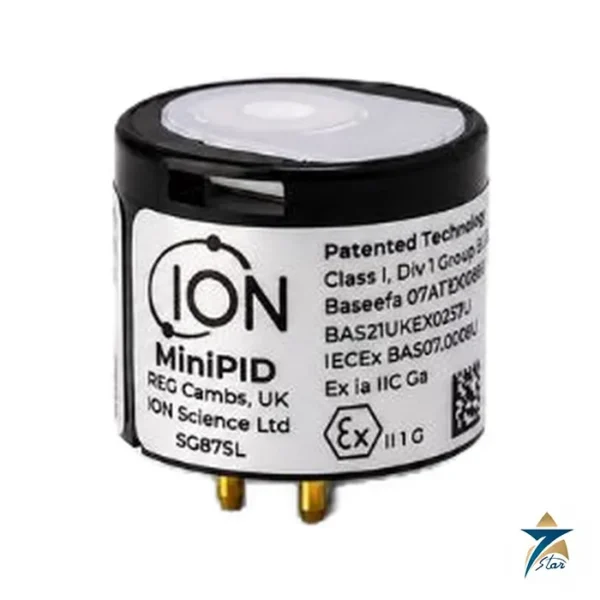
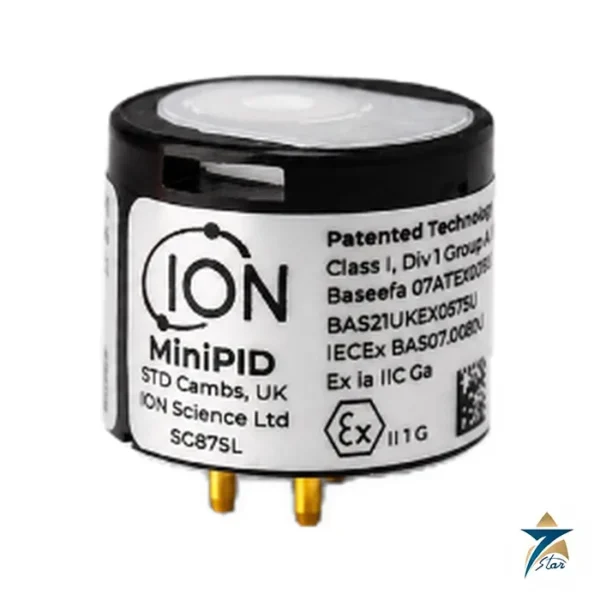
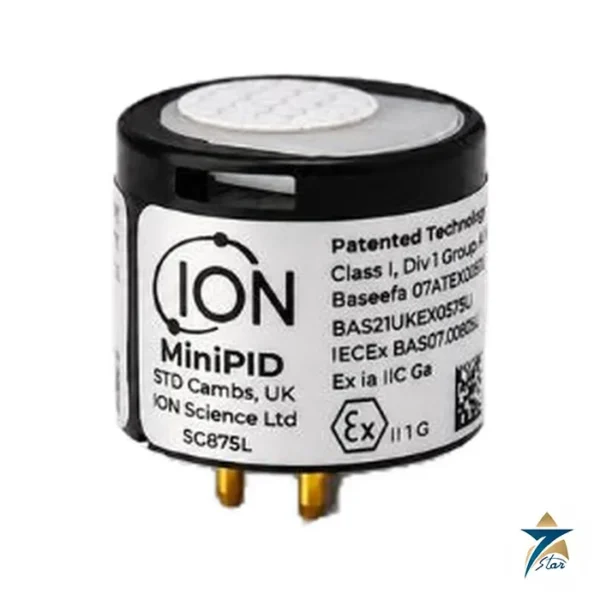
ION Science MiniPID 2 HS High-Sensitivity PID Gas Sensor
Description
Overview
The ION Science MiniPID 2 HS is the high-sensitivity member of the MiniPID 2 range, and the datasheet describes it as designed to detect volatile organic compounds at sub-ppb concentrations. It reaches a minimum detection limit of 0.5 ppb with a sensitivity of more than 600 mV per ppm, which is twenty times the figure of the PPB sensor. Seven Star LLC is an independent supplier serving Oman and the GCC. This page is an engineering summary, not a substitute for the datasheet.
Detecting below one ppb
At concentrations this low, contamination is the main problem. The datasheet explains that detection can be compromised by moisture, dust and aerosols, and that ION Science therefore developed a patent-pending filter to protect the ionisation chamber. The result is a sensor whose electrode stack is coloured red, a range above 3 ppm and a T90 of less than 12 seconds. The narrow range is the price of the sensitivity, and the designer must accept it knowingly: this is a sensor for clean environments where organic vapours are rare, not for leak searches near a process line.
Data table for ION Science MiniPID 2 HS
| Item | Value |
|---|---|
| Electrode stack colour | red |
| Minimum detection limit | 0.5 ppb |
| Range | more than 3 ppm |
| T90 response time | less than 12 seconds |
| Sensitivity | more than 600 mV/ppm |
| Filter | patent-pending contamination filter |
| Lamp | 10.6 eV |
| Supply voltage, internal regulator | 3.6 to 18 V (10 to 18 V when not intrinsically safe) |
| Supply voltage, regulated supply | 3 to 3.6 V |
| Current | 20 to 32 mA, 130 mA for 100 ms at start-up |
| Power consumption | 100 mW at 3.3 V |
| Output signal | 0 to rail voltage minus 0.1 V |
| Temperature range | 0 to 40 degrees C |
| Humidity range | 0 to 99 percent RH, non-condensing |
| Sensor body life | more than 5 years |
| Lamp life | 10,000 hours |
| Package | Series 4/A |
| Order codes | MP3SHLHSAU2 (3 to 3.2 V), MP3SHLHSBU2 (3.2 to 3.6 V), MP3SHLHSCU2 (3.6 to 10 V), MP3SHLHSNU2 (3.6 to 18 V) |
| Hazardous area approvals | ATEX II 1G Ex ia IIC Ga and IECEx Ex ia IIC Ga, minus 40 to plus 55 degrees C ambient at 1.1 W; UL913 Class I, II, III Division 1; EAC |
Where the ION Science MiniPID 2 HS pays off
- Semiconductor fabrication, where airborne molecular contamination damages wafers.
- Cleanrooms and glove boxes.
- Fertility laboratories, where incubator air must be free of volatile organics.
- Air quality monitoring and HVAC feedback.
Such applications are present in the GCC in electronics assembly, pharmaceutical packing, research institutes and clinics. A detector with 0.5 ppb sensitivity can warn about outgassing from new fittings, adhesives, paint or cleaning products before they affect sensitive work.
How MiniPID 2 HS differs from the PPB sensor
The numbers frame the choice. The HS detects 0.5 ppb where the PPB detects 1 ppb. The HS tops out above 3 ppm where the PPB tops out above 40 ppm. Sensitivity is above 600 mV per ppm versus above 30. The operating temperature range is also narrower: 0 to 40 degrees C for the HS against minus 40 to plus 65 degrees C for the PPB. The HS is therefore for indoor conditioned spaces, and the PPB for general fieldwork.
Electrical and approval data
Supply is 3.6 to 18 V through the internal regulator, or 3 to 3.6 V from a regulated rail; current is 20 to 32 mA with a 130 mA start-up peak; power consumption is 100 mW at 3.3 V; and the output reaches the rail voltage minus 0.1 V. The sensor body is certified ATEX II 1G Ex ia IIC Ga and IECEx for minus 40 to plus 55 degrees C ambient at 1.1 W, with UL913 and CSA coverage for Class I, II, III Division 1. Humidity tolerance is 0 to 99 percent RH without condensation, and lamp life is 10,000 hours.
Choosing between HS and PPB
A frequent question is whether the extra sensitivity is needed. If the monitored air normally holds a few ppb of background organic vapour, the HS will read that background continuously and its narrow range above 3 ppm may be exceeded by a minor event; a PPB gives more headroom. If the space is meant to be essentially free of organics, such as a semiconductor bay or an incubator room, the HS picks up trends that the PPB would miss. Think also about environment: because the HS is rated 0 to 40 degrees C, it belongs inside air-conditioned rooms in the Gulf, not on an open roof in summer.
Handling a high-sensitivity sensor
Because the sensor reacts to tiny amounts of organic vapour, keep it away from solvents, adhesives, marker pens and hand creams during installation and calibration. Let it warm up and stabilise longer than a standard sensor, ideally overnight before a baseline is accepted, take zero readings in verified clean air, and record the baseline over a few days. Calibrate with a low ppm standard of the intended gas, and confirm that the instrument’s amplifier and analogue-to-digital converter have enough resolution for the millivolt signals involved.
Verification before installation
Before a high-sensitivity sensor goes into a permanent monitor, run an acceptance test on the bench. Expose it to zero air and note the baseline, apply a low ppm span gas, confirm that the output rises as expected and settles within the stated T90 of 12 seconds, then return to zero and check that the signal falls back without a long tail. A long tail suggests contamination in the chamber, which at sub-ppb levels is serious. Keep the test records with the serial number so that later performance can be compared with the commissioning data and any decline is recognised early.
System kits
ION CONNECT provides UART and I2C communication and PC software to calibrate, set alarms and enter response factors, so a bench technician can verify a sensor before it is fitted into a cleanroom monitor, and ION TRANSMIT converts the data to RS-485 Modbus RTU and 4 to 20 mA. The ION GAS HOOD supplies impressed flow where the application needs it.
Related items you may also need: ION Science Titan 2 Fixed Benzene Monitor | ION Science Tiger XT Handheld VOC Detector | Apollo FL5100-600APO Soteria Dimension Optical Detector | All ION Science products.
Before you order the ION Science MiniPID 2 HS
- To avoid a wrong delivery, compare the code on the nameplate of the installed unit with the ION Science MiniPID 2 HS code on this page.
- The quotation for the ION Science MiniPID 2 HS states the confirmed code and the lead time to site.
- The attached manufacturer datasheet covers the ION Science MiniPID 2 HS ratings, dimensions and installation details.
- Delivery of the ION Science MiniPID 2 HS is arranged to project sites in Oman and across the GCC, alongside the rest of our fire & gas detectors range.
- A spare ION Science MiniPID 2 HS on the shelf is a simple way to protect critical service from long lead times.
Documents and quotation
The ION Science MiniPID 2 HS datasheet from the manufacturer holds the full table and order codes. We include the sensor datasheet with this page; it shows the drawings and the order codes. Send your RFQ stating the model, the order code that matches your supply voltage, the quantity, and your delivery location in Oman or the GCC.
Other Models in the MiniPID2 Range
Seven Star LLC supplies models from the MiniPID2 range in Oman and the GCC. Compare the related models below and request a quote for the one that matches your application.
| Model | Category | |
|---|---|---|
| ION Science MiniPID 2 PPB VOC PID Gas Sensor | Fire & Gas Detectors | View details |
| ION Science MiniPID 2 PPB WR Wide-Range PID Gas Sensor | Fire & Gas Detectors | View details |
| ION Science MiniPID 2 PPB XF Long-Life PID Gas Sensor | Fire & Gas Detectors | View details |
| ION Science MiniPID 2 HS High-Sensitivity PID Gas Sensor | Fire & Gas Detectors | You are viewing this model |
Datasheets & Documents
- Datasheet ION Science MiniPID 2 HS High-Sensitivity PID Gas Sensor Datasheet Download
Reviews (0)
How would you rate this product? Cancel reply
About brand
ION Science is a British maker of gas detection instruments, based in Fowlmere, Cambridgeshire. It has been active since 1989 and is best known for photoionisation detectors (PIDs) that measure volatile organic compounds at low concentrations. Its portable and fixed instruments are used for worker exposure monitoring, leak detection and environmental surveys.
Seven Star LLC is an independent supplier in Muscat. We list ION Science detectors for oil and gas, petrochemical and environmental users in Oman and the GCC.
ION Science company profile
| Active since | 1989, United Kingdom |
|---|---|
| Head office | Fowlmere, Cambridgeshire |
| Core technology | Photoionisation detection (PID) with patented Fence Electrode design |
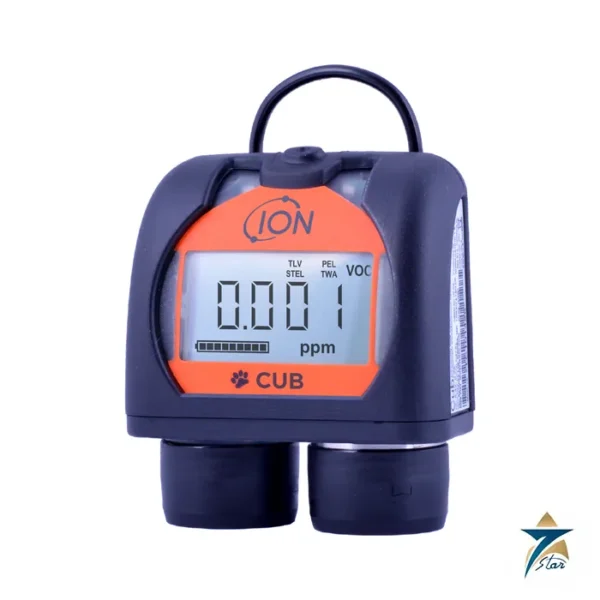
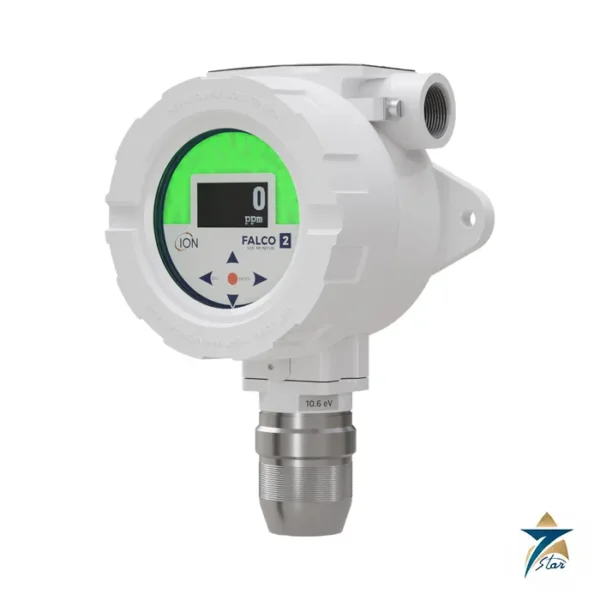
| Product families | Tiger XT and Cub portable PIDs, Titan benzene monitor, Falco fixed detectors |
Milestones
- 1989: ION Science begins operating.
- 1998: Patents its PID sensor.
- 2002: Patents the Fence Electrode for humidity-resistant PIDs.
- 2017: Opens its head office in Fowlmere.
ION Science product series
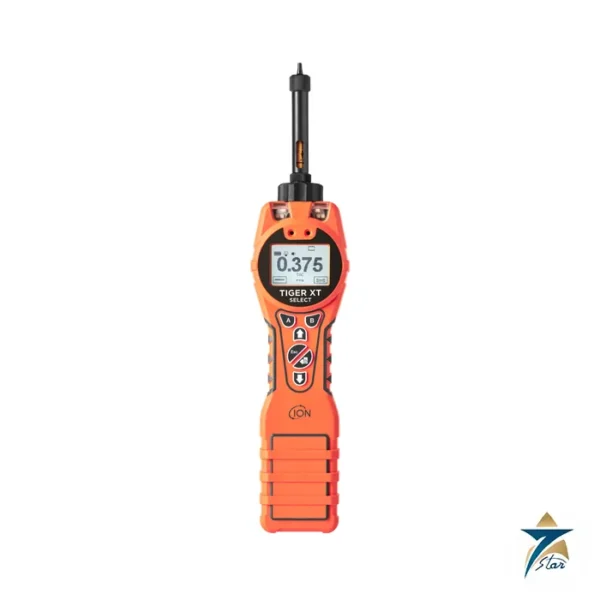
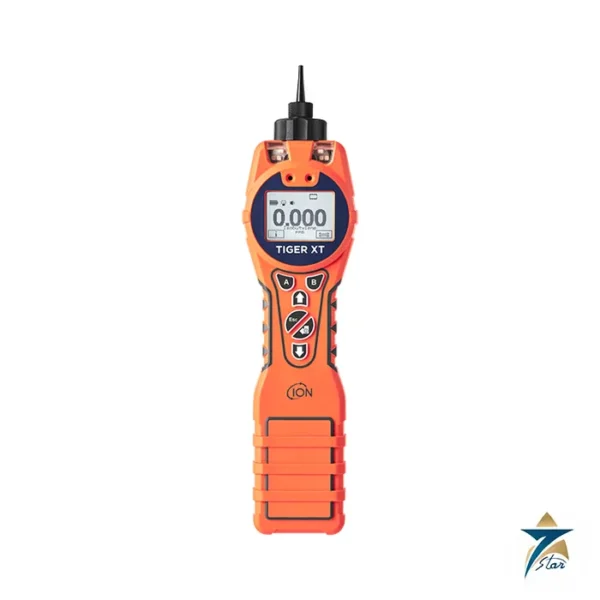
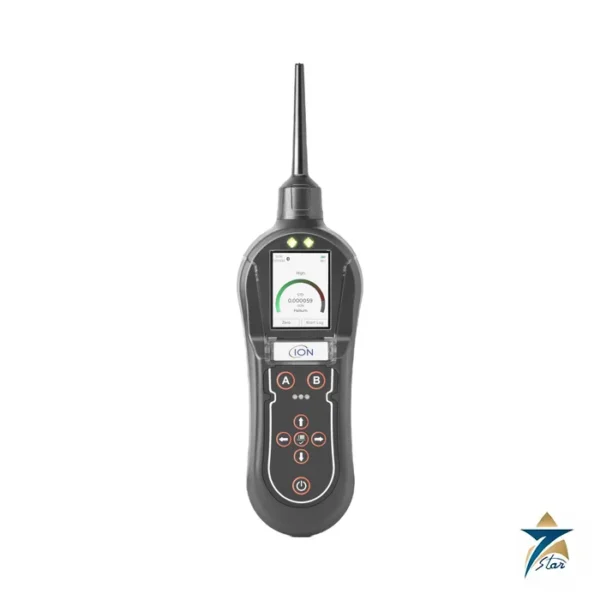
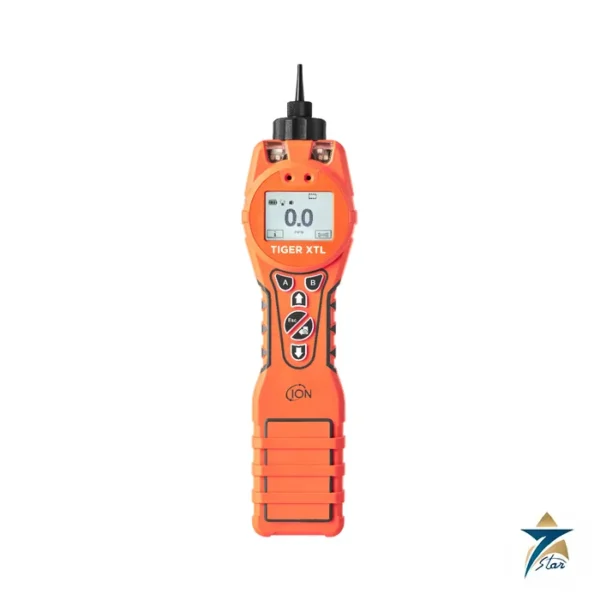
The Tiger XT is a handheld VOC detector for hazardous areas, and the Titan 2 is a fixed benzene monitor.
A PID uses ultraviolet light to ionise volatile organic compounds and measures the resulting current, which allows detection down to ppb levels. Response factors convert the reading for each specific compound. General VOC detectors measure the total, while benzene-specific monitors separate benzene from other hydrocarbons, which matters because benzene has very low exposure limits.
Where ION Science detectors are used
Leak detection, confined space entry checks, worker exposure monitoring, refinery and terminal benzene monitoring, and environmental and soil surveys.
Ordering ION Science detectors: what we need
Send the model, the compounds and ranges, lamp type, hazardous-area requirement and accessories such as probes, filters and calibration kits.
Facts checked against ION Science's published company history, October 2026.
Browse ION Science products by category: Gas Analyzer Systems, Fire & Gas Detectors.
FAQ
Questions about the ION Science MiniPID 2 HS High-Sensitivity PID Gas
Answers from our engineering team on installation, compatibility and integration.
01How sensitive is the ION Science MiniPID 2 HS?
The datasheet states a minimum detection limit of 0.5 ppb and sensitivity above 600 mV per ppm, with a range above 3 ppm.
02What temperature range does the MiniPID 2 HS operate in?
The datasheet gives 0 to 40 degrees C, narrower than the minus 40 to plus 65 degrees C of other MiniPID 2 versions.
03What filter does the MiniPID 2 HS use?
It uses a patent-pending filter that protects the ionisation chamber from moisture, dust and aerosols, which otherwise compromise sub-ppb detection.
04Which order codes are listed for the MiniPID 2 HS?
MP3SHLHSAU2, MP3SHLHSBU2, MP3SHLHSCU2 and MP3SHLHSNU2 for the four intrinsically safe supply voltage windows.
05Where is the MiniPID 2 HS typically used?
Semiconductor fabrication, cleanrooms, fertility labs, glove boxes, HVAC and air quality monitoring are the applications named in the datasheet.


Reviews
There are no reviews yet.