Brand:

ION Science GasClam 2 Continuous Borehole Gas Monitor

Description

Overview

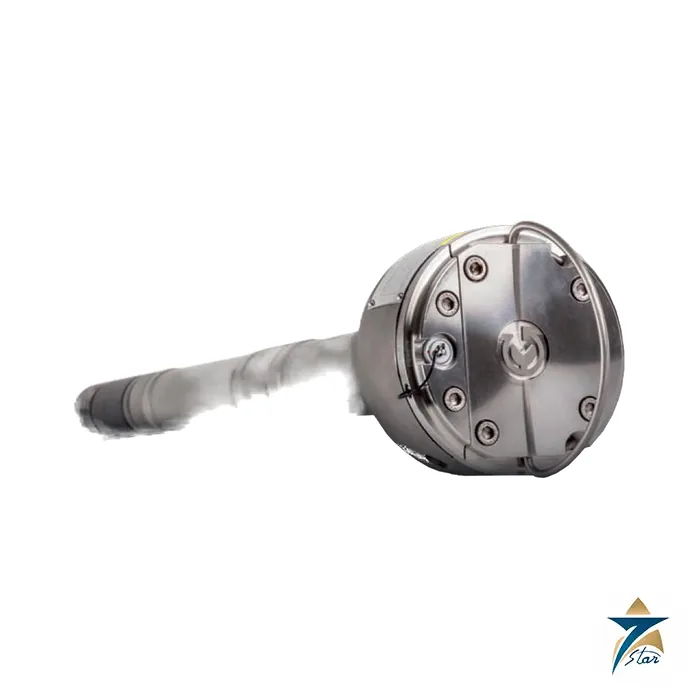
The ION Science GasClam 2 is an in-situ borehole gas monitor and data logger that sits inside a monitoring well and records what the ground gas is doing over weeks. Seven Star LLC is an independent supplier serving Oman and the GCC. The details below come from the manufacturer’s GasClam 2 user manual, version 1.2, which describes the instrument as the first continuous borehole gas monitor and logger of its type. They are restated here for geotechnical engineers, landfill operators and environmental consultants who have to prove gas conditions beneath a site.

Ground gas is a slow, changing hazard. Methane and carbon dioxide can accumulate under buildings and migrate along service trenches, and concentrations vary with barometric pressure, rainfall and water table. One-off spot readings can miss the worst conditions, so monitoring regimes call for repeated or continuous logging. The ION Science GasClam 2 takes automatic samples at set intervals and records them with date and time, so the evidence builds without a technician standing at the well.

What the ION Science GasClam 2 measures

The instrument can carry up to five gas sensors in fixed positions, together with two pressure sensors and an internal temperature chip. Choices include infrared CO2 and CH4 in either 0 to 100 percent or 0 to 5 percent ranges, an electrochemical O2 cell from 0 to 25 percent, electrochemical CO up to 2,000 ppm or H2S up to 100 ppm, a dual H2S and CO cell, and a photoionisation VOC sensor reading up to 4,000 ppm. Barometric pressure and borehole pressure are measured between 800 and 1,250 mbar with 1 mbar resolution. An optional piezoelectric water level sensor reads depth from 0 to 27 m with 0.01 m resolution.

Specification table for ION Science GasClam 2

Item Published value
Housing Stainless steel outer case and frame; polypropylene filter cover
Mass and size 7.5 kg; overall length 90 cm, head diameter 11 cm
Ingress protection IP68, continuous submersion 20 cm above the head for 7 days
Working environment 0 to +40 degrees C, up to 95 percent RH
Power options 2 x 1.5 V alkaline LR20, 2.6 V NiMH pack, 7.2 V lithium pack, 12 V external supply
Logging interval 3 minutes to 24 hours (lithium packs 15 minutes to 24 hours)
Memory Up to 30,000 date and time stamped sample sets
Communication RS232 at 115200 baud; setup by GasClam 2 software
CO2 and CH4 accuracy Plus or minus 2 percent of full scale (infrared)
O2 accuracy Plus or minus 5 percent of reading plus or minus one digit
Hazardous area marking II 2G Ex d ib [ib] IIB T4 Gb, certificate FTZU 07 ATEX 0105 X

How GasClam 2 differs from handheld ION Science detectors

The Tiger and Panther are carried by an operator and give a spot reading. The ION Science GasClam 2 stays in the ground, is sealed to IP68 and works unattended. It takes a sample every hour by default, giving about one month of life on the supplied rechargeable battery packs and up to three months with optional lithium packs. A sample cycle takes roughly two and a half minutes, which is why the minimum logging interval is three minutes. Where a handheld unit yields a reading in two seconds, the GasClam 2 yields a long record, trading speed for time coverage.

Applications in Oman and the GCC

Ground gas assessment is needed for landfill and dump sites, brownfield redevelopment, reclaimed land, areas near hydrocarbon facilities and construction on made ground. As Gulf cities expand onto former industrial or waste areas, consultants must show that buildings will not collect methane or carbon dioxide. The GasClam 2 is used to record concentrations together with barometric pressure so that worst-case conditions, such as falling pressure, are captured.

Installation and operation

Lower the instrument into the borehole standpipe so that its head seals the pipe, fit the moisture filter and select the sensors. Configure logging interval, number of samples, power supply and venting through the software, then start logging; the first sample is taken immediately. The manual warns that water in the borehole affects readings and that users should read the sections on optimising performance and on the effects of water before deployment. A water level sensor lets the operator see when flooding is a problem and flag those data.

Reading the data from a GasClam 2 deployment

Raw gas concentrations alone rarely settle a risk assessment. Ground gas assessments usually compare gas concentrations with barometric pressure and borehole pressure, because many gas events occur when the atmospheric pressure falls and gas is drawn out of the ground. The instrument records those parameters in every sample set, so the consultant can plot concentrations against pressure and identify the worst case. The software exports data to a spreadsheet for this analysis. When the carbon dioxide sensor of 0 to 5 percent range is fitted, note the manual’s explanation that it reads about 90 percent of the true value after a single sample, since the sensor and filter respond gradually, so a step change in concentration appears over a few samples rather than immediately. Sampling at shorter intervals, with external power if needed, gives a clearer view of fast changes.

Keep a deployment log that lists borehole identity, sensor serial numbers, filter changes, calibration dates and any water level events. It makes later quality review of the dataset much easier.

Service and calibration of GasClam 2

The manufacturer recommends regular bump tests with an annual service and calibration, and a twelve-month replacement of the MiniPID lamp when a VOC sensor is fitted. Registering within one month of purchase extends the warranty to two years. Do not connect or disconnect cables in a hazardous area and use only approved accessories.

Ordering notes for GasClam 2

Specify the sensors you need (position by position), whether you want the borehole water level sensor, the battery type, and any telemetry option. Please confirm the full configuration code with the supplier before ordering.

Related items you may also need: ION Science Tiger XT Handheld VOC Detector | ION Science Titan 2 Fixed Benzene Monitor | Oldham BM 25A Transportable Multi-Gas Area Monitor | All ION Science products.

How to specify the exact ION Science GasClam 2 configuration

The ION Science GasClam 2 is offered as a model with several kit and accessory options, so the exact supply is defined by the points below rather than by the model name alone.

  • Target gas or gases and the measuring range needed for the ION Science GasClam 2 application.
  • Lamp or sensor option where the instrument offers more than one, for example the standard VOC lamp or a selective configuration.
  • Hazardous area approval required for the site, such as ATEX or IECEx zone rating.
  • Accessories needed with the unit, such as charger, calibration adaptor, sampling probe, carry case or docking station.
  • Any data logging, software or calibration certificate requirement for your records.

Share these points, or the part number printed on an existing unit or previous order, and the quotation will list the confirmed kit contents.

Documents and quotation

The manufacturer’s GasClam 2 user manual is attached to this page as a datasheet. Send your RFQ with the part number GasClam 2, the sensor configuration, quantity and your delivery location in Oman or the GCC.

Datasheets & Documents
  • PDF Datasheet ION Science GasClam 2 Continuous Borehole Gas Monitor Datasheet Download
Reviews (0)

Reviews

There are no reviews yet.

How would you rate this product?

It takes about 10 seconds — just tap a star. Your email is never published.

About brand

ION Science is a British maker of gas detection instruments, based in Fowlmere, Cambridgeshire. It has been active since 1989 and is best known for photoionisation detectors (PIDs) that measure volatile organic compounds at low concentrations. Its portable and fixed instruments are used for worker exposure monitoring, leak detection and environmental surveys.

Seven Star LLC is an independent supplier in Muscat. We list ION Science detectors for oil and gas, petrochemical and environmental users in Oman and the GCC.

ION Science company profile

Active since 1989, United Kingdom
Head office Fowlmere, Cambridgeshire
Core technology Photoionisation detection (PID) with patented Fence Electrode design
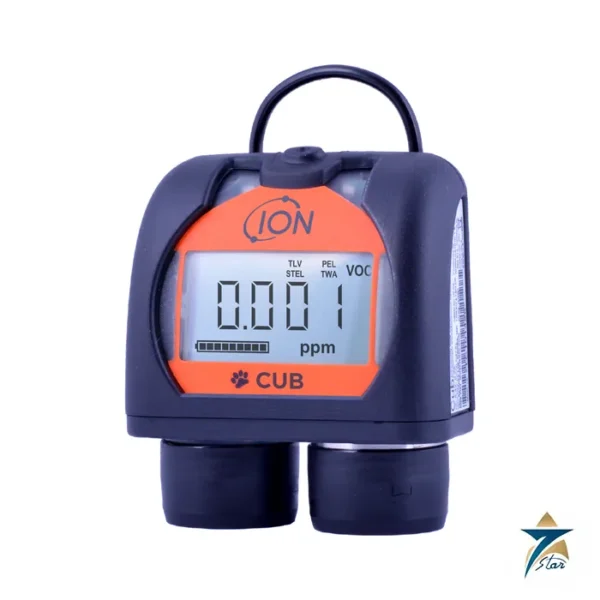
Product families Tiger XT and Cub portable PIDs, Titan benzene monitor, Falco fixed detectors

Milestones

  • 1989: ION Science begins operating.
  • 1998: Patents its PID sensor.
  • 2002: Patents the Fence Electrode for humidity-resistant PIDs.
  • 2017: Opens its head office in Fowlmere.

ION Science product series

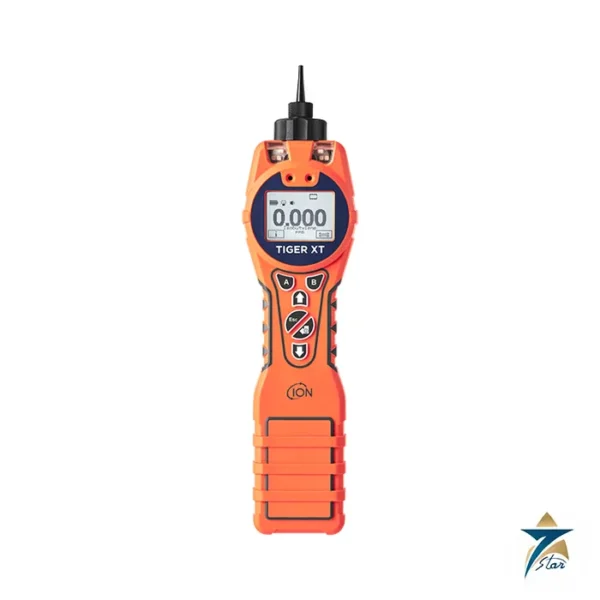
The Tiger XT is a handheld VOC detector for hazardous areas, and the Titan 2 is a fixed benzene monitor.

A PID uses ultraviolet light to ionise volatile organic compounds and measures the resulting current, which allows detection down to ppb levels. Response factors convert the reading for each specific compound. General VOC detectors measure the total, while benzene-specific monitors separate benzene from other hydrocarbons, which matters because benzene has very low exposure limits.

Where ION Science detectors are used

Leak detection, confined space entry checks, worker exposure monitoring, refinery and terminal benzene monitoring, and environmental and soil surveys.

Ordering ION Science detectors: what we need

Send the model, the compounds and ranges, lamp type, hazardous-area requirement and accessories such as probes, filters and calibration kits.

Facts checked against ION Science's published company history, October 2026.

FAQ

Questions about the ION Science GasClam 2 Continuous Borehole Gas

Answers from our engineering team on installation, compatibility and integration.

01What gases can the ION Science GasClam 2 measure?
Depending on configuration it measures CH4, CO2, O2, CO, H2S and VOC, plus temperature, barometric pressure and borehole pressure.
02How long does the GasClam 2 run unattended?
At the default one-hour logging interval the rechargeable packs last about one month, and optional lithium packs extend that to up to three months.
03What is the shortest logging interval of the GasClam 2?
The minimum is 3 minutes, or 15 minutes with lithium battery packs, because each sample cycle takes about two and a half minutes.
04Is the GasClam 2 suitable for hazardous zones?
Yes. It is marked II 2G Ex d ib [ib] IIB T4 Gb for Zone 1 and has IP68 protection with a stainless steel case.
05How many samples can the GasClam 2 store?
Its internal memory holds up to 30,000 date and time stamped sample sets, depending on configuration.