Brand:

ION Science MVI Portable Mercury Vapour Indicator

Description

Overview

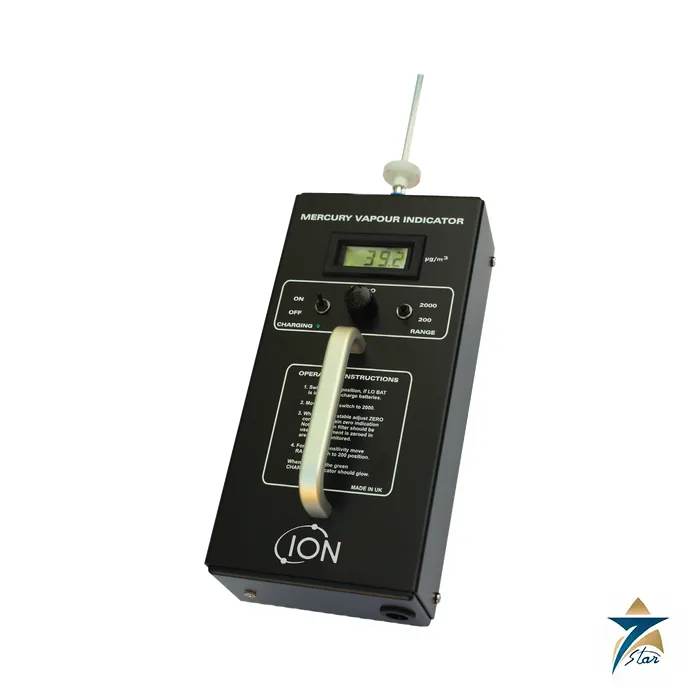
The ION Science MVI is the Mercury Vapour Indicator from ION Science, a portable instrument that measures mercury vapour in air and gives a reading within about three seconds. Seven Star LLC is an independent supplier serving Oman and the GCC. The manufacturer’s brochure, version 1.8, stresses that the unit does not saturate and needs no regeneration between readings, so a survey can continue without waiting for a sensor to recover. The notes below put that brochure into plain language for hygienists, decommissioning teams and plant owners dealing with mercury.

Mercury is awkward because it is heavy, volatile and easily lost in cracks, drains and soft surfaces. Spills evaporate slowly but continuously, and a room that looks clean can still hold a vapour concentration above the exposure limit. A fast, direct-reading meter lets a surveyor find the source, confirm a clean-up and check a worker’s breathing zone with the same tool.

Measuring principle of the ION Science MVI

The detector is a dual beam ultraviolet absorption module. Mercury atoms absorb ultraviolet light at a characteristic wavelength, and the instrument compares the absorption in two beams to calculate concentration. Because this is an optical measurement, it can handle high concentrations without saturating the way some gold-film sensors do, and it recovers quickly. A high-performance pump draws the sample through the cell for fast indication and clear-down.

Two ranges are provided: 0.1 to 199 and 1 to 1999 micrograms per cubic metre. The lower range suits time-weighted average monitoring and exposure checks, and the upper range allows spills and heavily contaminated areas to be surveyed. An audible alarm is factory pre-set to 20 micrograms per cubic metre and a large digital display shows the live value.

Technical data table for ION Science MVI

Parameter Published value
Detector Dual beam ultraviolet absorption module
Ranges 0.1 to 199 and 1 to 1999 micrograms per cubic metre
Response time 3 seconds
Accuracy Plus or minus 5 micrograms or plus or minus 10 percent of reading
Repeatability Plus or minus 5 percent FSD at 1 microgram per cubic metre
Alarm Audible, factory pre-set to 20 micrograms per cubic metre
Battery NiMH, up to 4.5 hours from full charge
Temperature 10 to 50 degrees C
Weight 3 kg (6 lb 10 oz)
Dimensions 145 x 295 x 80 mm

How MVI differs from other ION Science instruments

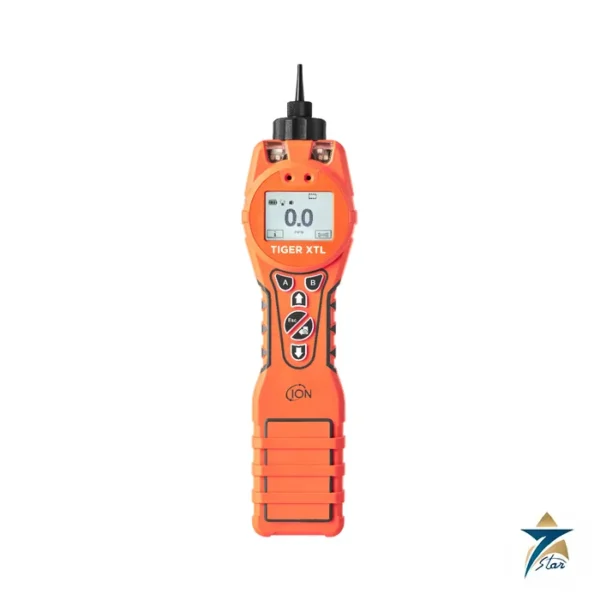
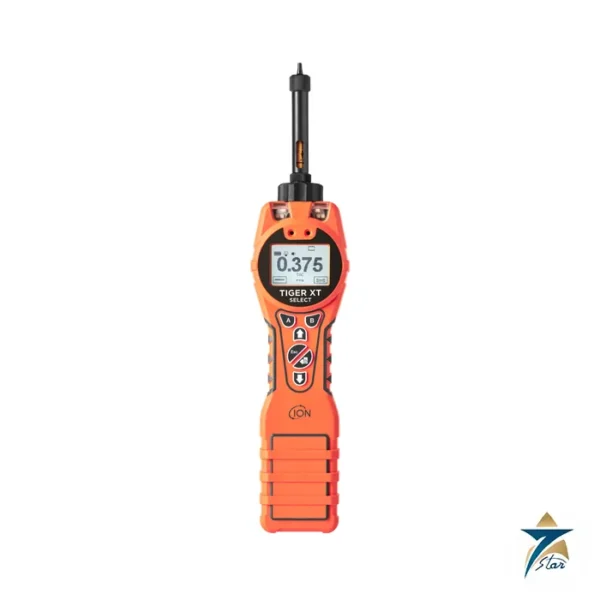
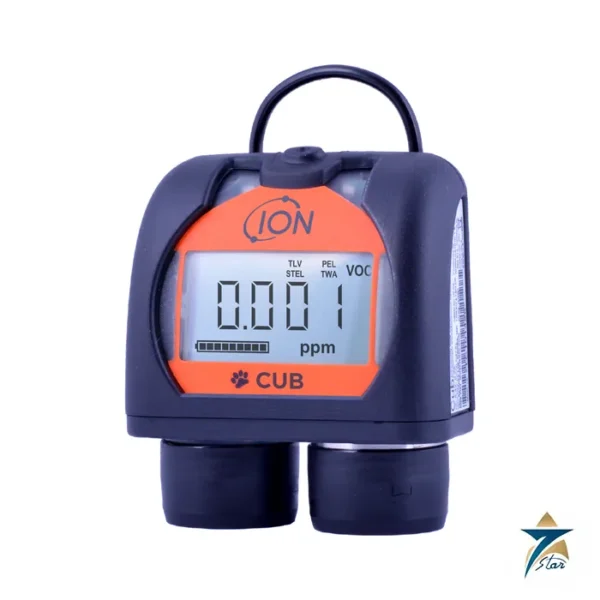
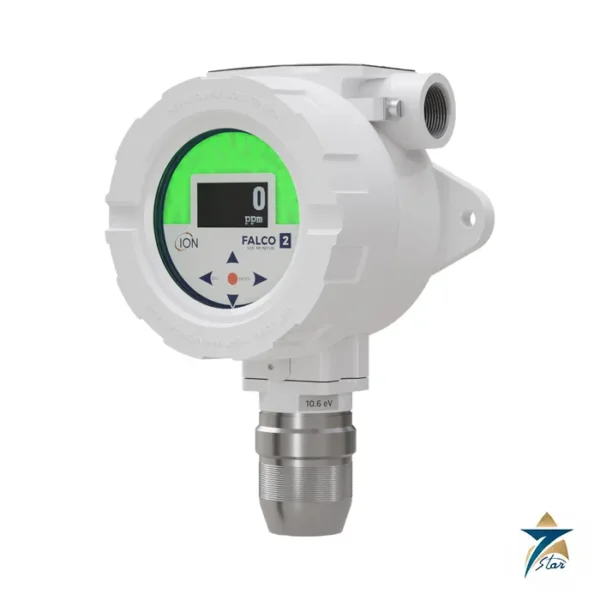
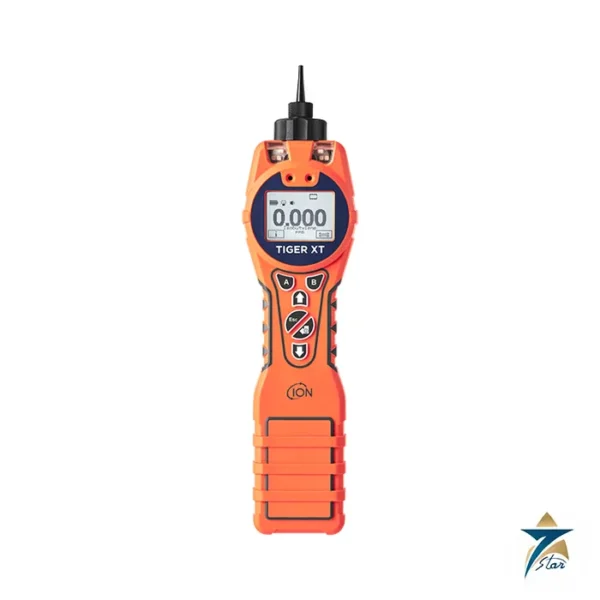
The ION Science MVI is a mercury-specific optical analyser, whereas the Tiger, Cub and Falco instruments are photoionisation detectors for general VOCs. The VOC instruments are calibrated and specified for organic vapours, not for mercury. The ION Science MVI weighs 3 kg against 870 g for a Tiger and is a survey unit rather than a pocket device. Use the ION Science MVI when the hazard is mercury and choose a PID when the hazard is solvent or fuel vapour.

Applications in Oman and the GCC

The brochure lists manufacturing, recycling, fluorescent lamp reprocessing, mining, petroleum, hydrocarbon, refining and bioremediation. Natural gas and crude streams can carry trace mercury, which accumulates in process equipment and must be checked before maintenance work, vessel entry and hot work. For plants in Oman and the GCC this makes the instrument relevant to shutdown planning, to laboratories using mercury thermometers and manometers, and to decontamination after an accidental spill.

Running a survey with MVI

Warm the unit up, take a baseline reading in clean air and then move the inlet across the suspect surface or space. Because the response is about three seconds, a surveyor can walk along a floor, pass the inlet along skirting boards and probe drains or equipment openings. Record peak and average values for the permit, and repeat after clean-up to demonstrate that levels have fallen below the limit. Continuous operation exceeds 4.5 hours on a charge, so a charge is usually sufficient for a shift.

Interpreting the numbers

Exposure limits for mercury vapour are expressed as time-weighted averages over a working shift, so a single high spot reading does not by itself mean a worker was overexposed, but it does show where the vapour source is. Surveyors usually begin on the low range because the factory alarm is set at 20 micrograms per cubic metre, and move to the high range when the display overranges near a spill. Temperature affects how quickly mercury evaporates, which matters in hot Gulf workshops, so a survey carried out in cool morning conditions can understate what will be found at midday. Ventilation also changes readings, therefore note whether doors, fans or air conditioning were running during the survey and repeat the measurement under the same conditions after clean-up. Combine instrument readings with visual inspection of floor cracks, sinks and equipment bases, where droplets lodge.

Service, calibration and warranty

The brochure states that annual calibration is required to maintain accuracy and the extended warranty. A two-year warranty applies when the instrument is registered online within one month of purchase, according to the supplier’s terms. Keep the inlet clean, protect the optics from liquid and contact the manufacturer or a service centre for calibration. Keep records of calibration certificates with the exposure monitoring file.

Safe handling during mercury work

An indicator shows the hazard but does not remove it. Teams should combine the ION Science MVI with the controls in their mercury procedure: restricted access, suitable respiratory protection when readings approach the limit, spill kits, sealed containers for waste and decontamination of tools and boots. After a survey, wipe the inlet area according to the manual and store the instrument away from contaminated zones so that the unit itself does not become a source of cross contamination.

Ordering notes for MVI

List the range you need, the accessories (the brochure mentions a range of accessories supplied with the instrument) and the delivery location. For a replacement please confirm the model designation on the nameplate before ordering.

Related items you may also need: ION Science Titan 2 Fixed Benzene Monitor | ION Science Tiger XT Handheld VOC Detector | MSA PrimaX IR Point Infrared Gas Transmitter (HART, SIL 2) | All ION Science products.

Points to confirm for the ION Science MVI

  • If the ION Science MVI is a like-for-like replacement, read the full code from the installed nameplate and compare it with this page.
  • For each ION Science MVI request we confirm the exact code and lead time in writing.

Choosing the right ION Science MVI kit

The ION Science MVI is offered as a model with several kit and accessory options, so the exact supply is defined by the points below rather than by the model name alone.

  • Target gas or gases and the measuring range needed for the ION Science MVI application.
  • Lamp or sensor option where the instrument offers more than one, for example the standard VOC lamp or a selective configuration.
  • Hazardous area approval required for the site, such as ATEX or IECEx zone rating.
  • Accessories needed with the unit, such as charger, calibration adaptor, sampling probe, carry case or docking station.
  • Any data logging, software or calibration certificate requirement for your records.

Share these points, or the part number printed on an existing unit or previous order, and the quotation will list the confirmed kit contents.

Documents and quotation

The manufacturer’s ION Science MVI brochure is attached to this page as a datasheet. Send your RFQ with the part number ION Science MVI, the quantity and your delivery location in Oman or the GCC, and we will reply with availability and lead time.

Datasheets & Documents
  • PDF Datasheet ION Science MVI Portable Mercury Vapour Indicator Datasheet Download
Reviews (0)

Reviews

There are no reviews yet.

How would you rate this product?

It takes about 10 seconds — just tap a star. Your email is never published.

About brand

ION Science is a British maker of gas detection instruments, based in Fowlmere, Cambridgeshire. It has been active since 1989 and is best known for photoionisation detectors (PIDs) that measure volatile organic compounds at low concentrations. Its portable and fixed instruments are used for worker exposure monitoring, leak detection and environmental surveys.

Seven Star LLC is an independent supplier in Muscat. We list ION Science detectors for oil and gas, petrochemical and environmental users in Oman and the GCC.

ION Science company profile

Active since 1989, United Kingdom
Head office Fowlmere, Cambridgeshire
Core technology Photoionisation detection (PID) with patented Fence Electrode design
Product families Tiger XT and Cub portable PIDs, Titan benzene monitor, Falco fixed detectors

Milestones

  • 1989: ION Science begins operating.
  • 1998: Patents its PID sensor.
  • 2002: Patents the Fence Electrode for humidity-resistant PIDs.
  • 2017: Opens its head office in Fowlmere.

ION Science product series

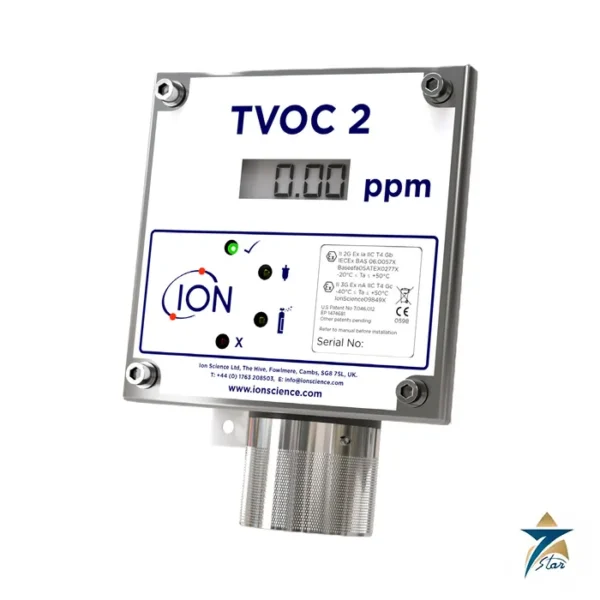
The Tiger XT is a handheld VOC detector for hazardous areas, and the Titan 2 is a fixed benzene monitor.

A PID uses ultraviolet light to ionise volatile organic compounds and measures the resulting current, which allows detection down to ppb levels. Response factors convert the reading for each specific compound. General VOC detectors measure the total, while benzene-specific monitors separate benzene from other hydrocarbons, which matters because benzene has very low exposure limits.

Where ION Science detectors are used

Leak detection, confined space entry checks, worker exposure monitoring, refinery and terminal benzene monitoring, and environmental and soil surveys.

Ordering ION Science detectors: what we need

Send the model, the compounds and ranges, lamp type, hazardous-area requirement and accessories such as probes, filters and calibration kits.

Facts checked against ION Science's published company history, October 2026.

FAQ

Questions about the ION Science MVI Portable Mercury Vapour Indicator

Answers from our engineering team on installation, compatibility and integration.

01How fast does the ION Science MVI respond to mercury vapour?
The brochure gives a response time of 3 seconds, using a dual beam ultraviolet absorption module with a high-performance sample pump.
02What ranges does the ION Science MVI cover?
It offers two ranges, 0.1 to 199 and 1 to 1999 micrograms per cubic metre, with accuracy of plus or minus 5 micrograms or 10 percent of reading.
03Does the MVI need regeneration between readings?
No. The manufacturer states that the MVI does not saturate or need regenerating, so there is no downtime between readings.
04How long does the MVI battery last?
The NiMH battery supports continuous operation of up to 4.5 hours from a full charge.
05How often must the MVI be calibrated?
The brochure says annual calibration is required to maintain accuracy, performance and the extended warranty.