- Automation & ControlView all 3,068 products
- Automation Accessories
- AC Drives
- PLC & I/O Cards
- Industrial Communications
- Vibration Monitoring
- Isolator & Barrier
- Controllers & Data Acquisition
- Safety Switches & Guard Locking
- Motor Soft Starters
- Encoders
- CCTV & Security
- Pneumatic Cylinders
- HMI Displays
- Servo Drives
- Industrial Computers
- Machine Vision
- Automation Software
- Robotics
Brand: ION Science
ION Science ARA100 Disposable Personal H2S Detector
Description
Overview
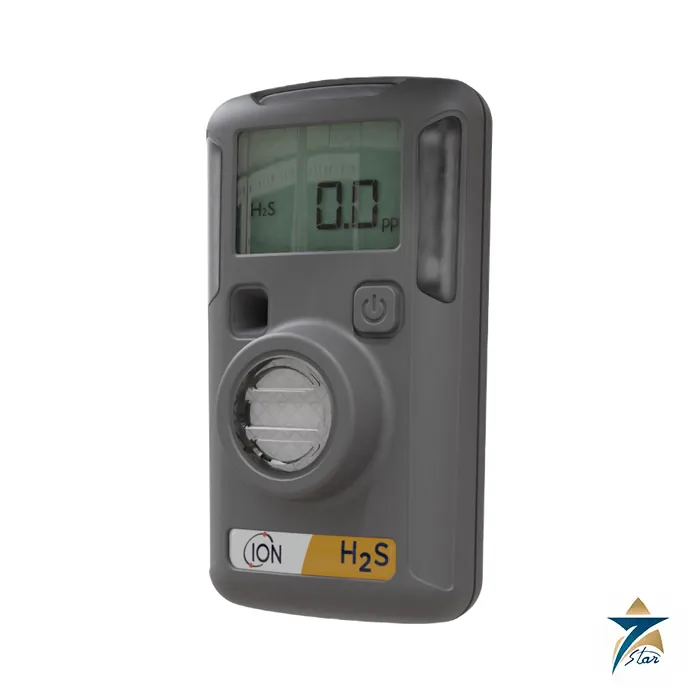
The ION Science ARA100 is the hydrogen sulphide version of the ARA, a personal, disposable single gas detector that clips to clothing and warns the wearer of a life-threatening atmosphere. Seven Star LLC is an independent supplier serving Oman and the GCC. The ARA brochure, version 1.1, covers four gases under one family, and model number ARA100 identifies the H2S unit. Below, the content is rewritten for safety officers choosing a maintenance-free H2S badge for field crews.
Hydrogen sulphide is among the most dangerous gases met in oil, gas, water and wastewater work. It smells of rotten eggs at low levels, but it quickly deadens the sense of smell, so people cannot rely on their nose. A wearable detector with an instant alarm is therefore part of the basic kit for anyone entering sour areas, sewers or tank farms.
Why a disposable detector
The ARA is built to run for a fixed period with no calibration chores in the middle. It has a single plug-in electrochemical cell and a 3.6 Vdc, 1.65 Ah lithium battery. The standard model delivers 24 months of operation assuming two minutes of alarm per day, and the ARA100H hibernation variant extends that to 36 months through a sleep function. A lifetime-remaining countdown on the display lets supervisors plan for shutdowns and issue new units before expiry.
Specification table for ION Science ARA100
| Parameter | Published value |
|---|---|
| Gas and model number | Hydrogen sulphide, ARA100 (ARA100H with hibernation option) |
| Detection range | 0 to 100 ppm H2S |
| Sensor | Single plug-in electrochemical cell |
| Battery life | 24 months standard, 36 months for hibernation model |
| Temperature | -40 to +60 degrees C; humidity 5 to 95 percent RH |
| Ingress protection | IP67 |
| Alarms | Audio 95 dB at 10 cm, LED visual, vibrating |
| Event log | Last 30 events |
| Display | Liquid crystal display |
| Weight and size | 92 g, 87 x 50 x 29 mm |
| Shelf life | 12 months for H2S, CO and SO2 units |
| Approvals | Class I Division 1 Groups A to D T4; Class I Zone 0 AEx ia IIC T4 Ga; Ex ia IIC T4 Ga |
How ION Science ARA100 differs from other ARA models
The family has six model numbers: ARA100 for H2S, ARA200 for carbon monoxide, ARA300 for oxygen, ARA400 for sulphur dioxide, plus ARA100H and ARA200H with the hibernation option. The ION Science ARA100 reads 0 to 100 ppm, whereas the ARA200 reads 0 to 300 ppm of CO, the ARA400 0 to 50 ppm of SO2 and the ARA300 0 to 25 percent oxygen. The H2S, CO and SO2 units work down to -40 degrees C, but the oxygen unit is limited to -30 degrees C, and the oxygen unit has a shelf life of six months against twelve for the toxic gas units.
Using the ION Science ARA100 in Oman and the GCC
The brochure lists oil and gas, manufacturing, government and defence, water, aerospace and power generation, with applications such as site-wide safety, confined space entry, plant shutdown and first response. In Oman and the GCC this fits sour gas fields, refinery turnarounds, sewage networks and desalination plants. The disposable approach is attractive for contractors who bring in large numbers of workers during a shutdown and do not want to maintain a calibration programme for each badge.
What the H2S sensor sees
An electrochemical H2S cell generates a small current in proportion to the gas concentration at its electrode, which the electronics convert to ppm. The 0 to 100 ppm range covers the exposure limits normally applied to hydrogen sulphide and the concentrations at which escape becomes difficult, so the badge works as both an early warning and an evacuation trigger. Adjustable low and high alarm levels allow a site to set thresholds consistent with its own procedures, for example a first alarm at a low ppm value to stop work and a second at a higher value to evacuate. Because the cell reacts with the gas, it does age even when not alarming, which is why the manufacturer quotes a 12 month shelf life for toxic gas models and why units should be rotated through stores on a first in, first out basis.
Cross-sensitivity is a feature of all electrochemical cells, and other gases may produce a small response. Treat an alarm as real until proven otherwise, move to fresh air upwind, and confirm with a calibrated multi-gas instrument before returning to the work area.
Self test, reminders and logs
One button runs a self test of the audio, visual and vibrating alarms, and the user can configure reminders for bump test and calibration. The unit stores the last 30 events and, with the optional IR Link, can send them to the ARA PC software, where a user ID, low and high alarm, displayed data (live reading or lifetime remaining), calibration interval, bump test interval and self test interval can be configured. The IR Link and the ARA DOCK4 bump test station, which tests up to four detectors at once and records each result, are sold separately.
Wearing and checking ARA100
Clip the unit in the breathing zone, run the self test before the shift and perform bump tests according to the site procedure. The detector must not be opened; when the battery countdown reaches zero, retire the unit. Keep unused detectors within their shelf life, since sensor chemistry is time limited.
Ordering notes for ARA100
State whether you need the standard ARA100 or the ARA100H hibernation model, and whether you also want the IR Link or the DOCK4. Please confirm the full model number on the unit label before ordering a replacement.
Related items you may also need: ION Science Titan 2 Fixed Benzene Monitor | ION Science Tiger XT Handheld VOC Detector | MSA Ultima XIR Infrared Combustible Gas Monitor (legacy) | All ION Science products.
How to specify the exact ION Science ARA100 configuration
The ION Science ARA100 is offered as a model with several kit and accessory options, so the exact supply is defined by the points below rather than by the model name alone.
- Target gas or gases and the measuring range needed for the ION Science ARA100 application.
- Lamp or sensor option where the instrument offers more than one, for example the standard VOC lamp or a selective configuration.
- Hazardous area approval required for the site, such as ATEX or IECEx zone rating.
- Accessories needed with the unit, such as charger, calibration adaptor, sampling probe, carry case or docking station.
- Any data logging, software or calibration certificate requirement for your records.
Share these points, or the part number printed on an existing unit or previous order, and the quotation will list the confirmed kit contents.
Documents and quotation
The manufacturer’s ARA brochure is attached to this page as a datasheet. Send your RFQ with the part number ARA100, the quantity and your delivery location in Oman or the GCC for a quotation.
Datasheets & Documents
- Datasheet ION Science ARA100 Disposable Personal H2S Detector Datasheet Download
Reviews (0)
How would you rate this product? Cancel reply
About brand
ION Science is a British maker of gas detection instruments, based in Fowlmere, Cambridgeshire. It has been active since 1989 and is best known for photoionisation detectors (PIDs) that measure volatile organic compounds at low concentrations. Its portable and fixed instruments are used for worker exposure monitoring, leak detection and environmental surveys.
Seven Star LLC is an independent supplier in Muscat. We list ION Science detectors for oil and gas, petrochemical and environmental users in Oman and the GCC.
ION Science company profile
| Active since | 1989, United Kingdom |
|---|---|
| Head office | Fowlmere, Cambridgeshire |
| Core technology | Photoionisation detection (PID) with patented Fence Electrode design |
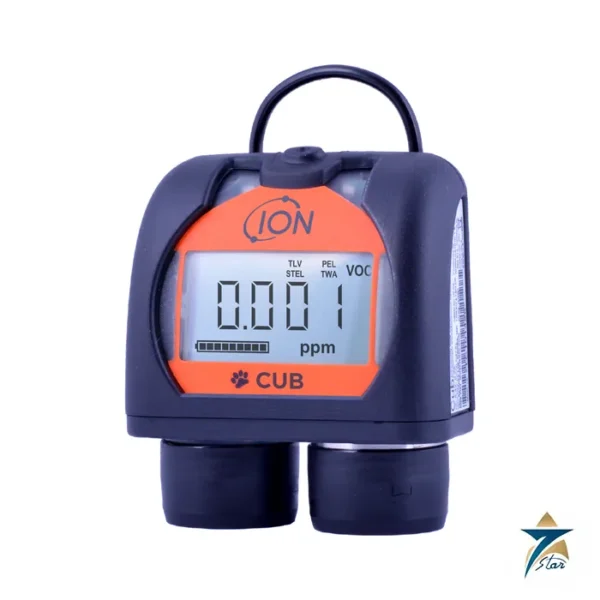
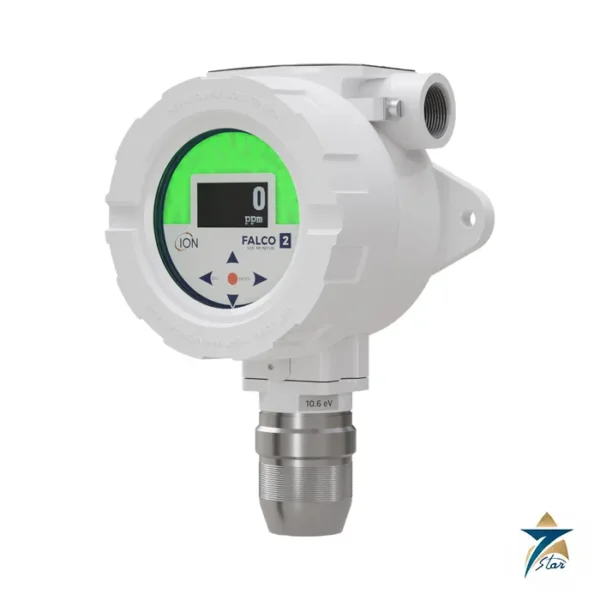
| Product families | Tiger XT and Cub portable PIDs, Titan benzene monitor, Falco fixed detectors |
Milestones
- 1989: ION Science begins operating.
- 1998: Patents its PID sensor.
- 2002: Patents the Fence Electrode for humidity-resistant PIDs.
- 2017: Opens its head office in Fowlmere.
ION Science product series
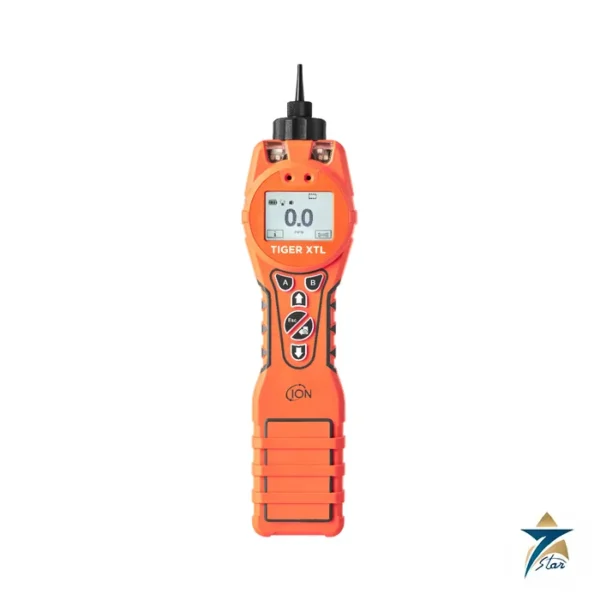
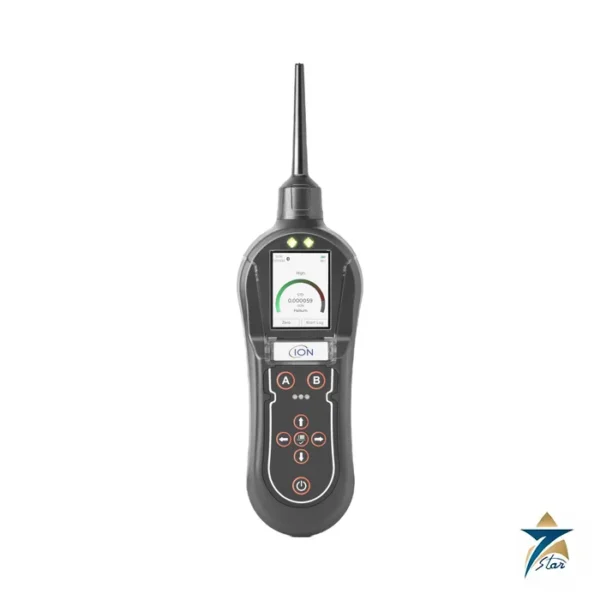
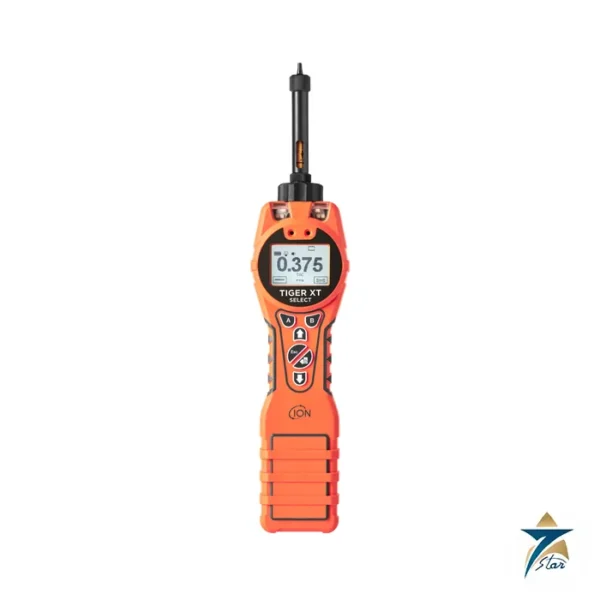
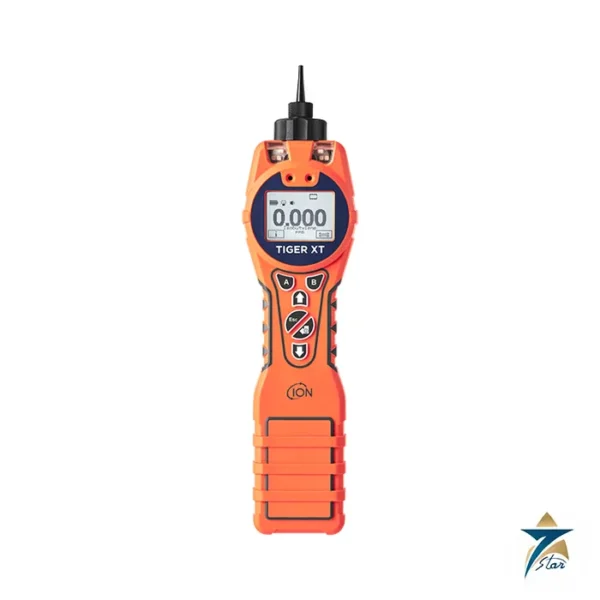
The Tiger XT is a handheld VOC detector for hazardous areas, and the Titan 2 is a fixed benzene monitor.
A PID uses ultraviolet light to ionise volatile organic compounds and measures the resulting current, which allows detection down to ppb levels. Response factors convert the reading for each specific compound. General VOC detectors measure the total, while benzene-specific monitors separate benzene from other hydrocarbons, which matters because benzene has very low exposure limits.
Where ION Science detectors are used
Leak detection, confined space entry checks, worker exposure monitoring, refinery and terminal benzene monitoring, and environmental and soil surveys.
Ordering ION Science detectors: what we need
Send the model, the compounds and ranges, lamp type, hazardous-area requirement and accessories such as probes, filters and calibration kits.
Facts checked against ION Science's published company history, October 2026.
Browse ION Science products by category: Gas Analyzer Systems, Fire & Gas Detectors.
FAQ
Questions about the ION Science ARA100 Disposable Personal H2S Detector
Answers from our engineering team on installation, compatibility and integration.
01What does the ION Science ARA100 detect?
The ARA100 is the hydrogen sulphide model, measuring 0 to 100 ppm H2S with a single plug-in electrochemical cell.
02How long does the ARA100 last?
The standard ARA100 gives 24 months of operation and the ARA100H hibernation version gives 36 months, based on two minutes of alarm per day.
03Is the ARA100 rugged enough for field work?
Yes. It is rated IP67, works from -40 to +60 degrees C, weighs 92 g and has audio, LED and vibrating alarms.
04Can the ARA100 be bump tested?
Yes. The optional ARA DOCK4 station tests up to four ARA detectors at once and records bump test and calibration results.
05How do ARA models differ?
ARA100 is H2S, ARA200 is CO, ARA300 is oxygen and ARA400 is SO2; the H and hibernation variants extend battery life to 36 months.


Reviews
There are no reviews yet.