Brand:

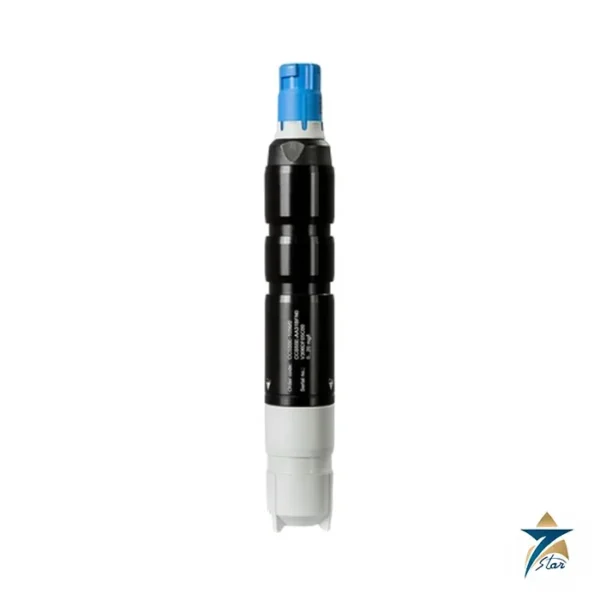
Yokogawa FU20-10-T1-FSM Flat Surface pH/ORP Sensor, 10 m

Description

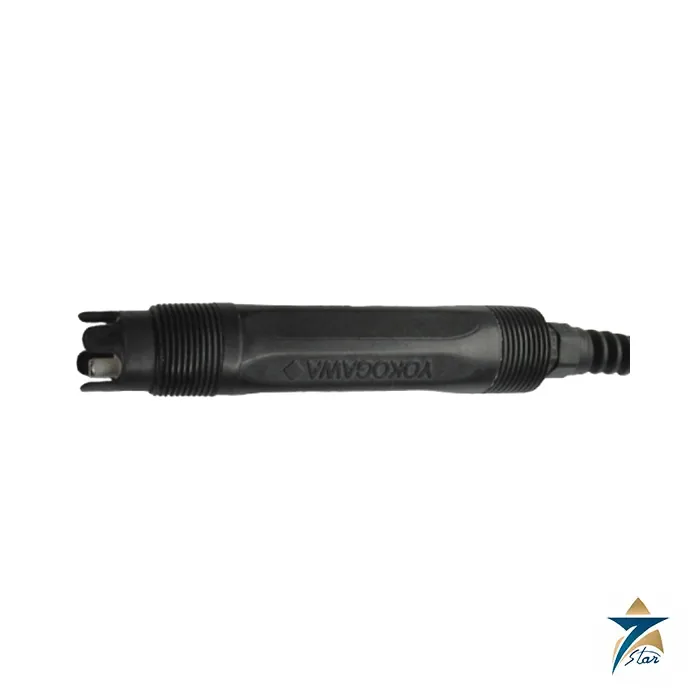
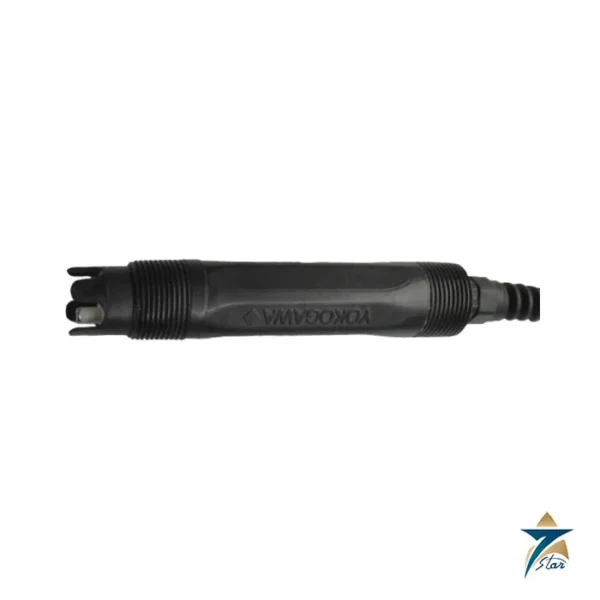
Flat glass for dirty water: FU20-10-T1-FSM

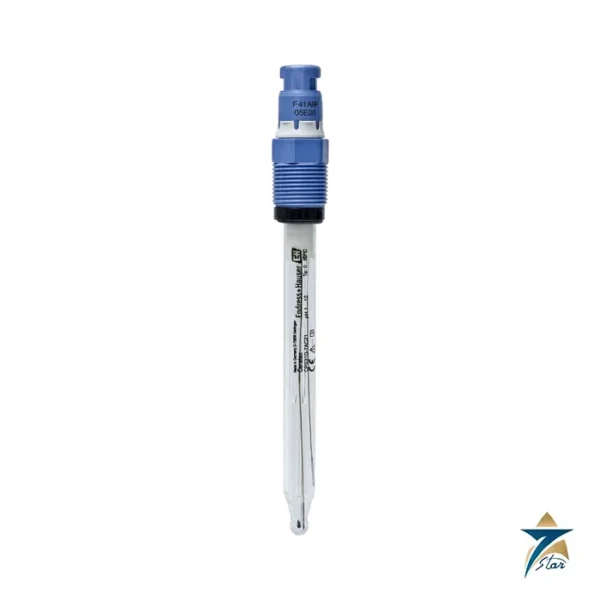
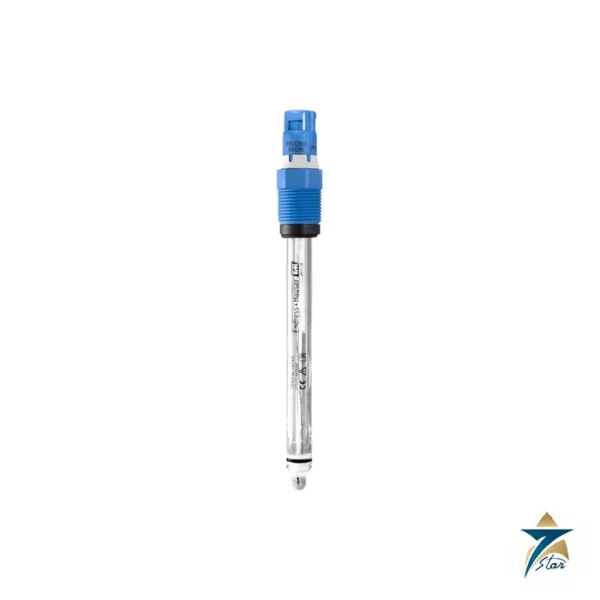
Yokogawa FU20-10-T1-FSM uses the same wide 26 mm body as every FU20 sensor, but the sensing end is a flat membrane rather than a dome. A flat surface is easier for flow, brushes or ultrasound to wipe, and it has less room for solids to lodge. That is why wastewater sludge, paper stock, mining slurries and food waste streams often specify the flat tip. The cable is 10 m, the temperature element is Pt1000, and the model code is FSM.

Seven Star LLC is an independent supplier serving Oman and the GCC and is not affiliated with the manufacturer.

Specifications of FU20-10-T1-FSM

Parameter Value
Tip Flat surface (FSM), G-glass, nominal 700 megohm
Body PPS 40GF, 26 mm diameter, 3/4 inch tapered thread
Reference Ag/AgCl saturated KCl, porous PTFE junction
Elements pH glass, platinum ORP/earth pin, Pt1000
Cable 10 m fixed, coaxial with 4 extra leads
pH response Under 15 s for 90 percent (7 to 4)
Temperature response Under 1.5 min for 90 percent
Stabilisation Under 2 minutes (0.02 pH per 10 s)
Range pH 0 to 14; -10 to 105 C; 0 to 10 bar; over 50 uS/cm
Isothermal / asymmetry pH 7 / 8 plus or minus 15 mV
Slope Above 96 percent

FSM versus NPT on the FU20

FU20-10-T1-FSM differs from FU20-05-T1-NPT in three numbers. Glass impedance: about 700 megohm against 200 megohm. Temperature step response: under 1.5 minutes against under 1 minute. Cable length: 10 m against 5 m. The higher impedance makes the signal slightly more sensitive to moisture and cable leakage, so keep the sensor connections dry; the flat tip trades some speed for resistance to fouling.

Why a flat membrane matters in practice

Think about what a pH electrode meets in a slurry. A dome sticks out into the flow, so fibres and grease collect around it, and any scraper or brush has to follow a curve. A flat glass face is simply a plane: a jet of water, an ultrasonic head or a mechanical wiper clears it in one pass. The datasheet describes the flat model as self-cleaning for exactly this reason when it discusses the FU24, and the same tip geometry is available on the FU20. The trade is a higher glass impedance of about 700 megohm and a slower thermal response, both manageable in a stirred tank or a channel where temperature changes slowly.

In wastewater plants the flat tip is often chosen at the inlet works, in the sludge thickener and in the dewatering filtrate line, where mixed solids and oils would foul a dome within days. In pulp, paper and food plants it is used in white water and in waste streams with fibres and fat. In mining and metals, the flat sensor is used in leach and neutralisation circuits. All of these resemble industries active in the Sultanate, from municipal sewage to mineral processing.

Another benefit of the 10 m cable of FU20-10-T1-FSM is installation freedom: the converter can be kept at a clean, accessible panel while the sensor works at the tank edge, and no terminal box is required between them. A junction box would add a place for moisture to enter, which a high-impedance sensor tolerates poorly, so a direct 10 m run is often the more reliable arrangement.

Good fits in Oman and the GCC

Typical applications are municipal sewage inlet works at Muscat, industrial effluent from food factories, dredged or slurry tanks, desalination brine discharge monitoring and process water with suspended solids. The conductivity of the liquid must exceed 50 uS/cm, which is satisfied in nearly all of these.

Mounting choices

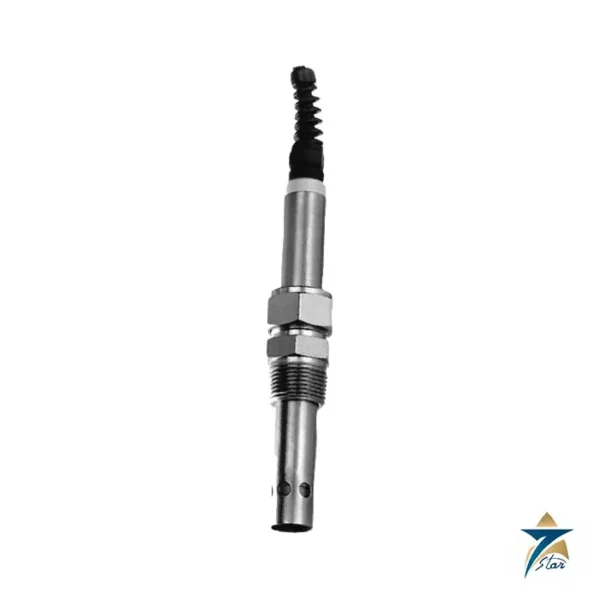
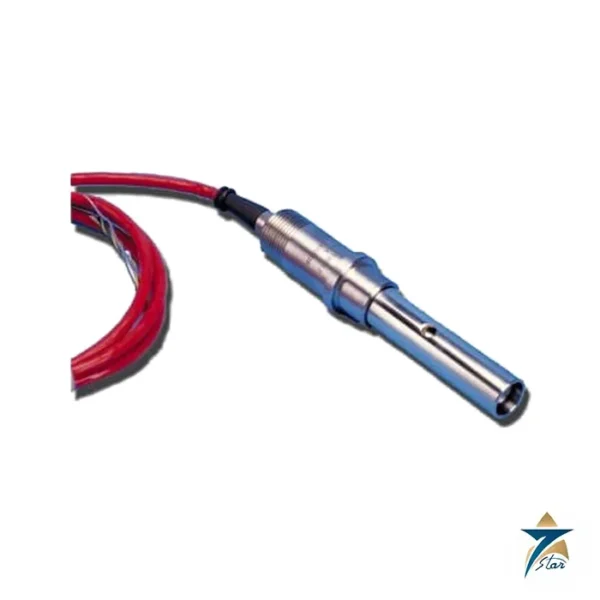
For a flow-through arrangement the FD40 fitting with the /FPS adapter (spare K1523DD) holds the sensor, and for a pipe stub the 1 inch adapters in 316L or titanium are available in NPT or BSP. In submersion service the 3/4 inch thread connects a pipe. A Hastelloy cleaning system /HCNF, spare K1547PJ, can be added where regular cleaning is needed.

Installation notes

Run the 10 m cable in its own conduit away from motor cables because the flat glass has high impedance. Support the cable weight at the top of the pipe and keep a drip loop before it enters the panel. Calibrate with two buffers after installation and record the slope, which should be above 96 percent. Do not let the glass dry out; if the sensor is removed, store the tip wet with the protective cap.

Cleaning and care

Wipe the flat face with a soft cloth or sponge; do not use abrasives. Soak in dilute hydrochloric acid for inorganic scale or an enzyme cleaner for biological films, then rinse. A sudden loss of response or slope under 90 percent means replacement is due, and a sensor that has dried out for a long time should be soaked in a storage or buffer solution before it is judged. Log the date of each cleaning and calibration against the tag. FU20-10-T1-FSM ships with a Quality Certificate, which belongs in the loop dossier.

Planning the loop

A complete loop needs a pH converter such as the EXAxt PH450G or a FLXA series analyser, plus mounting hardware. Our enquiry desk can combine these with FU20-10-T1-FSM in one quotation if you describe the converter and the tank or pipe fitting. Also tell us whether the sensor will sit in a holder, a pipe adapter or direct thread, and whether a cleaner is planned, so the accessories listed in the datasheet can be matched to the order. If the plant needs a spare for each tag, we can quote spares together with the installed units to shorten downtime when a sensor reaches the end of its life.

Documents and quotation

The datasheet for FU20-10-T1-FSM is attached. Send your RFQ to Seven Star LLC with the part number FU20-10-T1-FSM, quantity and delivery location.

Other Models in the FU20 Range

Seven Star LLC supplies models from the FU20 range in Oman and the GCC. Compare the related models below and request a quote for the one that matches your application.

ModelCategory
Yokogawa FU20-05-T1-NPT Wide Body pH/ORP Sensor, DomeLiquid Analysis SensorsView details
Yokogawa FU20-10-T1-FSM Flat Surface pH/ORP Sensor, 10 mLiquid Analysis SensorsYou are viewing this model
Datasheets & Documents
  • PDF Datasheet Yokogawa FU20-10-T1-FSM Flat Surface pH/ORP Sensor, 10 m Datasheet Download
Reviews (0)

Reviews

There are no reviews yet.

How would you rate this product?

It takes about 10 seconds — just tap a star. Your email is never published.

About brand

Yokogawa is the Japanese measurement and industrial automation company behind the DPharp EJA and EJX pressure transmitters, CENTUM distributed control systems and ProSafe-RS safety systems. Tamisuke Yokogawa set it up in 1915 as an electric meter research institute in Shibuya, Tokyo. It began selling electric meters in 1917, was incorporated as Yokogawa Electric Works in 1920, and has been Yokogawa Electric Corporation since 1986. In 1975 it released CENTUM, which it describes as the world's first distributed control system.

Seven Star LLC is an independent supplier in Muscat. We list Yokogawa transmitters, flowmeters, analysers, controllers, recorders and CENTUM and ProSafe spare modules, and supply them to oil and gas, power, water and process plants in Oman and the GCC by model code.

Yokogawa at a glance

Established 1915, Shibuya, Tokyo, by Tamisuke Yokogawa with Ichiro Yokogawa and Shin Aoki
Milestones Electric meters from 1917; incorporated in 1920; CENTUM DCS in 1975; renamed Yokogawa Electric Corporation in 1986
Headquarters Tokyo, Japan
Product families Pressure and temperature transmitters, magnetic, vortex and Coriolis flowmeters, liquid and gas analysers, controllers and recorders, CENTUM VP DCS, ProSafe-RS safety systems and STARDOM controllers

Yokogawa products we list

Family Models Typical use
Pressure and DP transmitters EJA110E, EJA430E, EJA530E, EJX110A, EJX530A, EJX910A multivariable Pressure, level and DP flow measurement in process plants
Temperature transmitters YTA610, YTA710 RTD and thermocouple signals converted to 4-20 mA, HART or fieldbus
Flowmeters ADMAG AXG, ADMAG AXW, ROTAMASS TI, VY vortex, VF701 Water and conductive liquids, mass flow of hydrocarbons, steam and gas
Analysers TDLS8000 laser gas analyser, FLXA402, FLXA21 DO, E7042UD zirconia cell, K9471DS cover Combustion O2, in-situ gas analysis, pH, conductivity and dissolved oxygen
Controllers and recorders UT35A/UT32A, UT32A-D, UT55A/UT52A, UT75A, UP35A/UP32A, UP55A, YS1700, GX10/GX20, GP10/GP20, GM10, µR20000 Single-loop control, furnace programs and data recording
Control and safety systems CP451-10 processor, ADV161, ADV551, node interface unit, ProSafe-RS, ProSafe-RS Lite, ProSafe-SLS, FCN-500 Spares and expansions for CENTUM DCS, safety systems and STARDOM
Battery packs S9129FA, S9185FA, S9548FA Memory backup batteries for DCS and controller modules

The EJA and EJX transmitters use Yokogawa's DPharp sensor: two silicon resonators whose vibration frequency changes with pressure, so the output is a digital frequency rather than an analogue strain signal. The model code describes the instrument completely. In EJA110E, "110" is a differential pressure transmitter, and the letters after the dash set the span, wetted materials, process connection, electrical output and approvals. When you replace a transmitter, sending the full code from the nameplate avoids a mismatch in range or materials.

Where Yokogawa products are used

In Oman and the GCC, Yokogawa transmitters, analysers and control systems are found in oil and gas production, gas processing and LNG, refineries and petrochemical plants, power and desalination stations, and water treatment. Many plants still run CENTUM CS 3000 and CENTUM VP systems that need spare I/O modules and batteries.

Ordering Yokogawa products: what we need

Send the full model and suffix code from the nameplate (for example EJA110E-JMS5J-912NN/KF22) and the style code. For DCS modules, add the module type and system version. For analysers, send the sensor type, measuring range and process conditions.

Facts checked against Yokogawa's corporate history, October 2026.

FAQ

Questions about the Yokogawa FU20-10-T1-FSM Flat Surface pH/ORP Sensor,

Answers from our engineering team on installation, compatibility and integration.

01What is the FSM tip on FU20-10-T1-FSM?
FSM is the flat surface model. Its flat glass membrane has a nominal glass impedance of 700 megohm and suits slurries and dirty water, where a dome tip would collect deposits.
02Is FU20-10-T1-FSM slower than the dome model?
Slightly. The datasheet gives a temperature step response of under 1.5 minutes for the flat surface against under 1 minute for the dome, while the pH step response is under 15 seconds for both.
03What does the 10 in FU20-10-T1-FSM mean?
A 10 m fixed cable. It lets the sensor sit at a tank or channel while the converter stays at a panel several metres away, without a junction box.
04Which fittings suit FU20-10-T1-FSM?
FD40 fittings with the /FPS Noryl adapter K1523DD, or 1 inch pipe adapters in stainless steel or titanium (K1547PK, K1547PL, K1547PM, K1547PN), or direct mounting by the 3/4 inch tapered thread.
05What temperature does FU20-10-T1-FSM measure?
Process temperature from -10 to 105 C using the Pt1000 element, and pressure from 0 to 10 bar, with pH 0 to 14.