- Automation & ControlView all 2,895 products
- Automation Accessories
- AC Drives
- PLC & I/O Cards
- Industrial Communications
- Vibration Monitoring
- Controllers & Data Acquisition
- Isolator & Barrier
- Safety Switches & Guard Locking
- Motor Soft Starters
- CCTV & Security
- Encoders
- Pneumatic Cylinders
- HMI Displays
- Servo Drives
- Industrial Computers
- Machine Vision
- Automation Software
- Robotics
Brand: Endress+Hauser (E & H)
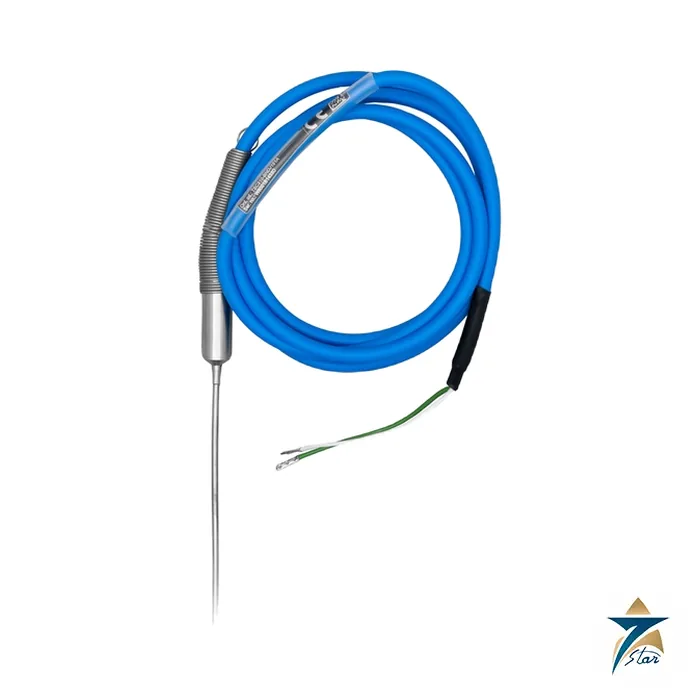
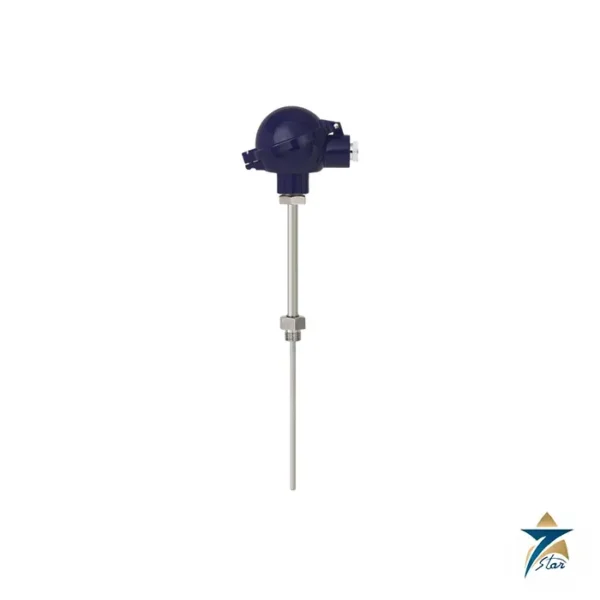
Endress+Hauser TSC310 Thermocouple Cable Probe
Description
Endress+Hauser TSC310 in brief
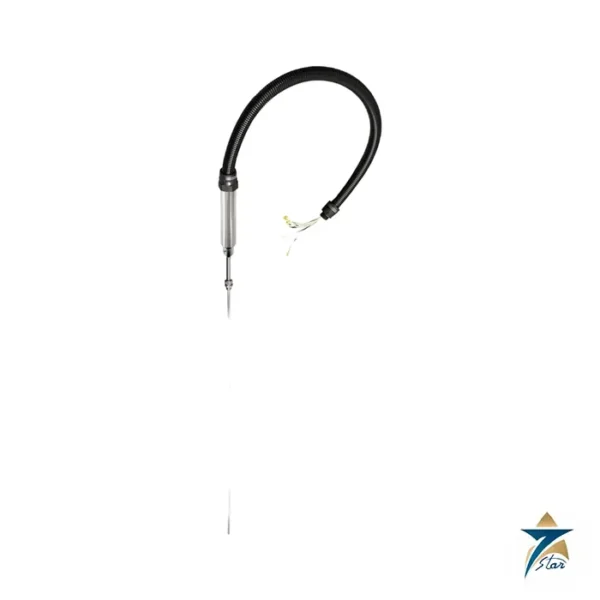
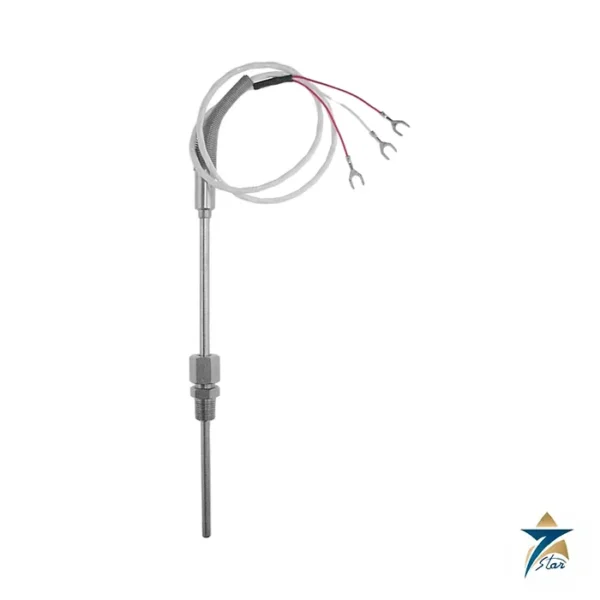
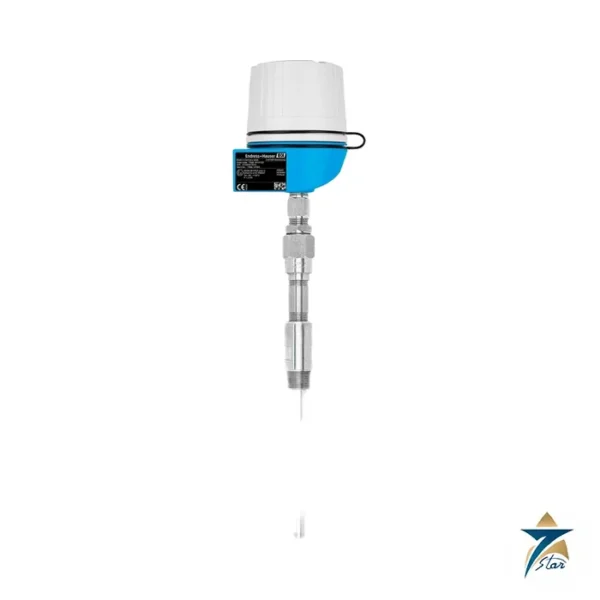
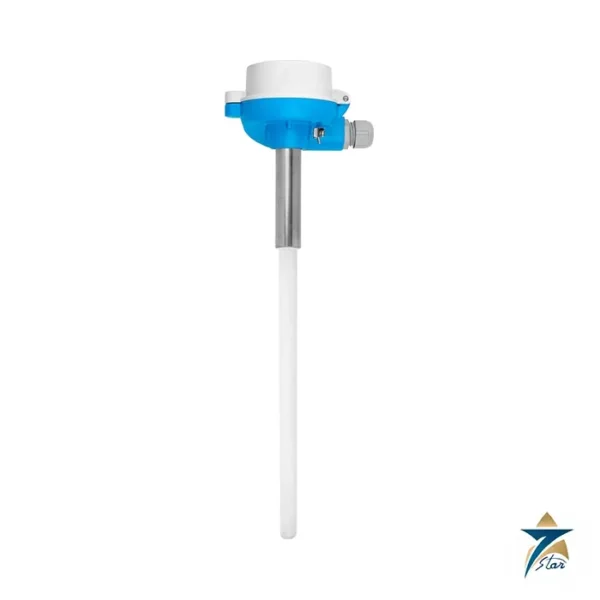
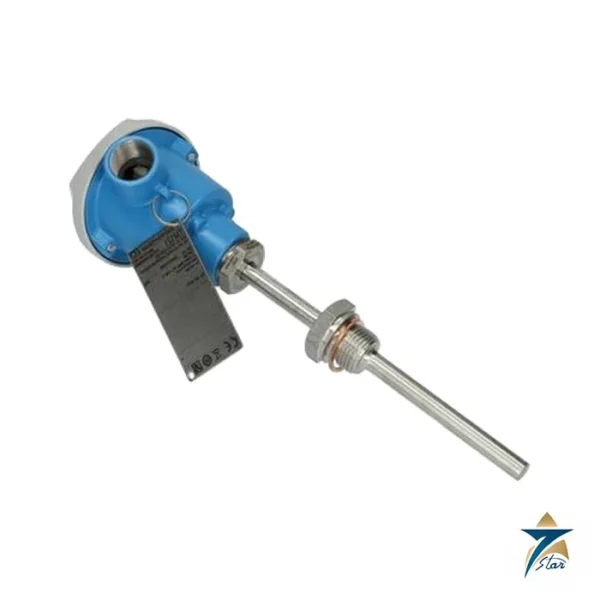
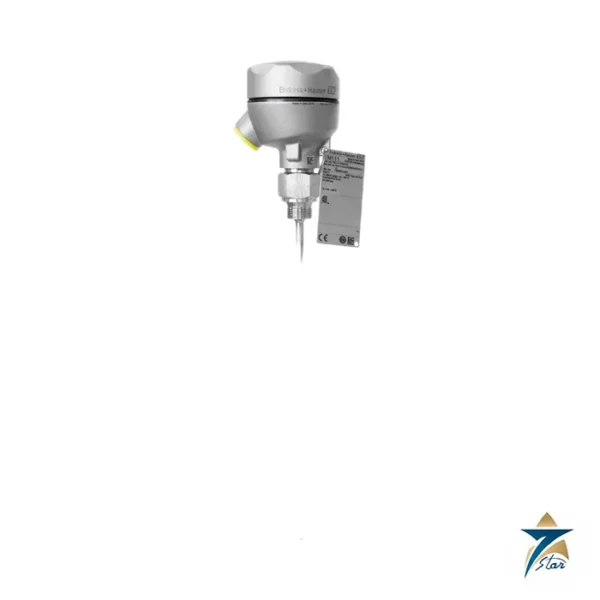
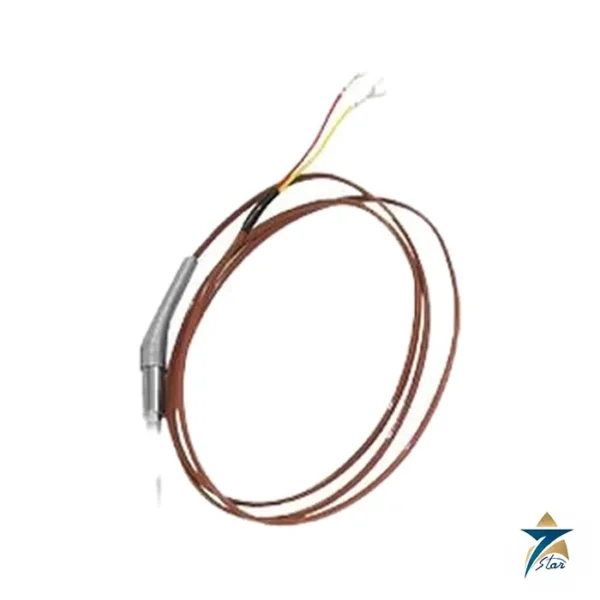
The Endress+Hauser TSC310 is a thermocouple thermometer on a connecting cable, offered as a screw-in or insertion probe with an anti-kink spring. Technical Information TI00255T lists machinery, power stations and plants with gaseous or liquid media such as air, steam, water and oil as typical uses. Two thermocouple types are available, J (Fe-CuNi) and K (NiCr-Ni), to DIN EN 60584 and ASTM E230/ANSI MC96.1, in grounded or ungrounded junction design, with Ex ia, Ex nA and NEPSI Ex ia approvals for hazardous locations. Seven Star LLC is an independent supplier serving Oman and the GCC and is not affiliated with the manufacturer.
Thermocouple choices and accuracy of TSC310
Type J covers -210 to +760 degrees C with a sensitivity near 55 microvolt per kelvin above zero. Type K covers -270 to +1 100 degrees C, limited by the sheath, with about 40 microvolt per kelvin. Standard tolerance under IEC 60584 is class 2: +/-2.5 degrees C from -40 to 333 degrees C and +/-0.0075 |t| above that, up to 750 degrees C for J and 1 200 degrees C for K. Class 1 is available on request at +/-1.5 degrees C to 375 degrees C and +/-0.004 |t| beyond. Under ASTM E230 the standard limit is the larger of 2.2 K or 0.0075 |t|, with special limits of 1.1 K or 0.004 |t|.
Response of the TSC310 probe tip
The junction type matters for speed. In water at 0.4 m/s with a 10 K step, a grounded 6 mm probe shows t50 of 2 s and t90 of 5 s; a grounded 3 mm probe 0.8 s and 2 s. Ungrounded junctions have their own, slower set of values in the datasheet because the junction is insulated from the sheath, so decide between grounded and ungrounded according to whether speed or electrical isolation matters more in the loop. Insulation resistance is at least 1 000 megohm at 100 V DC.
| Thermocouple types | J (Fe-CuNi) and K (NiCr-Ni) |
|---|---|
| Range type J | -210 to +760 degrees C |
| Range type K | -270 to +1 100 degrees C (limited by sheath) |
| Junction | Grounded or ungrounded |
| Standards | IEC 60584, ASTM E230/ANSI MC96.1 |
| Max. static pressure | 40 bar (580 psi) |
| Protection | IP65 |
| Insulation resistance | At least 1 000 megohm at 100 V DC |
| Cable limit PVC/PVC | 80 degrees C |
| Cable limit glass fibre/glass fibre | 400 degrees C |
| Sheath materials | AISI 316 / 1.4401 to 650 degrees C; Alloy 600 / 2.4816 to 1 100 degrees C |
| Wire cross-section | Up to 0.205 mm2 (AWG 24) 4-wire; up to 0.518 mm2 (AWG 20) 2-wire |
| Weight | From 100 g; 150 g for NL = 100 mm, G1/2 |
| Ferrule spares | 60011599 SS316 for 6.1 mm; 60011575 SS316 for 3 mm (10 pieces) |
Why TSC310 is not a TST310
The Pt100 twin TST310 shares the cable-probe mechanics but outputs a resistance, handles 75 bar and stops at +600 degrees C. The TSC310 produces a millivolt signal, climbs to +1 100 degrees C with type K, and its pressure limit falls to 40 bar. Select the TSC310 for hot gas, flue and steam tracing duties or for fast tip response, and the TST310 where a linear, stable signal below 600 degrees C is preferred.
Mounting notes for TSC310
The probe is fitted with an adjustable compression fitting. Thread options in the table include NPT 1/8, 1/4, 3/8 and 1/2 with SW 12 to 22 and thread lengths of 35 to 50 mm, and G1/8, G1/4, G3/8 and G1/2. A stainless clamping ring can only be tightened once, after which the position can no longer be changed. The datasheet also gives a permitted flow velocity that decreases with the immersion length exposed to the stream, so a long probe in a fast steam line should be checked against the diagram before ordering.
Wiring and cold junction
Leads are free ends. Colour codes: type J black plus and white minus under IEC, white plus and red minus under ASTM; type K green plus and white minus under IEC, yellow plus and red minus under ASTM. Use matching compensating cable up to the input card or head transmitter, and remember that a thermocouple measures a temperature difference, so the cold junction must be compensated by the receiving device.
Uses in Gulf utilities
A TSC310 fits gas-turbine auxiliary skids, boiler flue and economiser temperature, steam tracing, exhaust monitoring and heat-treatment furnaces in Omani plants. The glass-fibre cable option tolerates 400 degrees C at the cable, and the Alloy 600 sheath handles hot, oxidising gas. Do not use Alloy 600 in sulphur-bearing atmospheres, as the datasheet warns.
Planning the measuring chain around TSC310
A bare thermocouple needs a suitable receiving device. Many installations connect the probe to a head transmitter or a thermocouple input card with built-in cold-junction compensation, and the standard tolerance classes assume that compensation is done properly. When a long run of extension cable is needed, keep the same thermocouple type all the way, avoid joints through ordinary copper and keep cable away from power conductors to limit noise. Grounded junctions can pick up ground loops, so on analogue inputs without isolation prefer the ungrounded version. When the temperature is above 400 degrees C at the cable exit, select glass fibre insulation instead of PVC, because PVC is limited to 80 degrees C.
Maintenance
Thermocouples age through drift. Compare periodically against a reference, check the cable for kinks near the spring, and replace the clamping ring after loosening. The TSC310 is not repairable; a worn unit is replaced as a whole.
Documents and quotation
The datasheet TI00255T is attached to this TSC310 page. Send an RFQ to Seven Star LLC with the part number TSC310, thermocouple type, sheath diameter, insertion length, cable material, thread, quantity and delivery location.
What to Include in Your Endress+Hauser TSC310 Enquiry
An accurate quotation for the Endress+Hauser TSC310 depends on a few details. Please share the complete part number, any suffix codes for options or approvals, the operating conditions at the installation point, and whether certificates of conformity or test reports must ship with the goods. It also helps to know whether the unit is for planned maintenance, a shutdown or an urgent breakdown, because that decides how it is sourced and shipped. With this information our team can check compatibility with your existing rtd & thermocouple sensors and reply with availability and a realistic delivery estimate.
Datasheets & Documents
- Datasheet Endress+Hauser TSC310 Thermocouple Cable Probe Datasheet Download
Reviews (0)
How would you rate this product? Cancel reply
About brand
Endress+Hauser makes process measurement instruments for flow, level, pressure, temperature and liquid analysis. Georg H. Endress and Ludwig Hauser started the business in Lörrach, Germany, on 1 February 1953, first selling level meters, and the Endress+Hauser name has been used since 1957. The group is headquartered in Reinach, Switzerland, and has been wholly owned by the Endress family since 1975.
Seven Star LLC is an independent supplier listing Endress+Hauser flowmeters, level and pressure transmitters, temperature assemblies and liquid analysis products for buyers in Oman and the GCC. Instruments are matched from the full order code on the nameplate.
Endress+Hauser company profile
| Origin | Founded in Lörrach, Germany, on 1 February 1953 by the Swiss engineer Georg H. Endress and Ludwig Hauser |
|---|---|
| Headquarters | Endress+Hauser AG, Reinach (Basel-Landschaft), Switzerland |
| Ownership | Family owned; the Endress family has been the sole shareholder since 1975, and a family charter commits the company to stay family owned |
| Size | About 16,500 employees and sales of about EUR 3.7 billion (2023, as reported by the company) |
| Product families | Proline flowmeters, Micropilot and Levelflex radar, Liquiphant switches, Cerabar and Deltabar pressure, iTEMP and iTHERM temperature, Liquiline and Memosens liquid analysis |
Milestones
- 1953: Georg H. Endress and Ludwig Hauser start the business in Lörrach on 1 February, first selling level meters.
- 1957: The Endress+Hauser name comes into use.
- 1975: The Endress family becomes sole shareholder.
- 2023: About 16,500 employees and sales of about EUR 3.7 billion, as reported by the company.
Endress+Hauser product lines
| Line | Measuring principle | Typical use |
|---|---|---|
| Promass F 300, Promass 80F, 83F/84F | Coriolis mass flow | Direct mass flow and density of liquids and gases, hydrocarbon transfer and chemical dosing |
| Promag P 300, P 500, H 300, W 400, W 10, 50P | Electromagnetic flow | Water, wastewater, slurries and other conductive liquids |
| Prowirl F 200, 72F | Vortex flow | Steam, gas and low-viscosity liquids |
| Prosonic Flow 92F, t-mass 65F | Ultrasonic and thermal mass flow | Water lines; compressed air and industrial gases |
| Micropilot FMR62, FMR67, FMR60, FMR10B, FMR20, FMR50, FMR52 | Free-space radar level, 80 GHz and 26 GHz | Tanks, process vessels, silos and open water channels |
| Levelflex FMP51, FMP50, FMP54, FMP55 | Guided wave radar level | Level and interface in vessels, separators and bypass chambers |
| Liquiphant FTL51, Prosonic S FMU90 | Vibronic point level; ultrasonic level | High and low level alarms, pump protection, open channel flow |
| Cerabar PMC71B, PMP51B, PMP71, Deltabar PMD78B, PMD75 | Pressure and differential pressure | Process pressure, hydrostatic level and DP flow |
| iTEMP TMT82, TMT162, iTHERM TM101, TR66, TR10 | Temperature transmitters and thermometers | RTD and thermocouple points with thermowells |
| Liquiline CM444, CM442, Memosens CPS11E, Stamolys reagents | Liquid analysis | pH, ORP, conductivity, dissolved oxygen and nutrient analysis in water treatment and process |
Where Endress+Hauser instruments are used
In Oman and the GCC, Endress+Hauser instruments are common in oil and gas production and processing, refineries and petrochemicals, desalination and water networks, wastewater treatment, power plants and food and beverage plants. Coriolis meters measure hydrocarbon and chemical flows, electromagnetic meters cover water and wastewater, radar transmitters handle tank and silo level, and Liquiline analysers monitor water quality. Proline 300 and 500 flowmeters include Heartbeat Technology for in-situ verification, which reduces the need to remove a meter for checks.
Ordering Endress+Hauser instruments: what we need
The order code on the nameplate (for example PMP71-1QA1S11RDADU) defines every option: measuring range, process connection, materials, output, approvals and display. Send it with the serial number; Endress+Hauser can retrieve the original configuration from the serial number. For a new instrument add the medium, operating and design pressure and temperature, range, line size or tank geometry, process connection, wetted materials, output or protocol (4-20 mA HART, PROFIBUS, FOUNDATION Fieldbus, Modbus) and the hazardous-area approval required. Older models such as Promass 80/83 or Micropilot M are replaced by current Proline or 80 GHz Micropilot devices.
Facts checked against Endress+Hauser company history and product information, October 2026.
Browse Endress+Hauser products by category: Flowmeters, Level Transmitter, Pressure Instrumentation, Temperature, Liquid Analysis Sensors, Liquid Analytical Systems.
FAQ
Questions about the Endress+Hauser TSC310 Thermocouple Cable Probe
Answers from our engineering team on installation, compatibility and integration.
01Which thermocouple types does the Endress+Hauser TSC310 use?
The datasheet lists type J (Fe-CuNi) up to +760 degrees C and type K (NiCr-Ni) up to +1 100 degrees C, limited by the sheath material.
02What is the pressure limit of the TSC310?
Maximum static process pressure is 40 bar (580 psi), and the process connection tables may set a lower value.
03How fast does a TSC310 respond?
A grounded 3 mm probe gives t50 of 0.8 s and t90 of 2 s in water at 0.4 m/s; a grounded 6 mm probe gives 2 s and 5 s.
04Which sheath material should I choose for the TSC310?
AISI 316 is rated to 650 degrees C continuous in air, and Alloy 600 to 1 100 degrees C, but Alloy 600 must not be used in sulphur-containing atmospheres.
05Does TSC310 have hazardous-area versions?
Yes, the datasheet names intrinsically safe Ex ia, non-sparking Ex nA and NEPSI Ex ia approvals.


Reviews
There are no reviews yet.