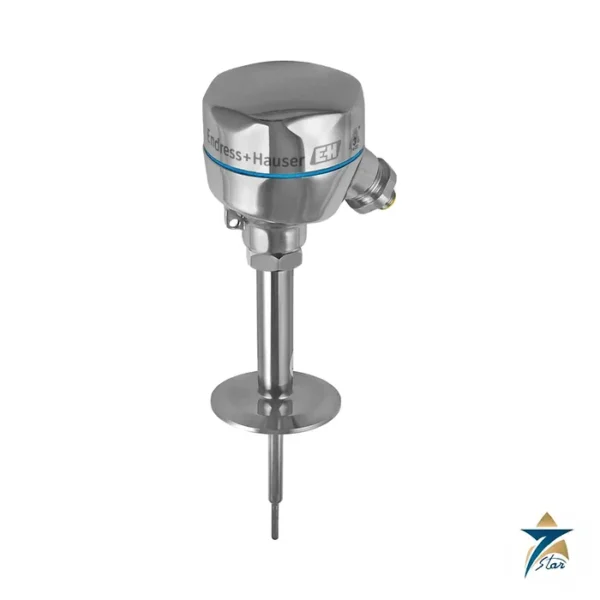
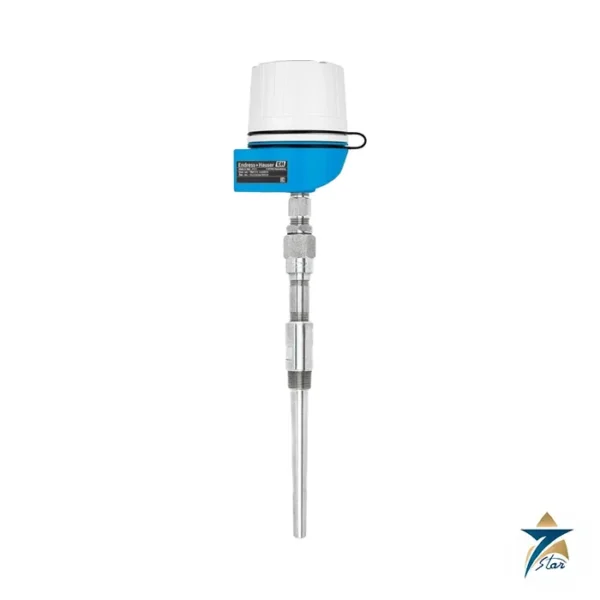
Endress+Hauser TT411 iTHERM ModuLine hygienic welded thermowell
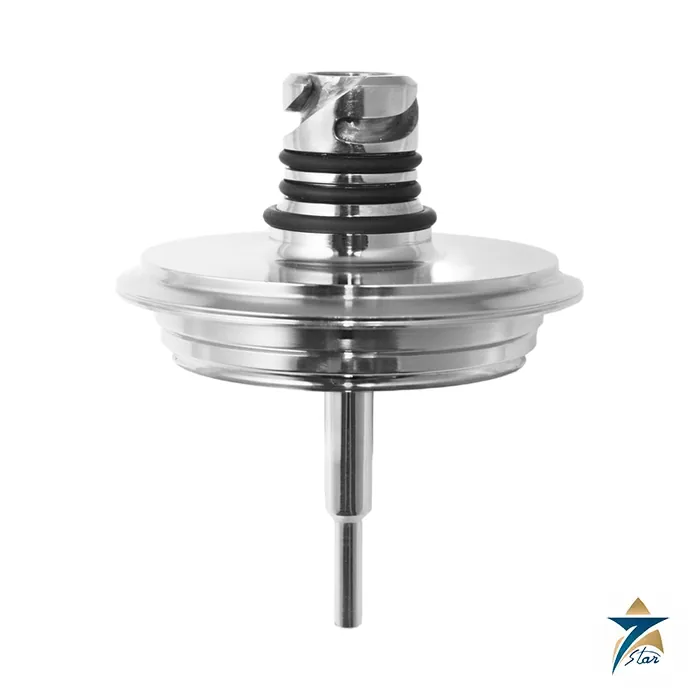
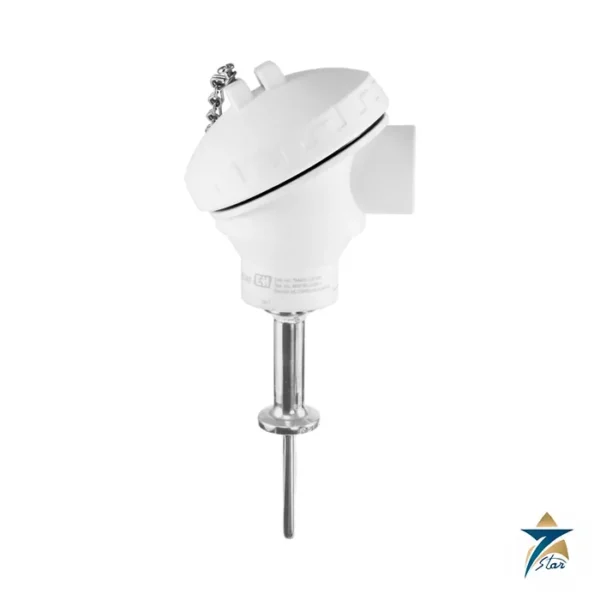
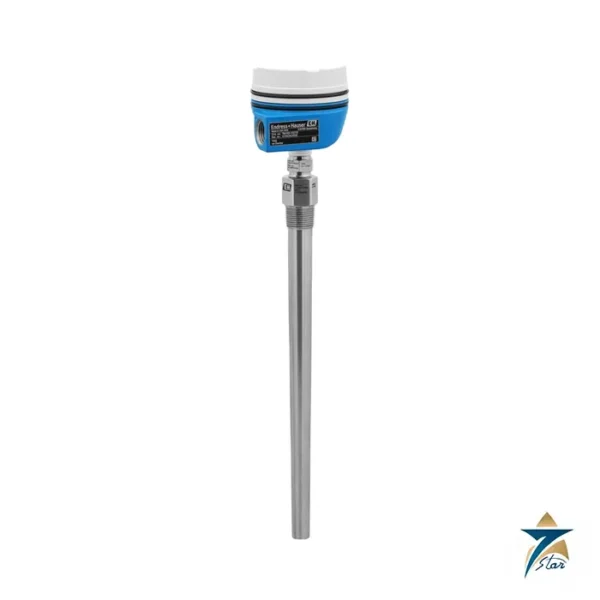
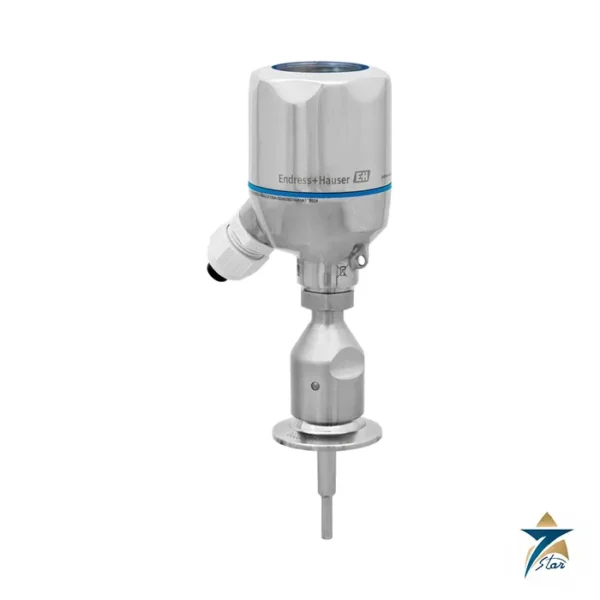
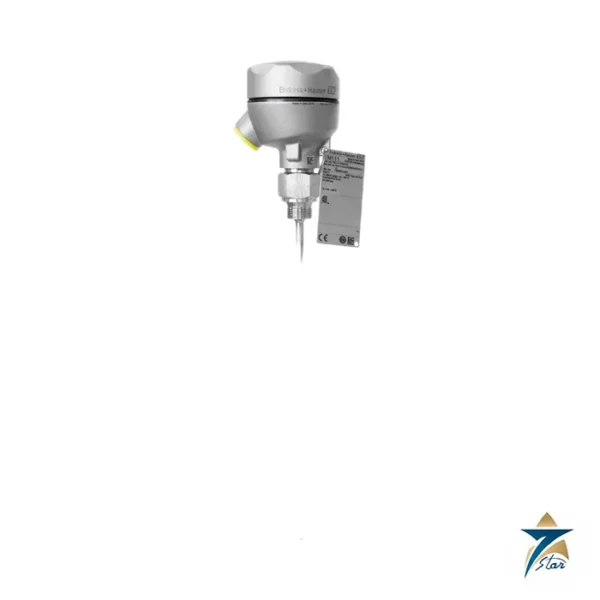
The TT411 is a metric welded thermowell from the Endress+Hauser iTHERM ModuLine range, developed for hygienic and aseptic pipes, tanks and containers. It is a protective sleeve, not a thermometer: a sensor insert is fitted into it, and the thermowell keeps the sensor out of the product while giving it a thermal path to the medium. Because it is hygienic, it is designed to be cleaned in place, to avoid dead legs and to meet the main food and pharmaceutical hygiene standards.
The special feature is the iTHERM QuickNeck head connection. The insert can be removed and refitted without tools, so a measuring point can be recalibrated in a closed process by simply swapping the insert. Seven Star LLC, an independent supplier in Muscat, supplies the TT411 in Oman and the GCC for dairy, beverage, water-for-injection and pharmaceutical customers; the ordering work is mostly choosing a process connection and a tip.
TT411 technical specifications
| Parameter |
Specification |
| Manufacturer / part number |
Endress+Hauser / TT411 (iTHERM ModuLine, welded thermowell, metric) |
| Type |
Fabricated thermowell for hygienic and aseptic use |
| Thermowell diameters |
6 mm (1/4 in), 9 mm (0.35 in) and 12.7 mm (1/2 in); also Tee and elbow versions to DIN 11865 / ASME BPE |
| Head connection |
iTHERM QuickNeck; male thread M24x1.5 or G 3/8 in |
| Process temperature |
Maximum –200 to +650 °C, depending on process connection and sensor |
| Process pressure |
Up to 40 bar (580 psi), depending on connection and temperature |
| Maximum standard immersion length |
4 000 mm (157.48 in) |
| Thermal shock |
Tested with +5 to +130 °C in 2 seconds (CIP/SIP) |
| Wetted material |
AISI 316L (1.4404 or 1.4435); optional 1.4435 + 316L with delta ferrite below 1 % or 0.5 % |
| Surface finish |
Ra 0.76 µm standard; Ra 0.38 µm buffed; electropolished option |
| Tip shapes |
Reduced 4.3 mm and 5.3 mm, tapered 6.6 mm, reduced 8 mm |
| Medium |
Gaseous or liquid, including viscous products such as yoghurt |
| Weight |
0.5 to 2.5 kg for standard versions |
| Hygiene conformity |
ASME BPE, 3-A Sanitary Standard 74-07 (listed connections), EHEDG type EL Class I (tested connections), FDA-compliant |
The values are for the product family; the process connection and tip you select determine the limits that apply to your thermowell.
How the TT411 works with a sensor insert
The wall of the thermowell is the only thing between the sensor and the product, so wall thickness and tip diameter set the response time. Reduced tips with thin walls (4.3 and 5.3 mm) are chosen for speed, whereas the tapered 6.6 mm and reduced 8 mm tips have thicker walls for pitting, abrasion and mechanical load. The manufacturer says the sensor itself should be matched to the immersion depth: iTHERM TrustSens or StrongSens need at least 30 mm, QuickSens 25 mm, wire-wound 45 mm and standard thin-film 35 mm. About 20 to 25 mm of the thermowell should be in the medium beyond the sensing element.
For tee thermowells, whose immersion is very short, the datasheet warns that measurement error increases, and recommends elbow thermowells with iTHERM QuickSens inserts. Tee and elbow versions are made without welds or dead legs, which meets the best hygienic design practice.
TT411 process connections and compatible parts
More than fifty hygienic process connections exist. Examples named in the datasheet include clamp connections to ISO 2852, dairy fittings to DIN 11851, aseptic unions to DIN 11864-1 Form A, Varivent, APV Inline, SMS 1147, Neumo Biocontrol, Ingold, the metal sealing system and weld-in adapters in cylindrical, spherical and spherical-cylindrical forms. A Liquiphant-M compatible thread allows use of weld-in adapters from that level-switch family.
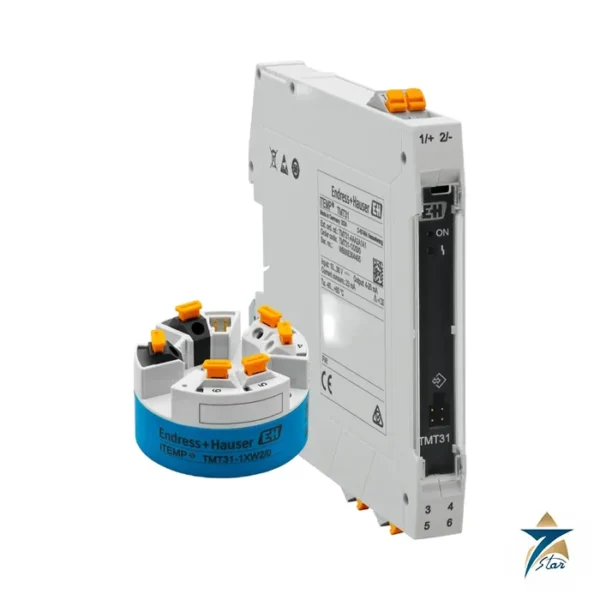
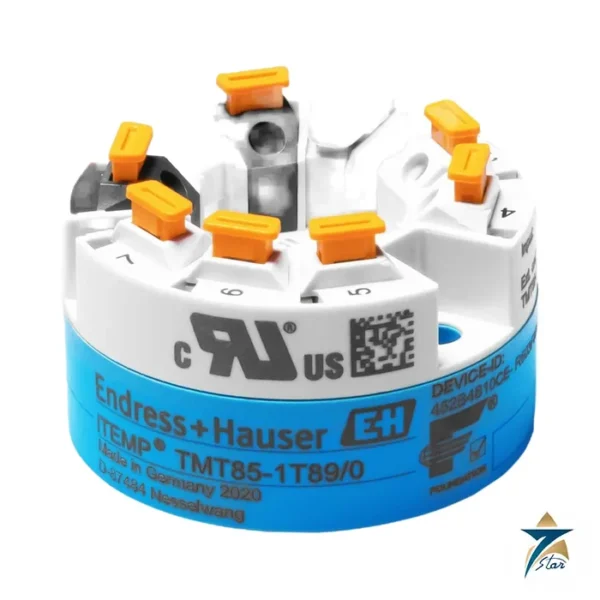
The TT411 takes inserts from the same ModuLine family, using the QuickNeck mechanism. The earlier thermowell models TA14, TW45 and TW47 are named as predecessors. The thermowell does not include the counterpart for the process connection, the seals or the O-rings; these are ordered separately. For the sensor side, iTHERM TrustSens, StrongSens and QuickSens inserts are the options mentioned.
Selecting a TT411: checklist
- Process connection type and size, and whether it must be EHEDG, 3-A or ASME BPE compliant.
- Thermowell diameter (6, 9 or 12.7 mm) and tip shape, based on response speed and mechanical load.
- Immersion length U, matched with the minimum length for the sensor technology.
- Pipe, tank or elbow installation; elbow thermowells for small pipes with QuickSens inserts.
- Material choice: standard 316L or 1.4435 with limited delta ferrite.
- Surface finish requirement: Ra 0.76, 0.38 or electropolished.
- Extras: oil and grease free for oxygen service, PWIS-free, ASME BPE certificate, CRN where offered.
- Insert type to be fitted, so the head connection (QuickNeck) matches.
Installing and maintaining a TT411 in hygienic lines
Install the thermowell so it drains: perpendicular to the flow at a minimum angle of 3 degrees, on an elbow, or inclined in small pipes. In small-bore pipework let the tip extend past the pipe axis. For EHEDG cleanability the ratio Lt should not exceed Dt − dt, and for 3-A it should not exceed twice that value. For weld-in versions use suitable filler, flush weld or a radius of at least 3.2 mm, avoid crevices and polish to Ra 0.76 µm or better.
If a seal or O-ring fails, remove the thermowell, clean thread and sealing surface, replace the seal and run CIP after reinstalling. Counterparts and seals are not part of the supply. Spares worth holding are the seals and a spare insert for recalibration swaps, because the QuickNeck design lets technicians replace and calibrate inserts away from the line.
TT411 in Oman and GCC hygienic industries
Hygienic thermowells are relevant in dairies, juice and bottled-water plants, breweries and soft-drink lines, food processing, and pharmaceutical or biotech sites in Oman and the wider Gulf. Hot-climate sites run frequent CIP and SIP cycles with fast temperature swings, which is why the quoted thermal-shock test between 5 and 130 °C matters. The same thermowell is also used on utility lines such as purified water and clean steam, where cleanability and calibration without breaking the loop reduce downtime.
TT411 tip and diameter overview
| Thermowell diameter |
Head thread |
Typical use |
| 6 mm (1/4 in) |
G 3/8 in |
Smallest diameter, extension-neck versions |
| 9 mm (0.35 in) |
M24x1.5 |
Wide choice of hygienic fittings |
| 12.7 mm (1/2 in) |
Per version |
Largest standard diameter |
| Tee and elbow, DIN 11865 / ASME BPE |
Per version |
Weld-in, small pipes, no dead legs |
Confirm the thread and neck length for the exact version in the datasheet drawings before ordering.
Information to send with a TT411 RFQ
- Process connection type, size and counterpart already on site.
- Thermowell diameter, immersion length and tip shape.
- Product, operating temperature and pressure, and CIP/SIP conditions.
- Hygienic certification needed: EHEDG, 3-A, ASME BPE or FDA documentation.
- Material, surface finish and any oxygen-service or PWIS-free requirement.
- Insert model that must fit the QuickNeck head.
- Quantity and delivery location in Oman or the GCC.
Documents and quotation
The official Endress+Hauser technical information for the TT411 is attached on this page as a PDF. The document lists the process-connection drawings and hygienic certificates. It is the reference for ranges, dimensions, materials and process-connection limits, so check your own configuration against it before you commit to a purchase.
Seven Star LLC is an independent supplier based in Muscat and supplies industrial instrumentation in Oman and the GCC. Send us the TT411 configuration you need, the tag or datasheet line it must match and the delivery location, and we will reply with availability and a quotation.




















Reviews
There are no reviews yet.